"A man shall leave his father and mother." What does it mean?
The short answer
The Bible sees marriage as creating a single, unified body out of two individual bodies. In this way, human marriage and family begins to reflect the love of God, a unified body of multiple persons all in loving relationship with one another.
What does the Bible mean when it says “a man shall leave his father and mother” and that he and his wife will become “one flesh”? In short, the Bible sees marriage as creating a single, unified body out of two individual bodies. The passage is: “For this reason a man shall leave his father and mother and cleave to his wife and the two shall become one flesh” (Gen. 2:24). It’s easy to read this verse as a colorful portrayal of how two people come together in marriage and lead a life of partnership and cooperation, but the traditional way Christians have understood this passage is much deeper than that. The passage actually explains not only the Christian view of marriage but the nature of God and of love itself.
What does the bible say about weddings?
It is important to consider this passage as ancient people did. Modern people tend to think of the physical and spiritual as opposites. Something can be “just” physical or it can be “just” spiritual. But ancient people did not think this way. All ancient people, in all cultures, believed that the physical and spiritual were deeply connected. They didn’t think that anything was just physical; instead, they thought that all physical things have a spiritual part to them, and also that spiritual things have a physical part to them. The spiritual and the physical could not be separated in any way that would make sense. All ancient people held this belief—pagans, Christians, and Jews alike. It was at the heart of the Christian idea of a wedding, which was viewed as a ritual action that changed the nature of the two people involved.
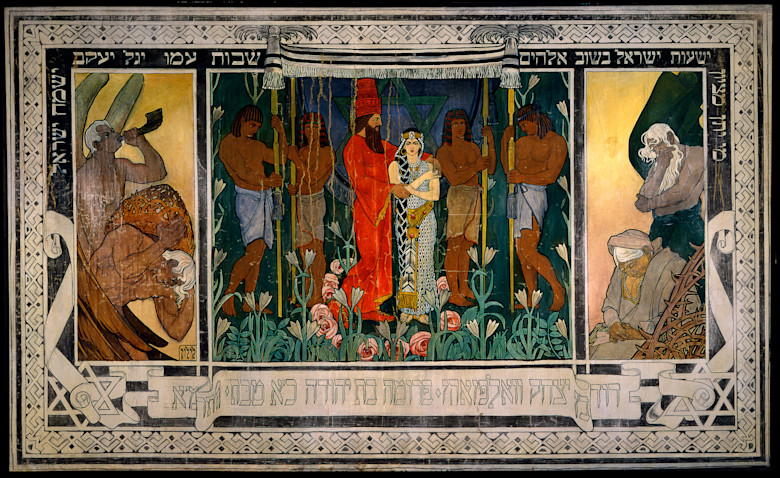
Ephraim Moses Lilien - An Allegorical Wedding - 1906
Leave and cleave
The Bible does not use this contract language. Instead it uses language that is both physical and spiritual. It says that a man will “cleave” to his wife, and that the two will become “one flesh.” In other words, that the act of sex actually creates a new physical and spiritual situation: two people have in fact become one person. The nature of the two people who have entered into the relationship has now physically changed. The most obvious way that husband and wife become one flesh is in the act of sex. A good analogy is to a lock and a key. You’ll notice that a lock and a key are not really two different mechanisms, they’re two different parts of the same mechanism.
The act of sex is what completes the process of wedding the two people together.
God is more married than we are!
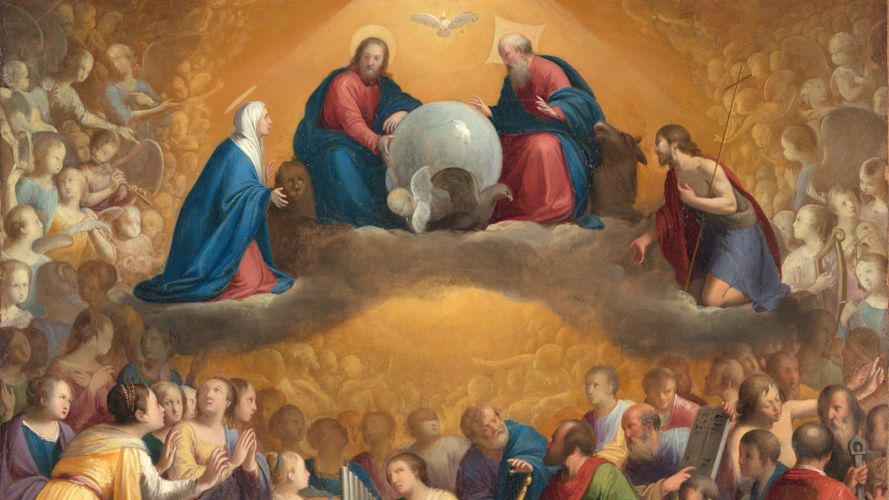
What is the spiritual significance of this unity? It indicates the nature of God. One thing that many people struggle to understand is the Christian notion of the Trinity: that God is both one God but also three persons—the Father, Son, and Holy Spirit. Sometimes the Trinity is explained as a “paradox” that has to be taken “on faith” but that is not how ancient Christians understood it. They believed in the Trinity not because it was a paradox but because it made sense—specifically, it made sense out of the things they saw in the life of Christ and in the writings of scripture. Much ink has been spilled over the centuries explaining exactly how the Trinity works, but most people aren’t interested in technical explanations. I think a better way to explain the Trinity is by answering the question, “why does it matter?”
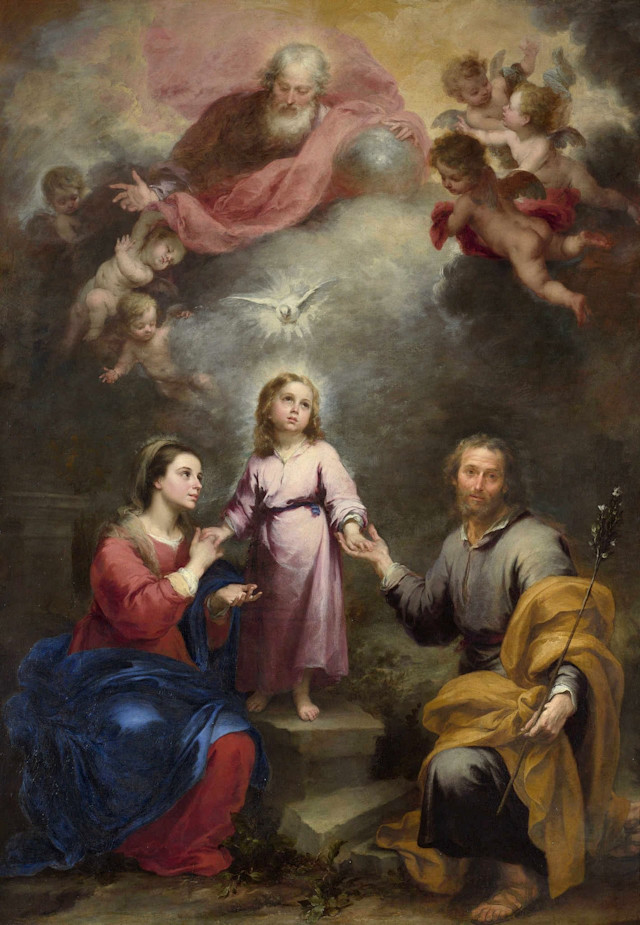
This 1675 painting by Bartolomé Esteban Murillo depicts the heavenly Trinity (the Father, Son, and Holy Spirit) and the Holy Family (Joseph, Jesus, and Mary).
Families reflect the Trinity

Peter Paul Rubens - The Fall of Man - 1628
When a single person is joined to a spouse in the physical way we’re talking about, the two spouses become one body in a real, physical sense. This physical unity creates a spiritual unity between them as well, such that we can call the two persons “one body.” And when children are born, those children are literally made out of the same “stuff” as their parents. It’s important to remember that your body is something your mother grows for you out of her own body—you are made out of the physical union of your parents.
In this way, a human family is a faint reflection of the Trinity.
Unfortunately, not all families are perfectly loving, and in some families there isn’t much love at all, but those cases are corruptions of what God intends. At the baseline, physical level, sexual activity leads to feelings of affection and unity. Likewise, parents have an innate predisposition to love their offspring. While these instincts can be ruined by bad actions over time, this state of loving unity is the default—it’s biologically hardwired into us.
Of course, a human family is not a perfect analogy for the Trinity. If you think of the Trinity as a family, you might think that “God” is less like a singular being and more like the name of a group of separate individuals, but that’s not correct. The Trinity is like a family, but it’s much more intense than that: the three persons are even more unified than a family is. They’re not merely “made of the same stuff.” They’re almost more unified than we can imagine, such that it’s correct to call the Father, Son, and Holy Spirit “one God.” If that doesn’t make sense completely, that’s okay. The full explanation is more technical, but for now it’s sufficient to say that a human family is a good analogy or starting place for understanding the nature of God as Trinity and God as love.
Marriage and the nature of God
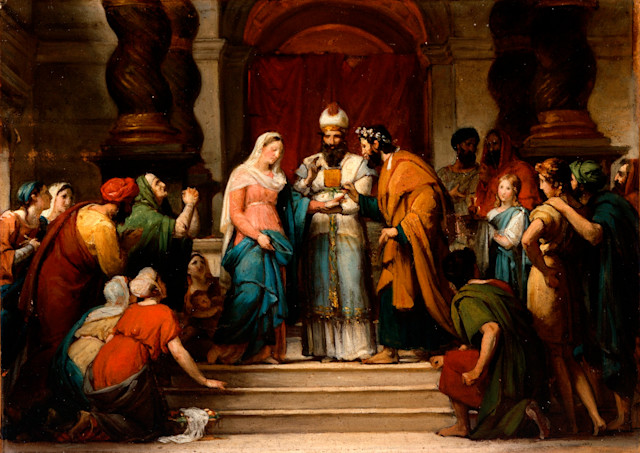
An 1833 painting of the marriage of Mary and Joseph, by Jérôme-Martin Langlois.
It is significant that this union is (ordinarily) life-giving: the intense physical desire and passion that lovers feel for one another leads to the creation of new life in the form of children. The life-giving union of marriage is a powerful image of God’s life-giving love for human beings, both in his creation of mankind in the first place and his work to free mankind from death through his resurrection from the dead.
Subscribe
Life-giving writing by Christian scholars sent to your inbox once per month
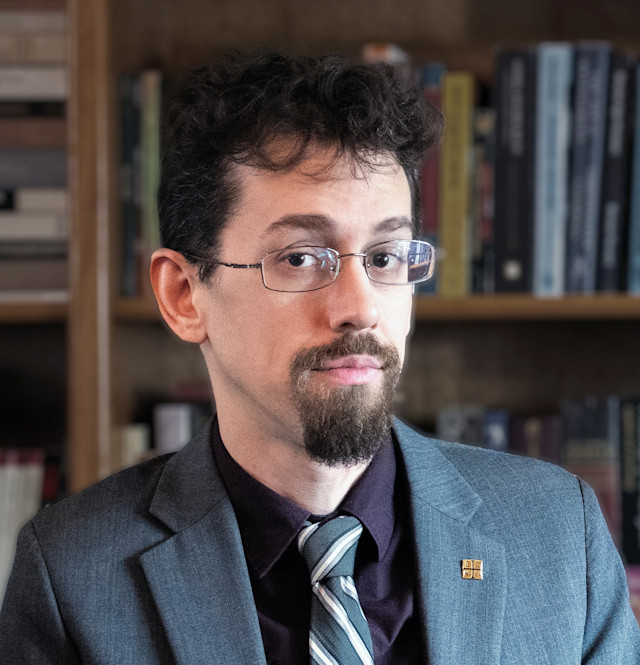
Zachary Porcu has a PhD in church history from the Catholic University of America in Washington DC, with additional degrees in philosophy, humanities, and Classics (Greek and Latin). He is an Eastern Orthodox Christian.
Keep reading
Forgiveness and the Remission of Sins
Stanley Hauerwas: Virtue Ethicist & Postliberal Theologian
Who is Jürgen Moltmann and What Did He Believe?

Jerry Bridges and The Navigators: A Protestant Order
Greg Bahnsen: Apologist and Presbyterian Minister