
Who was Hushai the Archite in the Bible?
The short answer
Hushai was one of King David’s friends who helped David defeat Absalom, one of King David's sons. Absalom was trying to overthrow his father and install himself as king of Israel. Hushai the Archite secretly helped Absalom fail.
We don’t know much about Hushai except what is listed in I Chronicles and II Samuel. Scholars suggest that “Hushai” was probably short for a name like “Ahishai” or “Ahushai”, and that “Archite” refers to him belonging to the clan that dwelt in Ataroth (Joshua 16:2-3).
A son revolts against his father
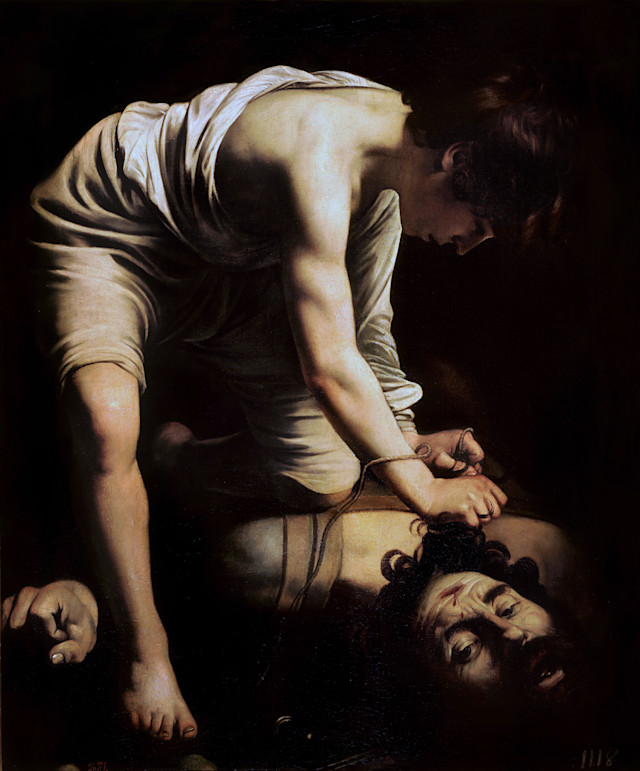
David cuts the head off Goliath - Caravaggio (c.1610)
David would go on to become the greatest king of ancient Israel. He had a long life with many adventures and misadventures, one of which was the rebellion of his son Absalom. Absalom was David’s third son, described as the most handsome man in the kingdom (2 Sam 14:25). He was a favorite of his father and well-loved by the people. Samuel even describes him as stealing their hearts (2 Sam 15).
Absalom grew in stature and ambition. He eventually declared himself king and raised a revolt against his father. Perhaps unsurprisingly, all of Israel and Judah supported Absalom over his father, and David and those few loyal to David were forced to flee.
Hushai, the "friend of David"
Hushai is sometimes called the “friend of David” because he stayed loyal to him during the insurrection. Absalom was being fed wicked advice by the courtly counselor Ahithophel (who seems to have been attempt to clear the way to the throne for himself). Hushai remained to counteract Ahithophel’s advice, instead giving council that would be in David’s favor. Most importantly, Hushai successfully convinced Absalom to not pursue David and his small army as they retreated. Instead Hushai convinces Absalom to wait, and this delay allows David the crucial time he needs to escape. From then on, Hushai the Archite acted as a spy and passed valuable information to King David about Absalom’s plans.
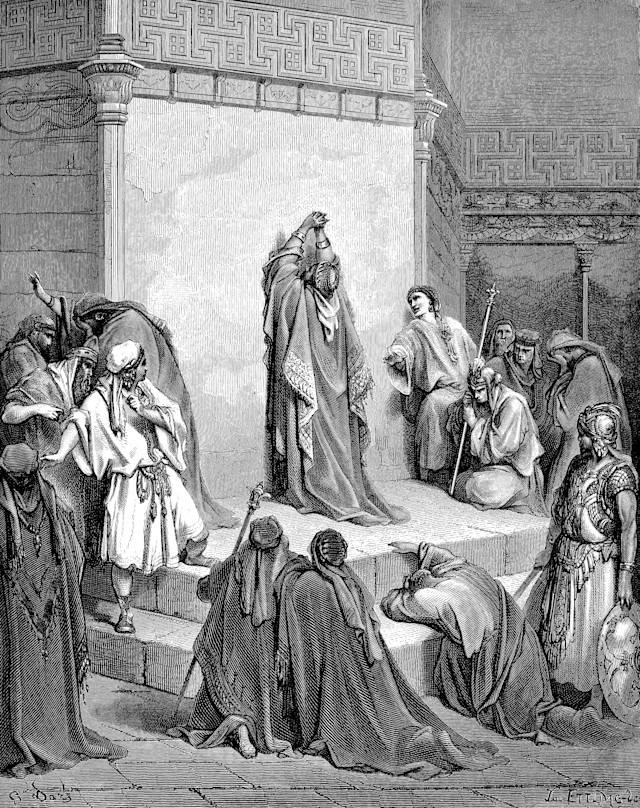
David mourns the death of his son Absalom - Gustave Dore
The importance of both loyalty and mercy
Loyalty is not really a virtue we talk much about in the modern world. Everything from divorce rates to job-hopping to “ghosting” people speaks to a world with very little sense of stability, let alone loyalty. Yet Hushai stayed loyal to king David despite the popularity of Absalom and the risk that he took upon himself. Once again, David was outmatched—just as he was against Goliath—but prevailed.
Yet we also see mercy in the actions of David. Though he had to fight to retake his kingdom as the rightful king, there’s no evidence that he harbored any resentment in his heart toward his rebellious son. To the contrary, he gives the order that Absalom is to be spared, and he weeps bitterly when he finds Absalom dead, even wishing that he had died in his place. It is qualities like these — tenderness and mercy side-by-side with the manly determination to retake his rightful kingdom — that have made David such an enduring figure in art and literature for centuries.
Subscribe
Life-giving writing by Christian scholars sent to your inbox once per month

Dr. Zachary Porcu has a PhD in church history from the Catholic University of America in Washington DC, with additional degrees in philosophy, humanities, and Classics (Greek and Latin). He is an Eastern Orthodox Christian.
Keep reading

What is Gilgal in the Bible?


Who were Jannes and Jambres in the Bible?

Where is Mazzaroth and the Zodiac in the Bible?
What is Cabul in the Bible?

Why stay away from the Book of Enoch
