What does the Bible say about drugs, drinking, and smoking?
The short answer
The Bible says nothing directly about drugs, although it celebrates the responsible use of alcohol. Yet, the greater issue is that the Bible isn’t first and foremost a book of rules. Christianity is about living life in Christ, and it’s on that basis that we should discern what things we put into our bodies.
It is common for people to wonder what the Bible says about drugs, drinking, or smoking. This can be an important curiosity, because it points to the more important discussion of what sin is. So let's explore the issue of drinking, smoking and drugs, beginning with alcohol.
What does the Bible say about drinking?
Despite various modern religious movements (primarily American) that considered alcohol consumption to be sinful, there’s no evidence for this in the Bible. Quite the contrary. Alcohol consumption is presented as ordinary throughout the Biblical narratives, and we know that ancient Jews and Christians—and basically all ancient people—made and consumed alcohol. More than that, alcohol, especially wine, was seen as a sacred type of drink: wine was used ritually in almost every culture in the Greco-Roman world, including at the heart of the early Christian liturgical service as the Blood of Christ in communion.
Some people argue that, because ancient people generally diluted their wine with water, that ancient people didn’t really experience the intoxicating effects of alcohol, and that this is the part that is sinful. But this too is a modern (usually American) perspective. The joyful effects produced by consuming alcohol are, again, presented as normal in the Bible. The most prominent example is in Psalm 104 (LXX 105) where wine is included in a list of good things that God provides for the Earth:
He makes the grass grow for the livestock and provides crops for man to cultivate,
bringing forth food from the earth: wine that gladdens the heart of man, oil that makes his face to shine, and bread that sustains his heart.Psalm 104:14-15
Bread, oil, and wine are all listed together as things that benefit man, indeed, that are provided for him by God, with specific purposes: bread sustains him, oil makes him shine, and wine makes his heart glad. It’s clear that making the heart glad is the purpose of wine. That is the main effect of alcohol, and why alcohol is consumed in celebrations and on feasts. Solomon mentions this in Ecclesiastes 9:7 as well: “Go, eat your food with gladness, and drink your wine with a joyful heart”.

Bottles, Wine, and Cheese - John F. Francis - 1857
The times that the Bible cautions against alcohol use are all in the context of excess. Proverbs 23:20 warns not to “mix with winebibbers, or gluttonous eaters of meat, for drunkards and gluttons become poor”. In his letter to the Galatians, St. Paul explains to his flock that “the acts of the sinful nature are obvious” and lists “drunkenness”, alongside orgies, reminding them that “those who live like this will not inherit the kingdom of God” (5:19-21). In his letter to the Ephesians he warns them, “do not get drunk on wine, which leads to debauchery” (5:18). Orgies, gluttony, and debauchery are all kinds of excesses; St. Paul is obviously not condemning the practice of eating food or having sex—that would be absurd. He is condemning the abuse of those things.
As countless theologians have pointed out, from St. Augustine in the fourth century to CS Lewis in the twentieth, nothing is evil by nature. Evil happens when we take a good thing and corrupt it. Sex is good but it can be corrupted through rape or orgies; food is good but it is corrupted through gluttony; alcohol is good but is corrupted through drunkenness. This is normal for sins of the body, which tend to be perverted through excess.
The conclusion? The Bible says nothing against alcohol per se. Drink alcohol, drink it even unto merriment! But don’t drink to excess. And this was the consensus view among Christians, all across the world and over many centuries, until certain recent minority movements among American evangelicals.
What does the Bible say about drugs like weed or smoking tobacco?
The Bible doesn’t say anything about marijuana specifically, nor really anything about nicotine, tobacco, or the like. Because of that, very simply, we can’t say that the Bible says anything against (or for) any practices like this. We have to instead infer whether or not smoking any particular thing is in keeping with a Christian way of life.
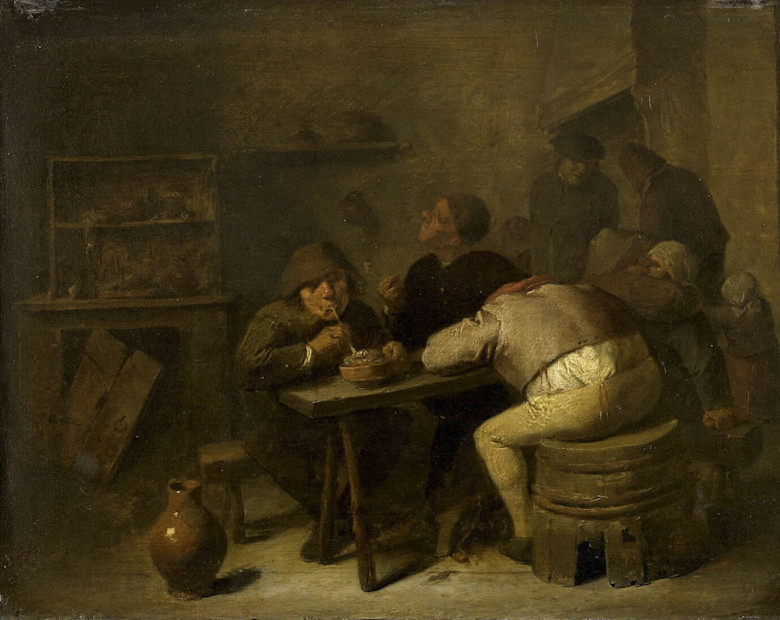
Tobacco Inn - painting by Adriaen Brouwer - 1630
Most arguments against the use of cigarettes or marijuana in the Bible are these exact kind of inferences, but they tend to be very weak in that they could be used to apply to smoking but could just as easily be applied to many other things.
Sometimes people cite verses about the sacredness of the gift of life (Acts 17:24-25 or Romans 12:1) to make the connection that substances which are toxic or shorten your life are somehow sinful, because it wastes the gift God has given you. This is a good example of an argument that “proves too much”: many, many things have damaging or detrimental effects on our health, such as eating fast food, consuming processed foods, and leading a sedentary lifestyle. Are those things therefore sinful?
It’s true that there are many things that are unhealthy for you, and we should want, as much as possible, to take care of ourselves as much as we can, but the reality is that, no matter what we do, every single one of us is going to die. The over-obsession over healthy living, of living as long as possible, is a kind of distraction from the most important goal of a Christian’s life, which is to die well in preparation for the age to come and return of Christ. This is more important than living a long life or even a healthy life, since length of days or quality of life don’t actually do anything to solve the problem of the inevitability of death. I myself eat very healthy, work out regularly, and take a great deal of concern for my health, but not because I think it makes me more holy in itself or that living longer is somehow more Christian.
Christians have always viewed addiction as sin.
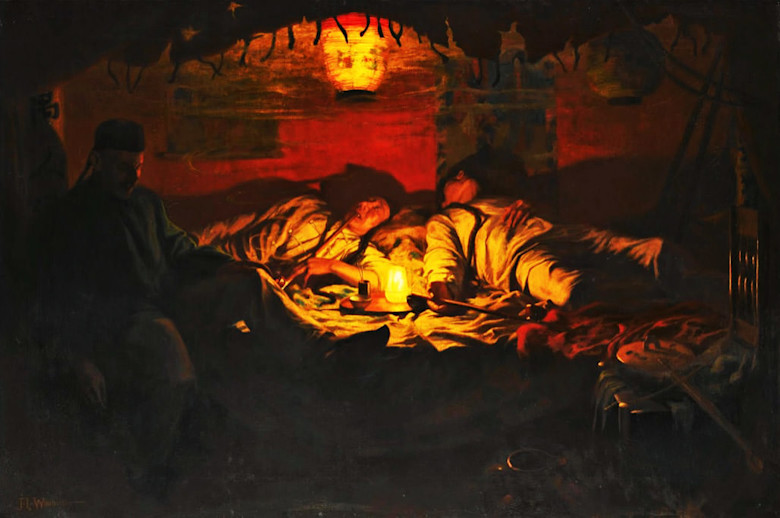
Addicts in an opium den - Wimbush - 1889
This is a good reason to avoid addictive substances like nicotine or recreational drugs. But I would argue that this applies to many, many things beyond just “drugs”: sugar and internet addiction are well-studied behaviors that we know are massively addictive (and, for what it’s worth, that also have very bad health consequences). But there’s no stigma against these the way there’s a stigma against recreational drug use, but if we’re really worried about being dehumanized by slavery to substances, sugar and dopamine addiction are certainly in the top tier of threats!
Another thing to avoid is the bad culture that’s often associated with people who tend to participate in these kinds of activities. If you’ve been around a lot of people who smoke weed as their main recreation, you see that the stereotypes are quite justified: apathy, laziness, lack of ambition, are all frequent traits of such social circles. The same is true for those who constantly need to drink alcohol to have a good time: constant binging leads to a narrower, more excessive, enslaved lifestyle. Neither of these kinds of subcultures do much to foster growth in virtue, and in my experience generally work against it.
What is sin?
In the modern Western world, it’s very common to think about sin as a sort of spiritual crime. People who think this way generally want to make lists of exact crimes so that they know exactly where the line is in how much they can indulge themselves. When they argue about the Bible, it’s generally about trying to turn the Bible in a rulebook so that they can have an authority for their list of crimes, often to condemn others or justify themselves. This is generally why people ask questions like, “what does the Bible say about X topic?” But all of this is a twisted version of the ideas of sin and holiness, and not at all in keeping with the early Christian picture of the issue.
The early Church saw sin, not as a crime, but as a disease.
This is also why the Church has always curated lists of sins. You’ve probably heard of the but the original version of this list was first cultivated by early Christians who treated each sin as a specific ailment of the soul, and they give diagnostics about how to identify it as well as prescriptions for how to cure it.
This is the best way to look at these things. Do the substances in your life lead to sloth, idleness, anger, excess, or other kinds of enslavement? It’s easy to say, “No, it’s fine. I’ve got it under control,” because you want to keep doing it. But here’s a serious question, are you asking this question because you want to condemn someone else or feel less guilty about your own indulgences? Or are you asking because you really want to know what the path to being a better you consists of?
Subscribe
Life-giving writing by Christian scholars sent to your inbox once per month

Dr. Zachary Porcu has a PhD in church history from the Catholic University of America in Washington DC, with additional degrees in philosophy, humanities, and Classics (Greek and Latin). He is an Eastern Orthodox Christian.
Keep reading
What are the best Bible verses for men?

Bible on pornography: What does God say about porn?
What does the Bible say about self-satisfaction?

Is manifesting a sin? The Bible on the law of attraction

What is sexual fasting? On abstinence in marriage