Predestination vs. Free Will
The short answer:
The doctrine of predestination is an idea among certain minority denominations of modern-day Christians. While you could try to justify it through certain Bible verses, it isn’t a good reading of those verses and ultimately undermines essential Christian doctrines—which is why none of the early Christians believed in it.
The idea of predestination varies, but the basic premise is that, because God is all-knowing and all-powerful, he pre-orders all events in the cosmos. That means that the only things that ever occur are things that God specifically planned. Whatever happens to you, therefore, is already determined by God ahead of time, including your ultimate destiny in heaven or hell—although, again, it depends on who you ask.
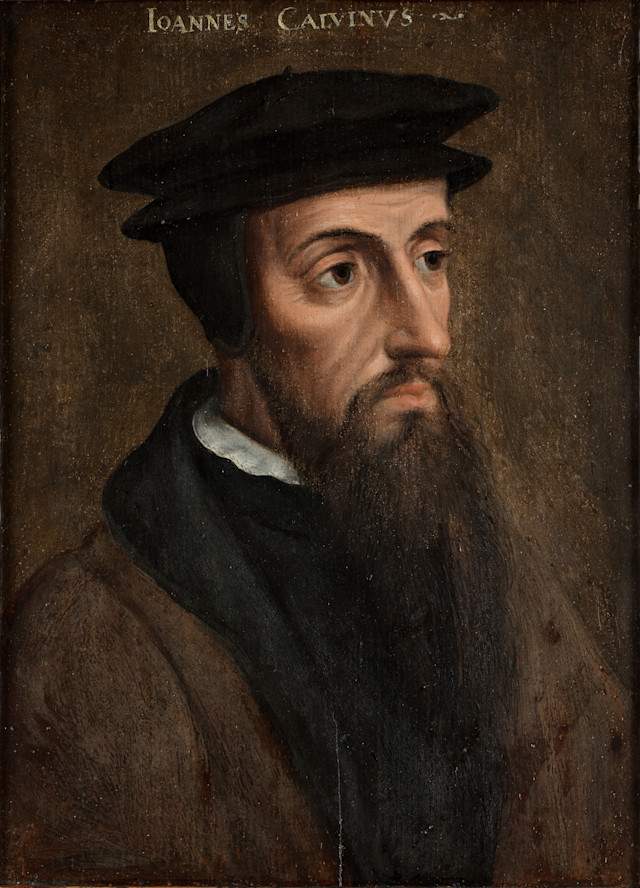
Anonymous - Portrait of John Calvin - circa 1550
The primary doctrines of Calvinism are generally summarized by five points, referred to using the acronym “TULIP,” based on the first letter in each of the phrases:
Total depravity—the idea that humans are so depraved that they cannot even want salvation.
Unconditional election—the idea that God elects (meaning he chooses) certain people to receive salvation through grace, not at all based on their merits.
Limited atonement—the idea that Christ’s atonement for mankind was only intended for the forgiveness of the sins of those whom God chose, not the ones he leaves for damnation.
Irresistible grace—the idea that God’s gift of grace cannot be resisted; if God choses you for salvation, then you are getting saved.
Preservation of the saints—the idea that once you’ve received this election you cannot lose it.
There are many variations in these beliefs, such as the so-called “four-point Calvinists” or even “three-point Calvinists” who only believe in some of the five points, or those who believe that God also predestines people to hell as well as to heaven (called “double predestination”) rather than simply allowing people to choose hell and only predestining some to salvation, and so on. But the common denominator is that they believe in some form of predestination on the basis that (a) mankind is too depraved or sinful to be able to even want to choose the good; and (b) that God being all-powerful means it’s up to him to choose certain people to be saved, and that they can only be saved in this way.

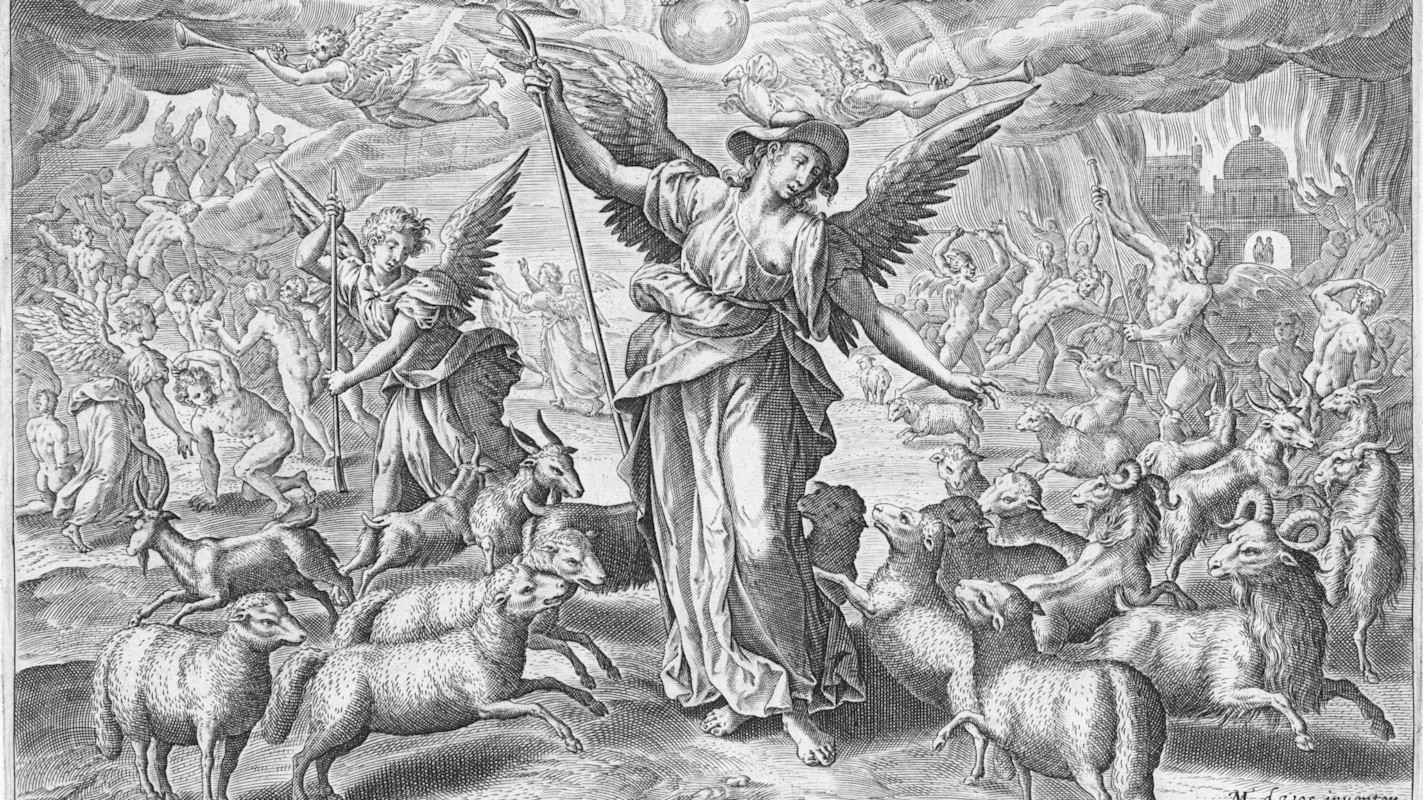
A Roman sarcophagus lid from 300-400 A.D., depicting the parable of the separation of the sheep and goats at the Last Judgment.
Does the Bible support predestination?
As with almost everything, the question of whether something is supported in the Bible is up for debate. The Bible can be interpreted in almost any way if you are creative enough or if you decide that some verses are more important than others. There are many verses that seemingly contradict one another at the literal level, and so what many people do is choose which side they want to take on something and come up with an argument for why one set of verses is more important than another.
What are the main verses that support this belief in predestination? The word “predestined” comes up in several places in certain English translations, but perhaps the most famous is in St. Paul’s letter to the Romans:
“We know that in everything God works for good with those who love him, who are called according to his purpose. For those whom he foreknew he also predestined to be conformed to the image of his Son, in order that he might be the first-born among many brethren. And those whom he predestined he also called; and those whom he called he also justified; and those whom he justified he also glorified.” (Romans 8:28-30)
The way a Calvinist would interpret this verse is as justification for the idea that God chooses ahead of time who’s going to be saved and who isn’t. And when you see the word “predestined,” it’s easy to think, “wow, I guess it says ‘predestined’ right there. That must mean God really does predestine people.”
A Turkish painting of a tulip, 1708-1709.
With the word “predestined,” it’s easy to see it and interpret it to mean something like, “God forces people to be saved,” since the word “destined” in English usually means something like fate or what philosophers call “determinism.” Determinism is the idea that everything in life is predetermined and people don’t have any free will. This idea is nothing new: many religions and philosophies throughout history have come to this conclusion—very often those that don’t believe in the kind of God that Christians do (or in any God, for that matter).
But remember that the Bible is translated into English from Greek. Is “predetermined” a good translation of the original Greek word? I don’t think it is, for two reasons. First of all, the root verb here is ὁρίζω (oridzo) which means to divide, separate, delimit, or bound. It’s used in situations where people mark out or trace boundaries to determine or define something, like marking out the boundary lines for a territory or the limits of a city. The noun version of this verb is ὅριον (orion), which likewise refers to a boundary, frontier, or limit, in the sense of something like a territory boundary or even a road.
Gustave Moreau - Oedipus and the Sphinx - 1864
You would think that that, as someone familiar with this idea, St. Paul would have used the same word that the Greeks tended to use for fate, which was μοῖρα (moira). But that isn’t the word he used in the passage from Romans. Instead, he chose a different word—one that doesn’t have the same connotations of unalterable destiny. The word he chose, oridzo, refers to marking out and defining rather than pre-determining.
When you translate the word as “predestine,” you get the sense that our free will is taken away. However, you don’t have to translate it this way. You could use the word “predetermine” instead. How would that translation differ?
Let’s say that you were hosting a dinner, and you knew that there were going to be twenty adults and ten kids coming to the dinner. You therefore set out twenty adult place settings and a smaller table with ten kid place settings. What did you do? You marked out the boundaries, or defined the limits, of each of the tables in advance—you “pre-determined” this setup, because you did it ahead of time. But just because you knew how many people were coming over doesn’t mean you caused those people to come over. You might have invited thirty adults, and wanted all of them to come, but ten of them canceled, and so, knowing this, you set out twenty adult place settings instead of thirty.
You might think of salvation in the same way. God calls everyone to salvation, which we know from 1 Timothy 2:3-4: “For this is good and acceptable in the sight of God our Savior, who desires all men to be saved and to come to the knowledge of the truth” (NKJV, my emphasis). But not everyone decided to RSVP, so God only set out a certain number of place settings because he knew who would be coming. That’s not the same as forcing some people to come and others to stay home.
Do we have free will or is everything determined?
But even if you disregard this argument about the original Greek word, it’s still problematic to think that God predestines people or determines their actions, for a few reasons.
- It means God ceases to be loving. Something that’s very common to hear in the writings of the early Church fathers is the idea that God loves mankind. Yet it would be very hard to reconcile the idea of God being love itself (1 John 4:8) with the idea that he intentionally gives some of his creatures the express purpose of being tortured for eternity.
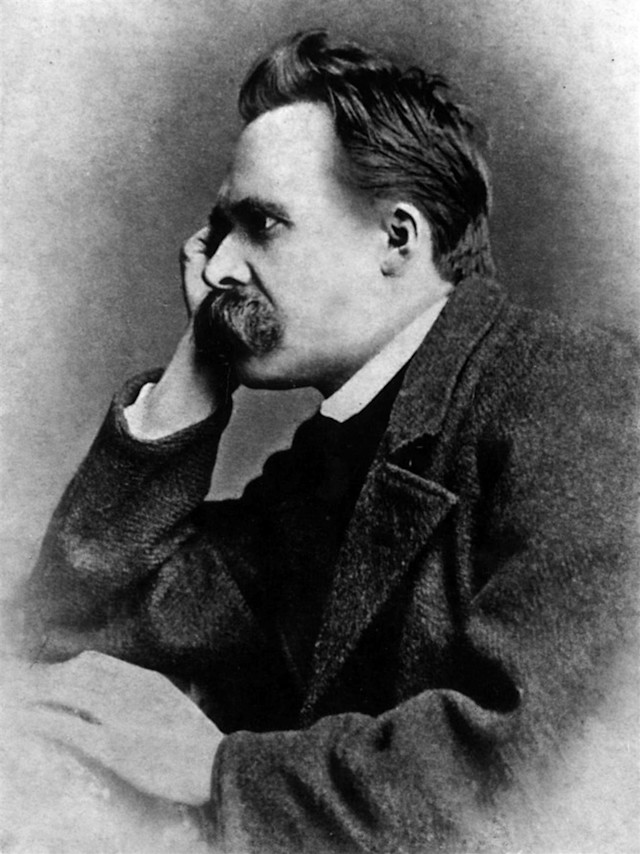
Friedrich Nietzsche, 1882 - photograph by Gustav Schultze
It makes God the source of evil. If God predetermines everything then that means God causes everything, and if he causes everything, then he also causes all the evil things that happen in the world. While some people argue that this account is okay because God uses evil to bring about good, this argument has a big problem: if God causes all the evil in the world, then he is the source of all evil. For that to be true, he must be either evil himself or beyond good and evil in such a way as to make these terms meaningless when applied to him. Either way, that’s not the God of Christianity.
It takes away free will. For almost all of Christian history, Christians have asserted that God gives mankind free will, on the basis that, logically speaking, we must have free will to be real human beings at all. If I were to force you to be my friend at gunpoint, could we really say that you were my friend? The answer is no, obviously. To have a relationship with someone, especially to love someone, requires freedom. But if God forces some to love him through an “irresistible grace,” and especially if he specifically creates some people with the knowledge that they will go to hell (as in the “double predestination” belief), then we’re talking about a world where no one has free will except God. How can we be said to have love at all, therefore, or even to be human beings?
Predestination is not a traditional Christian belief. While there have always been minority, heretical groups who have believed all sorts of weird things, the consensus throughout all of Christian history has been that God gave mankind free will. So many essential Christian beliefs rest on this idea, and the religion starts to fall apart without it. Saint Augustine wrote a whole book on the topic, called On the Free Choice of the Will (De Libero Arbitrio Voluntatis) in which he explains that free will is the cause of all the suffering in the world. Saint Ignatius, one of the earliest Christian thinkers after the apostles, wrote that “everyone, according to the choice he makes, shall go to his own place” and that each man belongs either to God or to the devil “not by nature, but by his own choice” (Letter to the Magnesians), and St. Justin Martyr affirms the same concept in his First Apology chapter 43. If our fates are determined by our free choice, therefore, then they obviously can’t be pre-destined or pre-fated.
Only relatively recently, and only among a minority of people who identify as Christians, has the idea of God predestining everything become popular. And while those minority groups have had a large influence on modern Christians, if you went back in time and tried to explain these ideas to the early Christians, they wouldn’t have recognized them as Christian ideas at all. Instead, they would have seen them as pagan ideas, because it was pagans who believed in determinism, while Christians preached radical freedom in Christ.
Subscribe
Life-giving writing by Christian scholars sent to your inbox once per month

Zachary Porcu has a PhD in church history from the Catholic University of America in Washington DC, with additional degrees in philosophy, humanities, and Classics (Greek and Latin). He is an Eastern Orthodox Christian.
Keep reading
Barachiel and Baraqiel: Angels named outside Scripture
St. José Sánchez del Río, modern child martyr

Who was St. Gemma Galgani, patron of students?
A PhD explains the phrase "What the devil meant for evil"

Pastor vs. Priest: What are the differences?
