A PhD explains the phrase "What the devil meant for evil"
The short story:
There isn’t any Bible verse that specifically references what the devil or the enemy “meant for evil.” However, the idea that God takes evil and turns it into good is a common theme in the Bible, because what Christians mean by “God” isn’t merely a deity—it is He Who is Goodness itself.
There isn’t a single, specific Bible verse about what “the enemy meant for evil,” but the closest is Genesis 50:20: “But as for you, you meant evil against me; but God meant it for good, in order to bring it about as it is this day, to save many people alive.” What does this passage mean?
The context for this passage is one of major stories in the Book of Genesis. Genesis ends with the story of Joseph and his eleven brothers. One of the main themes of that story is God taking evil and turning it into good.
Joseph was the second youngest of twelve brothers. Their father, the patriarch Jacob, had had twelve sons by four different women—two wives and two concubines. The youngest two sons were from the same wife, Rachel. Rachel was Jacob’s favorite wife, and as such he favored Joseph among his brothers because he loved Rachel the most. This favoritism caused jealousy and tension among the other brothers, who seized an opportunity to trap Joseph and sell him into slavery in Egypt.
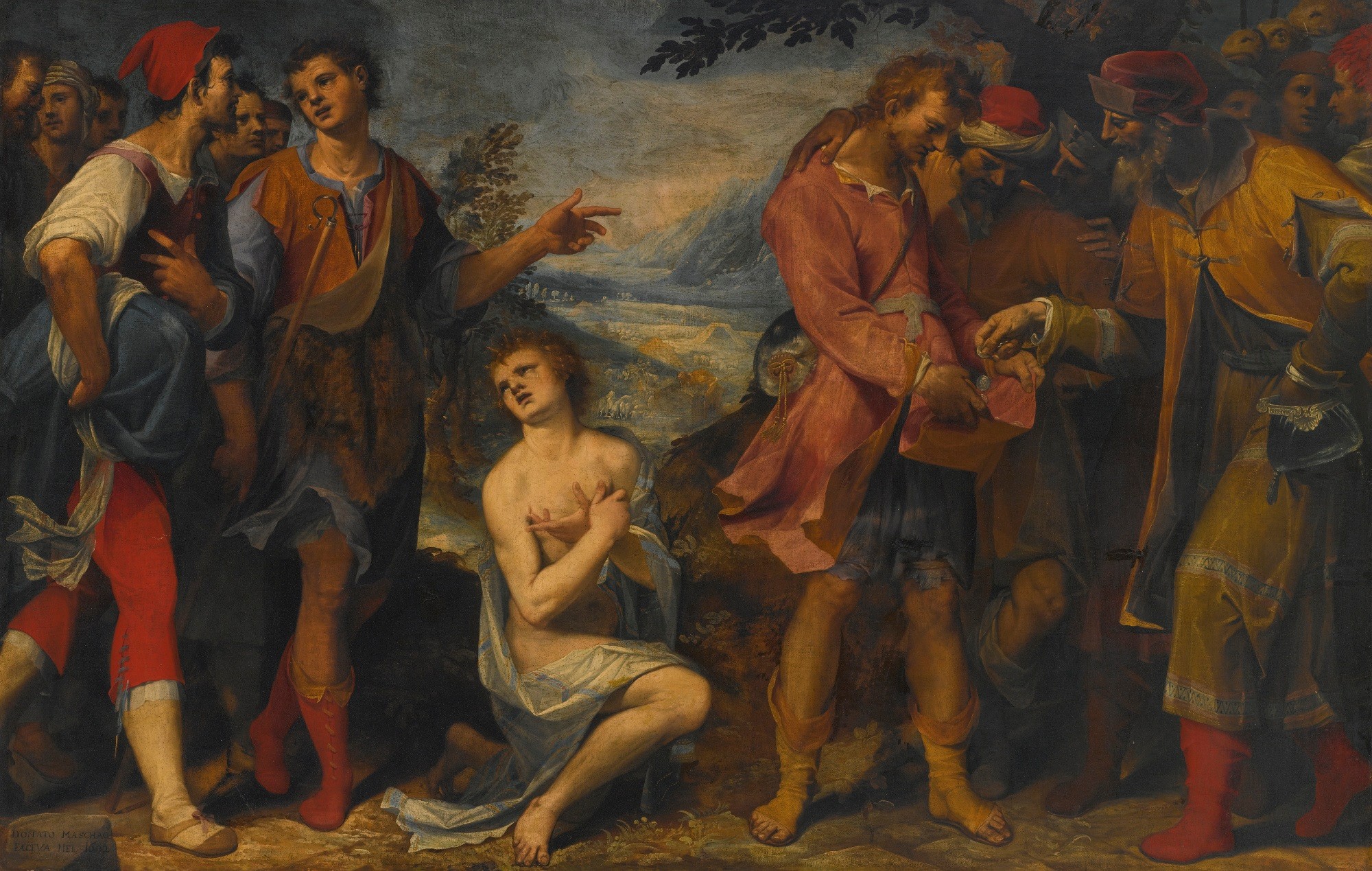
Damiano Mascagni - Joseph Sold into Slavery by His Brothers - 1602
While in Egypt, Joseph experienced many hardships but was providentially guided by God such that he found favor with Pharaoh, the king of Egypt. Pharaoh received a prophetic dream that Joseph interpreted as predicting a great famine in the land, and through his careful planning, Egypt was able to save enough grain ahead of time to survive the famine comfortably, while the surrounding nations starved. Because of his ability to interpret the dream and his wise counsel about how to handle the famine, Joseph was elevated to become the country’s second-in-command, just under Pharaoh, and was therefore part of the ruling class of Egypt.
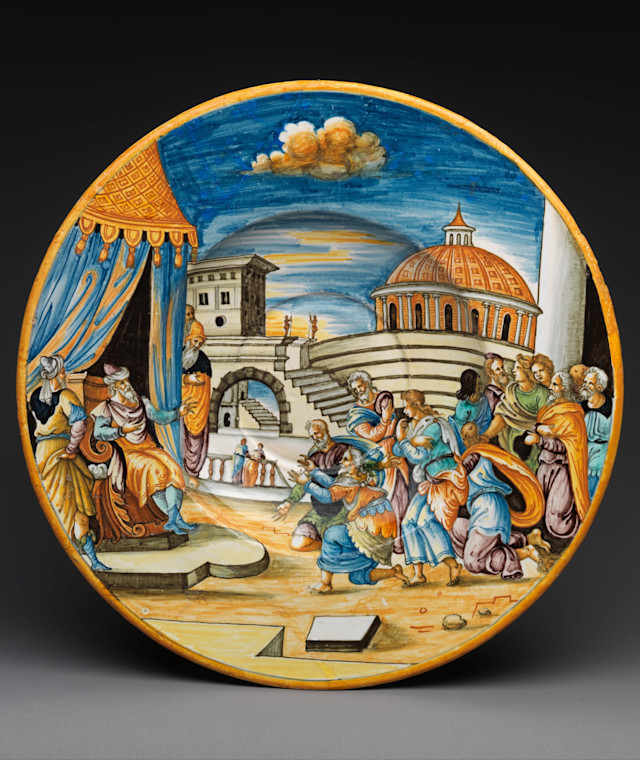
This dish, made in the 1600s, depicts Joseph's brothers meeting him in a position of power in Egypt.
Joseph forgave his brothers and sent them back to their homeland to bring their wives, their children, and their father Jacob to live with Joseph in Egypt. Eventually, however, Jacob died, and the brothers became concerned that Joseph would use his immense power in Egypt to get revenge, now that their father was not there to prevent it. They went to Joseph, threw themselves at his feet, and begged for forgiveness. Instead of replying harshly to them, Joseph responded,
“Do not be afraid, for am I in the place of God? But as for you, you meant evil against me; but God meant it for good, in order to bring it about as it is this day, to save many people alive. Now therefore, do not be afraid; I will provide for you and your little ones.” And he comforted them and spoke kindly to them.” (Genesis 50:19-22)
Joseph saw the bigger picture of what had happened. The brothers, motivated by jealousy and resentment, had intended evil for Joseph. But it was the very act of selling Joseph into slavery that caused him to end up in Egypt. And it was there, through God’s providence, that he was able to predict Pharaoh’s dream, plan for the famine, and save the lives of many people—including his family. God had taken a bad thing, intended for evil, and turned it into good.
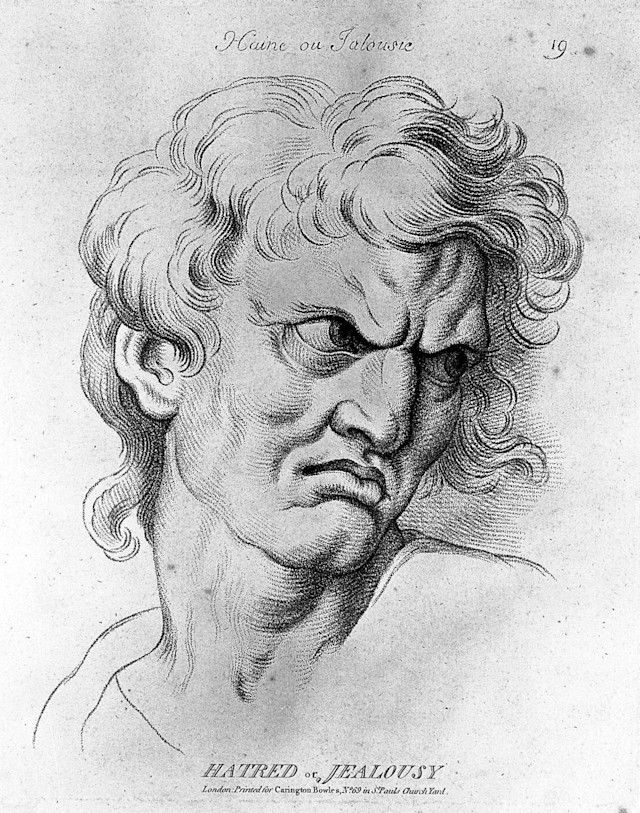
Charles Le Brun - Hatred or Jealousy - 1600s
What is Isaiah 41, verse 10?
There is a similar passage in the Prophet Isaiah that people often connect to this idea that God will turn evil into Good. The verse is Isaiah 41:9-10, which reads,
“And said to you,
‘You are My servant,
I have chosen you and have not cast you away:
Fear not, for I am with you;
Be not dismayed, for I am your God.
I will strengthen you,
Yes, I will help you,
I will uphold you with My righteous right hand.’”
This passage is often quoted to people who need comfort or assurance that God is going to help and protect them. What is the context for this passage? Isaiah was speaking about God’s promise to Abraham, that he would take Abraham’s descendants and set them apart from the other people groups who were enslaved to the demonic gods of the ancient world. The Lord of lords and God of the gods made this family into a great nation that culminated in Jacob and his twelve sons. Just a few verses prior to this passage, Isaiah references this people, speaking with the voice of God:
“But you, Israel, are My servant,
Jacob whom I have chosen,
The descendants of Abraham, my friend.
You whom I have taken from the ends of the earth,
And called from its farthest regions.” (Isaiah 41:8-9)
This passage from Isaiah is closely related to the passage in Genesis 50. Isaiah references the fact that God carefully guided Abraham’s descendants, saved them from all sorts of threats and dooms, and transformed them from the twelve sons of Jacob to the Twelve Tribes of Israel.
Does God turn bad into good?
The idea that God turns bad into Good isn’t limited to a particular Bible verse or passage. You can find all sorts of passages where God promises different people that he’s going to take care of them, protect them from harm, and give them a place in his kingdom. The idea that God turns bad into good is a fundamental truth about God’s nature.

Sunset at the Ullum Dam in Argentina
You see, when Christians talk about God they don’t mean a divine entity with superhuman power. They don’t even mean the divine entity with the most power. When Christians talk about God, they mean something much higher: that thing which is being and life itself.
This language sounds a little abstract, but it’s intuitive if you think about it. Imagine if you said that a garden was “teeming with life.” You couldn’t point to a particular plant or animal in the garden and say that it was “life.” You could say that it “had life” or that it was “alive,” but that’s not the same thing. Life is something that everything in the garden shares, but no one plant or animal in the garden is life itself. When Christians talk about God, they mean life or existence itself, the power by which everything that exists has existence. As St. John writes, “All things were made through Him, and without Him nothing was made that was made” (John 1:3).
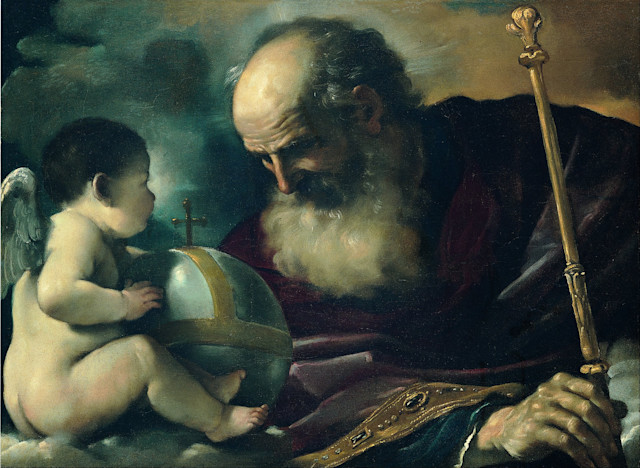
Guercino - God the Father And Angel - 1620
Why? Because the ancient Christians realized that God was both being itself and goodness itself. God’s nature is the source of all moral good in the universe. Goodness and existence are, in a real sense, the same sort of thing.
This account changes how we think about good and evil. For example, you may have heard someone respond to something bad by saying, “it was all part of God’s plan,” because some good came out of it. If something bad happens to you, but there’s a silver lining or it resulted in something good, it’s easy to think that God caused the bad thing to happen to bring about the good thing.
Most people who think this way are well-meaning, but this idea is problematic. If you say that evil is “part of God’s plan,” you’re saying something terrible: that God uses evil to bring about good, as though evil were simply one of God’s tools. If that were true, it would make God the cause or source of evil, making him either evil or beyond good and evil.
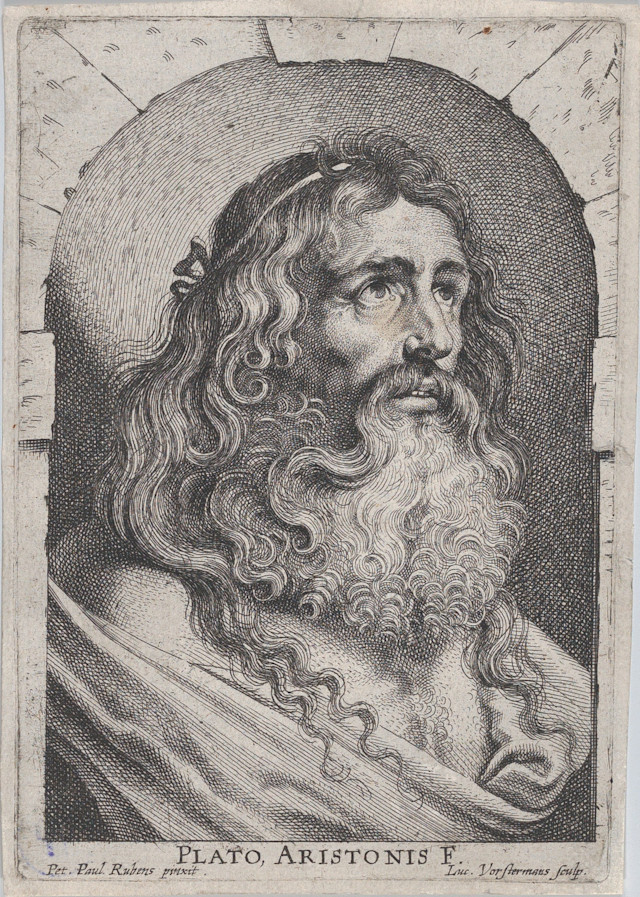
A depiction of Plato by Lucas Vorsterman I, after Peter Paul Rubens, circa 1620. In the Euthyphro, Plato discussed the relation between God and piety.
The answer to this dilemma is that goodness is neither higher than God nor lower than him: goodness is identical with God. Goodness is God’s nature. He is Goodness. And because God is also life and existence itself, everything he touches turns into good—if we let it.
Where does evil come from, then? Evil does not have its source in God, but in our own free will. We can use our free will to turn good into evil, but God can turn even the worst things that happen to us into good, if we let him.
Subscribe
Life-giving writing by Christian scholars sent to your inbox once per month

Zachary Porcu has a PhD in church history from the Catholic University of America in Washington DC, with additional degrees in philosophy, humanities, and Classics (Greek and Latin). He is an Eastern Orthodox Christian.
Keep reading

Who was Tartak in the Bible? The idol of the Avites

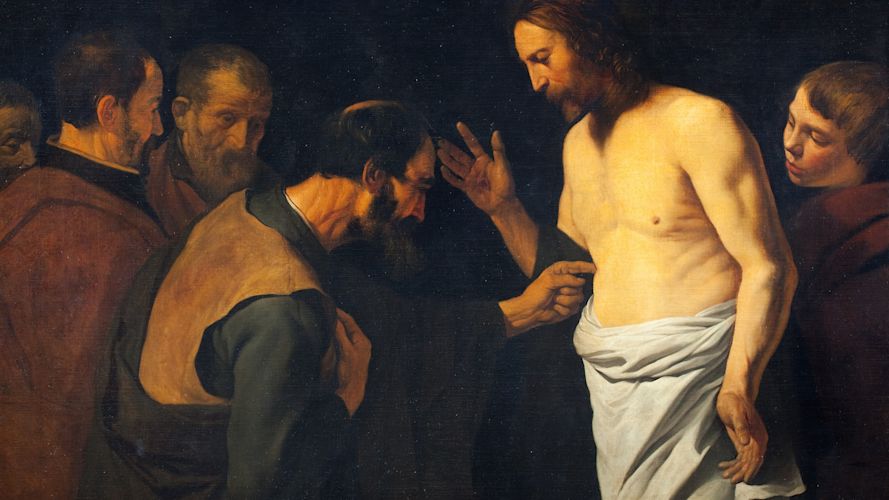
Forgiveness and the Remission of Sins
Stanley Hauerwas: Virtue Ethicist & Postliberal Theologian
Who is Jürgen Moltmann and What Did He Believe?

Jerry Bridges and The Navigators: A Protestant Order