
What does Jehovah Tsidkenu mean?
The short answer
A name of God in the Book of Jeremiah is Jehovah Tsidkenu, which translates as "The Lord our righteousness". But the meaning is much deeper than this flat translation, as Jesus Christ eventually fulfilled this prophesy in Jeremiah. As such, Jehovah Tsidkenu refers to Jesus Christ, and thus Christ is our righteousness.
Because the Bible is long, complex, and technical, it’s easy for people to take this or that part out of the Bible and get absorbed in endless details that seem dramatic and engaging but which may entirely miss the point of the point of that passage.
One easy way to do this is with names for God. God has all sorts of names and titles in the Bible, especially when you take into account different words in Hebrew and all of their translations into Greek, Latin, and other languages across the centuries. One important name is “Jehovah Tsidkenu”, which a quick internet search will tell you means something like, “The Lord is our righteousness”. But is that a good translation? And what is the context?
Jehovah Tsidkenu meaning
While “Tsidkenu” is a word that can be simply translated as “righteousness”, it’s important to be clear about what “Jehovah” means. Certainly it’s a name for God, but it’s specifically a Latinization of the Hebrew word Yahweh – a word that has massive theological significance.
Originally this word was written as four characters in Hebrew: יהוה. Because ancient Hebrew was written without vowels, the way you write the name in English is YHWH. However, the name wasn’t pronounced by the ancient Israelites for fear of violating the third commandment, “thou shalt not take the Lord’s name in vain”. So instead of taking the risk of using the name in a context where it would be “taken in vain”, the ancient Israelites simply stopped using the name at all – just to be safe.
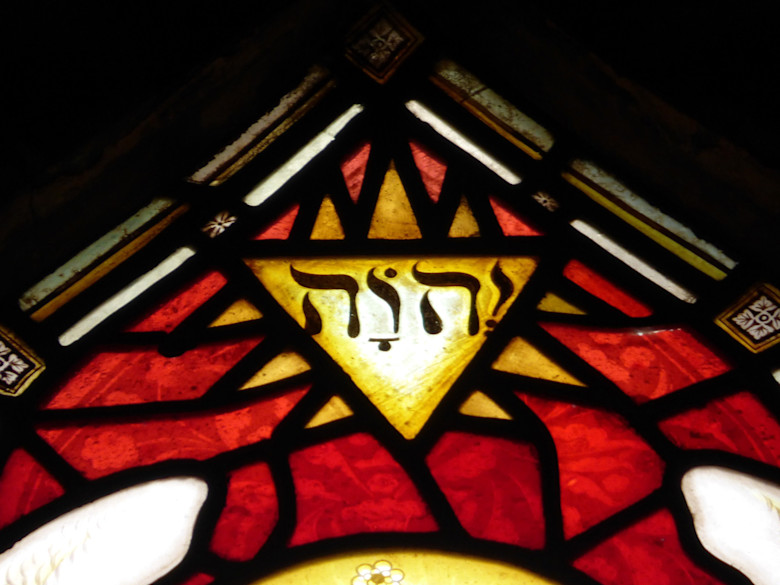
The name for God (YHWH in Hebrew letters, read from right to left) in stained glass. (source)
But in Christianity this understanding changed, and people started speaking the word again. ”Yehovah” is one of the ways you might pronounce the word if you were a Latin speaker, and over time the Y eventually became a J – which is why English speakers sometimes say it as “Jehovah”.
But what does the name mean? The name Yahweh was the name that God told Moses in the famous “Burning Bush” passage in Exodus. In this story, Moses encountered the voice of God speaking out of a flaming bush that burned but was not consumed. God told Moses to lead the Israelites out of Egyptian captivity, and Moses responded with a simple question that prompted a powerful answer:
“Moses said to God, “Suppose I go to the Israelites and say to them, ‘The God of your fathers has sent me to you,’ and they ask me, ‘What is his name?’ Then what shall I tell them?”
“God said to Moses, “I AM WHO I AM. This is what you are to say to the Israelites: ‘I AM has sent me to you’
(Exodus 3:13-14).
“I am who I am” or simply “I am” is how “Yahweh” is often translated into English. But what’s the significance? It wasn’t that he was telling Moses something that was true about himself. Anyone can say the sentence “I am” about him or herself and it would be true. What’s significant about this passage is that God was saying his name. God’s name is “I am” – what this means is that to exist is God’s nature. Existing is what he does.
What does that really mean? What you have to understand is that when Christians use the word “God” we aren’t talking about some particular entity or creature that’s in the universe, the way we would talk about Zeus or Thor. Zeus and Thor are specific entities that have their own, very human-like traits: they get tired, jealous, angry, and so on. And – in Norse mythology, for example – the gods can die. The point being, even though we call them “gods”, what we really mean are something more like “superhumans”. They might have all sorts of powers, but ultimately they have limitations – just like us.

Thor, of Nordic mythology, had the ability to die. 19th century painting. (source)
But when the Bible talks about God, what it’s talking about is something more like “existence itself”. God, on this understanding, is not really any thing that exists, he is the source of all existence and life, which means he is higher and beyond any merely existing thing.
Think about it like this: you are alive. So are trees and grasshoppers and cats. All of those things have life. But the Christian understanding of God is that he is life, he is “life itself”. This is what Jesus was talking about (partly) when he said that he is “the way, the truth, and the life” (John 14:6). Unlike religions that believe in a “life force” (or even the idea of “the Force” that you see in the Star Wars movies), Christians believe that “life itself” or “existence itself” was not just an impersonal force but is also a person – the person of Jesus Christ.
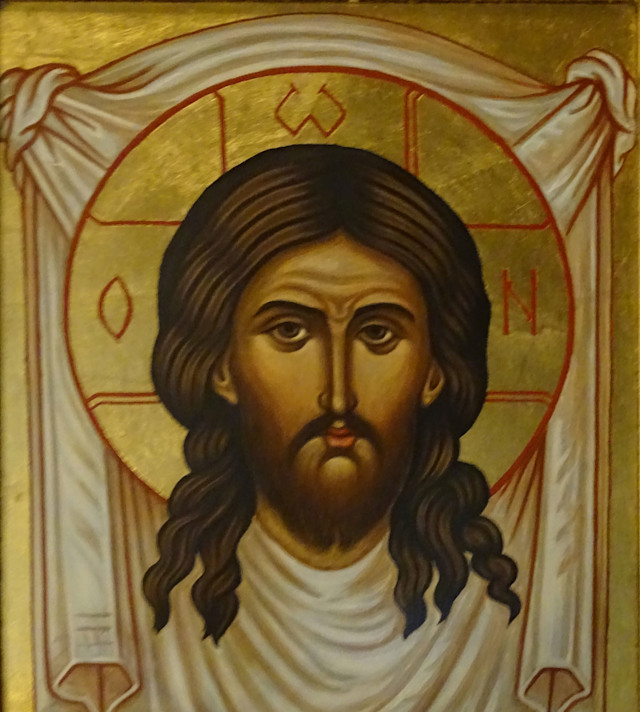
The letters O W N around Christ's head is translated as "He who is" as seen in this orthodox icon. (source)
So it’s not just that it means “the Lord is our righteousness” or “God is our righteousness”, it also has this very particular sense of God as “the existing one” or “the one who is the source of all being”. It’s that which is also our righteousness!
The historical context of Jehovah Tsidkenu
But, of course, you can’t only look at the words, you also want to look at the historical and Biblical context. There are only two uses of this word in the Bible, both in the prophecies of Jeremiah:
“‘Behold, the days are coming,’ says the Lord, ‘that I will raise to David a Branch of righteousness; a king shall reign and prosper, and execute judgment and righteousness in the earth. In His days Judah will be saved, and Israel will dwell safely; now this is His name by which He will be called: THE LORD OUR RIGHTEOUSNESS’”
Jeremiah 23:5-6
Jeremiah was a prophet during a difficult time in Israel’s existence. He witnessed the fall of Jerusalem to the Babylonian empire and the destruction of the glorious . This was the period known as the “Babylonian captivity”, when man Israelites were exiled into Babylon. Jeremiah was prophesying that there would be a restoration of Jerusalem through the reign of a righteous king.
The second appearance of the phrase Jehovah Tsidkenu appears ten chapters later. Jeremiah again makes a reference to the restoration of Israel:
“‘In those days and at that time I will cause to grow up to David a Branch of righteousness; He shall execute judgment and righteousness in the earth. In those days Judah shall be saved, and Jerusalem will dwell safely. And this is the name by which she will be called: THE LORD OUR RIGHTEOUSNESS’”
Jeremiah 33:15-16
It might be tempting to get thrown off by the use of “she” in this passage, but it’s not a reference to a woman savior – or anything like that. The “she” refers to Jerusalem.
Jesus is the fulfillment of the prophecies
Jeremiah’s prophecies, like all the prophets of the Old Testament, ultimately end up referring to Jesus. This is the major source of the split between the religion that developed into Rabbinic Judaism in the second century A.D. and the historic Christian Church: the identity of Jesus.
The Jews at the time were looking for an earthly Messiah, some sort of a king to save them from Roman oppression. Israel had been through a variety of such tribulations: they had been enslaved to the Egyptians, conquered by the Babylonians, governed first by the Persians and then by the Greeks, and finally conquered by the Romans. By the time of Christ, there were many movements pushing for an overthrow of their latest oppressors, and they looked towards the messiah as prophesied in their scriptures to come and deliver them from their worldly oppressors.

Christ setting free the captives of death, 15th century painting
This is where Jesus was a disappointment to many of the Jewish leaders. Instead of leading them in a political revolution, he repeatedly explained that his kingdom was “not of this world”, and that the real enemy he came to deliver them from was death and their slavery to the devil. In other words, he was not aimed merely at their freedom from Roman rule, but at the freedom of all human beings from the tyranny of death and sin. In the freedom that Christ brings we can become truly righteous, what the early church and ancient Israelites called holiness. But it is Jesus, “the existing one”, the one who is the source of all life and being, who makes this possible. That is why he is our righteousness and why Jeremiah calls him “Jehovah Tsidkenu”.
Subscribe
Life-giving writing by Christian scholars sent to your inbox once per month

Dr. Zachary Porcu has a PhD in church history from the Catholic University of America in Washington DC, with additional degrees in philosophy, humanities, and Classics (Greek and Latin). He is an Eastern Orthodox Christian.
Keep reading
What is the sin of envy in the Seven Deadly Sins?


Are there aliens in the Bible?
The Sigil of Baphomet and the Satanic Pentagram

Pastor vs. Priest: What are the differences?
Healing is the children's bread?
