What is algum wood in the Bible?
Algum is a type of wood that’s referenced in the Old Testament. It was one of the main types of wood used by Solomon in the construction of Solomon’s Temple. Almug and algum are both variants of the same word, originally written in Hebrew as אַלְמֻגִּים and אַלְגּוּמִּים, respectively, and written in Latin as almuggīm and algūmmīm. The variation in the words is slight, and probably just a spelling difference, which was much more common in a world with regional pronunciation differences and without standardized spelling.
Algum: what kind of wood was it?
It’s often hard to identify specific plants or animals in ancient texts like the Bible because species names weren’t standardized across cultures, or across human history in general. Only in very recent times, and only among a small group of specialists, are exact names used for plant and animal species. Most people today, as throughout history, have all sorts of different names for plants and animals.
A good modern example is “June bug.” When you read this phrase, you probably have a specific image come into your mind. You may even think that this is a very precise name for one specific creature. However, it is a general name used by people across the world to refer to hundreds of different species of beetles! By “June bug” some people mean a small, reddish-brown beetle; some people mean a larger green beetle; and others might mean anything else.
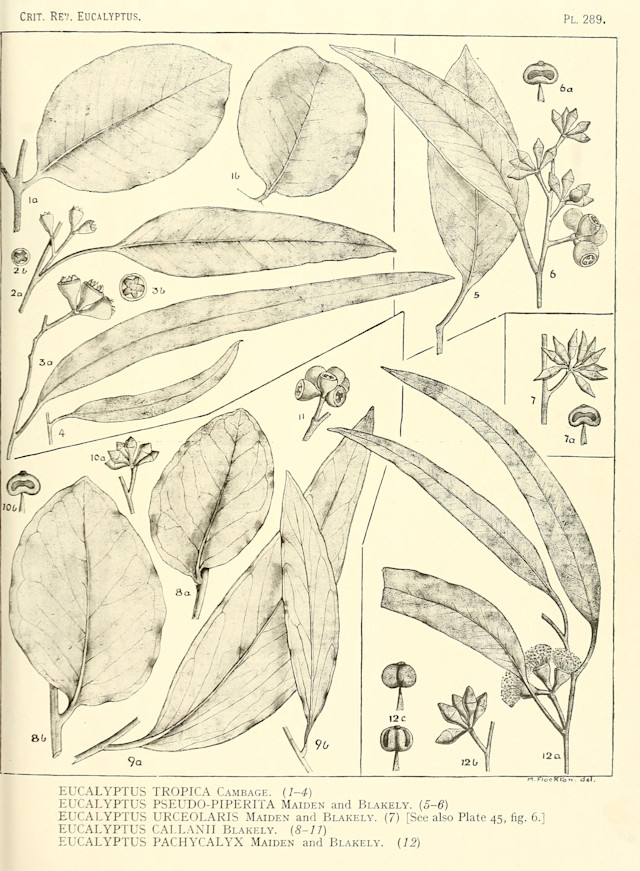
Joseph Henry Maiden - A Critical Revision of the Genus Eucalyptus - 1903
A good example is the famous story of Jonah and the whale. It’s common for people think of the big sea creature in the story as a whale, and it’s also common for others to correct them by saying that the Bible uses the word “fish” instead of “whale.” If it was a fish, you might be tempted to conclude that a large non-mammal creature swallowed Jonah. But the reality is that both “whale” and “fish” are modern English translations of an ancient Hebrew or Greek word that may or may not have referred to a whale. Since ancient peoples didn’t have the same kind of classifications for animals that we have now, it’s a mistake to think that their words meant the same thing ours do.
To add more confusion to the problem, the Greek word for “great fish” influenced how we talk about whales today. The most prominent version of the Bible used in the ancient world, the one Jesus and the apostles quote from in the New Testament, was the Septuagint. The Septuagint was a Greek translation of the Old Testament made by Israelites living in a predominantly Greek-speaking world. It was considered the authoritative translation by the early Christian church, which is why you see the New Testament authors quoted from it.
What does the Septuagint have to do with whales? The Greek phrase used in the Book of Jonah is κήτει μεγάλῳ (ketos megalos), which means “great fish.” But it turns out that ketos eventually became synonymous with the word “whale,” so much so that the study of whales became known as cetology (from ketos + ology). So what did the author of the book of Jonah really mean? It’s hard to say, because the words we use now for things like whales were influenced by the ancient Greek word for “fish.” So it’s a mistake to take ketos as a technical term; it was a general term for a large sea-dwelling creature.
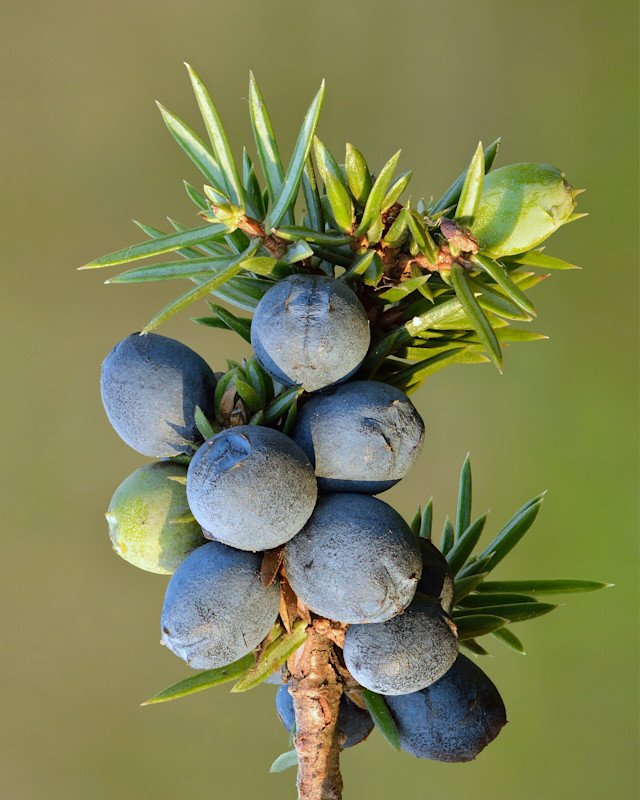
The fruit of the common Juniper plant.
Another theory is that algum was red sandalwood. The reason for this theory has to do with the identity of Ophir, the city from which Solomon imported the wood. From archeological evidence, we know that Ophir was a real city, but scholars are still uncertain as to its exact location. Some have speculated that it was a city in India, or possibly Sri Lanka, which would make it more likely that the wood was red sandalwood.
Algum and Solomon’s temple
Reading the account of Solomon’s temple is an interesting reminder to modern readers about things we don’t always think about. In our world of globalization, it’s easy to forget that ancient people couldn’t just walk into Home Depot and buy whatever kind of wood they wanted, conveniently cut down to the exact dimensions they needed. It wasn’t until the last hundred years or so that such convenience was possible. In the ancient world, people were limited to the things that were available in their own region: the wood you had access to depended on the types of trees that were growing in your region, just as much as your diet depended on the types of plants that grew in your area or the animals that lived there.
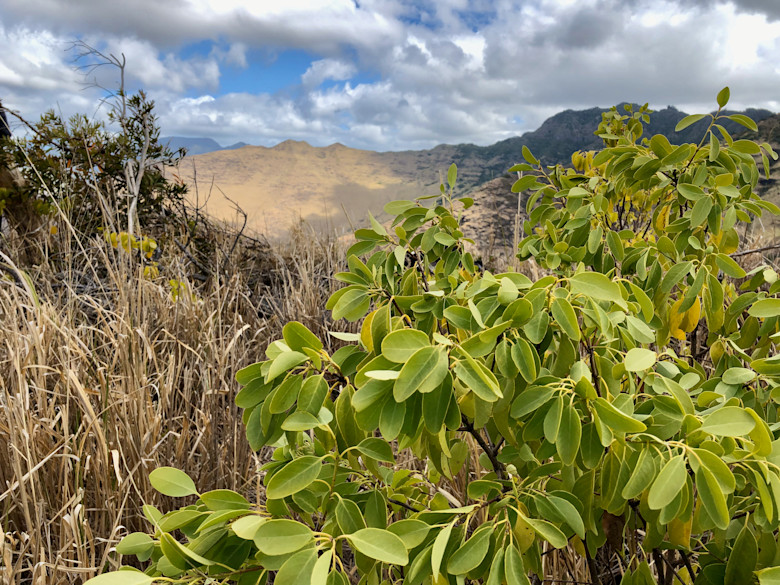
A coastal sandalwood tree in the Nanakuli Forest Reserve of Hawaii.
Absolute advantage offers context for why Solomon gave several small cities to the king of Ophir in exchange for the amount of wood and gold that the latter donated. Trees of a particular variety which only grew in a limited region could have been exceedingly valuable, especially without the aid of large-scale tree farming. Not the mention the time and energy it would take to transport that much of wood to a distant country.
The next time you go to a lumber store—or even to the spice section of a grocery store—take a minute to appreciate the fact that in the ancient world, this kind of selection would only have been available to the very richest people, would have taken months of travel to obtain, and would have been exceedingly expensive. While we don't know exactly what algum wood was, we know that it was precious to Solomon.
Subscribe
Life-giving writing by Christian scholars sent to your inbox once per month

Zachary Porcu has a PhD in church history from the Catholic University of America in Washington DC, with additional degrees in philosophy, humanities, and Classics (Greek and Latin). He is an Eastern Orthodox Christian.
Keep reading
Hineni in Hebrew: “Here I am” from God and Man

Who was Jotham, king of Judah?
What are the prophetic books of the Bible?
Who is Esaias in the Bible? Answered by a Christian Scholar

Peor: The Mountain and God of the Moabites