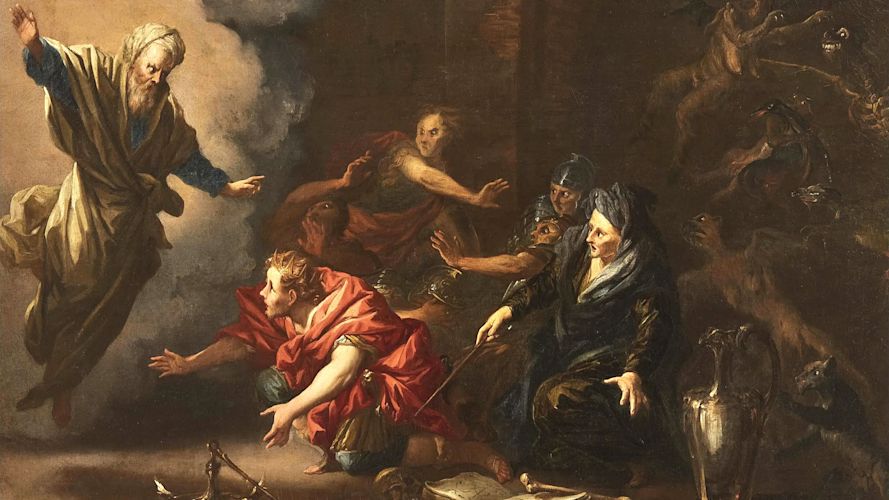
Prophetic parents: Who was Amoz father of Isaiah?
The short answer
Amoz is a mysterious figure who is barely mentioned in the Bible. When he is mentioned, it is always as the father of his son, the Prophet Isaiah. Amoz's name literally means "strong" in Hebrew, so the tremendous success of his son Isaiah may be the result of his strong fatherly influence.
Amoz is one of those Biblical figures connected to prominent people in the Bible, but whom we know very little about. He is explicitly mentioned only thirteen times, all in reference to Isaiah: “Isaiah, Son of Amoz.” We only know one other thing, which is that in Hebrew, the name “Amoz” (אָמוֹץ) means “strong.” Some traditions in Talmudic Judaism hold that Amoz was the “man of God” mentioned in Chronicles 25:7-9, but there isn’t a consensus about that in Christianity. What’s most important about Amoz, from the Biblical literature, is that he was the father of Isaiah, who was considered one of the greatest prophets of all time.
The Prophet Isaiah, son of Amoz
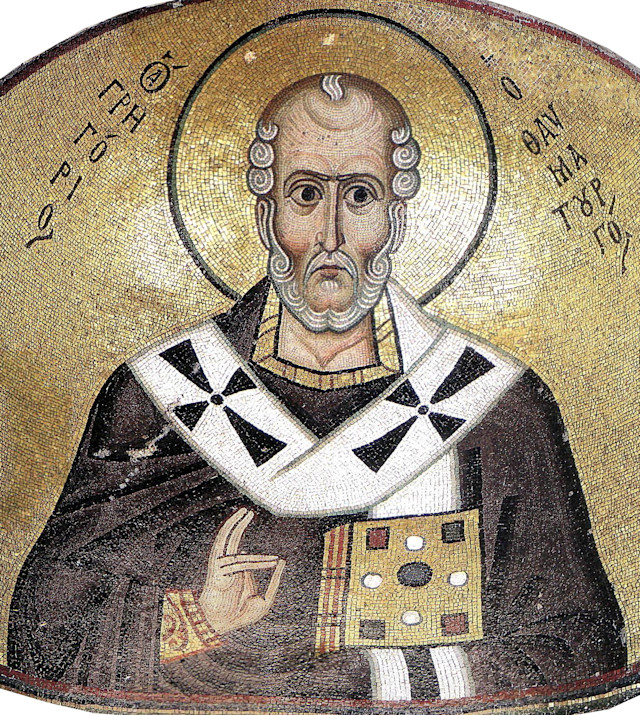
An 11th century mosaic of Gregory of Nyssa from the Hosios Loukas Monastery.
And, indeed, many of the most important parallels between the old and new testaments are found in Isaiah. The virgin birth of Christ is linked to Isaiah 7:14, “Therefore the Lord himself shall give you a sign; Behold, the young woman shall conceive, and bear a son, and shall call his name Immanuel.” Isaiah also speaks of the atonement of Christ when he writes, “But he was wounded for our transgressions, he was bruised for our iniquities: the chastisement of our peace was upon him, and with his stripes we are healed” (53:5). In the New Testament, St. Peter refers to the Jews who reject Christ (1 Peter 2:8), referencing the language from Isaiah 8:14 about Christ being a stumbling block to Israel. These examples are just a few selections from a very long list of messianic prophecies.

Yevgeny Vuchetich - Let Us Beat Swords Into Plowshares - 1959
Reading the Book of Isaiah
Of course, not everyone reads Isaiah as a prophecy for the coming of Jesus. The main opponents of this reading are Orthodox Jews, who follow the Pharisee-initiated tradition of Rabbinic Judaism. If you look up interpretations of Isaiah, the most common you’ll find are arguably Christian readings, but the other interpretation you might find are Rabbinic Jews trying to demonstrate that Isaiah does not reference Jesus, including some authors who are quite emphatic about it.
The main kinds of arguments they make have to do with the language in scripture. This argument is complicated by the fact that the standard version of the Old Testament used at the time of Jesus and his apostles was a Greek translation of the Hebrew scriptures. A lot of these arguments are very technical and could be overwhelming to a lay reader, who may feel the need to learn Greek and Hebrew in order to have an opinion about them. Fortunately, these kinds of arguments somewhat miss the point. The real issue about interpreting prophecy—or any passage of the Bible—comes down to one important question: what is your standard for interpretation?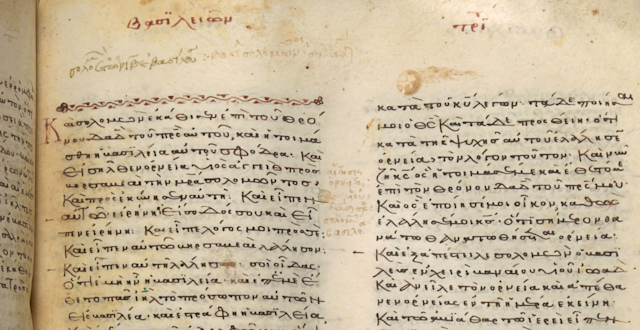
A 12th century manuscript of the Septuagint, the earliest extant translation of the Tanakh.
Another way of saying this is that—contrary to popular belief—evidence can’t really stand on its own; it always has to be interpreted. So whether a particular passage in the Old Testament is a prophecy about Christ is something that depends on the lens you use to interpret that passage.
I am the truth.
It’s important to remember that the first Christians were also Jews. They knew the prophecies of Isaiah and the Hebrew scriptures inside and out. Then they encountered this man Jesus, and their personal encounter with him led them to read the Old Testament in a particular way. It was on that basis that they wrote their gospel accounts, which feature regular references to passages in Isaiah because they saw these passages as referring to Jesus.
Yet the gospel accounts show us that even these men who very much loved and believed in Jesus were slow to understand how the prophecies applied to Christ. In the famous passage from Luke about the Road to Emmaus, Jesus appears to the disciples after his resurrection and they don’t even recognize him—even though they knew him personally and intimately—because their hearts weren’t ready to understand what had happened. This story shows how even something that seems to be quite obvious (such as your best friend appearing right in front of you) is something that we can be blind to, not because we’re stupid but because our spirits can be darkened. In other words, insight and knowledge have as much a spiritual component to them as an intellectual or physical component.
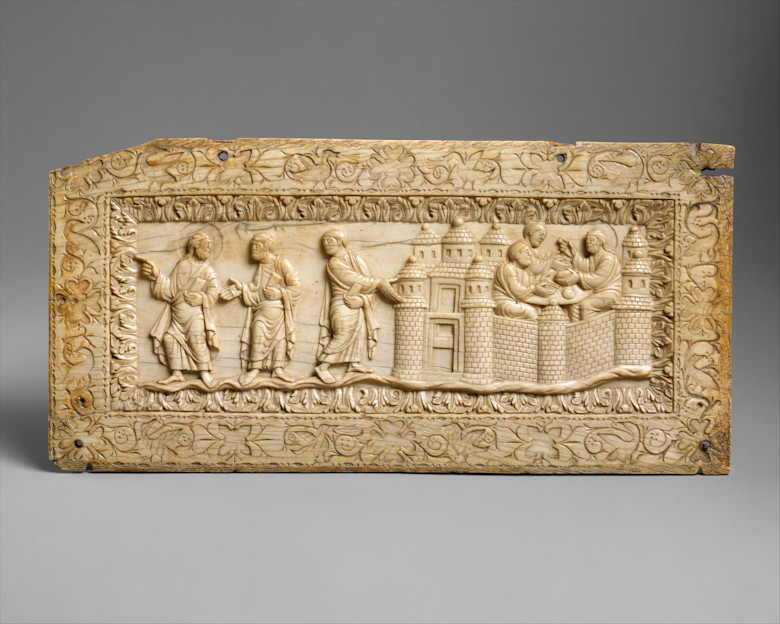
An ivory plaque depicting the Road to Emmaus and the Supper at Emmaus - circa 850
An important part of the Emmaus episode is that Jesus interprets the scriptures for his disciples. Indeed, Jesus tells them, “how foolish you are and how slow to believe all that the prophets have spoken!” (Luke 24:25). It’s no irony that it takes Christ himself personally interpreting the scriptures for the disciples to be able to understand the Hebrew scriptures correctly. This idea is basic to the entire Christian understanding of truth. For Christians, it isn’t that Jesus’ teachings are the correct teachings, as with the claims of many other religious teachers. The claim is that Jesus is the truth itself. “I am the way, the truth, and the life”, as he explains it (John 14:6). For Christians, truth is not a disembodied piece of data, truth is a person, which is why in order to know truth, you have to have a personal relationship with truth himself.
However, one important and often overlooked element in this personal relationship is that you are also a participant in such a relationship. This means you have to be able to have a relationship to the truth insofar as you’re ready for it. If you hate someone, for example, it’s going to be hard for you to understand that person truly because everything you might learn about him or her is going to be colored by your disdain and hatred. Or if there’s something that you don’t want to be true, you will be more resistant to accepting that it is true. People who are in pain generally have these symptoms: suffering actually changes your approach to truth, how open you are to certain truths, and your ability to see the world as it really is, rather than as you want it to be.
Purification through fire
Fittingly, the book of Isaiah gives us a clear picture of this idea. Isaiah records that his prophecy began with a powerful vision of God: “In the year that King Uzziah died, I saw the Lord, high and exalted, seated on a throne; and the train of his robe filled the temple. Above him were seraphim, each with six wings: With two wings they covered their faces, with two they covered their feet, and with two they were flying. And they were calling to one another: ‘Holy, holy, holy is the Lord Almighty; the whole earth is full of his glory’. At the sound of their voices the doorposts and thresholds shook and the temple was filled with smoke” (Isaiah 6:1-4). But what is Isaiah’s reaction to this? He sees himself as unprepared to receive truth—not because he’s intellectually inferior, but because he’s spiritually deficient. He replies, “’Woe to me!’ I cried. ‘I am ruined! For I am a man of unclean lips, and I live among a people of unclean lips, and my eyes have seen the King, the Lord Almighty’” (6:5).
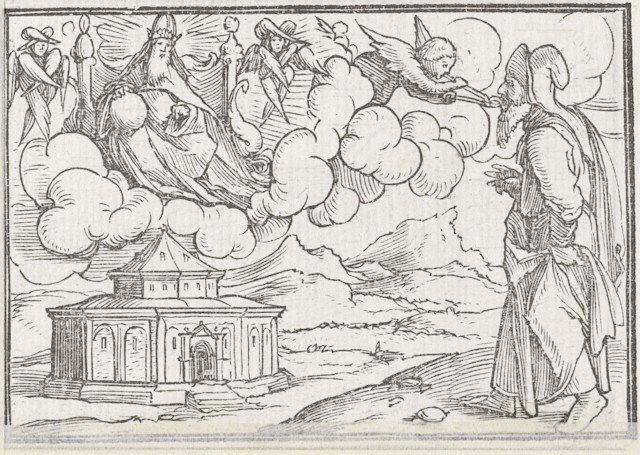
A 1538 woodcut by Veit Rudolf Specklin of the prophet Isaiah's lips being purified with a coal.
The full story of Amoz is probably lost to history. That said, Amoz gave the world a powerful gift in the form of his son, the prophet Isaiah.
Subscribe
Life-giving writing by Christian scholars sent to your inbox once per month

Zachary Porcu has a PhD in church history from the Catholic University of America in Washington DC, with additional degrees in philosophy, humanities, and Classics (Greek and Latin). He is an Eastern Orthodox Christian.
Keep reading
Hineni in Hebrew: “Here I am” from God and Man

Who was Jotham, king of Judah?
What are the prophetic books of the Bible?
Who is Esaias in the Bible? Answered by a Christian Scholar

Peor: The Mountain and God of the Moabites