What is the sin of envy in the Seven Deadly Sins?
The short answer
Envy is one of the major sins in Christianity. It is mostly about wanting what other people have, and while it’s often seen as discontentment, envy is more often about resentment.
Some people think that envy as a sin is a silly idea. If you take envy to be seeing something you want and becoming motivated to get it, then envy is, in a certain sense, the entire basis for our economic framework in the modern West. There’s a lot to be said for the value of positive motivation towards a goal, and rejecting this type of motivation would indeed be silly.
What is the mortal sin of envy?
The deeper, more nefarious issue with envy is that it’s usually founded upon resentment.

Cain slays Abel in this 1866 engraving by Gustave Dore
The impulse to hate and destroy that which you don’t have is the essence of the dark resentment that hides at the base of envy. It comes up all the time in worldly issues, especially politics. It’s very common today to see movements and groups who claim to be disadvantaged in one way or another, but their requests for accommodation contain (and sometimes only barely disguise) the desire to destroy and tear down those things or groups that they view as responsible.
We must be very careful about how we look at our relationship to others. Being inspired to be better by someone else is of course a good thing; but ingratitude towards the good things in your life—let alone any amount of hatred, resentment, or desire for someone else to fail—is where this sort of thinking becomes sinful and self-destructive.
The Seven Deadly Sins and their meanings
Envy is listed as one of the Seven Deadly Sins, a popular list in Western Christianity since the Medieval era. What most people don’t know about the Seven Deadly Sins is that this list is only the most recent version of a list that has been reshaped several times over the centuries. One interesting detail about this tradition is that envy isn’t one of the original “deadly” sins. Analyzing why gives us a better sense of what Envy really is, deep down.
The idea of keeping a distinctive list of sins goes all the way back to the early Christian Evagrius Ponticus in the fourth century. He composed a short explanation of sins in his work On the Eight Vices, in which he categorized the major vices according to whether they were of the body, the heart (or emotions), or the mind. He listed Gluttony, Lust, and Avarice (or “greed”) as the three sins pertaining to the body; Dejection (or “sadness”), anger, and despondency (or ”listlessness”) for the emotions, and vainglory and pride for the mind.
Over time, however, this list of eight vices would become modified and condensed into the form in which we recognize it today. In the sixth century, Pope Gregory I revised the list: he combined dejection and despondency into sloth (or “laziness”); he combined vainglory and pride into just pride; and he added envy, bringing the total down to seven.

16th century painting of the Seven Deady Sins (in the middle) and the Four Last Things (in the corners)
In the late Medieval period, Thomas Aquinas would base his own list of sins on Pope Gregory’s, which solidified them in Catholic tradition. They would be taken up by Lutheranism in the centuries to follow, and by that point this particular list of sins became the standard in the Western imagination.
Different lists of the Seven Deadly Sins
If you search around for different lists of sins, you’ll find many different variations. Which is the most authoritative list? It’s hard to pinpoint it exactly, as it depends on who you read. Part of the problem is that people use different words to describe the different sins, such as “avarice” for “greed”, “excess” for “lust”, and “listlessness” for “sloth”. It’s important to keep in mind that these variations are mostly due to translation. The original list of vices was written in Greek, and some changes happened when they were translated into Latin, and then finally into English. Not all of them translate exactly into another language, and this difficulty has produced some of the changes in these lists over time.
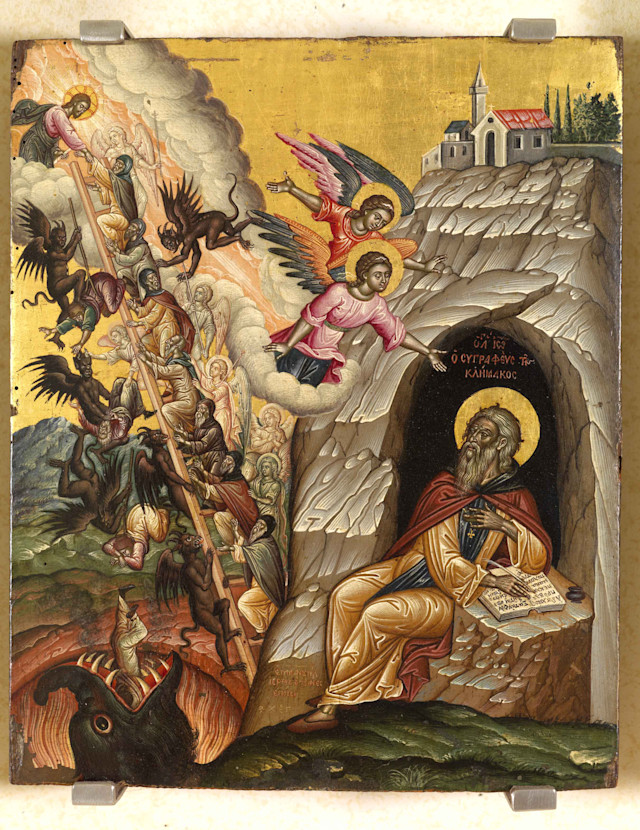
Emmanuel Tzanes - The Ladder of Divine Ascent - An icon of St. John Climacus - 1663
But what actually is sin?
However, while a “definitive” list of the major sins is helpful, in practice it is more important to know how to think about sin in general. Part of why the idea of “sin” is a sore spot in the modern West is that many people feel judged by the idea of sins, and they feel condemned and therefore defensive about this topic. I believe that’s the wrong way to think about sins. The problem is that Western tradition since the Medieval era conceived of sin primarily in terms of a punishment, and so part of the purpose of categorizing sins was to discern exactly how guilty you were for committing different sins (as in the distinction between “mortal” sins and “venial” sins). No wonder modern Western people are so anxious about this topic!
Early Christians understood sin, not as a crime, but as a disease.
As the early Christians understood it, sin is a disease that leads to death. The goal of religious life was to overcome sin, grow healthy, and ultimately be cured of death by participation in Christ’ .
Subscribe
Life-giving writing by Christian scholars sent to your inbox once per month

Dr. Zachary Porcu has a PhD in church history from the Catholic University of America in Washington DC, with additional degrees in philosophy, humanities, and Classics (Greek and Latin). He is an Eastern Orthodox Christian.
Keep reading

Are there aliens in the Bible?


The Sigil of Baphomet and the Satanic Pentagram

Pastor vs. Priest: What are the differences?

Healing is the children's bread?

Where is Amenadiel in the Bible?