Barachiel and Baraqiel: Angels named outside Scripture
The short answer:
Baraqiel (spelled with a “q”) is one of the fallen, rebel angels listed in the Book of Enoch. Barachiel (spelled with a “ch”) is one of the seven holy archangels from the Book of Enoch. Neither is mentioned in the canon of scripture, and while saints and iconography in Catholic and Orthodox traditions acknowledge different archangels, they don’t put a lot of emphasis on them.
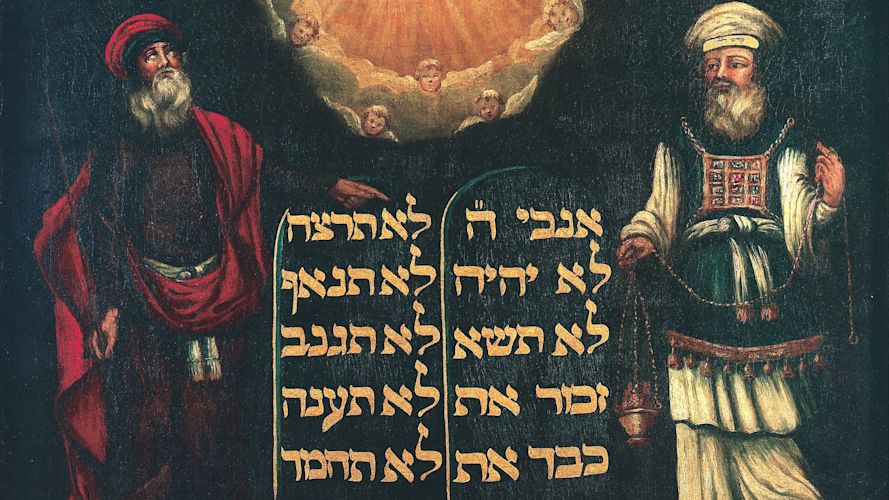
Investigating angel lore is a tricky subject. There are a lot of false leads and made-up information, as well as careful distinctions that need to be considered. One issue is that angel names tend to derive from Hebrew, and there is no standard spelling when they’re translated into English. There are often small name variations that all refer to the same creature. However, for the angel known as Barachiel, spelling differences indicate a crucial distinction. “Baraqiel” and “Barachiel” are two names that look like spelling variations but in fact refer to two different entities. Baraqiel (spelled in Hebrew as בַּרַכְאֵל) and Barachiel (spelled as ברקאל) have a one-letter difference in the original Hebrew/Aramaic script, and are likewise very close when spelled with Roman letters (“q” vs. “ch”). Which is which?
Is Barachiel in the Bible?
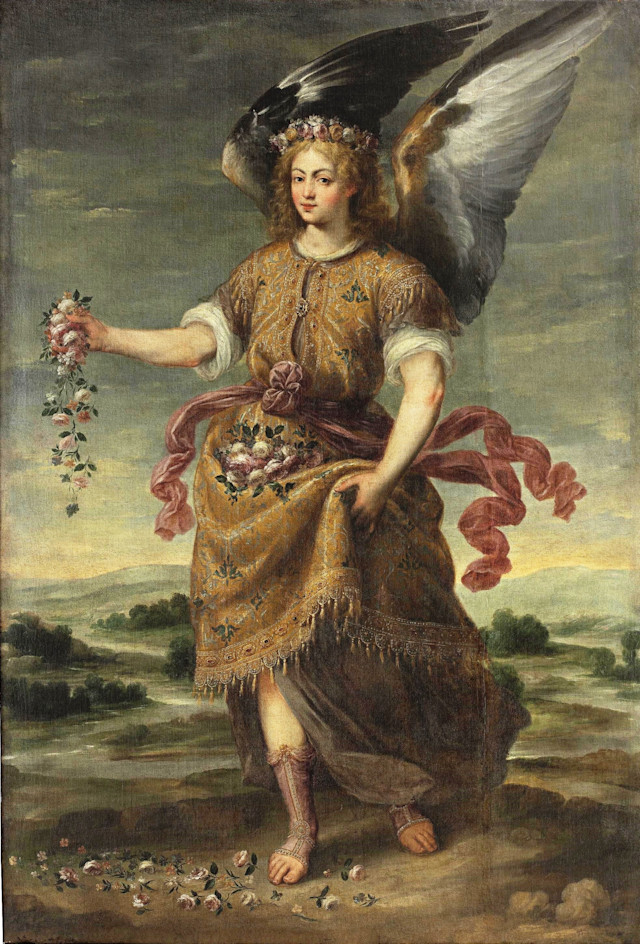
Bartolomé Román - The Archangel Barachiel Scattering Flowers - early 1600s
Barachiel, on the other hand, seems to be the name of one of the “good” or unfallen angels and has been acknowledged over the centuries across both Catholic and Orthodox tradition.
Neither the good angel Barachiel nor the fallen angel Baraqiel are mentioned in the Bible. The only angels mentioned by name in the Bible are the holy archangels Michael, Gabriel, Raphael, and Uriel—though other angels have been acknowledged by Christians over the centuries. Christian groups who use the shorter canon of scripture probably won’t recognize Raphael and Uriel because they only appear in the traditional canon of Christian scripture, which is the Greek translation used by the early Church.
Who are the twelve archangels?
The idea that there are twelve archangels instead of seven is a Kabbalah idea, not a Christian one. Kabbalah is what you might call an occult form of Jewish mysticism, a non-Christian (and even anti-Christian) offshoot of Rabbinic Judaism.
Christian groups, on the other hand, tend to acknowledge seven archangels, but they haven’t always agreed on which angels are included in the list.
Jacob Matham - Jupiter, from "The Planets" - circa 1597
Who are the seven archangels? The early Christians took the names of the first four from scripture: Michael, Gabriel, Raphael, and Uriel. The other three appear in lists by some of the most influential church fathers, such as St. Dionysius the Areopagite and St. Gregory the Theologian, and across various traditional sources in Eastern Orthodoxy, Oriental Orthodoxy, and Catholicism.
The Book of Enoch lists Raguel, Saraqael, and Remiel, along with Michael, Gabriel, Raphael, and Uriel, in a list of “the names of the holy angels who watch mankind” (1 Enoch 7:1). Catholicism generally affirms these names, which you can see in the Catholic Encyclopedia, and lists Izidkiel, Hanael, and Kepharel as variants of Raguel, Sariel, and Jerahmeel. Eastern Orthodoxy gives the names Barachiel, Salathiel, and Jehudiel (or Jegudiel or Gudiel) for the other three.
Interestingly, Barachiel is depicted in certain Eastern Orthodox icons along with the other archangels:
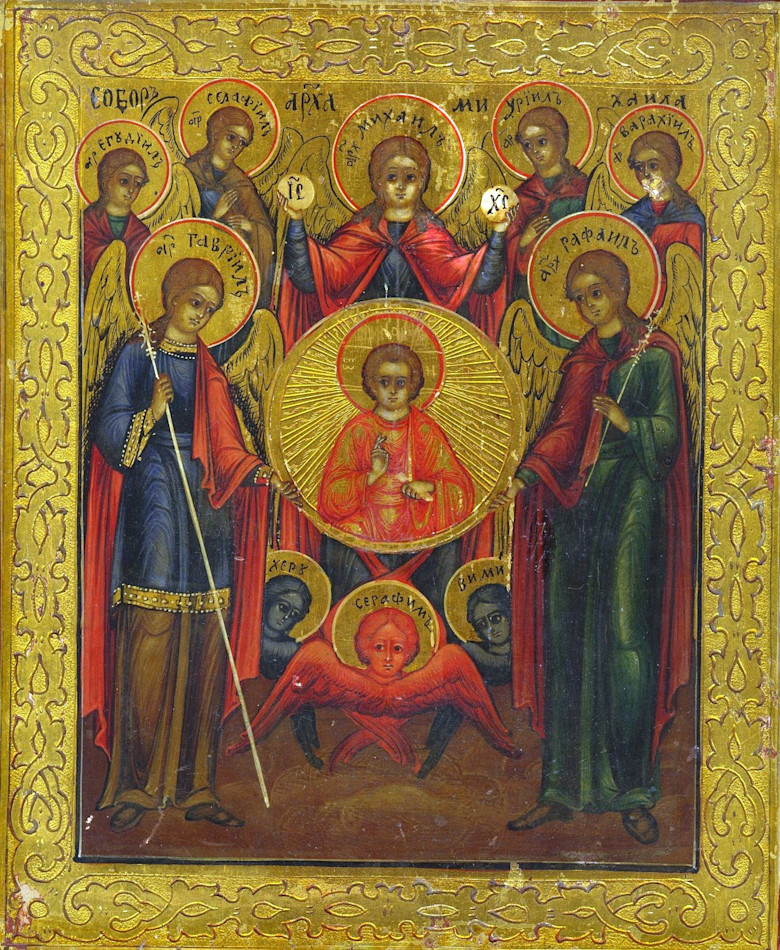
An icon of the seven archangels.
You can see Barachiel in the upper-right corner with a name in his halo that looks like it starts with “bapax.” Where does authoritative knowledge of Barachiel come from? Barachiel is mentioned in the Lives of the Saints by St. Demetrius Rostov, a Russian saint who published a lengthy, multi-volume work that chronicled the lives of the saints. As a miracle-working saint who had a variety of heavenly visions, he had the divine insight to know things about the archangels.
Similarly, the Catholic saint Amadeus of Portugal had an ecstatic vision and conversation with the archangel Gabriel in which he prayed to archangels he referred to as Jegudiel, Gabriel, Selaphiel, Michael, Uriel, Raphael, and Barachiel.
How should we interact with angelic beings?
While angelic names and powers are certainly interesting, it’s important to stay within the bounds of what can be demonstrated by holy tradition—such as the Bible, the teachings of the early church, and the writings of the saints. It’s easy to get caught up in internet speculation about these creatures. There are many New-Age and esoteric websites that will tell you all sorts of things about various angelic powers, but where they get this information isn’t clear—which is a reason to be wary.
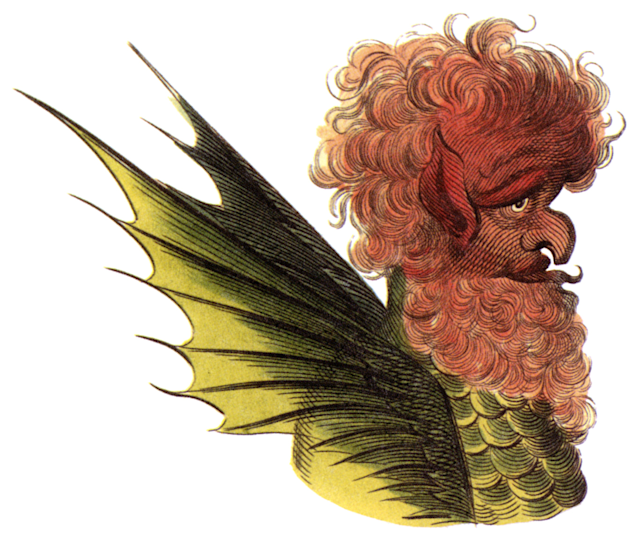
Apollyon, a fallen angel from "The Magus" by Francis Barrett, 1801.
As a result, though both the Roman Catholic and Eastern Orthodox churches believe that there are seven archangels with particular names, they have advocated for a certain amount of caution with these matters.
According to the Catholic Directory on Popular Piety and the Liturgy, “the practice of assigning names to the Holy Angels should be discouraged, except in the case of Gabriel, Raphael and Michael whose names are contained in Holy Scripture.”
Orthodox Christians celebrate the “Synaxis of Archangel Michael and the Bodliless powers” in November, and gives them names in iconography, but beyond that the Eastern Orthodox only really have practices, feasts, and prayers associated with those angelic beings that are named in the Bible.
Subscribe
Life-giving writing by Christian scholars sent to your inbox once per month

Zachary Porcu has a PhD in church history from the Catholic University of America in Washington DC, with additional degrees in philosophy, humanities, and Classics (Greek and Latin). He is an Eastern Orthodox Christian.
Keep reading

Why stay away from the Book of Enoch
Forgiveness and the Remission of Sins
Stanley Hauerwas: Virtue Ethicist & Postliberal Theologian
Who is Jürgen Moltmann and What Did He Believe?
Jerry Bridges and The Navigators: A Protestant Order