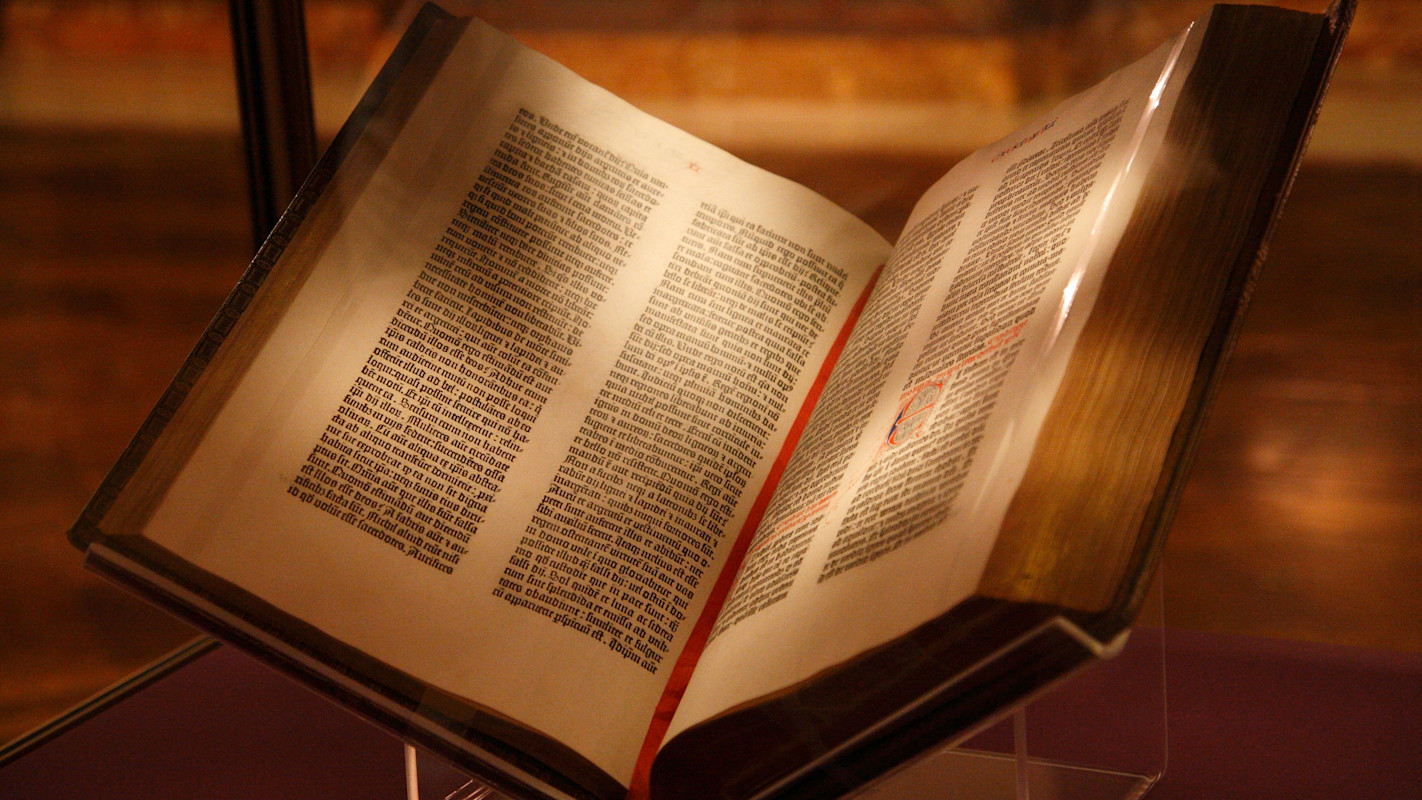
The Best Order to Read the Bible for the First Time?
The short answer
While there are many schools of thought, the best order to read the Bible for someone new to it is to start with Genesis, then read the Gospels, then Exodus, then Acts, and then the letters of John.
The Bible is not a single book. It’s a collection of books by many different authors across thousands of years. Where to begin reading, therefore, depends on your goals. If you’re a new reader of the Bible, I would suggest a reading in this order: Genesis, Mark, John, Matthew, Luke, Exodus, Acts, 1 John, 2 John, and 3 John. Let's break each of these steps down.
Best order to start reading the Bible
Step 1. Read Genesis: Genesis is the first book of the Bible and contains several central, foundational stories: the creation of the world, the Fall of mankind, Cain and Abel, the Tower of Babel, and the Flood of Noah. After that, it tells the history of the ancient Israelites, including God’s choosing of Abraham, and how Abraham’s grandson Jacob became the nation of Israel and settled in Egypt.
Step 2. Read the Gospels: There are different schools of thought about how to do so, but I might recommend this order:
First, Mark: The shortest gospel. It will give you a very quick (though rough) overview of the story, so you’ll have a good idea of what’s going on.
Second, John: The most spiritual, mystical, and (to me) coolest gospel: the way it starts parallels how Genesis starts. It is focused on the divinity of Christ and his cosmic battle with evil.
Third, Matthew: The longer, fuller version of the story, it is the only gospel to include the visit of the Magi, which is a unique and interesting episode about pagan magic-users recognizing that Jesus was actually the Christ—before the religious leaders of Israel did.
Fourth, Luke: The gospel account that includes the most details about what happened leading up to Christ’s birth, it features the encounters of the Virgin Mary and the Prophet Zacharias with the Archangel Gabriel, as well as the birth of St. John the Baptist, a very important figure in the early Church.
Alternatively, you could switch this order: read the Gospels first and then Genesis; either is fine. Of course, if you’re reading the Bible to young children, there are some parts of Genesis you may want to skip over; like all bronze-age mythic histories it features such topics as murder and incest.
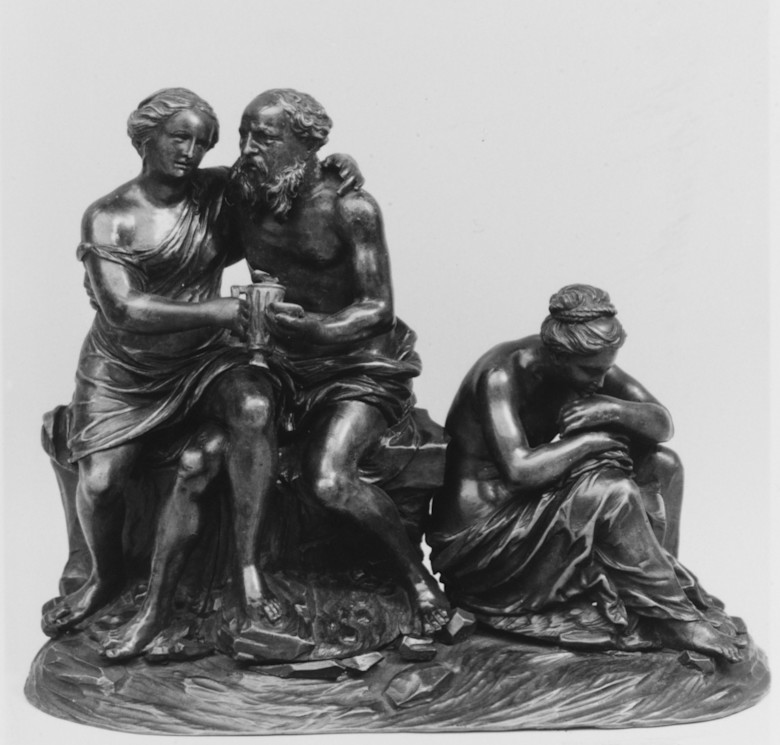
A 17th-century sculpture of Lot and his Daughters by an unknown German artist.
Step 3. Go back to the Old Testament and read Exodus: While a bit tedious in places, Exodus is vital because it’s the next stage in the story after Genesis: it chronicles the escape of the Israelites from the land of Egypt and how they established themselves as their own people group with their own religious practices. It’s important to understand how the Israelites came to be a people and what their religion was at the time. It gives you a lot of background to understand the religious practices that were standard when Jesus came on the scene.
When reading Exodus, it’s important to realize that that these commandments were given to the ancient Israelites in a particular religious form, one that does not apply in the same way as today. It’s easy for modern-day people to see God giving these religious laws and conclude that, because these commands are in the Bible, that they are also a prescription for how Christians ought to behave. The earliest Christians, themselves raised in the religion of ancient Israel, asked this same question, and their conclusion was that, though the law of God did not change, the way in which those laws manifested in our daily lives changed with the coming of Christ. Circumcision, for example, was replaced by baptism, not because the law changed but because the idea behind the law of circumcision was more truly manifested in baptism.
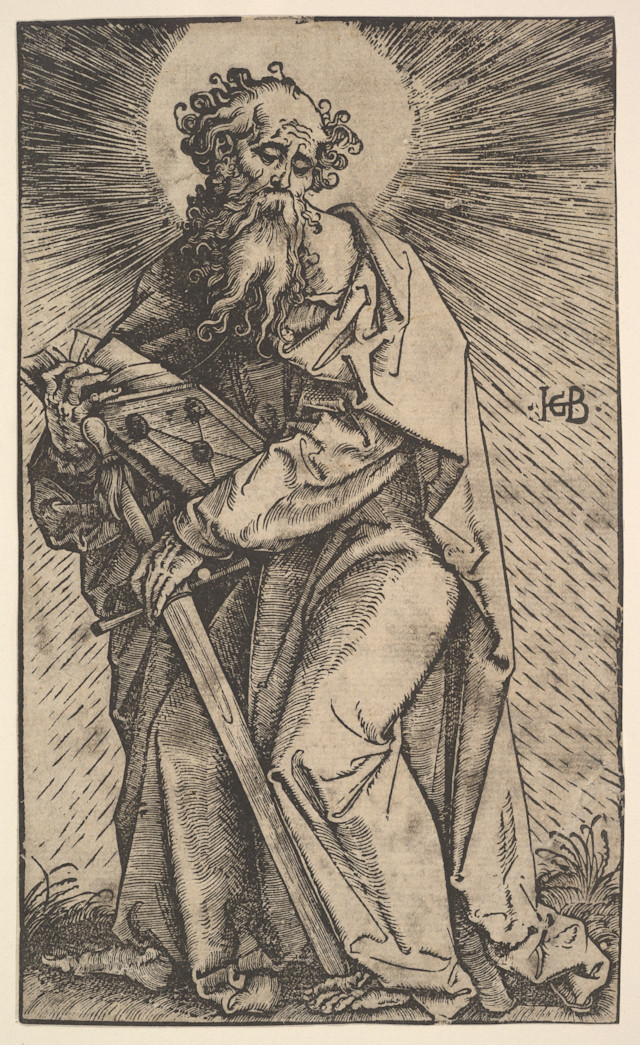
A 1519 woodcut of St. Paul by Hans Baldung.
Step 5. Read the three letters of St. John: 1 John, 2 John, and 3 John: These are letters St. John wrote to various people, but they are also passionate and beautiful memoirs of one of the last living people who knew Jesus when he was on Earth. St. John was the youngest of the apostles, but the letters were written when he was very old, around A.D. 90 or 100.
Step 6. From here, you have a few choices: You could read the Psalms and Proverbs to get a sense of the “wisdom literature” genre of the Bible, or you could read the rest of the epistles of the New Testament. I would generally recommend waiting to read much of the Old Testament, since it has always been considered the most difficult and complicated part of the Bible. Further—and you may be surprised to hear this claim—the Old Testament is not as important for Christians to read and understand as the Gospels and Epistles are. The reason is that, without proper guidance, it’s easy to misinterpret the texts of the Old Testament, because they were written for a very different target audience. You might hear a commandment given by one of the prophets and think that, to be a good Christian, you can’t mix cheese with meat, or wear blended fabrics, or work on Saturdays. However, these laws were discussed already by the early Church, and they concluded that Christ had transformed most of those laws into new practices like baptism, communion, and participation in the liturgy.
How long does it take to read the Bible?
What if you want to read the entire Bible, though? I would only recommend doing so after you’ve read through the major texts I’ve mentioned at least a few times. However, even in that case, or even if you already had a good introduction to the Bible through Sunday School, catechism, or other formation, I don’t generally recommend going through the Bible from the very first chapter, straight through to the very last chapter. Most Bible reading plans intersperse Old Testament readings, Psalms, and New Testament readings so that you’re getting a good mix of different genres every day (here’s one example, and here’s another).
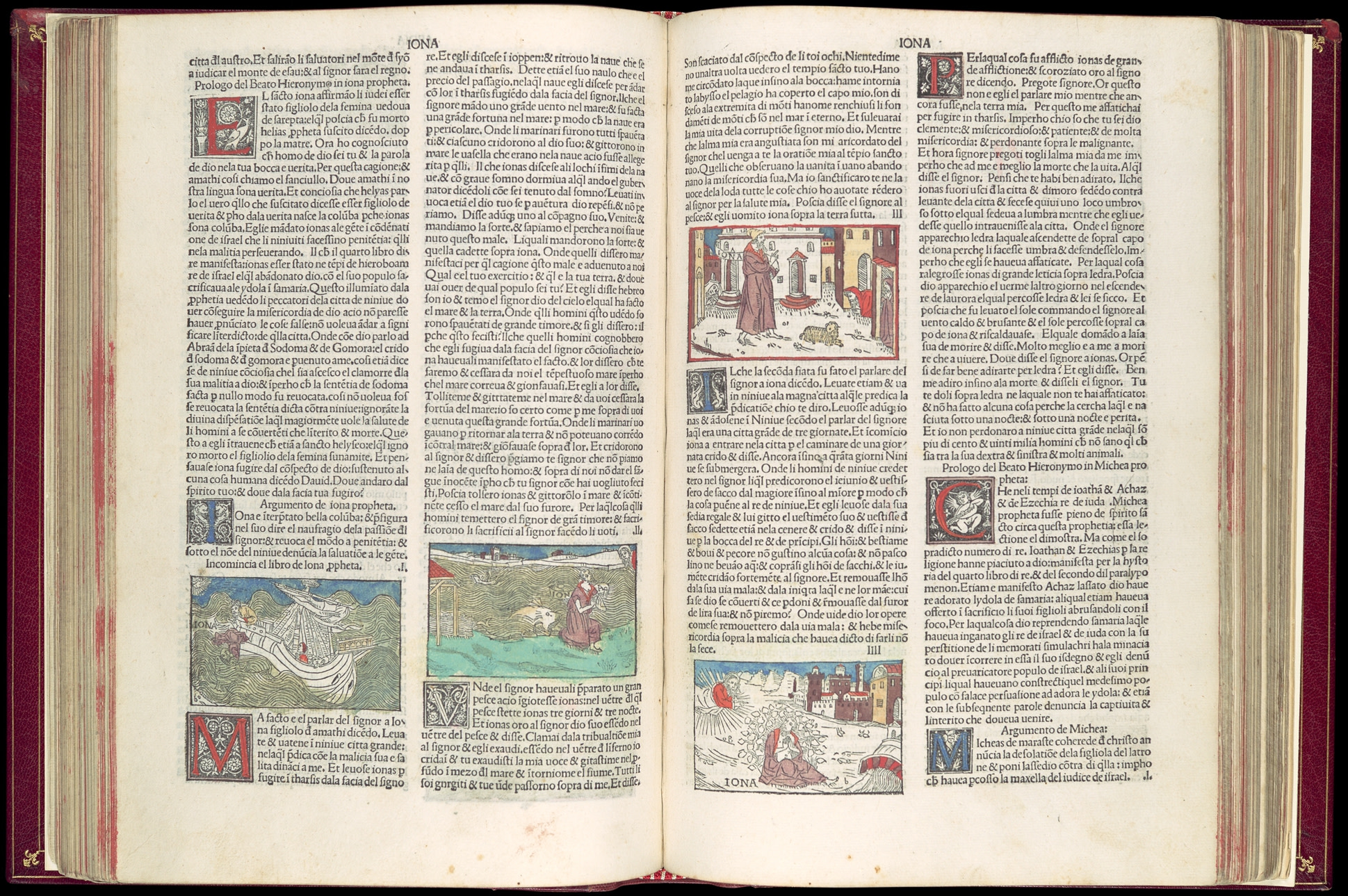
A 1490 edition of Niccolò Malèrmi's Italian translation of the Bible.
Depending on how much time you have, you can read through the entire Bible in about a year by reading just 15-20 minutes per day. It helps to build a consistent, daily habit. Lots of people have a cup of coffee every single morning, but don’t think about it as drinking 365 cups of coffee in an unbroken streak throughout the year. If you read a short section of the Bible for 15 minutes with your cup of coffee every morning, you’ll read the entire Bible in a year without much additional effort. Lots of people I know simply scroll on their phones for the same amount of time while drinking their coffee. All you’d have to do is replace the one activity for the other and you’d be done before you know it. If you want to read the Bible in six months, just double your daily reading to 30-40 minutes. If you want to do it in four months, simply devote an hour a day to it.
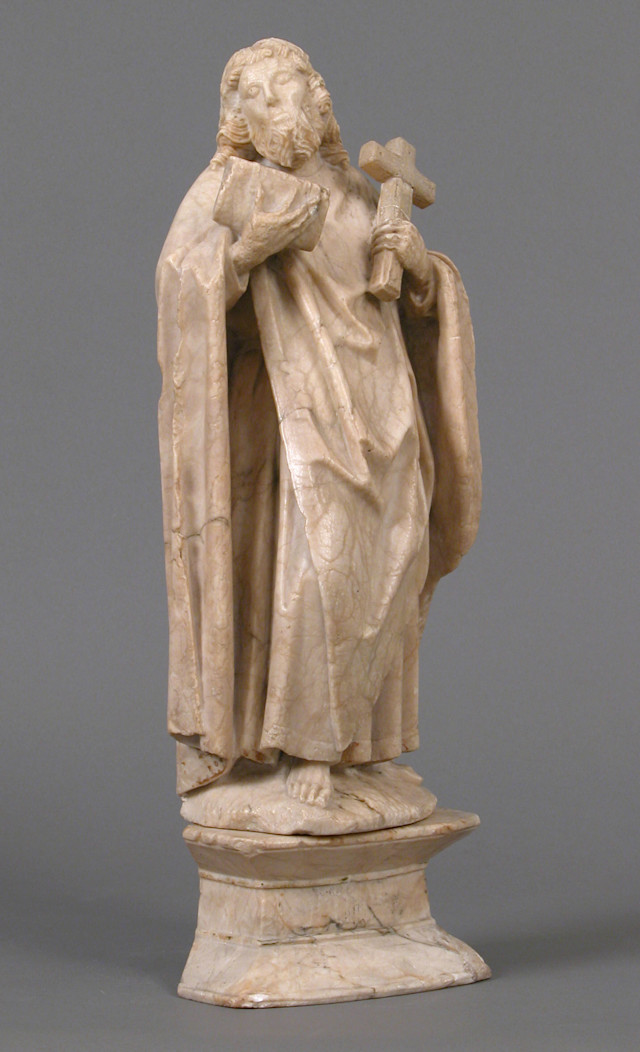
A statue of St. Philip from circa 1450-1460.
It isn’t enough to calculate how often and how long you need to read in order to finish the Bible in a year, or six months, or whatever. You want a plan that also allows you to benefit from doing the reading. There’s even a passage in the Bible itself that makes this point: Saint Philip runs into an Ethiopian who is reading a passage from the Old Testament and asks him, “do you understand what you are reading?” The Ethiopian replies, “how can I, unless someone explains it to me?” (Acts 8:31-32).
Important tips when reading the Bible
How to read the Bible is perhaps the most tortured and difficult question in the history of Christianity. Everyone talks about “believing in God” or “loving Jesus,” but it’s not so easy to talk about the “message of the Bible.” As a result, there are something like thirty- to forty-thousand Christian denominations, because—unfortunately—the Bible can be interpreted to mean just about anything if you are creative enough.
In the modern world, people have this idea that the Bible is something like a rulebook, an instruction manual, or a legal document for morality, but that’s not how the early Christians understood it. If you understand it properly, the way they did, you’ll see that reading it through from beginning to end isn’t the best strategy.
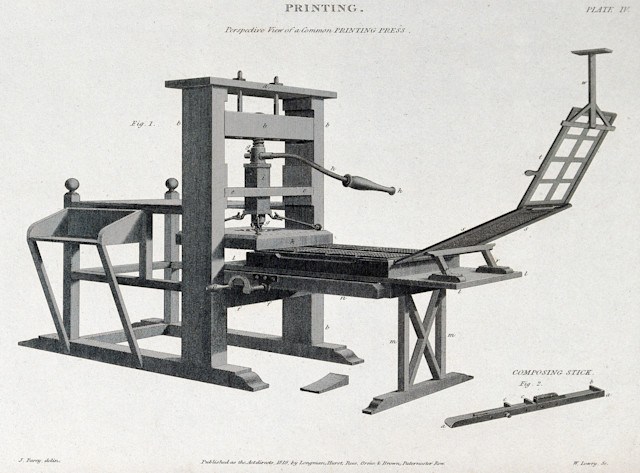
An 1819 illustration of a printing press by Wilson Lowry.
In the ancient world, therefore, people didn’t think of the Bible as one book. The word “Bible” actually comes from the Greek word biblia, which is a plural word, not a singular word. In other words, the canon of scripture was not referred to as “the book” but “the books” of the church. Because the early Church understood the Biblical literature as a collection of texts rather than a single text, it was easier for them to understand that different texts in that collection had different purposes and also different levels of importance. The early Church saw the Gospels as more important than all the other texts in that collection, and the Epistles (the writings of the apostles) as the second most important. Following that they saw “wisdom literature” like the Psalms as next in importance, and so on.
There are, therefore, a few things to keep in mind when attempting to read the entire collection of Biblical literature:
Don’t just take passages at face-value. Just because the Bible “says” something doesn’t mean anything about whether you ought to put it into practice. It’s much more complicated than that. To do justice to what the text is saying, you’ll need lots of context: the context of the rest of the chapter, historical context, cultural context, and often the context of the entire Bible itself.
Understand that the early Church and the ancient Christians understood the Bible as having multiple layers: there was a literal meaning, a moral meaning, and a spiritual or “typological” meaning. I discuss the different ways of interpreting the Bible here, here, here, and in my book, Journey to Reality: Sacramental Life in a Secular Age
Read the Bible through the lens of the early church. There are many passages in the Bible where what the author meant is not clear from that passage alone. One way to get some clarity on what that author meant is to consult other authors who are not in the Bible but who knew those authors personally. The best example is that the disciples of Jesus all had their own disciples, and they taught them just as you might mentor an apprentice. This second generation of disciples also left us many writings; invaluable sources that settle many issues that have become somewhat ambiguous to us. But wait! You might ask, what good are these writings if they’re not in the Bible? The answer is that there were many texts which were authoritative to the early Christians and throughout Christian history, but there’s a difference between texts that were included in the canon of scripture—what we call “the Bible”—and those which had a kind of secondary (but still very real) authority. I discuss the difference between texts that were authoritative to the early Christians and those that became part of the canon of scripture in my article on Enoch.
Subscribe
Life-giving writing by Christian scholars sent to your inbox once per month

Zachary Porcu has a PhD in church history from the Catholic University of America in Washington DC, with additional degrees in philosophy, humanities, and Classics (Greek and Latin). He is an Eastern Orthodox Christian.
Keep reading
Agur son of Jakeh: The mysterious proverb writer


What is the Walk to Emmaus weekend Cursillo retreat?
What does Jehovah Tsidkenu mean?
How Hot is Hell? Biblical Ideas vs. Pop Culture Depictions
The Problem with Sexual Sin