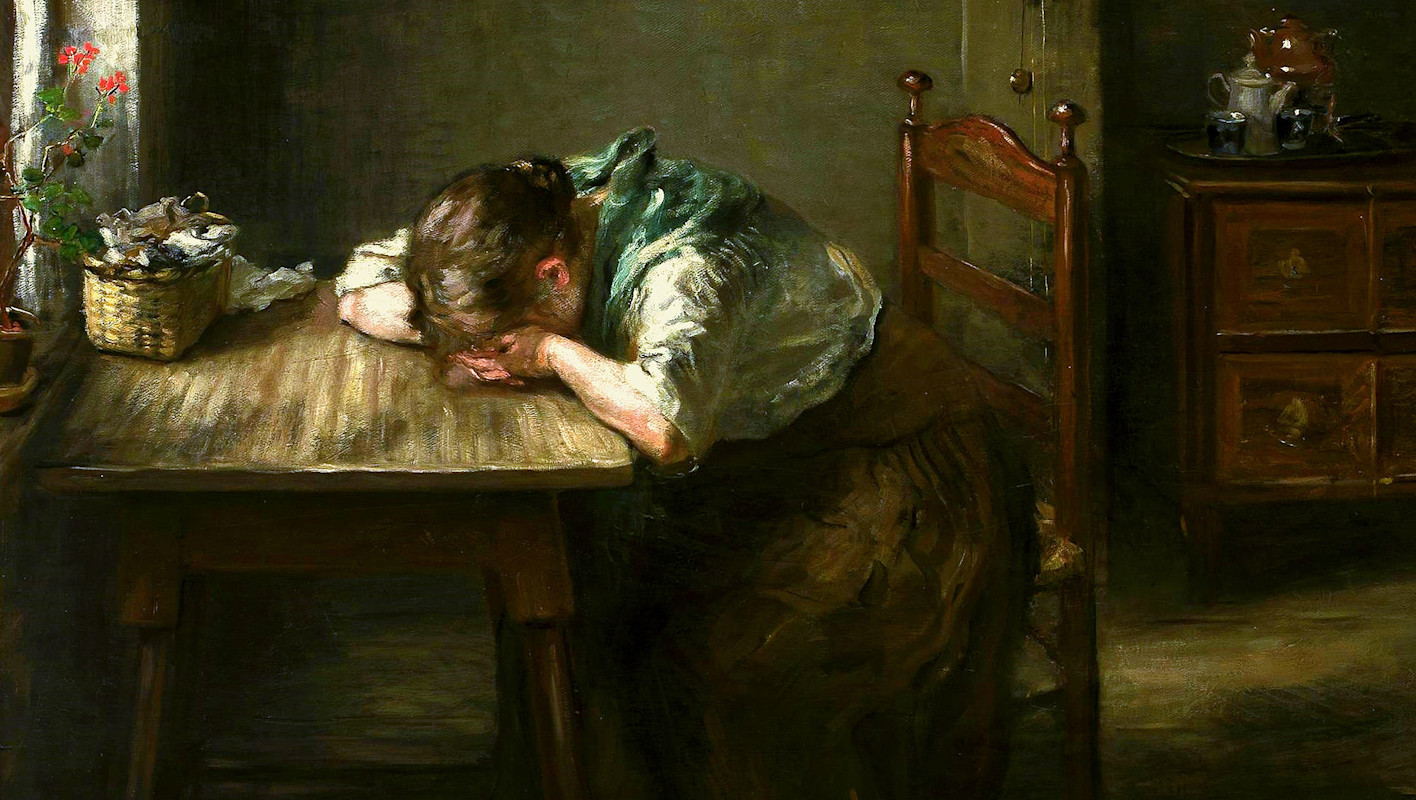
Do you go to Hell if you commit suicide?
The short answer
Suicide is a terrible sin for how it cuts life short while removing someone's ability to ask God for forgiveness. But it is impossible to know if any act of suicide sends someone to Hell because we cannot know if someone commits suicide with full knowledge and freedom, and thus if they will suffer sin's worst outcome. What we can know is the immense mercy and love of God that allows us to navigate sin without despair.
If someone commits suicide, do they go to Hell? This question is tremendously loaded, which means there is a lot involved with giving a good answer. So, before giving one, we need to pause and ask what people mean when they ask if a suicidal act sends someone to Hell. The full answer is more complicated than you may think.
Are you suicidal?
This article is only meant to provide a theology of suicide. If you are considering suicide, seek help immediately. Call or text a priest, pastor, or loved one who will listen and help. You can also call or text 988 to reach the 988 Suicide & Crisis Lifeline. Calling or texting 988 is free and confidential. Do not wait to act.
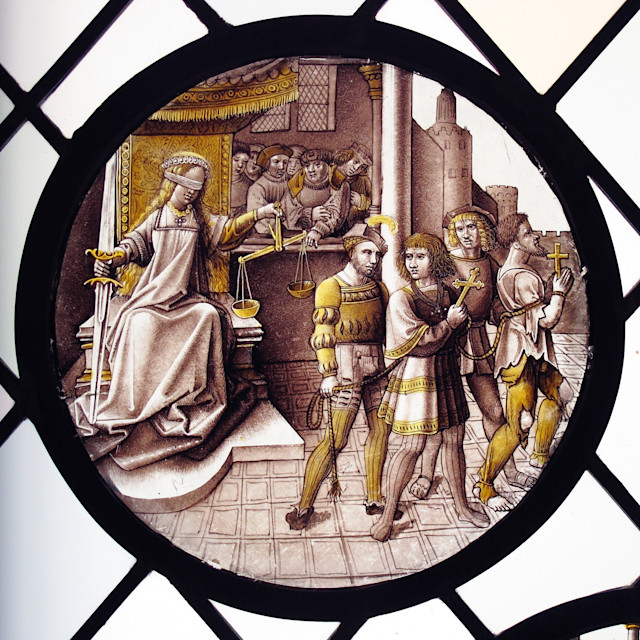
This Netherlandish stained glass depicts Justice blindfolded, holding a double-ended sword and a set of scales.
Eternal life is a gift
To be a real, healthy, mature Christian means to be fundamentally unified with God. It means that you have realized God’s love and grace, not only that you believe in the idea of God’s love, but that you cast your very life upon this great Love, that you have faith in it. A real Christian knows the goodness of God as infinitely greater than themselves. This is life’s greatest ecstasy.
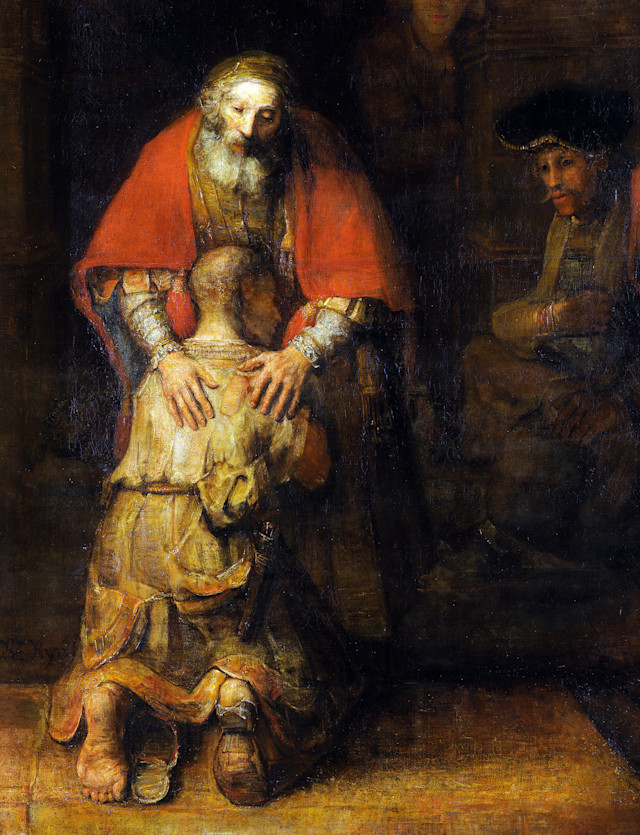
Rembrandt - Return of the Prodigal Son - 1668
Therefore, any talk about how people end up in Heaven or Hell, first of all, has absolutely nothing to do with a set of scales weighing human actions. Eternal life is first the tremendous reality that God already was before the world began, best seen in his great passion at the cross:
“But God, who is rich in mercy, out of the great love with which he loved us, even when we were dead through our trespasses, made us alive together with Christ (by grace you have been saved), and raised us up with him, and made us sit with him in the heavenly places in Christ Jesus, that in the coming ages he might show the immeasurable riches of his grace in kindness toward us in Christ Jesus. For by grace you have been saved through faith; and this is not your own doing, it is the gift of God” (Ephesians 2:4-8 RSV).
In short, before speaking of the connection between suicide and Hell, eternal life must first be understood as a marvelous gift . First and foremost, it is not about if someone spent their life serving the homeless or abusing children. In its deepest sense, Goodness Itself does not depend on human actions (see Jehovah Tsidkenu). Yes, we need to seriously consider whether we are going to Heaven or Hell when we die. But if our response to this concern is to endlessly worry about our actions, if it is to dwell on ourselves, then we have got it all wrong. In contrast, if our concern about our eternal destiny is met by taking attention off of ourselves and giving it to God, if we respond to this concern by meditating on the Creator who is grace and love Itself, then our heart is correctly oriented and we are responding in the right way.
Eternal life is also a choice
However, salvation is not only a gift. In a great mystery, eternal life also involves our freedom and actions. Granted, our eternal destiny is first and foremost the work of God. But in a lesser way, going to Heaven also requires our work. We must attend to fixing our own sinful behavior, because the effects of sin are real, severe, and can separate us from God and send us to Hell.
Is it fair to say that choosing to sin has the effect of separating people from God? Actually, we see it all the time. Let’s say a guy is raised in a healthy church, becomes an adult, and begins life on his own. At his new job, he finds that he has opportunities to steal from his employer. Temptation gets the better of him, and embezzlement becomes a habit. The habit is fed and grows into an addiction. A downward spiral begins and his life unravels. His old Christian habits begin to feel forced and awkward. Fast forward ten years, and he has completely given himself over to dishonesty, including losing the relationship with God he had as a kid.
In this example, note that doing sinful things led to this man becoming separated, in a real and immediate way, from the God that made him and loves him. His childhood and adulthood are not the same; the adulthood is actually worse. Of course God’s love always remains, always covers us from head to toe, even right now. As the Scriptures say, nothing can separate us from his heavenly love. God’s love does not depend, at all, on how we respond to it. But there are real consequences to not responding. Sin really does separate us from God, sending our lives toward fragmentation and death.
Saint Dismas and the beauty of repentance
So, then, how do we stop our sin from separating us from God? The answer is a beautiful and ancient Christian word: repentance. Repentance is why, in the only prayer that Jesus gave us, he has us ask God to “forgive us of our debts” or “forgive us of our trespasses” (Matthew 6:9-13). Christ is saying that we constantly need to tell God how sorry we are for sinning. We regularly need to stop and take time to ask God to forgive us, then receiving the forgiveness that He immediately gives, without hesitation, to all true repentance: “If we confess our sins, he is faithful and just, and will forgive our sins” (1 John 1:9 RSV).
If salvation was merely a gift and not also a choice, Jesus would never have made repentance so central. Repentance wouldn’t actually matter. But since the Christian life also involves the work of avoiding sin and entering into union with God’s holiness then we must regularly take time to apologize to God for our sin.

Saint Dismas in 1560 Russian icon
When Jesus was dying on the cross, two criminals were crucified with him. One of the criminals was full of bitterness. But the other criminal rebuked the first and expressed true repentance for his past actions, “'Do you not fear God, since you are under the same sentence of condemnation? And we indeed justly; for we are receiving the due reward of our deeds; but this man has done nothing wrong.' And he said, 'Jesus, remember me when you come into your kingdom'” (Luke 23:40-42 RSV).
Christ responded to this second criminal: “Truly, I say to you, today you will be with me in Paradise.” Basically, Jesus says to this second thief, “You are going to Heaven.” This story is amazing because the second criminal likely never lived a godly life. It is entirely possible his life was filled with terrible behavior that hurt other people. Yet, by admitting his wrongdoing, the second criminal embraced new confidence in Jesus, and this turn to Christ is all that matters. Two things saved him from Hell: first, regretting his sin; and second, choosing to entrust his life to Christ. The second criminal is today honored throughout the Christian world as a great hero: Saint Dismas.
Suicide and our humble view of human hearts
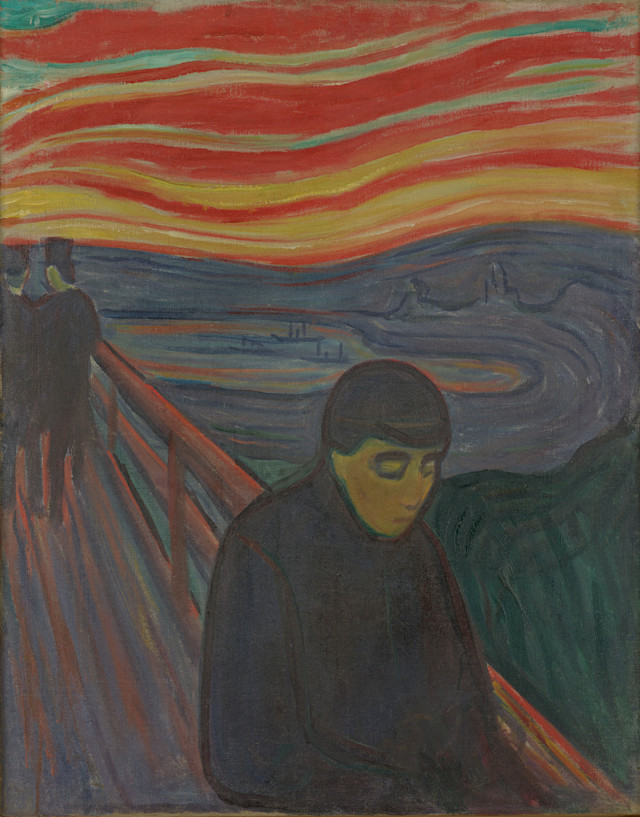
Edvard Munch - Despair (oil on canvas)
But this belief is wrong. And it is wrong because it is not focusing its attention on God’s love. God is not only pure, holy, and opposed to sin. God is also merciful, just, and abounding in compassion. While sin separates us from God and can send people to Hell, God also understands that people do sinful actions with varying degrees of responsibility. Sometimes people do terrible acts with full knowledge of how evil the behavior is, and with full freedom to act or not act. A sin done with full knowledge and freedom is the sin in its darkest form. But sometimes people do terrible things without knowing how evil some behavior is, or without much power to choose their own actions.
I think about all the people with mental illness who are, right now, homeless and living on the streets. Some of them are not aware of where they are; some have forgotten their own names and the names of their loved ones. If someone this ill commits suicide, are they in full possession of their actions? Are they in full awareness that suicide is evil? Certainly not. Would a loving and merciful God understand and judge this sinful act with the same severity as someone who is completely healthy? No way.
Thus, I can now answer the question of whether suicide sends someone to Hell. The answer is: we don’t know. Nobody knows (not you, not any pastor, not any priest) because nobody knows if someone who commits suicide was in full control of themselves or fully understood the seriousness of suicide. We don’t have access to people's insides. As Scripture teaches, only Christ is the judge of hearts (John 5:22). Therefore, it is impossible to know, on this side of Paradise, whether someone who commits suicide ends up in Hell.
Since there is no actual ability to know whether any single act of suicide results in someone going to Hell, our attention, instead, should be focused on the mercy, goodness, and tremendous love of God. This is our only hope, and what a powerful hope it is. If we focus our attention only on wrong actions, either on our own sin or on the actions of others, the result is a life of drawn-out misery and anxiety. But giving our full attention to God, plunging ourselves into the tremendous mercy and love that he is, this is eternal life, both beginning now and extending into eternity.
Subscribe
Life-giving writing by Christian scholars sent to your inbox once per month

Simon Cunningham is the director of Holy Ground. He has a PhD in theology from the University of Nottingham in the UK. Simon is passionate about faithful Christian existential theology, namely theology that interacts with the tangible, immediate, and real elements of life.
Keep reading
What does the Bible say about drugs, drinking, and smoking?

Who was Saint Longinus and what is his story?

Jesus went to Hell for 3 days as seen in Scripture
How Hot is Hell? Biblical Ideas vs. Pop Culture Depictions
The Problem with Sexual Sin