What is the longest book in the Bible? And the shortest?
The short answer:
Some versions of the Bible differ in how they translate or compile things, but the three longest books are almost always Jeremiah, Genesis, and the Psalms.
Questions about which book of the Bible is the longest or the shortest are a little misleading because the answers depend entirely how you count.
The first issue is that there isn’t a single canon of scripture. The older canon of scripture, which was used from the time of the early Church and is still used by Roman Catholics and Eastern Orthodox today, includes more books than the canons that came to be used by certain modern-day Christian groups following the invention of the printing press.
The other issue is that it depends on how you divide the books of the Bible. The Bible was not presented as a single volume—or one “book”—for most of its existence. It was contained in various volumes, such as the law of Moses, the Gospels, the Prophets, and so on. In the time of the ancient Israelites, the prophets were kept in separate scrolls. All of this is to say that the books of Kings and Chronicles are now (generally) split into two parts (1 Kings, 2 Kings, 1 Chronicles, 2 Chronicles). Do you count them as separate, or as combined?
There are also various translations, so many people like to count the number of words in the original language. But do you use the Hebrew language—which was what the Old Testament was originally written in—or do you use the Greek version (called the Septuagint)—which was the version that Jesus and the New Testament writers quoted from and viewed as authoritative?
Regardless of how you count things, however, the shortest book in the Bible is the third letter of John, which is only a single chapter and barely a few paragraphs. No matter how you count it or what translation you use, this book is clearly the shortest.
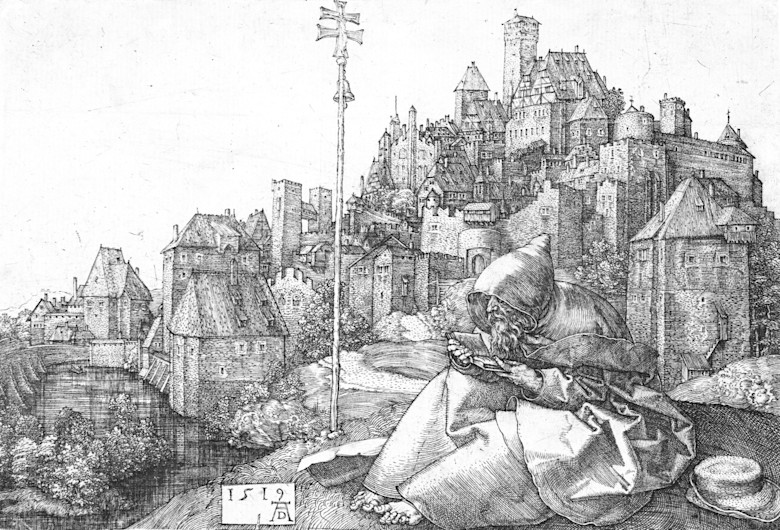
Albrecht Dürer - Saint Anthony Reading - 1519
Which is the longest? No book in the New Testament can compete for longest book in the Bible, so we really just need to look at the Old Testament. If you count 1 Kings, 2 Kings, 1 Chronicles, and 2 Chronicles as separate books, and you use something like the Logos Bible Software to do a word count of the original Hebrew—as the folks over at gotquestions.org did—you get the following results:
Jeremiah (33,002 words)
Genesis (32,046 words)
Psalms (30,147 words)
What is the longest book in the new testament?
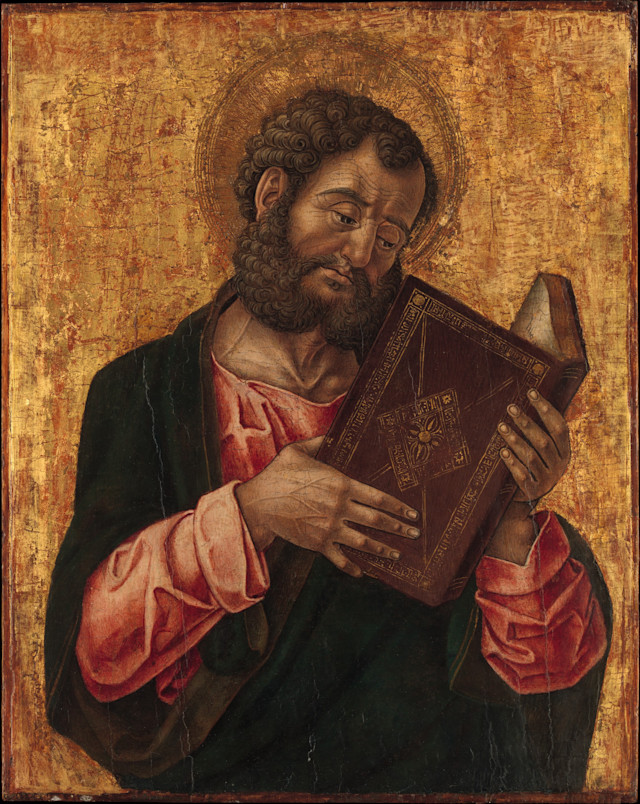
Bartolomeo Vivarini - A Saint Reading - circa 1470
It’s similar to the question of whether or not to separate books like Kings and Chronicles into two different parts. You could combine them or not, but it’s somewhat arbitrary. It all depends on how you want to cut things.
How long is each book of the Bible—and why does it matter?
Again, it depends on the translation. Few people have done studies of this kind, I suspect because of the difficulty of selecting the criteria for how you want to count things. Deane Barker, a man with a Wordpress blog, undertook such a project. He chose to use the King James version of the Bible on the basis that it was fairly old and carries some cultural weight of authority. The old King James version does have various issues, such as using the abbreviated canon of scripture that was popular after the Reformation, but Barker does a fairly thorough job of documenting the stats on most of the books. You can read his analysis here (with a nice, detailed table).
The big takeaway, though, is that it’s not important to focus on the length of the various books of the Bible as a guide to their spiritual significance. I think that some people get obsessed about reading into the lengths of books or the significance of verse numbers, but the reality is that almost all of these things are artificial constructions. The way that the different texts of the Bible were combined or split up are relics of decisions made by the text’s compilers, who made those decisions hundreds or even thousands of years after the composition of the texts themselves. The Bible’s chapter divisions were created in the Medieval era, and verse numbers were added in the 1500s—which is fairly recent compared to the life of Christ! Ultimately, it is important to remember that the value of the Bible is the contents, not the packaging.
Subscribe
Life-giving writing by Christian scholars sent to your inbox once per month

Zachary Porcu has a PhD in church history from the Catholic University of America in Washington DC, with additional degrees in philosophy, humanities, and Classics (Greek and Latin). He is an Eastern Orthodox Christian.
Keep reading
Hineni in Hebrew: “Here I am” from God and Man

Who was Jotham, king of Judah?
What are the prophetic books of the Bible?
Who is Esaias in the Bible? Answered by a Christian Scholar

Peor: The Mountain and God of the Moabites