How long is a generation in the Bible?
The short answer:
There is no standard unit of measurement in the Bible for a generation; it’s an ambiguous term with different meanings depending on the context. It gets more attention in the Gospel of Matthew, where Matthew uses it in a symbolic way to make a spiritual point about the true meaning of Christ’s mission.
The word “generation” is used in a variety of ways in the Bible. It is not a precise technical term or a standardized unit of measure. Sometimes the Biblical authors use the word to mean everyone who was alive at a certain time, as in Exodus 1:6. Other times the word refers to a period of about twenty or thirty years, the same way that we talk about the “Generation X,” “Millennial,” or “Baby Boomer” generations in the United States. When used in the plural, the word is indefinite or general, such as in Isaiah 51:9 or Acts 14:16. It all depends on the context.
How many years is 14 generations in the Bible?
Questions about defining generations often arise because Matthew’s Gospel account begins with a list of Jesus’ ancestors, divided into three groups of fourteen generations each. The first group starts with Abraham and spans fourteen generations to the time of David. The second group counts fourteen generations from David until the Babylonian captivity (and the end of the first temple period). The final fourteen generations go from the Babylonian captivity until Christ (the period of the second temple). Matthew concludes,
“So all the generations from Abraham to David are fourteen generations, from David until the captivity in Babylon are fourteen generations, and from the captivity in Babylon until the Christ are fourteen generations.” (Matthew 1:17)
How long were each of these generations? It’s difficult to say because people—and therefore different generations—live for different lengths of time. But you can get a sense for the timelines Matthew is talking about by looking at the other events that he mentions.
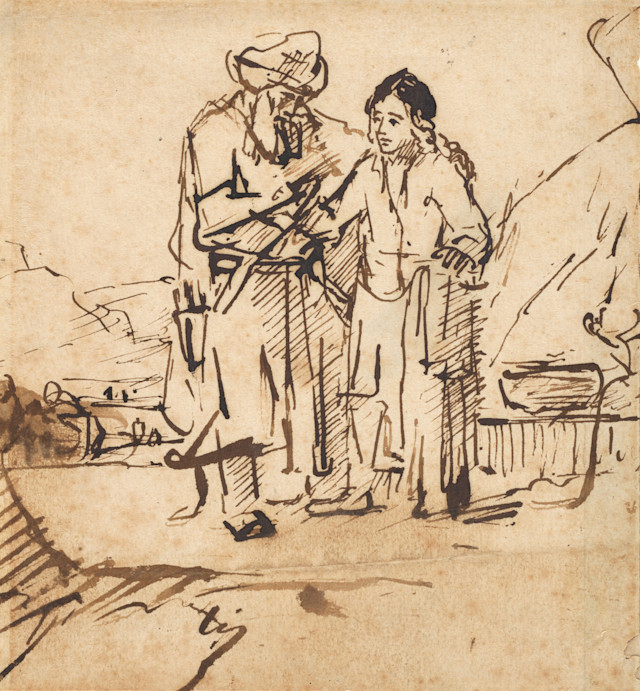
School of Rembrandt van Rijn - Abraham and Isaac before the Sacrifice - circa 1645
Like all events in the ancient world, it’s difficult or impossible to precisely date these groups of generations. Generally speaking, however, there was something like a thousand years between Abraham and David, five hundred years between David and the Babylonian captivity, and five hundred years between the Babylonian Captivity and Jesus. If each of those three periods was supposed to be fourteen generations, the generations weren’t all the same length.
When you add up these sets of fourteen generations, the total comes to 42 generations, which (in this instance) spans about 2000 years—from the time of Abraham to the birth of Christ.
Is the inconsistency in dating significant?
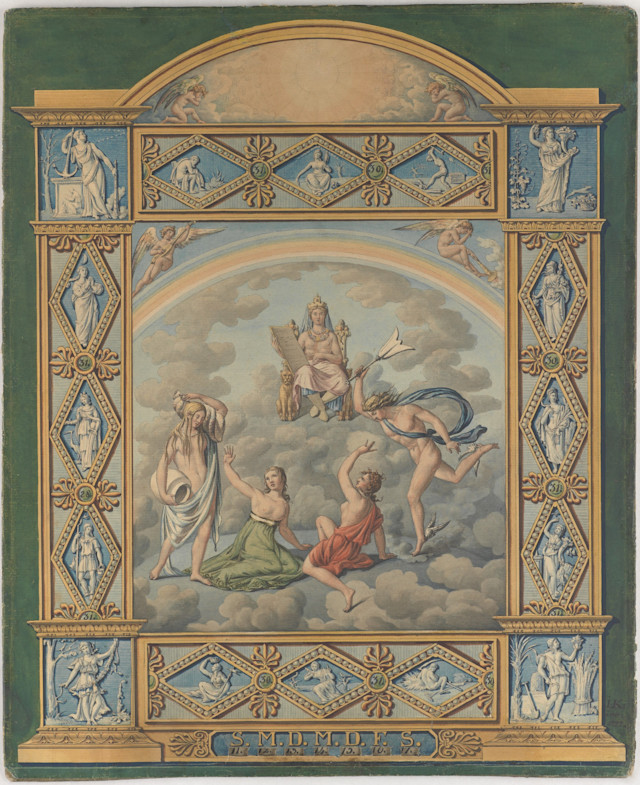
Joseph Anton Koch - Weekly Calendar - 1822
It’s easy to see this choice and conclude that Matthew was being dishonest, twisting the truth to make things fit into a tidy package. Such apparent dishonesty might cast doubt on the reliability of the Gospel accounts, the other claims of the Biblical authors, or Christianity as a whole. But I think this account jumps to conclusions and projects our own modern biases onto ancient people who didn’t share our way of viewing the world.
Modern people tend to be obsessed with exactness and accuracy, because we are a scientific society. But being a scientific or science-oriented society isn’t an advantage in every situation. Yes, our focus on what is observable and verifiable has helped with technological and medical advances, but it has also caused problems of its own, including the crisis of meaning in modern society.
To put it briefly, Western civilization as a whole has been experiencing a crisis of meaning over the last hundred years or so. The breakdown of traditional institutions, the rise in anxiety and depression, and the increase in violence and brutality have been attributed to the loss of any sense of meaning or any grounding for morality. Many thinkers have pointed out that this shift is inevitable when a society starts to focus solely on things that can be verified according to the narrow requirements of the scientific method. Things like love, morality, friendship, beauty, and meaning cannot be subjected to the rigors of scientific examination, and if they are, they’re almost always explained away as “chemical phenomena,” which is just another way of saying that they’re not real.
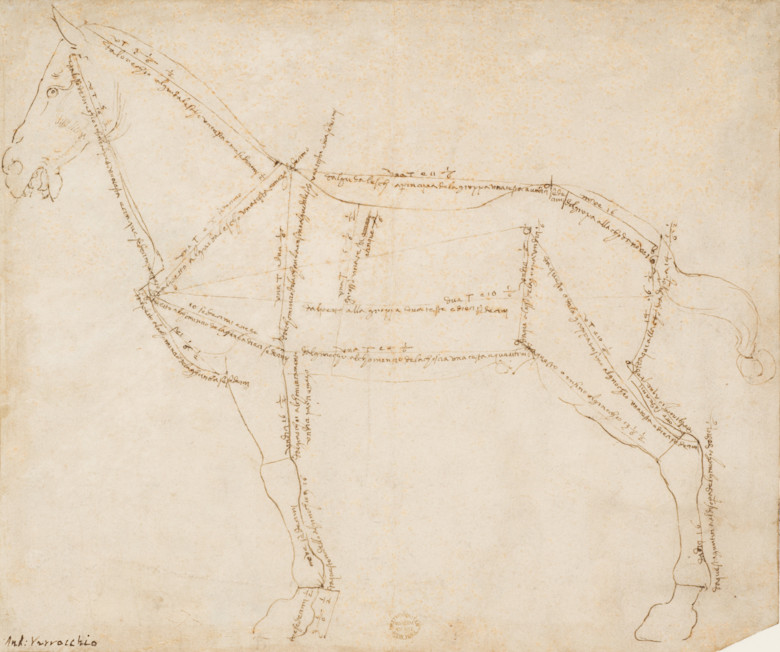
In this sketch by Andrea del Verrocchio from the 1480s, a horse is depicted as the set of measurements of its proportions.
Why does this emphasis on the measurable matter? Because it creates a demand in modern people for strict, scientific exactness over everything else. But ancient writers thought about the world differently. All ancient thinkers—Christian and pagan—viewed meaning as the most important thing, more important the little particulars of factual accuracy. For example, it was a universally accepted practice in the ancient world to shuffle facts around to make the moral point of a story stronger—even in historical accounts! The ancients didn’t think of history in terms of giving an accurate account of data to be interpreted by the reader. They believed that there was meaning in everything, even (or especially) in history. The presence of meaning in historical facts meant that the ancients didn’t believe that you could see the world neutrally. That modern people do think you can see the word neutrally is one of our modern biases, one that’s been seriously called into question by philosophers for the last hundred years.
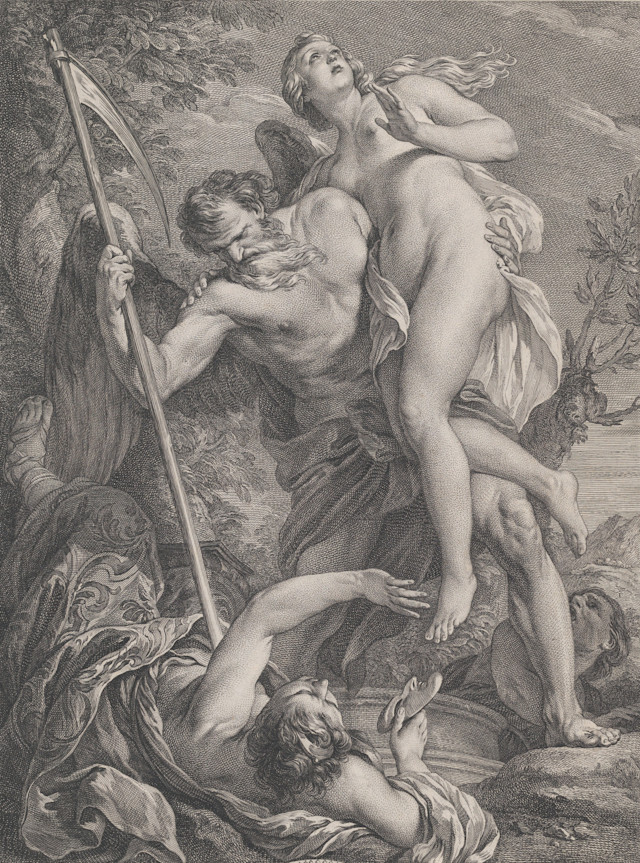
Laurent Cars - Time Carrying Truth - 1747
This type of thinking—what you might call “enchanted” thinking—was the way nearly all ancient cultures thought about the world. It can be difficult for modern people to wrap their heads around this way of thinking because we are steeped in our modern biases: we think that informational accuracy is real and things like meaning are subjective and therefore less real. But if you want to understand any ancient culture at all, you have to let go of your biases and try to think in a new way about the world. If you’re interested, I recommend Journey to Reality, a short, accessible book on how to think about the world from the perspective of the ancient Christians.
Christ the True Man
How then should we understand the spiritual content behind Matthew’s decision to arrange the genealogies this way? What you have to understand as well is that ancient people saw spiritual significance in everything, and numbers were no exception. Numbers had a variety of associations and symbolism, and ancient authors used certain numbers to reinforce the points they were making.
It’s true that modern people tend to go a little crazy with numerology and similar ideas. Some people become superstitious in trying to add up exact dates about things in the past to make predictions about the future. They have some very weird conclusions that may sound authoritative but are simply one person’s speculation. Again, ancient people thought about these things differently.
How would ancient people have thought about the number fourteen, for example? For one thing, it’s a factor of seven. In many cultures, seven is an important number, as it is one fourth of a lunar cycle (it takes the moon roughly 28 days to go through all its phases), which is why there are seven days in a week. The most famous symbolism for the seven days of the week, of course, is the six days that God created the world and the seventh day on which he rested, as depicted in Genesis chapter 1. Seven came to be associated with the idea of completion, and was especially so in the imaginations of the ancient Israelites, the target audience for Matthew’s gospel account.
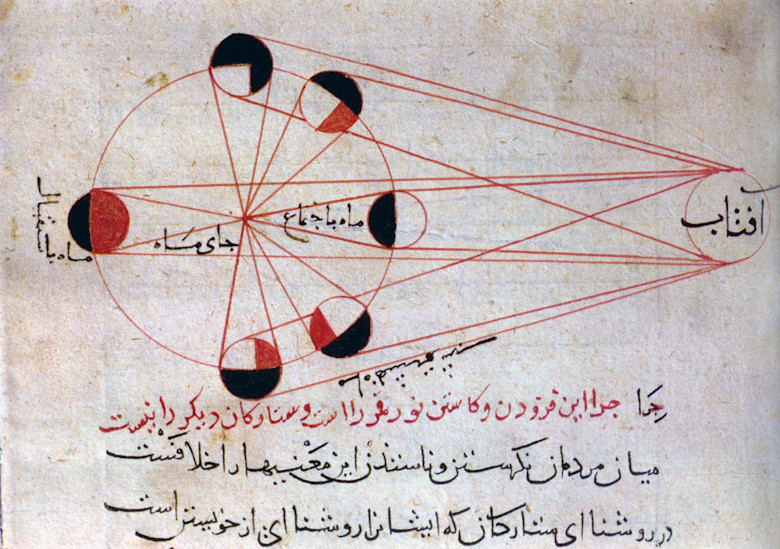
Al-Biruni - Lunar Phases - 11th century
So what? Well, fourteen is a multiple of seven, so fourteen generations has a “sevenness” to it and would have called to the mind of an ancient Jewish reader this concept of completion. It indicates the early Christian idea that Christ was a fulfillment and a completion of the law of Moses, the Hebrew prophets, and mankind itself. The early Christians understood that Christ had become the first fully human being. When Christ said his famous last words on the Cross, “it is finished,” the early Church Fathers understood him to mean that the project of mankind itself was now complete. Up until this point they understood that it was very much unfinished, as humans were fallen and therefore subject to death and corruption. As such, St. Paul and St. John call Christ “the firstborn from the dead” (See Col 1:18 and Rev 1:5), because he was the completed, perfected man, the one who was not subject to death.
One other element that may be a factor is “gematria,” the ancient practice of assigning number values to words and then looking for the spiritual significance within words. In Hebrew, every consonant letter had a numerical value: the value of D was 4 and V was 6. If you add up the letters in David’s name—D, V, and D again—the total is 14, the same as the number of generations that St. Matthew is talking about. What was the significance of this figure? King David was understood as the greatest king of the ancient Israelites, the man that they all thought of as the archetype of what a king should be. So the number 14—because it is the numerical value of David’s name in Hebrew—could have stood for “David” in the mind of St. Matthew’s target audience, which would have added to the idea that Christ was a true king and descendant of king David. That there are three sets of 14 generations only emphasizes this point, as repeating the number 14 three times is equivalent to saying, “David, David, David!”
So was Matthew trying to present Christ as the fulfillment of the law and the prophets, the ultimate heir of the line of king David, and the completion of the unfinished creation of mankind—all by arranging the generations in multiples of seven? You might call that interpretation a “deep reading,” but it’s not as far-fetched as it may sound. It’s exactly how ancient people thought about the world and was the way they often made their points.
Subscribe
Life-giving writing by Christian scholars sent to your inbox once per month

Zachary Porcu has a PhD in church history from the Catholic University of America in Washington DC, with additional degrees in philosophy, humanities, and Classics (Greek and Latin). He is an Eastern Orthodox Christian.
Keep reading

What is a sardius stone in the Bible? Carnelian symbolism

Hineni in Hebrew: “Here I am” from God and Man
Who was Jotham, king of Judah?
What are the prophetic books of the Bible?
Who is Esaias in the Bible? Answered by a Christian Scholar