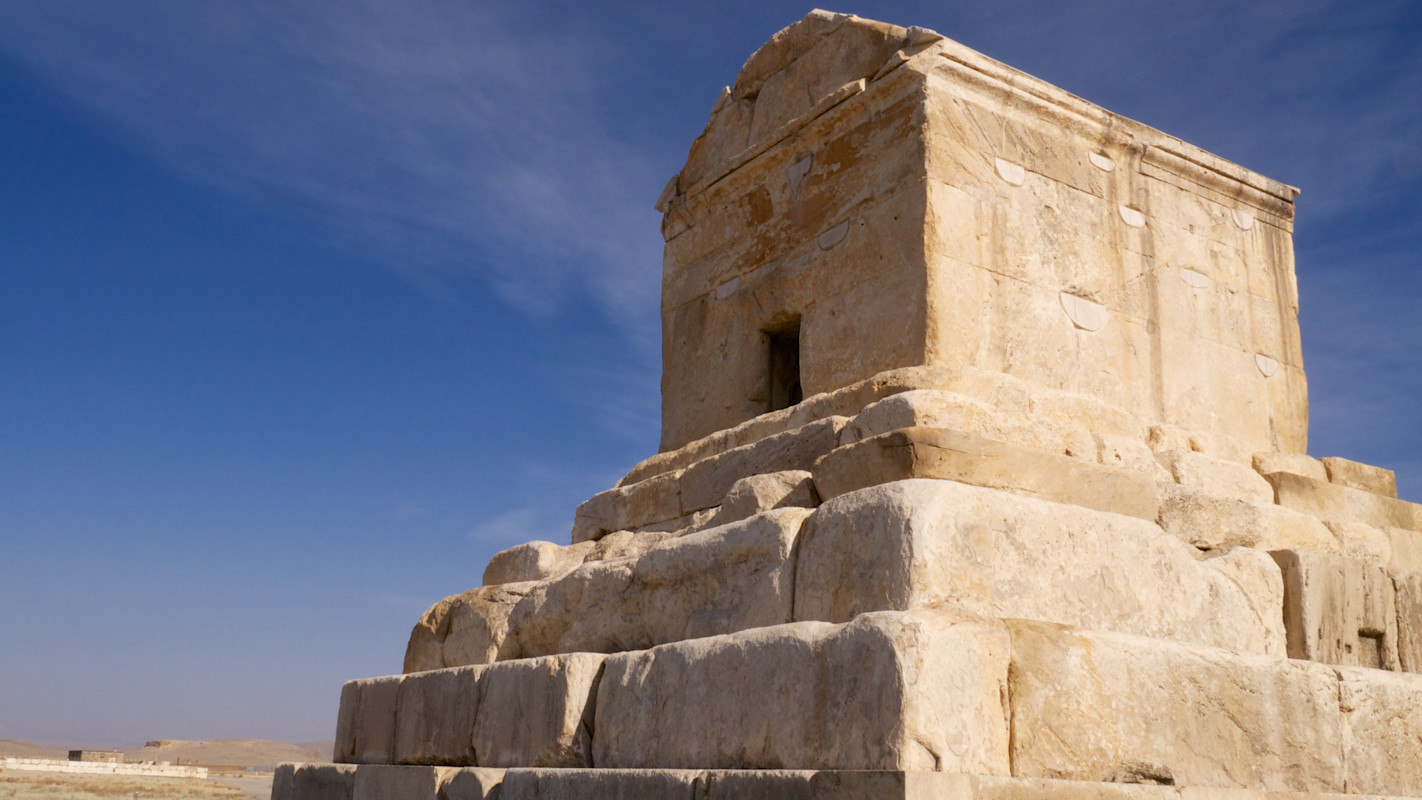
Emperor, Liberator: Who was Cyrus in the Bible?
The short answer:
Cyrus the Great was a king of Persia, born between 590 and 580 B.C. He was famous for founding the Achaemenid Empire and was called the founder of his people by the ancient Persians. The Greek historians Herodotus and Xenophon praised him, and he was referenced in the Bible as a liberator of the ancient Israelites from Babylonian captivity.
To understand the significance of Cyrus the Great, we need a little bit of context for the history of the ancient Israelites. If you know your Old Testament history, you know that there were two important time periods in the history of Israel, each marked by one of the two great temples that the ancient Israelites built to worship God.
The first temple, which defined the “first temple period”, was built during the reign of Solomon, the son of king David. The reigns of David and Solomon were arguably the high point of the history of the ancient Israelites: they had their own land and were, especially under Solomon, quite wealthy—wealthy enough for Solomon to commission the building of a lavish temple dedicated to the worship of the most high God. No expense was spared in the building of this temple, which featured imported wood and metal from all over the surrounding regions. This temple lasted for about five-hundred years. It was the centerpiece of life for the ancient Israelites, since they were dedicated to the proper worship of God. Indeed, it was more than just their religious identity: it was the heart of their entire cultural and ethnic identity in the ancient world.
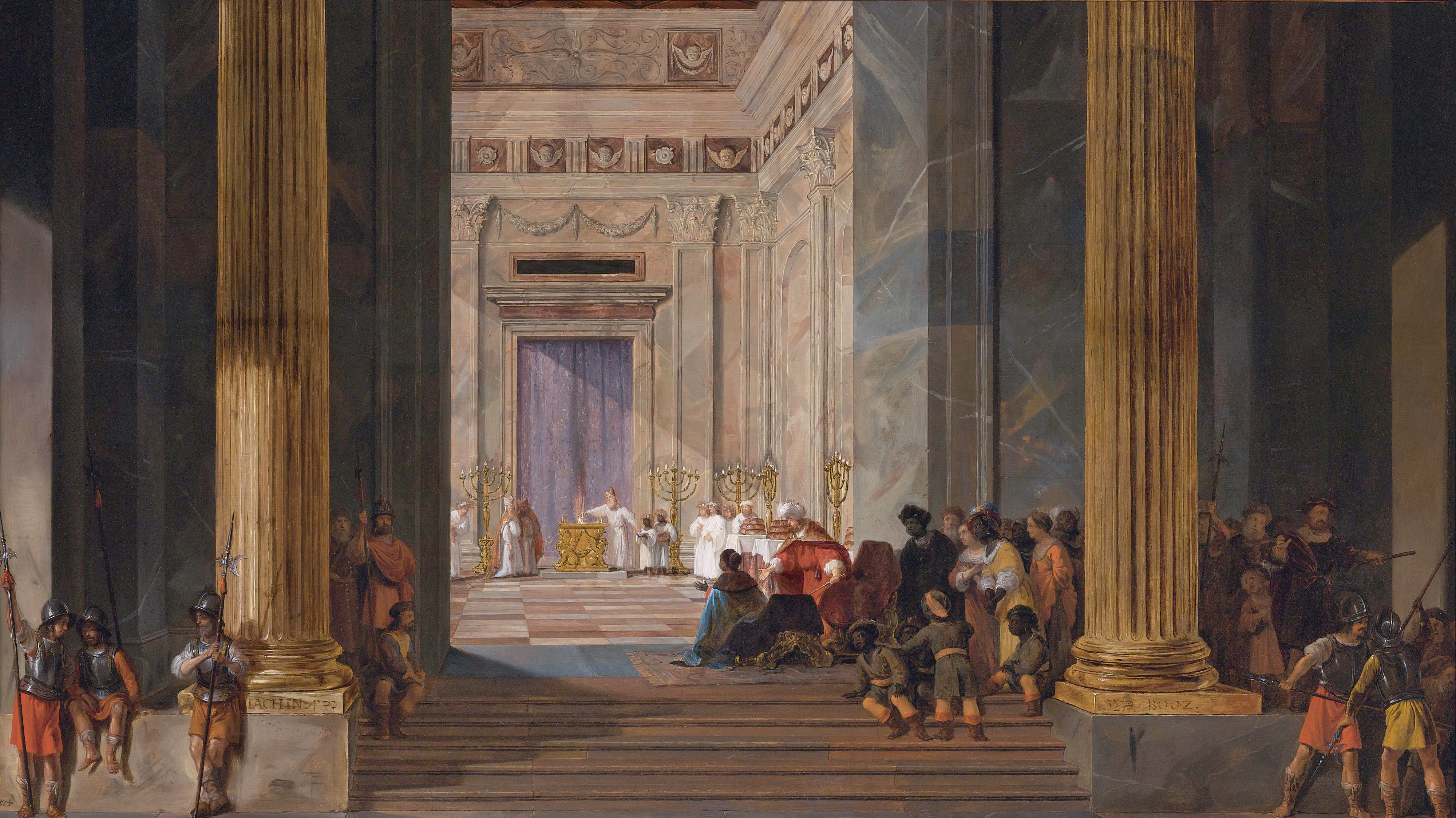
Salomon de Bray - The Queen of Sheba before the temple of Solomon in Jerusalem - 1657
As such, you can understand why it was a catastrophe when the temple was destroyed during the sack of Jerusalem by Nebuchadnezzar II. In what become known as the Siege of Jerusalem, the Babylonians attacked Israel, defeated them, and destroyed and looted the temple in 597 B.C. Over the next decade, thousands of Israelites were relocated to Babylonia in what became as the Babylonian Captivity, a time of great heartbreak and hardship for the Israelites.
Though extremely difficult, the situation didn’t go on for too long. The Babylonian empire only lasted another seventy years: the Persians, lead by Cyrus the Great, conquered the Babylonians and took over the lands they previously held, including the land of ancient Israel.
Unlike the Babylonians, the Persians tolerated the religion of the Israelites and encouraged them to continue practicing it. They even authorized the rebuilding of the temple.
Construction of the new temple was begun around 537 BC, which inaugurated the “second temple period”: the five hundred years between the building of the second temple and the time of Christ.
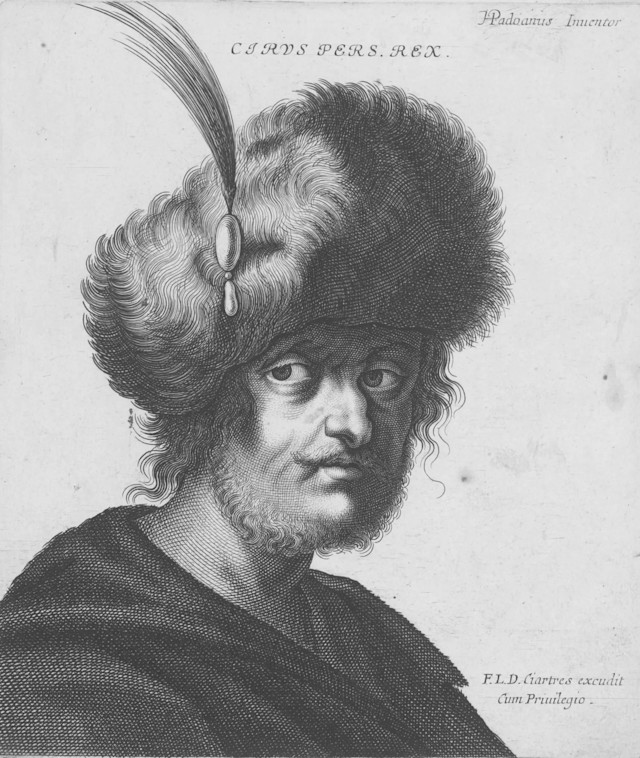
A engraving from the 1600s depicting Cyrus the Great, attributed to Jérôme David.
“Now in the first year of Cyrus king of Persia, that the word of the Lord by the mouth of Jeremiah might be fulfilled, the Lord stirred up the spirit of Cyrus king of Persia, so that he made a proclamation throughout all his kingdom, and also put it in writing, saying,
‘Thus says Cyrus king of Persia:
All the kingdoms of the earth the Lord God of heaven has given me. And He has commanded me to build Him a house at Jerusalem which is in Judah. Who is among you of all His people? May the Lord his God be with him, and let him go up!’” (2 Chronicles 36:22-23)
It is also recorded—almost exactly—in Ezra chapter 1:
“Now in the first year of Cyrus king of Persia, that the word of the Lord by the mouth of Jeremiah might be fulfilled, the Lord stirred up the spirit of Cyrus king of Persia, so that he made a proclamation throughout all his kingdom, and also put it in writing, saying,
‘Thus says Cyrus king of Persia:
All the kingdoms of the earth the Lord God of heaven has given me. And He has commanded me to build Him a house at Jerusalem which is in Judah. Who is among you of all His people? May his God be with him, and let him go up to Jerusalem which is in Judah, and build the house of the Lord God of Israel (He is God), which is in Jerusalem. And whoever is left in any place where he dwells, let the men of his place help him with silver and gold, with goods and livestock, besides the freewill offerings for the house of God which is in Jerusalem.’” (Ezra 1:1-4)
What’s noteworthy here is that God divinely inspired (we might say, “in-spirited”) Cyrus to this action. We see this sort of inspiration occur from time to time throughout the Old Testament, where pagan leaders have some level of attunement or openness to the inspiration of God, despite the fact that they were pagans.
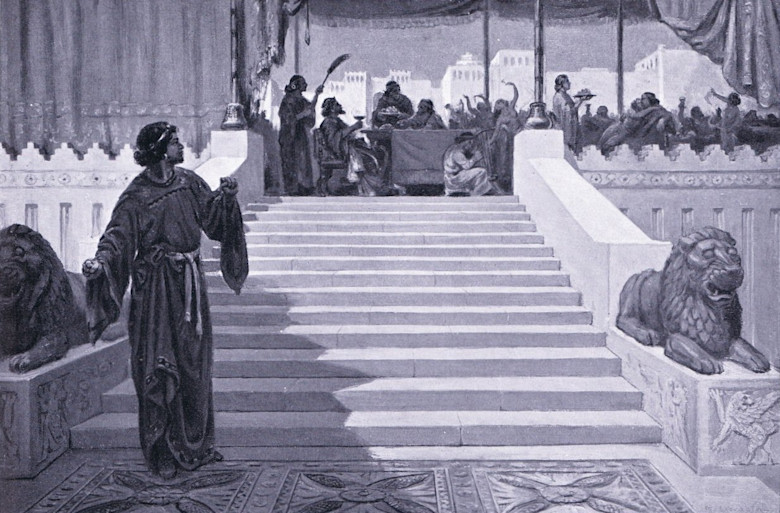
Margaret Dovaston - Cyrus Resolves to Rebel against Astyages the Mede, 550 BC - circa 1915
Who is Cyrus according to Isaiah 45?
The idea that Cyrus was guided by God, and even helped by God to right various wrongs in the world, is attested by the prophet Isaiah:
“Thus says the Lord to His anointed,
To Cyrus, whose right hand I have held—
To subdue nations before him
And loose the armor of kings,
To open before him the double doors,
So that the gates will not be shut:
‘I will go before you
And make the crooked places straight;
I will break in pieces the gates of bronze
And cut the bars of iron.
I will give you the treasures of darkness
And hidden riches of secret places,
That you may know that I, the Lord,
Who call you by your name,
Am the God of Israel.’” (Isaiah 45:1-3)
Cyrus is a powerful endorsement of the idea that God works through all kinds of people. While we can’t know for sure what his inner life was like, it seems that Cyrus was what the early Church fathers called the “virtuous pagans”: those pagans who—despite their lack of knowledge of Christ or even the teachings of the law of Moses—nevertheless had some grasp on truth and righteousness, enough to allow them to be collaborators with God.
Subscribe
Life-giving writing by Christian scholars sent to your inbox once per month

Zachary Porcu has a PhD in church history from the Catholic University of America in Washington DC, with additional degrees in philosophy, humanities, and Classics (Greek and Latin). He is an Eastern Orthodox Christian.
Keep reading

What is algum wood in the Bible?

Hineni in Hebrew: “Here I am” from God and Man
Who was Jotham, king of Judah?
What are the prophetic books of the Bible?
Who is Esaias in the Bible? Answered by a Christian Scholar