Samyaza and the fall of the angels
The short story
Samyaza was the leader of the rebel angels as depicted in the Book of Enoch, a book outside the biblical canon that influenced the biblical authors. In the story, Samyaza makes a pact with his band of angels to rebel against God and seduce human women. God then sends the angels Michael, Gabriel, and Raphael to bind and imprison the rebel angels, including their leader Samyaza.
Samyaza (also spelled Shemyaza or Semjaza) was the leader of a group of angelic beings described in the Book of Enoch, an ancient Jewish text that influenced early Christians. The text tells the story of a group of beings called “the Watchers” who oversaw the Earth and watched over humans. However, they became consumed by lust because of the beauty of human women and conspired to descend to the Earth and take human brides for themselves. When they met to discuss this plan, Samyaza expressed concern that the other angels would abandon him and fail to follow through with the plan, so that he alone would transgress and be punished. To resolve his concern, the rebel angels decided to swear an oath that bound all of them to go through with the plan, together.
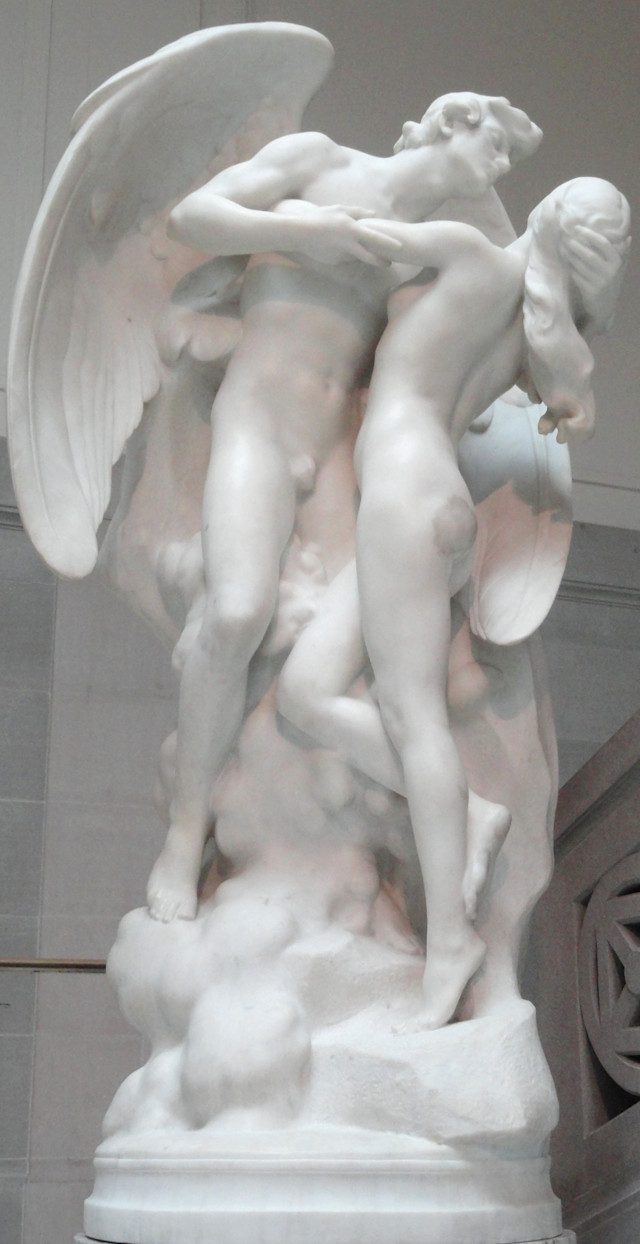
Daniel Chester French - The Sons of God Saw the Daughters of Men That They Were Fair - 1923
“And they became pregnant, and they bare great giants, whose height was three hundred ells: Who consumed all the acquisitions of men. And when men could no longer sustain them, the giants turned against them and devoured mankind. And they began to sin against birds, and beasts, and reptiles, and fish, and to devour one another's flesh, and drink the blood.” (1 Enoch 7:1-5)
The destruction and depravity that ensued was so great that it prompted God to send the famous flood of Noah that destroyed the world—to cleanse the Earth from the abominations caused by the Watchers falling from their station.
This account from The Book of Enoch lines up with—and expands—the Biblical account in Genesis chapter 6. We have another article discussing the Book of Enoch and whether it was authoritative for the Early Christians. Click here to read it. But another interesting aspect of this account of the “fall of the angels” in Enoch is that it also lines up with—and explains—pagan mythology.
What is the source of pagan myth?
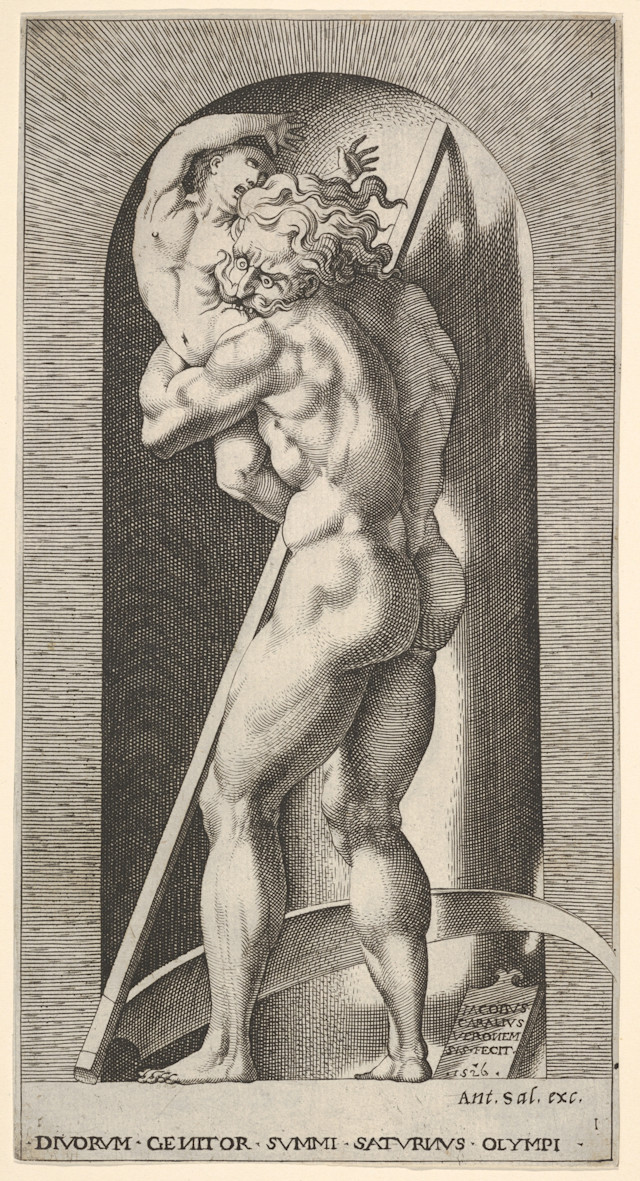
In this illustration by Giovanni Jacopo Caraglio, Saturn devours his son to prevent the child from overthrowing him.
While these stories have a general consensus that the old gods were bad and the new gods enacted a just rebellion, the Book of Enoch goes against this common narrative. In Enoch, the lower gods attempt to rebel against the natural order not because of any sense of justice, but because of their disordered desires. They become enslaved by their lust, and rebel against the cosmic order for the purpose of their self-satisfaction. A second difference is that they do not succeed. Instead of overthrowing the older gods, Enoch describes the rebellion of the Watchers as, essentially, the fall of the angels—how their rebellion, in other words, fails to overthrow the cosmic order. Instead, the God of gods sends the (unfallen) archangels Michael, Gabriel, and Raphael to bind and imprison the rebels:
“Go, bind Semjaza and his associates who have united themselves with women so as to have defiled themselves with them in all their uncleanness. And when their sons have slain one another, and they have seen the destruction of their beloved ones, bind them fast for seventy generations in the valleys of the earth, till the day of their judgement...” (1 Enoch 10:11-12)
If there really was a rebellion against the natural order and a subsequent war in heaven—as most major mythologies hold—then you might expect that story to be told differently depending on who tells it. You’ll notice that in some of the most famous accounts of pagan mythologies, the author begins his story by invoking the muses. In Greek mythology, the muses were goddesses, daughters of Zeus, who visited poets and artists and gave them divine inspiration, teaching them things that they would not normally be able to know: showing them how the world was created or teaching them cosmic truths about the nature of the universe. It was through the muses that famous poets like Homer (the author of the Iliad and the Odyssey) supposedly knew about things that no mortal could know, such as intimate details of wars that took place centuries before their birth.
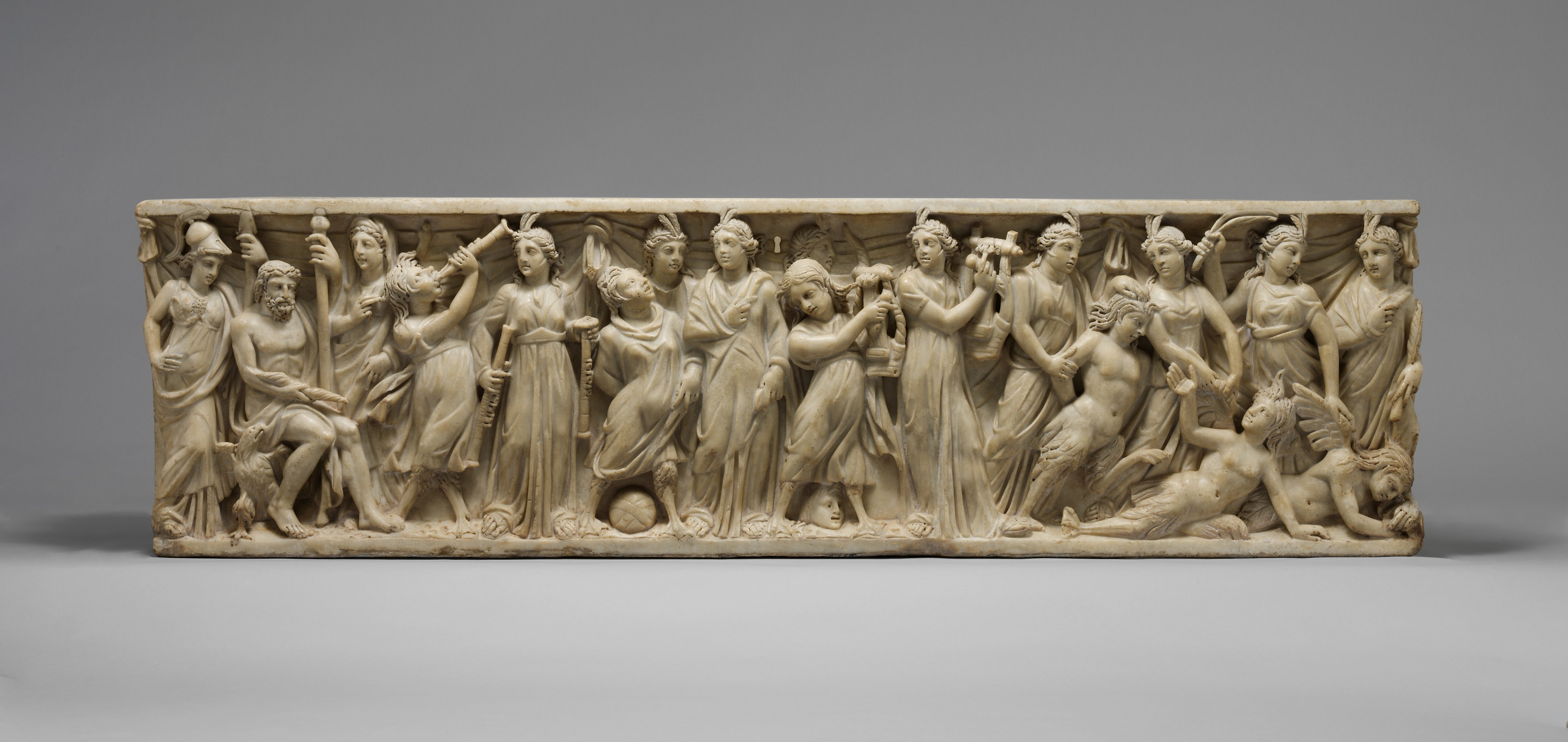
This Roman sarcophagus from the 200s depicts Athena, Zeus, and Hera judging a musical contest between the Muses and the sirens.
But if these goddesses were part of the group of the fallen, rebel angels, then it makes sense that they might inspire a poet with ideas about the world that were not quite right. They might want to make the story differ from what happened so it favored their position and cast them in a better light. They might modify the story to say that they successfully rebelled against wicked gods. In other words, should you invoke a goddess to inspire you, she might not tell the truth: she might instead tell you a fake history. According to the early church fathers, pagan religions came about in this very way; fallen gods created new religions to deceive humanity.
False religions
When the ancient Christians talked about pagans as following “false religions,” they didn’t mean that those religious were completely fake. Nor did they disbelieve the existence of the pagan gods. On the contrary, the early Christians believed in the existence of creatures like Zeus and Thor, but they identified them as the fallen gods as depicted in the Book of Enoch. What was false about the pagan religions, therefore, was not that they worshiped non-existent beings, but that they worshiped liars and usurpers. Their belief was that the pagan gods were simply the fallen angelic powers, who fell because of their lack of virtue and self-control, but wanted to cover up their fall by inventing alternative mythologies (what we would today call revisionist propaganda) to trick humans into thinking that they were still all-mighty, good gods who rightly ruled the world. The whole system of pagan religion, therefore, was an invention by these fallen gods to subjugate humans and receive gifts from them.
What sort of gifts? If you read Greek mythology, you’ll see that the pagan gods loved and demanded sacrifices. These sacrifices were the burnt offerings of various animals, where the human worshipers would sacrifice the animal and burn a part of it. The burnt part was understood to be consumed by the god, and the other parts were cooked and eaten by the human participants. This kind of ritual was literally sharing a meal with the gods. You prepared food for them as a gift just as you would with any other person.
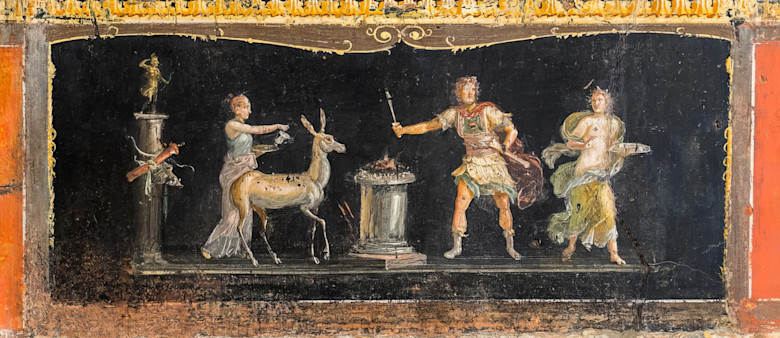
In this first century Pompeian painting, a deer is sacrificed to Diana.
This desire for worldly things is a clue that these creatures were fallen gods, not benevolent rulers. Lusting after the things on the Earth rather than being satisfied with their place in the heavens is exactly what drew Samyaza and the other rebel gods down from heaven and caused them to commit atrocities. And in the stories of Greco-Roman mythology, the gods are absorbed by all sorts of earthly desires: they often become consumed by their emotions and act out in ways that are easy to identify as sinful. They get angry for petty reasons and lash out, as Hera did when she struck Tiresias blind for offending her. They play favorites and let other people die as a result, as in the Trojan war. Or they lust after humans and have sex with them, as Kalypso did with Odysseus. So even in the retelling, it was very clear to the early Christians that these creatures were evil (or at least earthly) and unworthy of worship or imitation.
It’s hard, though, to come to definitive conclusions about these things. If the fallen gods lied to disguise their true story in the form of inspiration to the pagan poets, then it’s difficult to tell what really happened or who they really were. It could be that Samyaza was really the creature that the Greeks came to call Zeus. Zeus is often described in the same kinds of terms, such as the “father of all,” which ancient Israelites and early Christians used to refer to the God of gods. Yet Zeus, consumed by his pettiness and lust for women, shows partiality and looks nothing like the Christian God who is love itself and goodness itself. He looks a lot more like Samyaza and his associates: fallen creatures, not the unfallen Creator.
Subscribe
Life-giving writing by Christian scholars sent to your inbox once per month

Zachary Porcu has a PhD in church history from the Catholic University of America in Washington DC, with additional degrees in philosophy, humanities, and Classics (Greek and Latin). He is an Eastern Orthodox Christian.
Keep reading
Hineni in Hebrew: “Here I am” from God and Man

Who was Jotham, king of Judah?
What are the prophetic books of the Bible?
Who is Esaias in the Bible? Answered by a Christian Scholar

Peor: The Mountain and God of the Moabites