Skip to content
Benaiah, soldier of David and Solomon: What did he do?

Benaiah, soldier of David and Solomon: What did he do?

Dr. Zachary Porcu

April 30, 20264 min read

The short answer:

Benaiah was one of King David’s special forces. Benaiah also served under Solomon and performed many incredible feats of strength, as listed in 2 Samuel/2 Kingdoms 23:20-23.

Benaiah, son of Jehoiada was one of King David’s “mighty men” in the Old Testament. He was one of the supporting characters in the life of King David, especially in the complicated struggle for the throne among David’s sons.
20260430_SAS

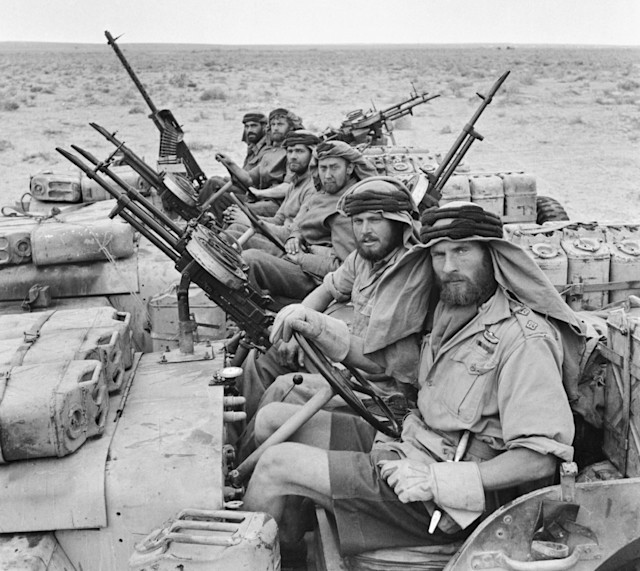
British special forces in North Africa, 1943.

Who were David’s “mighty men”? These men were something like the special forces or shock troops for King David during his reign. To be counted among them meant you were one of the most physically powerful and tactically skilled men in that part of the world. He was the leader of David’s personal guard (2 Samuel / 2 Kingdoms 23:23) and one of the more powerful members of David’s special forces. These special forces were divided between “the three” and “the thirty,” which seem to have been subdivisions. The three were the highest and most preeminent of the group, though the thirty were also a force to be reckoned with. This passage also identifies Benaiah at his exact level of prowess: he was more powerful than the others but not quite as strong as the top three (2 Samuel / 2 Kingdoms 23:23).

Benaiah, son of Jehoiada

Benaiah was not mere hired muscle, however. He was a prominent and trusted member of David’s court and went on to serve under David’s son, King Solomon. One of David’s son’s, Adonijah, started a rebellion by declaring himself king while his father was still alive, sparking a fierce conflict. But Benaiah, loyal to David, supported Solomon:

“Benaiah the son of Jehoiada answered the king and said, “Amen! May the Lord God of my lord the king say so too. As the Lord has been with my lord the king, even so may He be with Solomon, and make his throne greater than the throne of my lord King David.” (1 Kings/3 Kingdoms 1:36–37)
20260430_NathanZadok

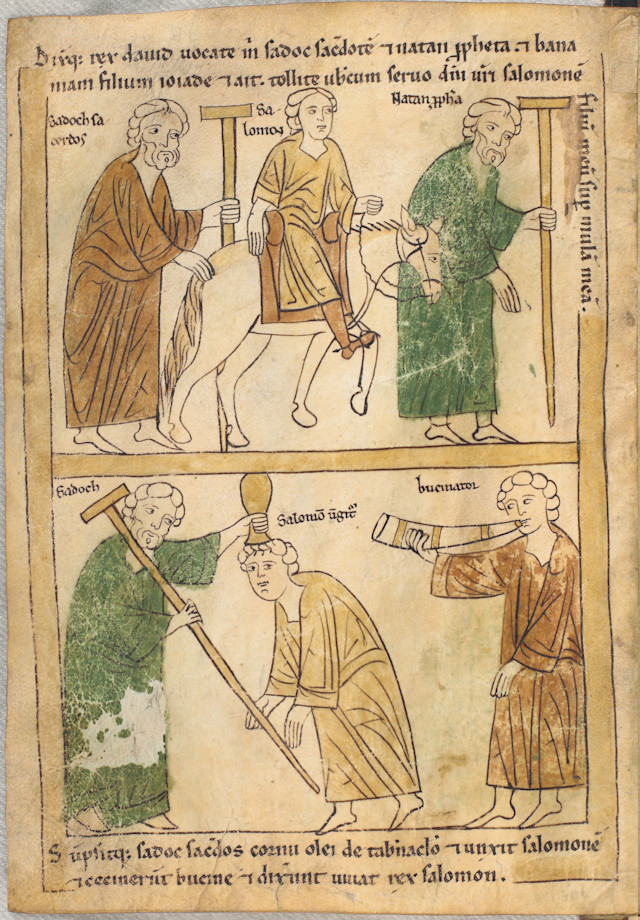
Ferrando Petri Funeskoa - Illumination of Solomon, Nathan, and Zadok - 1200

Another clue to the prestige and renown of Benaiah was his inclusion by Nathan the prophet among the people that Adonijah did not invite to his premature celebration of his (supposed) ascent to the throne. Nathan mentions that “he has not invited me—me your servant—nor Zadok the priest, nor Benaiah the son of Jehoiada, nor your servant Solomon” (1 Kings/3 Kingdoms 1:26). The implication was that Adonijah’s ascent to the throne was not fully legitimate because he did not invite any of the old king’s inner circle to the party. Benaiah is included in that inner circle along with the high priest—the preeminent prophet of the day—and the true heir, Solomon.

And later, all of these figures were part of the triumphal procession for Solomon’s ascent to the throne. Jonathan, one of David’s closest friends, mentions Benaiah when he is explaining to Adonijah that Solomon had ascended to the throne. He explains,

“Our lord King David has made Solomon king. The king has sent with him Zadok the priest, Nathan the prophet, Benaiah the son of Jehoiada, the Cherethites, and the Pelethites; and they have made him ride on the king’s mule. So Zadok the priest and Nathan the prophet have anointed him king at Gihon; and they have gone up from there rejoicing, so that the city is in an uproar. This is the noise that you have heard. Also Solomon sits on the throne of the kingdom” (1 Kings/3 Kingdoms 1:43-46).

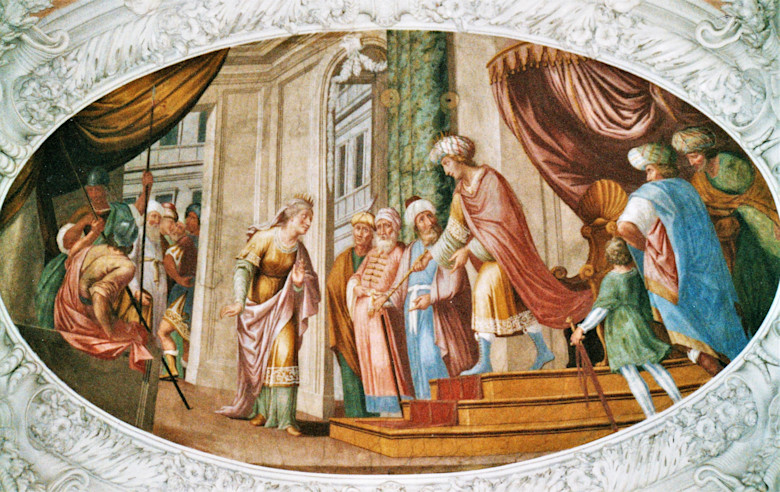
After King David’s death (1 Kings/3 Kingdoms 2:10), Solomon ascended to the throne but was willing to give Adonijah a second chance because they were half-brothers. Unfortunately, as soon as Adonijah made the slightest act that could be interpreted as a bid for the throne, Solomon cut him off. The book of Kings (or Kingdoms) recorded what happened next: “‘Now therefore, as the Lord lives, who has confirmed me and set me on the throne of David my father, and who has established a house for me, as He promised, Adonijah shall be put to death today!’ So King Solomon sent by the hand of Benaiah the son of Jehoiada; and he struck him down, and he died” (1 Kings/3 Kingdoms 2:24-25). Solomon assigned this important task to Benaiah, who was still a trusted and high-ranking member of the house of David.
20260430_BathshebaSolomonFresco

Giovanni Carlone - Bathsheba, the mother of Solomon, intercedes with her son on behalf of Adonijah - 1687

Benaiah kills a lion

Benaiah appears throughout the books chronicling the reign of David, but the main passage that lists his achievements is 2 Samuel / 2 Kingdoms 23:20-23:

“Benaiah was the son of Jehoiada, the son of a valiant man from Kabzeel, who had done many deeds. He had killed two lion-like heroes of Moab. He also had gone down and killed a lion in the midst of a pit on a snowy day. And he killed an Egyptian, a spectacular man. The Egyptian had a spear in his hand; so he went down to him with a staff, wrested the spear out of the Egyptian’s hand, and killed him with his own spear.” (2 Samuel/2 Kingdoms 23:20-21)
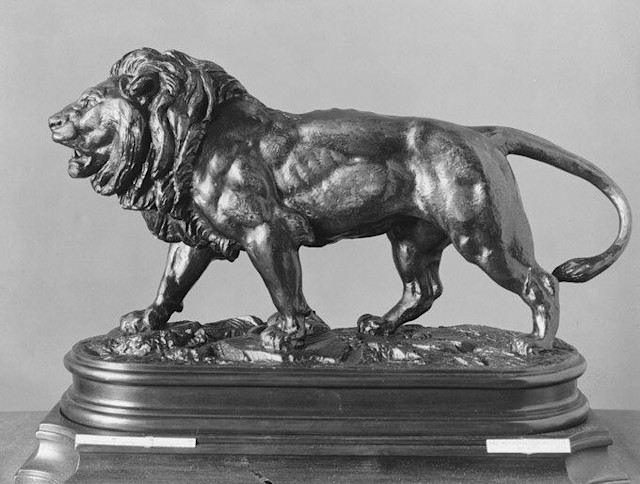
20260430_Antione-LouisBarye_WalkingLion

Antoine-Louis Barye - Walking Lion - 1840s

In short passages like this, it’s easy to gloss over the significance of some of these achievements. Benaiah is listed as besting other powerful warriors in combat, including a mighty Egyptian warrior armed with a spear. The implication seems to be that Benaiah defeated an armed Egyptian while himself unarmed—he wrestled the man, took his spear, and defeated him with it. If you know anything about spears, you know that a man with a spear has a huge advantage over someone who is unarmed, as a spear gives a reach advantage that is very difficult to overcome. That Benaiah was able to take the weapon from him and defeat him with it indicates the difference in skill between them. Killing a lion is also no small feat, but the text adds that he achieved this on a cold, snowy day inside a pit. How mighty he must have been!

Like most people listed in the adventures of the Old Testament, Benaiah’s full life story was not given to us. Though he was an important and valuable member of David’s inner circle and played a role in critical events of the time, Benaiah was not the focus of these chronicles, so his death was not recorded in the Old Testament.

What is the meaning of Benaiah's name?

Benaiah is a common Hebrew name (בניה) which means “Yahweh builds up.” Because the name was so common, there are a variety of other Benaiahs listed in the text. Some of these include the father of Pelatiah from Ezekiel’s prophetic vision (Ezek 11:1, 13), several Levites mentioned in Chronicles (2 Chron. 20-14, 2 Chron. 31:12), and even (confusingly) another of David’s mighty men (1 Chron. 11:31, 1 Chron 27:14, and 2 Samuel/2 Kingdoms 23:30).

Image credit
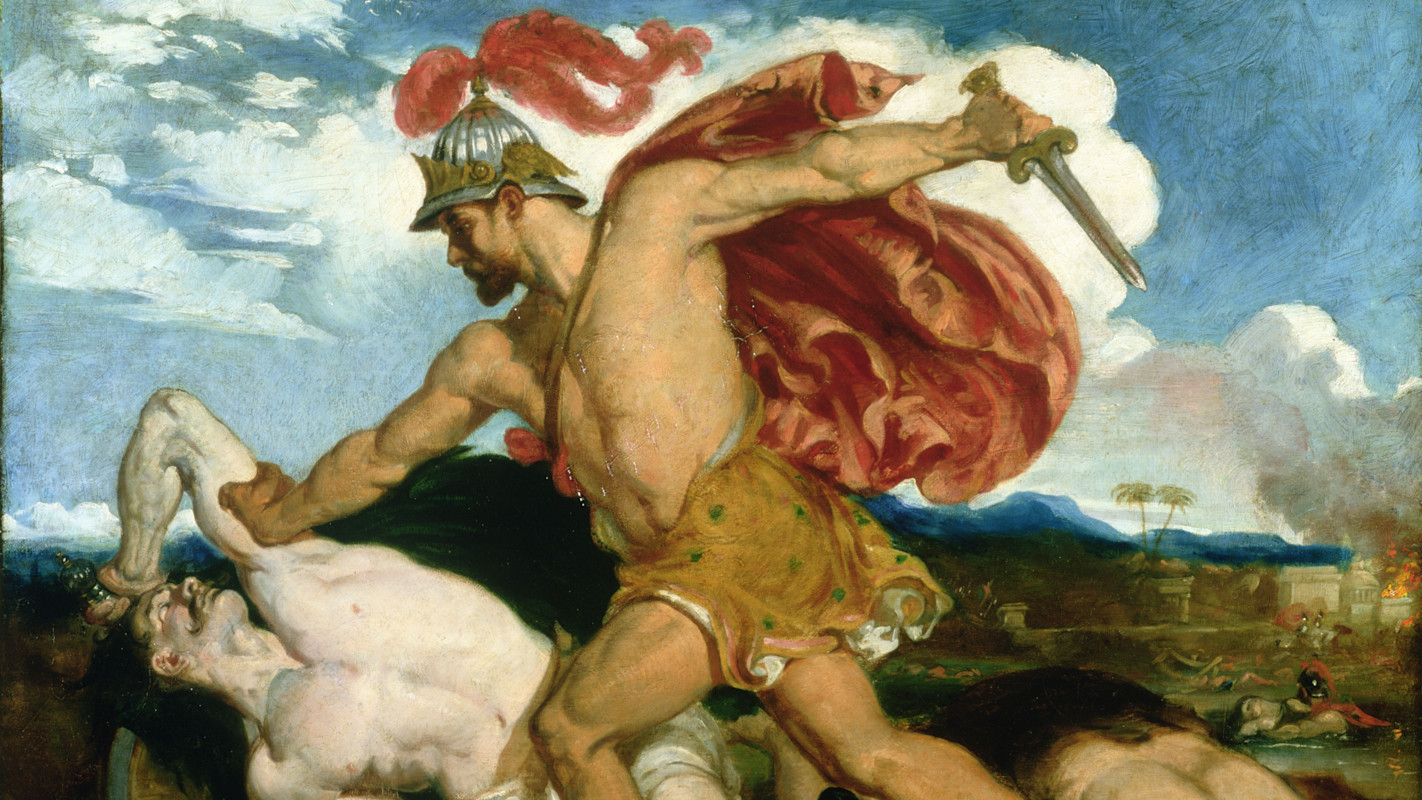
  • William Etty - Benaiah - 1829
  • Special Air Service in North Africa - 1943
  • Ferrando Petri Funeskoa - Illumination of Solomon, Nathan, and Zadok - 1200
  • Giovanni Carlone fresco of Solomon and Bathsheba - Photograph by Hermetiker
  • Antoine-Louis Barye - Walking Lion - 1840s

Article folder: Old Testament

Tagged with: King DavidSolomonIsraelitesHebrewwar

Dr. Zachary Porcu

Zachary Porcu has a PhD in church history from the Catholic University of America in Washington DC, with additional degrees in philosophy, humanities, and Classics (Greek and Latin). He is an Eastern Orthodox Christian.

Full author bio

Keep reading

Who was Hushai the Archite in the Bible? A friend of David

Who was Hushai the Archite in the Bible? A friend of David
Dr. Zachary Porcu
by Dr. Zachary PorcuCatholic University of America
We don’t know much about Hushai except what is listed in I Chronicles and II Samuel. Scholars suggest that “Hushai” was probably short for a name like “Ahishai” or “Ahushai”, and that “Archite” indicated that he belonged to the...
Rachel's Tomb: The Death of an Israelite Matriarch

Rachel's Tomb: The Death of an Israelite Matriarch

Dr. Zachary Porcu
by Dr. Zachary PorcuCatholic University of America
The Biblical passage that relates Rachel’s death is from Genesis 35: “Then they journeyed from Bethel. And when there was but a little distance to go to Ephrath, Rachel labored in childbirth, and she had hard labor. Now it came...
Necromancy in the Bible: Fallen Spirits, Ancient Religion

Necromancy in the Bible: Fallen Spirits, Ancient Religion

Dr. Zachary Porcu
by Dr. Zachary PorcuCatholic University of America
Because of fantasy novels, zombie movies, and games like Dungeons and Dragons, a “necromancer” has come to mean someone who raises and commands the dead. In popular culture, a necromancer is commonly pictured as an evil warlock...
Resen: One of the Cities of Nimrod

Resen: One of the Cities of Nimrod

Dr. Zachary Porcu
by Dr. Zachary PorcuCatholic University of America
Resen is a city mentioned in Genesis 10:12: “Cush begot Nimrod; he began to be a mighty one on the earth. 9 He was a mighty hunter before the Lord; therefore it is said, “Like Nimrod the mighty hunter before the Lord.” 10 And t...
Who is Asaph in the Bible? A minister and psalmist of David

Who is Asaph in the Bible? A minister and psalmist of David

Dr. Zachary Porcu
by Dr. Zachary PorcuCatholic University of America
The name “Asaph” is Hebrew for “gather”. It is used three times in the Bible, and may refer to any of several figures. But the main one that people are generally interested in is the Asaph who is attributed a number of the psal...
The Shulamite: Bride of Solomon and Allegorical Woman

The Shulamite: Bride of Solomon and Allegorical Woman

Dr. Zachary Porcu
by Dr. Zachary PorcuCatholic University of America
The word “Shulamite” (also spelled “Shulammite”) is only used once in the Bible, in the Song of Solomon, chapter 6, verse 13. What does it mean? It’s at least a reference to the bride of Solomon, but the nature of the title is ...