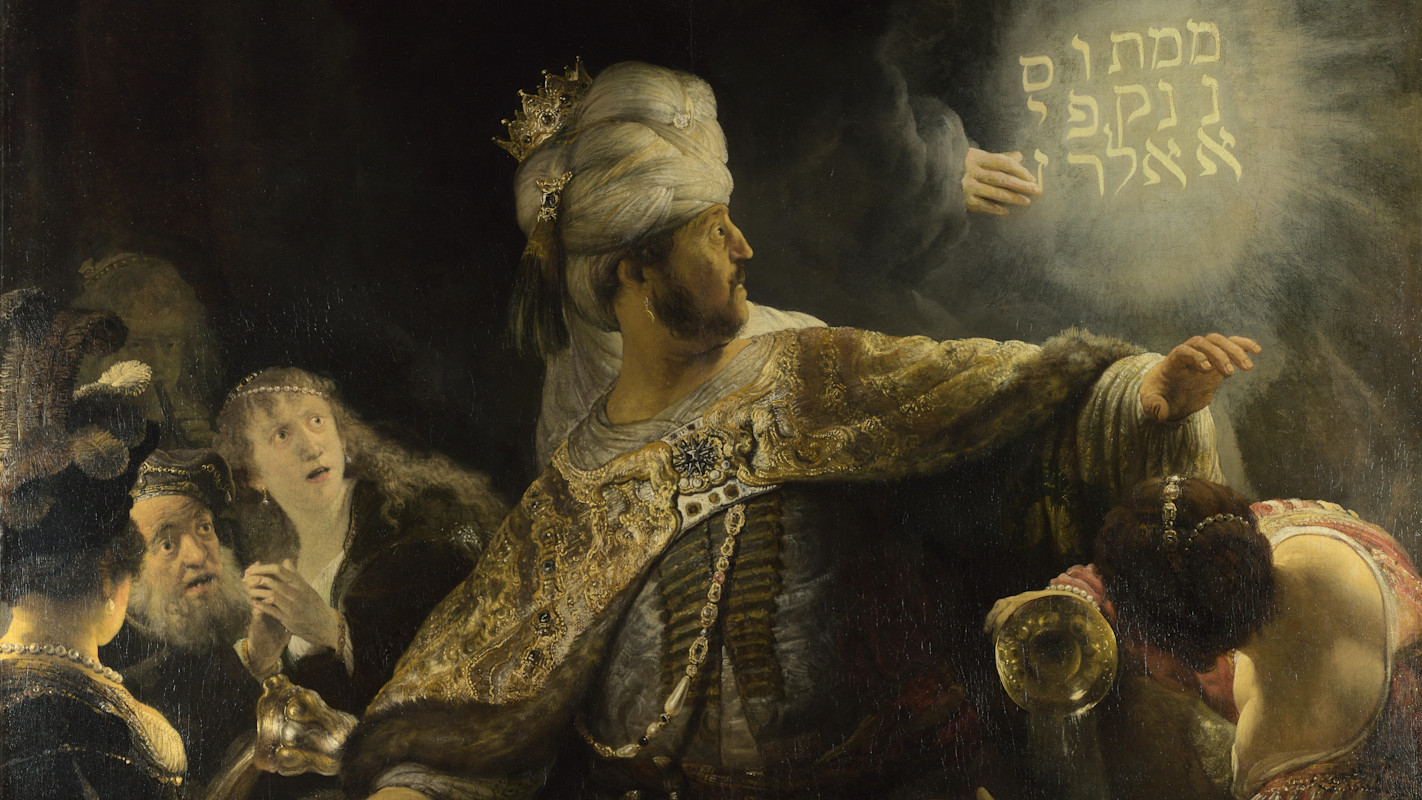
Two biblical figures: Belteshazzar or Belshazzar
The short answer:
Belteshazzar and Belshazzar were two different people: Belteshazzar was the name given to Daniel when he was a slave in Babylon, while Belshazzar was a king who reigned during Daniel’s time in exile.
There was no king “Belteshazzar” in the Bible, though you may be misled by the similarity of this name to “Belshazzar.” The latter was a king, the last king of the Neo-Babylonian empire, and some scholars believe that he was the grandson of Nebuchadnezzar II. Belteshazzar, on the other hand, was the name given to the prophet Daniel when he was taken as a captive in Babylon.
Why was Daniel given the name Belteshazzar?
Daniel was one of the most famous prophets of the Old Testament. He served under Nebuchadnezzar II, the king of Babylon, and was famously thrown into a den of lions as punishment for refusing to worship the king as a god. While a captive servant, Daniel was trained in the Babylonian court and given the name “Belteshazzar.” Getting a new name was common for captured or enslaved people. Daniel’s new owners were Babylonians, and “Daniel” was a Hebrew name, so it makes sense that they might want the convenience of referring to him with a name from their own language.
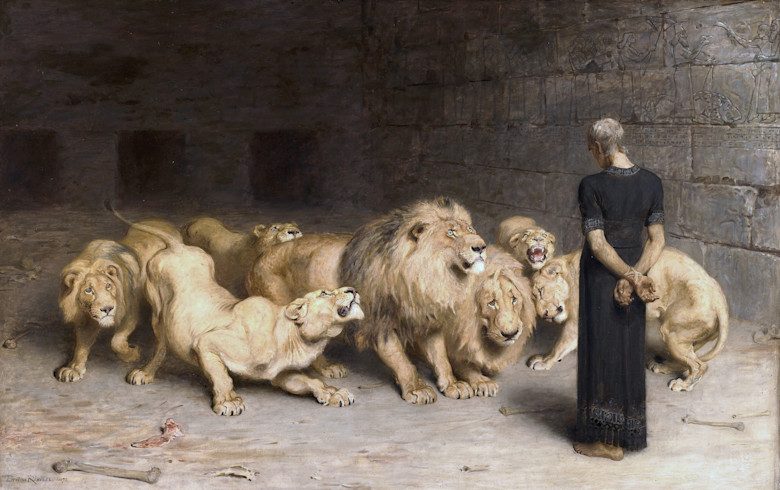
Briton Rivère - Daniel in the Lion's Den - 1872
Why did God punish King Belshazzar?
Belshazzar, on the other hand, was one of the last kings of Babylon. Chapter 5 of the Book of Daniel describes a grave mistake that that Belshazzar made during his reign. He held a feast and ordered that the gold and silver vessels which were originally in the temple in Jerusalem be brought out so he and his guests might drink out of them. The Babylonians had previously conquered the Israelites and destroyed the temple, looting the valuable cups and other vessels that the Israelites had used in their temple worship of God. After wars in the ancient world, it was common to take as spoils the religious objects of a conquered people. But Belshazzar’s actions had a further spiritual significance: he did more than drink out of those cups at the feast—he misused them in a religious way. As the Book of Daniel describes it,
“Then they brought the gold vessels that had been taken from the temple of the house of God which had been in Jerusalem; and the king and his lords, his wives, and his concubines drank from them. They drank wine, and praised the gods of gold and silver, bronze and iron, wood and stone.” (Daniel 5: 3-4)
What were the “gods of gold and silver, bronze and iron”? In the ancient world, there was an almost-universal art form of “making gods.” It was the practice of creating statues made of different materials (bronze, wood, stone, gold, et cetera) in the likeness of a particular deity and using magical arts to summon the deity’s spirit into the statue and trap it there—like a genie in a bottle. (Read more about the ancient practice of idol worship here.)
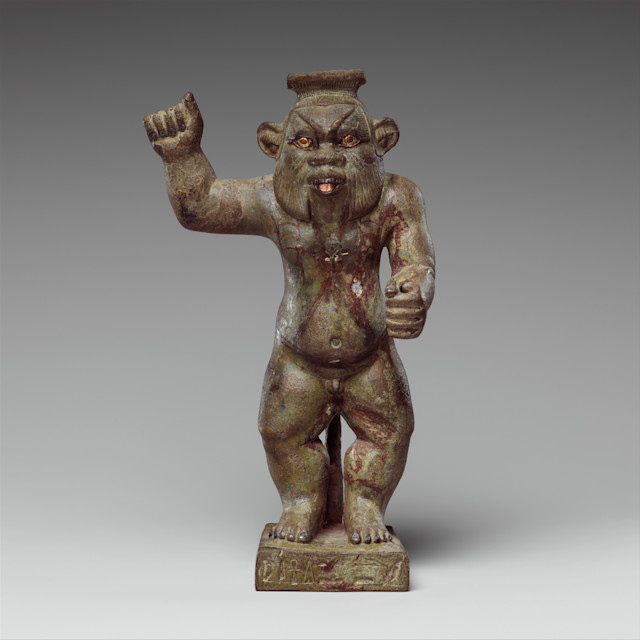
An Egyptian image of the god Hor-Asha-Khet, 4th–2nd century B.C.
What happened next? A hand appeared in the midst of the party and wrote something on the wall in front of everyone. No one could read the writing, so Daniel was summoned to interpret it. Daniel explained that the former king, Nebuchadnezzar, had been humbled by God and learned the lesson that, “the Most High God rules in the kingdom of men, and appoints over it whomever He chooses” (Daniel 5:21), but that Belshazzar, the current king, had not been humble:
“But you his son, Belshazzar, have not humbled your heart, although you knew all this. And you have lifted yourself up against the Lord of heaven. They have brought the vessels of His house before you, and you and your lords, your wives and your concubines, have drunk wine from them. And you have praised the gods of silver and gold, bronze and iron, wood and stone, which do not see or hear or know; and the God who holds your breath in His hand and owns all your ways, you have not glorified.” (Daniel 5:22-23)
Daniel interpreted the writing as declaring that Belshazzar had been weighed and found wanting, and that his kingdom would be divided up and given to the Medes and Persians. Sure enough, that very night, Belshazzar was slain and his kingdom was inherited by Darius the Mede (Daniel 5:31-32).
Subscribe
Life-giving writing by Christian scholars sent to your inbox once per month

Zachary Porcu has a PhD in church history from the Catholic University of America in Washington DC, with additional degrees in philosophy, humanities, and Classics (Greek and Latin). He is an Eastern Orthodox Christian.
Keep reading

Who was Tartak in the Bible? The idol of the Avites

Hineni in Hebrew: “Here I am” from God and Man
Who was Jotham, king of Judah?
What are the prophetic books of the Bible?
Who is Esaias in the Bible? Answered by a Christian Scholar