Skip to content

Hebrews 6

A font-perfect reading bible

1Wherefore leaving the doctrine of the first principles of Christ, let us press on unto perfection; not laying again a foundation of repentance from dead works, and of faith toward God, 2of the teaching of baptisms, and of laying on of hands, and of resurrection of the dead, and of eternal judgment. 3And this will we do, if God permit. 4For as touching those who were once enlightened and tasted of the heavenly gift, and were made partakers of the Holy Spirit, 5and tasted the good word of God, and the powers of the age to come, 6and then fell away, it is impossible to renew them again unto repentance; seeing they crucify to themselves the Son of God afresh, and put him to an open shame. 7For the land which hath drunk the rain that cometh oft upon it, and bringeth forth herbs meet for them for whose sake it is also tilled, receiveth blessing from God: 8but if it beareth thorns and thistles, it is rejected and nigh unto a curse; whose end is to be burned.

9But, beloved, we are persuaded better things of you, and things that accompany salvation, though we thus speak: 10for God is not unrighteous to forget your work and the love which ye showed toward his name, in that ye ministered unto the saints, and still do minister. 11And we desire that each one of you may show the same diligence unto the fulness of hope even to the end: 12that ye be not sluggish, but imitators of them who through faith and patience inherit the promises.

13For when God made promise to Abraham, since he could swear by none greater, he sware by himself, 14saying, Surely blessing I will bless thee, and multiplying I will multiply thee. 15And thus, having patiently endured, he obtained the promise. 16For men swear by the greater: and in every dispute of theirs the oath is final for confirmation. 17Wherein God, being minded to show more abundantly unto the heirs of the promise the immutability of his counsel, interposed with an oath; 18that by two immutable things, in which it is impossible for God to lie, we may have a strong encouragement, who have fled for refuge to lay hold of the hope set before us: 19which we have as an anchor of the soul, a hope both sure and stedfast and entering into that which is within the veil; 20whither as a forerunner Jesus entered for us, having become a high priest for ever after the order of Melchizedek.
American Standard Version (ASV), 1901. Public domain in the United States. Digital text courtesy of eBible.org.

Keep reading

Who is Esaias in the Bible? Answered by a Christian Scholar

Who is Esaias in the Bible? Answered by a Christian Scholar

Dr. Zachary Porcu
by Dr. Zachary PorcuCatholic University of America
In English the name “Esaias” is usually written as “Isaiah,” which is closer to the original Hebrew spelling, but the spelling “Esaias” is closer to how it would be spelled in ancient Greek (Ἡσαΐας). This matters because Greek ...
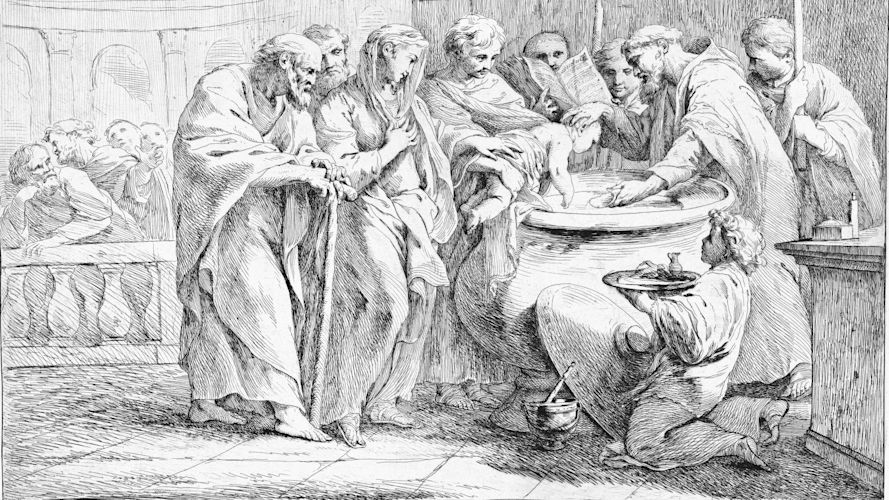
What is paedobaptism? A Christian scholar explains

What is paedobaptism? A Christian scholar explains

Dr. Zachary Porcu
by Dr. Zachary PorcuCatholic University of America
Paedobaptism is the more technical or older way of referring to the baptism of infants. “Paedo” or “Pedo” come from the Greek pais (πάις), which means “child.” However, because “pedo” in modern slang has come to be a shorthand ...
What is wrong with reformed theology? By a Christian PhD

What is wrong with reformed theology? By a Christian PhD

Dr. Zachary Porcu
by Dr. Zachary PorcuCatholic University of America
Reformed theology is a broad religious system with many different elements. Its theology is organized around the absolute sovereignty of God—the idea that God is in total, complete control of everything. In grappling with this ...
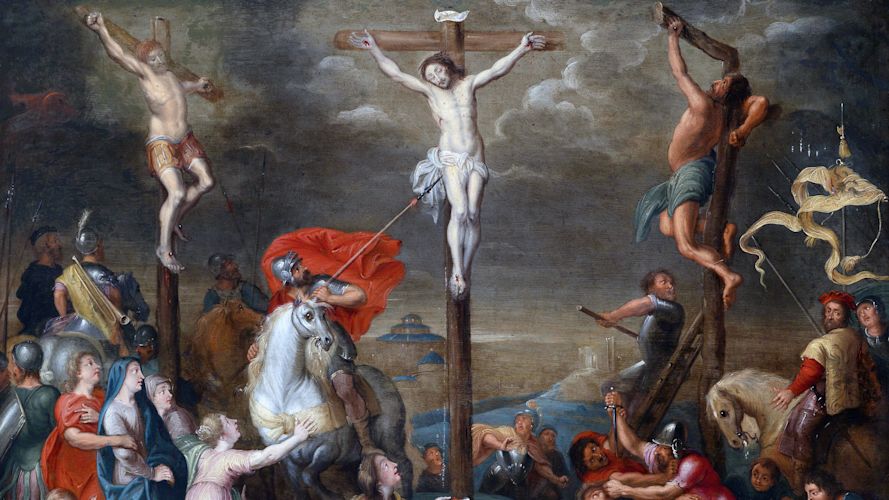
Who was Saint Longinus and what is his story?

Who was Saint Longinus and what is his story?

Dr. Zachary Porcu
by Dr. Zachary PorcuCatholic University of America
There are many famous characters whose names aren’t recorded in the New Testament but who we know about through tradition and other extra-Biblical sources. For example, the “woman at the well” whom Jesus talks to, as recorded i...
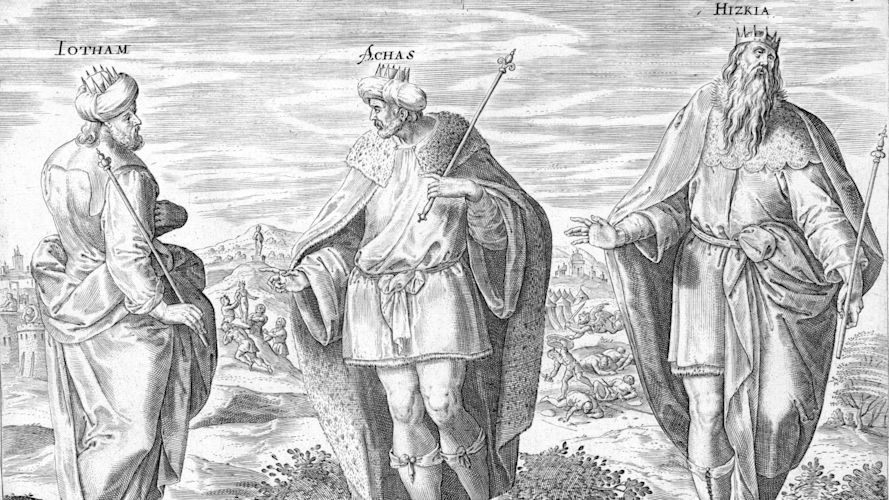
Who was Jotham, king of Judah?

Who was Jotham, king of Judah?

Dr. Zachary Porcu
by Dr. Zachary PorcuCatholic University of America
To understand Jotham we have to understand his father, Uzziah, and the context of ancient Israel at this time. Both Jotham and Uzziah were Kings of Judah, the southern tribe of Israel. Uzziah took the throne at age 16 and reign...
A PhD explains Isaiah's phrase: “Forget the former things”

A PhD explains Isaiah's phrase: “Forget the former things”

Dr. Zachary Porcu
by Dr. Zachary PorcuCatholic University of America
The past is a powerful thing. Through pictures, videos, and other types of “time capsules,” we can create powerful messages that endure into the future and offer a window into the past. Certain sounds, tastes, and especially sm...