What is wrong with reformed theology? By a Christian PhD
The short story:
Reformed theology, also called Calvinism or Calvinist theology, is a denomination of Protestant Christianity that heavily emphasizes the sovereignty of God. The Calvinist hyper-emphasis on sovereignty and man’s utter sinfulness often leads to theological problems, such as minimizing the traditional idea that God is love or even making God the source of evil.
Reformed theology is a broad religious system with many different elements. Its theology is organized around the absolute sovereignty of God—the idea that God is in total, complete control of everything. In grappling with this concept, Calvinists developed many ideas about the problem of human sin.
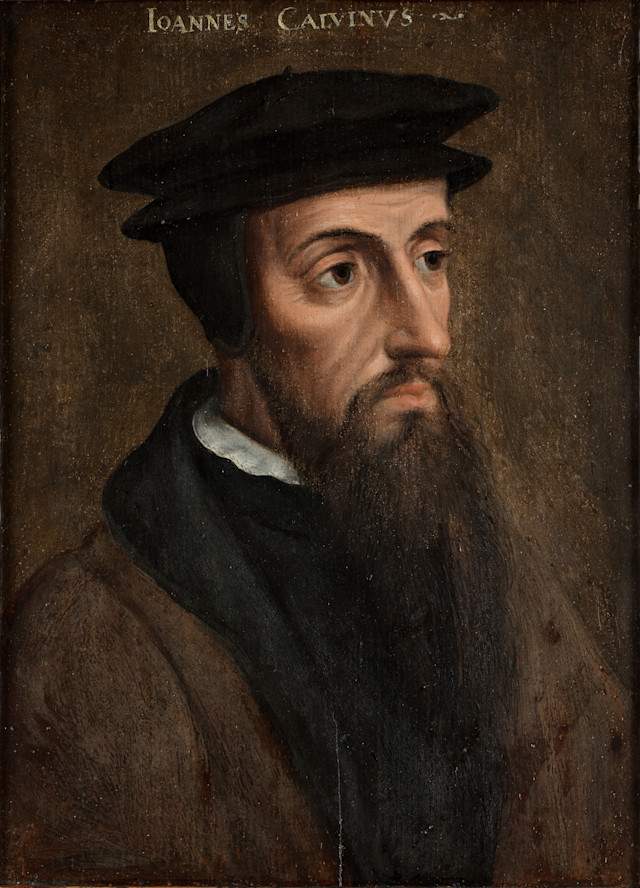
Anonymous - Portrait of John Calvin - circa 1550
An important part of this view is the idea of divine justice. Because God is just, he must punish evil. Any evil or sin is an abomination to God, and for God to be just he has to punish sin and evil, so God must inflict his wrath on mankind because mankind is so utterly evil.
The problem is that if God poured out all his wrath on mankind, we couldn’t bear it—we would be completely destroyed. For this reason, Jesus had to take on human nature. Because Jesus is human, God the Father can punish humanity through Jesus. But because Jesus is also divine—as God the son—he could actually endure the punishment, which no human being could ever bear. Reformed theology says that, when Jesus was on the cross, God poured out all his punishment on Jesus instead of inflicting it on the rest of us. But Jesus was able to endure it all and even rose from the dead.
A good place to understand the core, traditional beliefs of Reformed theology is the Heidelberg Catechism, a document written in the 1500s for teaching Calvinist doctrine that takes on a question-and-answer format with Bible verses to back up its ideas.
The Heidelberg Catechism says that, “This fall has so poisoned our nature, that we are all conceived and born in a sinful condition” and affirms that “we are so corrupt that we are totally unable to do any good and inclined toward all evil” unless we are reborn by the spirit of God. The idea is that while we had the ability to do good and to live up to God’s laws, we lost the ability to do either in the Fall. The Heidelberg Catechism uses verses like Romans 5:12 to prove this: “Therefore, just as sin came into the world through one man, and death through sin, and so death spread to all men because all sinned” (ESV; see also Genesis 3, Romans 5:18-19, and Psalms. 51:5).
Significantly, while the Heidelberg Catechism acknowledges that God is merciful, it brushes passed this fact to focus on God’s justice:
Q. But isn’t God also merciful?
A. God is certainly merciful, but also just. God’s justice demands that sin, committed against his supreme majesty, be punished with the supreme penalty—eternal punishment of body and soul.
It defends this maneuver with verses like Matthew 25:46, the final line of the Parable of the Sheep and the Goats: “And these will go away into eternal punishment, but the righteous into eternal life.” Other verses it lists to back up God’s justice are Exodus 34:7; Deuteronomy 7:9-11; Psalms 5:4-6; and Hebrews 10:30-31.
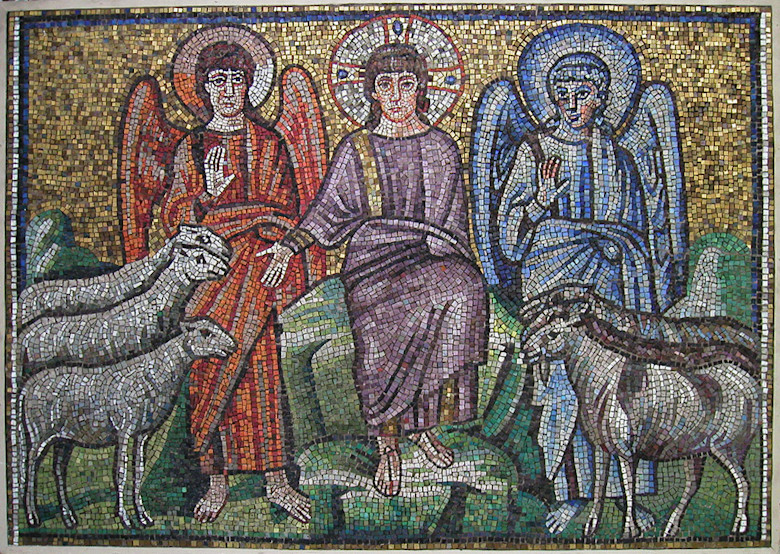
A 20th century reproduction of a 6th century Byzantine mosaic depicting the separation of sheep and goats.
The way that mankind escapes this eternal punishment is that God the Son (Jesus) bears the weight of the punishment and wrath of God:
Q. Why must the mediator also be true God?
A. So that the mediator, by the power of his divinity, might bear the weight of God’s wrath in his humanity and earn for us and restore to us righteousness and life.
That said, there are a lot of other elements to Reformed theology. Like most Protestants, Reformed theologians believe that the Bible is the only and/or primary authority in Christian doctrine. They reject the idea that the Bible is a part of (and inseparable from!) apostolic tradition—the teachings and writings of Christ’s apostles. Like most groups descended from traditional Christianity, they affirm some type of Trinitarianism. Like certain other Protestants, they have a particular view about the relationship between God and man expressed in various laws or covenants. In fact, the position of Reformed Theology is also referred to as “covenant theology”; it is a particular way of reading the Bible that organizes the Biblical story into various covenants between God and man.
But the thing that most Reformed theologians are known for is their focus on the sovereignty of God, man’s absolute corruption and in ability to love God, God’s consequent wrath and need to punish mankind, and Jesus’ role in taking our punishment so that we don’t have to suffer it.
These ideas are popularly summarized with the acronym “TULIP”:
TULIP
- T: Total depravity—mankind is completely and utterly depraved.
- U: Unconditional election—God “elects” (chooses) us for salvation not based on our deeds.
- L: Limited atonement—Jesus only died for the sins of the elect.
- I: Irresistible grace—no one can resist God choosing him or her for salvation.
- P: Perseverance of the saints—once you’re chosen for salvation, you can never lose it.
Is there a difference between Calvinism and Reformed theology?
Confusingly, the word “Reformed” could refer either to the specific set of denominations that follow the teachings of John Calvin or it could be a word that refers broadly to the Protestant Reformation as a whole.
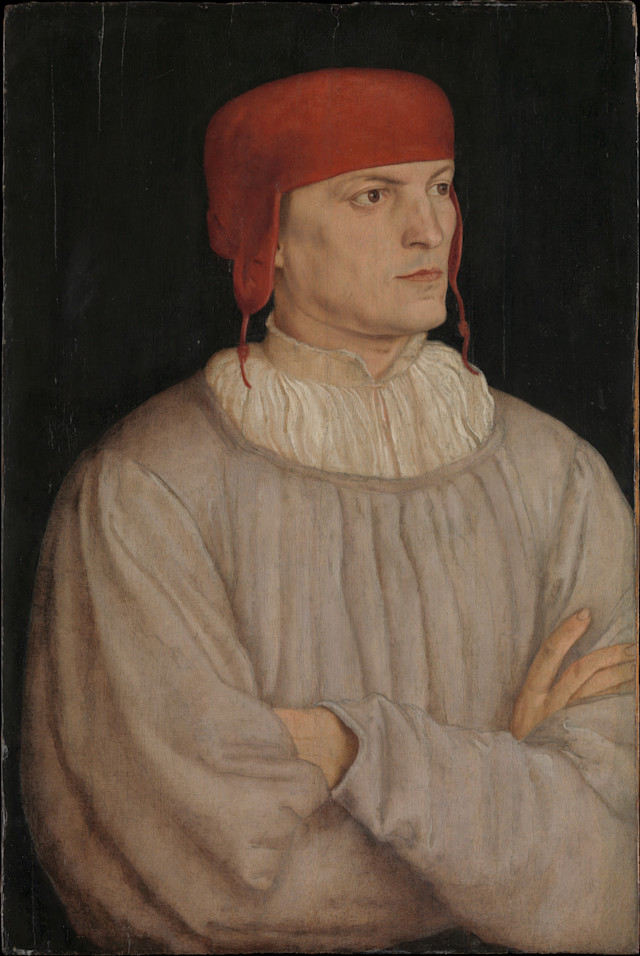
Chancellor Leonhard von Eck, who opposed the Reformation.
But the term “Reformed theology” usually means something more specific than the entire Reformation movement. It’s usually a synonym for the type of theology that’s based on John Calvin’s belief system and which historically manifested in Presbyterianism, but has also had a pan-denominational influence on many other Protestant groups.
Generally speaking, there isn’t a difference between “Calvinism” and “Reformed theology.” Different groups may identify as “Reformed” and deny that they’re “Calvinist” proper, but from a classification standpoint scholars have not been able to arrive at any consensus distinction between the two. Most people use the terms interchangeably.
Is Reformed Theology biblical?
Given all the Bible citations in the Heidelberg Catechism and the emphasis Calvinists put on the authority of the Bible, you would think that Reformed theology was in complete lockstep with what we see presented in the Bible. However, strictly speaking, that isn’t the case. To understand this, we need to make a distinction between explicit statements from the Bible and potential interpretations of the Bible.
Because the Bible is such a long and complex document—it’s really a collection of books rather than one book—it’s easy to find Bible verses to back up all sorts of different positions. There are also many places where the Bible seems to contradict itself, or say different things in different places. It’s important to distinguish between verses that explicitly define something and verses that could be taken in various ways.

Utagawa Hiroshige - Poppy and Sparrow - circa 1833
“Are not two sparrows sold for a copper coin? And not one of them falls to the ground apart from your Father’s will. But the very hairs of your head are all numbered. Do not fear therefore; you are of more value than many sparrows.” (Matthew 10:29-31, NKJV)
This passage is often referenced to show that God is sovereign over all things, which is certainly clear throughout the Bible. But it’s one thing to state God’s sovereignty and another to say that God’s sovereignty precludes human free will—which this passage doesn’t explicitly say.
Or how about Romans 3:9-12, in which Paul famously quotes the Psalter to demonstrate that “Jews and Gentiles alike are all under the power of sin”?
“There is no one righteous, not even one;
There is no one who understands;
There is no one who seeks God.
All have turned away,
They have together become worthless;
There is no one who does good,
not even one.”
The issue with this passage is that we know it can’t be taken literally, because the Bible constantly refers to individuals as being righteous, seeking after God, and wanting to do God’s will:
Saint Paul says it about himself: “You are witnesses, and so is God, of how holy, righteous and blameless we were among you who believed” (1 Thess 2:9-11, NKJV, my emphasis).
Saint Luke describes the parents of John the Baptist as righteous:
“There was in the days of Herod, the king of Judea, a certain priest named Zacharias, of the division of Abijah. His wife was of the daughters of Aaron, and her name was Elizabeth. And they were both righteous before God, walking in all the commandments and ordinances of the Lord blameless.” (Luke 1:4-6)
What about Noah? As Genesis 6:9 says, “Noah was a just man, perfect in his generations. Noah walked with God.”
So obviously, the issue of sin is more complex than a literal reading of the Psalm—because a literal reading of countless other verses says the opposite.
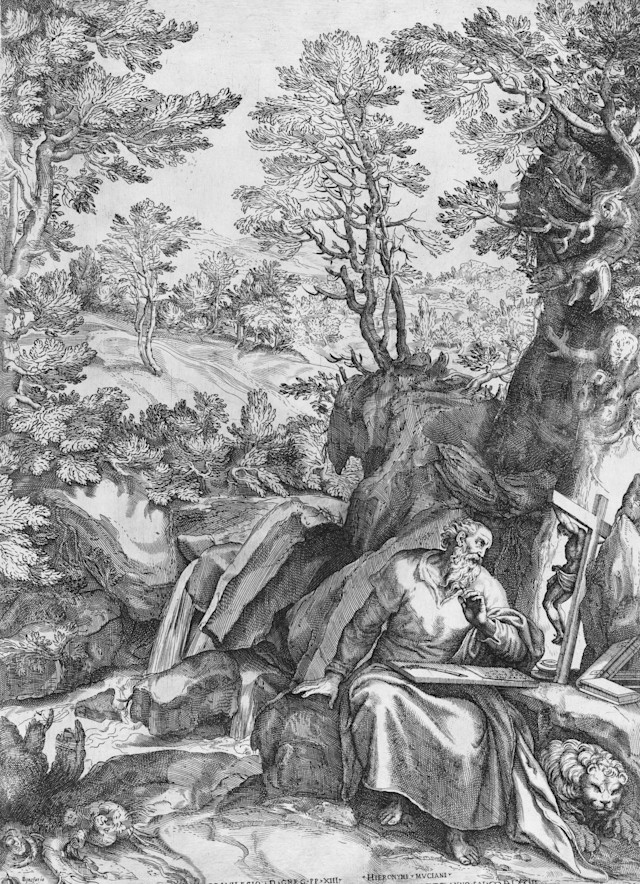
Cornelius Cort - St. Jerome Translating the Bible in the Wilderness - 1573
You might say, “well, people can always find something to argue about.” But consider: no major Christian denomination has ever used citations from the Bible to argue that God doesn’t exist or that there was no such person as Jesus. Why? Because the Bible is explicitly clear that there is a God and that there was a person named Jesus. There’s no ambiguity about these statements.
It’s true that many translations of St. Paul’s letter to the Romans actually use the word “predestined,” but that certain people have chosen to translate his words in this way doesn’t prove that “predestination is in the Bible.” How come? Check out my other article, “Predestination vs. Free Will” to get more into that question.
Why do some people dislike Calvinism?
A basic reason why some people dislike Calvinism is because they don’t think that the verses commonly used to evince it succeed in doing so. But in my experience it’s usually not a good use of time to argue about Biblical interpretation because—again—you can quote the Bible in all sorts of creative ways to prove almost anything you want. That’s why groups as different as Mormons (who do not believe in the Trinity), Evangelicals (who believe that the sacraments are only symbolic), and Catholics (who believe the sacraments have a real physical effect on your soul), can all cite Bible verses to prove their points—despite all of their points being incompatible.
The deeper problems that people have with Calvinism are, I think, two-fold: Calvinist beliefs seem to cause moral issues with how we understand God, and they aren’t traditional beliefs that go back to the early Church.
Jupiter with a Thunderbolt - 1500s-1600s - The Metropolitan Museum of Art
Another issue is that these ideas seem to take away some of God’s freedom as well. The way these doctrines are usually explained, God the Father seems to be bound by justice: he seems to be unable to do anything except satisfy divine justice. He is determined and controlled by his nature, which seems to mean that something—namely justice—is higher than God. In addition, the idea of a divinely angry God who needs to “take it out” on somebody is impossible to reconcile with the God who is love itself according to the Apostle John (1 John 4:7-8). I have personally known many people who lost their faith because they couldn’t accept the idea that God was an uncontrollably angry being—and I don’t blame them.
Third, absolute sovereignty—the idea that God is totally in control over everything that happens—leads to the logical conclusion that God is the cause of evil. If he has complete control over everything, then he causes everything, and if that’s true, then he also causes all the evil in the world. And if that’s true, then God is the source of evil, which either makes God evil himself or else beyond good and evil such that he would be amoral.
The other major problem with Reformed theology is that many of its ideas have little continuity with the beliefs of the early Church, especially belief in the absolute sovereignty of God in the sense that precludes human free will and limits the gospel to God pouring out his justice on Jesus. Such a view is not consistent with those of the church fathers. While it’s common to point to early theologians like St. Augustine to support the idea of total depravity, such claims are misplaced; St. Augustine famously defended human free will in a treatise called, On Free Choice of the Will. And the main concept of salvation in the early church was not the idea that Jesus took the just punishment for our sins; instead, it was that Christ conquered death and the devil, and sacramental unity with him allows us to join him in the triumph of eternal life.
Finally, it is important to consider the teachings of Christ himself. Two of his longest discussions of salvation are the parable of the Sheep and the Goats and the Parable of the Prodigal Son. In the Sheep and the Goats, it’s quite clear that the goats are punished and the sheep are rewarded on account of what they did, not because God chose one for punishment and another for reward. More radical is the Parable of the Prodigal Son, in which there is no punishment or propitiation element at all. Saint John Chrysostom, an early Church Father and one of the most prominent preachers of the ancient world, pointed out that in this parable, the Father does not rebuke the son, and the fatted calf is slain not as punishment but for the feast which is at the heart of the celebration. The son’s suffering while out in a foreign land was punishment enough, and he needed no further punishment.
Subscribe
Life-giving writing by Christian scholars sent to your inbox once per month

Zachary Porcu has a PhD in church history from the Catholic University of America in Washington DC, with additional degrees in philosophy, humanities, and Classics (Greek and Latin). He is an Eastern Orthodox Christian.
Keep reading
The Trinity: Are God and Jesus the same person?
Forgiveness and the Remission of Sins
Stanley Hauerwas: Virtue Ethicist & Postliberal Theologian
Who is Jürgen Moltmann and What Did He Believe?

Jerry Bridges and The Navigators: A Protestant Order