Who was Jotham, king of Judah?
The short answer:
Jotham was one of the kings of Judah, the southern Kingdom of Israel. He was a good king, though he seems to have been permissive with pagan religious elements in his kingdom. This permissiveness arguably led to his son engaging in pagan practices and ruining the religious landscape of Jerusalem.
To understand Jotham we have to understand his father, Uzziah, and the context of ancient Israel at this time. Both Jotham and Uzziah were Kings of Judah, the southern tribe of Israel. Uzziah took the throne at age 16 and reigned from approximately 790 to 739 BC, around 50 years.
For the first part of his reign, he did many good things for the land. In the book of Chronicles, Uzziah is compared to his father before him:
“And he did what was right in the sight of the Lord, according to all that his father Amaziah had done.” (2 chronicles 26:4, NKJV)
He seems to have acted righteously in large part because he had Zechariah the prophet to guide him:
“He sought God in the days of Zechariah, who had understanding in the visions of God; and as long as he sought the Lord, God made him prosper.” (2 Chronicles 26:5, NKJV)
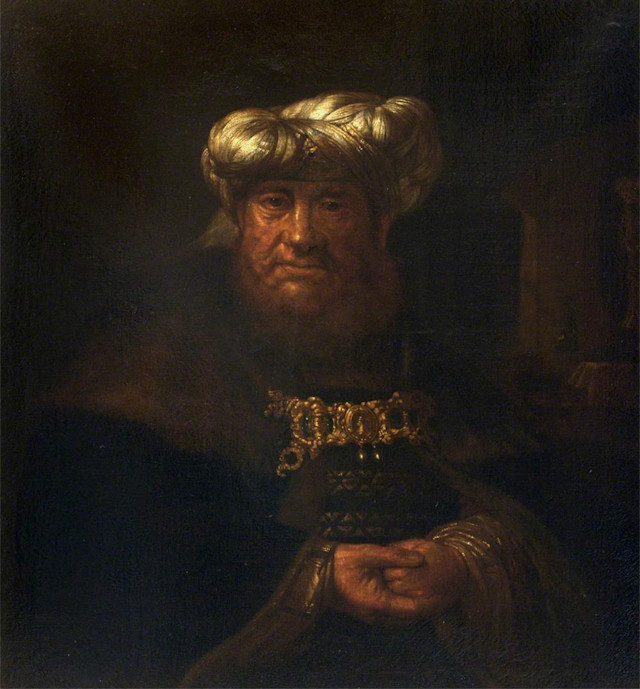
Rembrandt van Rijn - King Uzziah Stricken with Leprosy - circa 1639
Unfortunately, after the prophet Zechariah died, Uzziah seems to have allowed his success to fill him with pride, as the author of Chronicles points out:
“But when he was strong his heart was lifted up, to his destruction, for he transgressed against the Lord his God by entering the temple of the Lord to burn incense on the altar of incense.” (2 Chronicles 26:16)
What was wrong with this? To understand the severity of this trespass you have to appreciate the highly structured religious and cultural system of ancient Israel. The temple was not merely a church building where people sang songs together and listened to sermons. The temple was a place where ritual sacrifice was performed on behalf of the people of Israel, and in which the priests interfaced directly with God, who was understood to be literally present in the temple. God's presence in the temple meant that ceremony and ritual were of utmost importance, as every action that took place in the temple had spiritual meaning—so people behaved with special care.
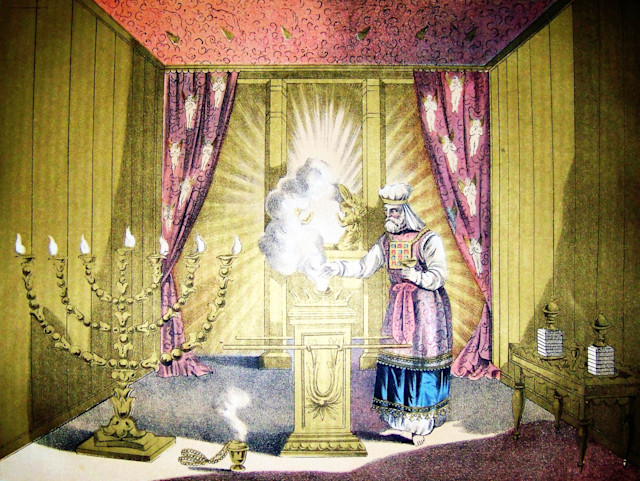
Unknown Artist - The Holy of Holies - 1890
Because of his pride, Uzziah was afflicted with leprosy and had to be in what was—essentially—solitary confinement for the rest of his life.
What did Jotham do in the Bible?
Jotham succeeded his father to the throne at the age of 25, and though he followed his father's piety more or less and was a good King, he took the precaution of never entering the temple at all. He had seen what had happened to his father and, apparently, didn't want to take any chances with committing blasphemy himself:
“And he did what was right in the sight of the Lord, according to all that his father Uzziah had done (although he did not enter the temple of the Lord).” (2 Chronicles 27:2, NKJV)
The major issue that persisted during his reign, however, is that the people of Judah engaged in pagan religious practices that were incompatible with the Israelite worship of the God of gods.
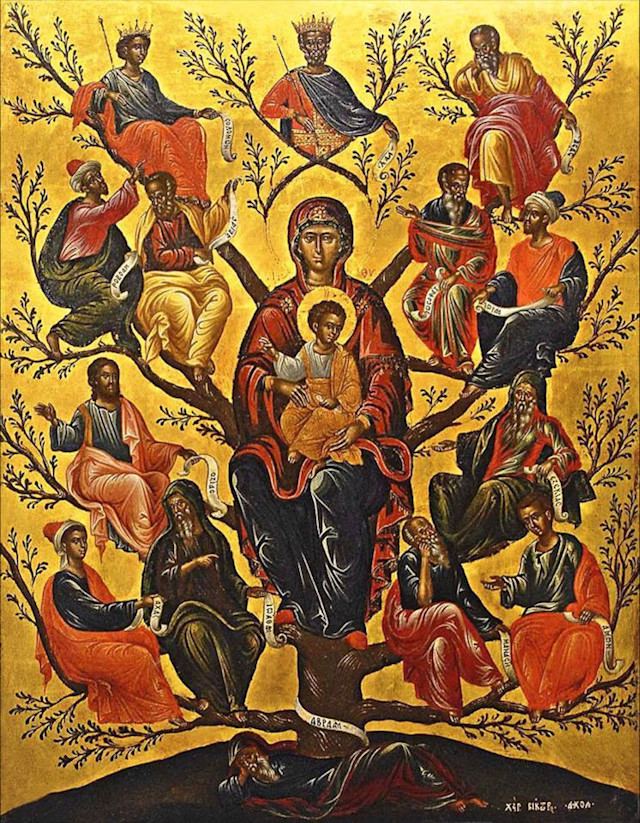
This 1674 icon by Victor of Crete depicts part of the lineage of Jesus, including Uzziah and Jotham.
Was King Jotham good or bad?
There is a sense in which Jotham was a good king as a person, but he never really dealt with certain important issues in Judah. The book of Kings draws out the tension between a good king who behaved well but allowed immoral pagan rituals to take place:
“And he did what was right in the eyes of the Lord, according to all that his father Uzziah had done. Nevertheless, the high places were not removed. The people still sacrificed and made offerings on the high places.” (2 Kings 15:34-35, ESV)
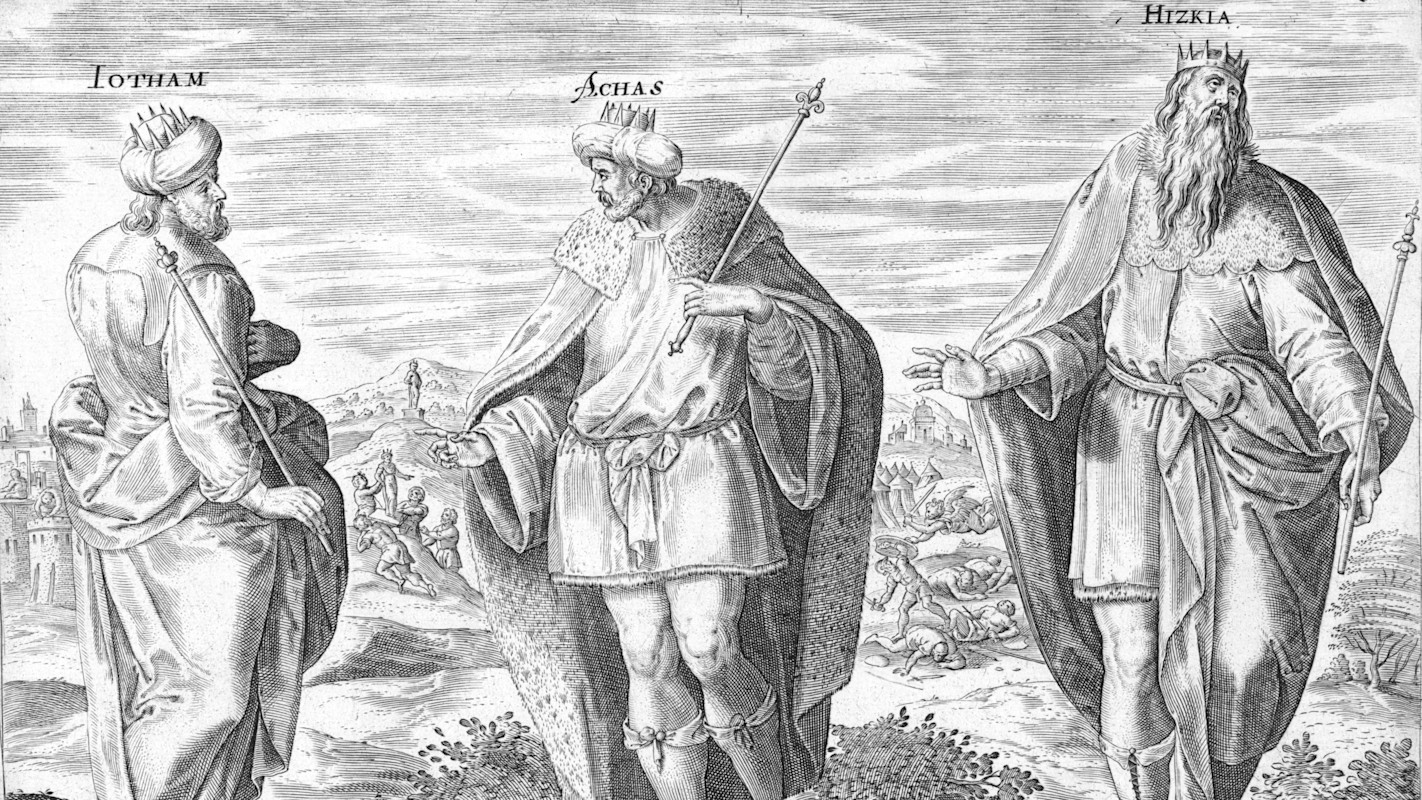
You might say that while the leader of the nation was good, the practices of the nation at that time were not. And when the culture is not oriented properly, it doesn't matter how good the leader is, because eventually he dies and a new leader takes his place. In the case of Jotham, his son Ahaz took the throne. Ahaz was a wicked king who became personally involved in pagan religious practices, to the point of sacrificing his own child, one of the most barbaric religious practices of the neighboring peoples:
“...but he [Ahaz] walked in the way of the kings of Israel. He even burned his son as an offering, according to the despicable practices of the nations whom the Lord drove out before the people of Israel.” (2 Kings 16:3, ESV)
Ahaz would go on to close the doors of the temple after appropriating many of its furnishings. He also constructed pagan altars all over Jerusalem.
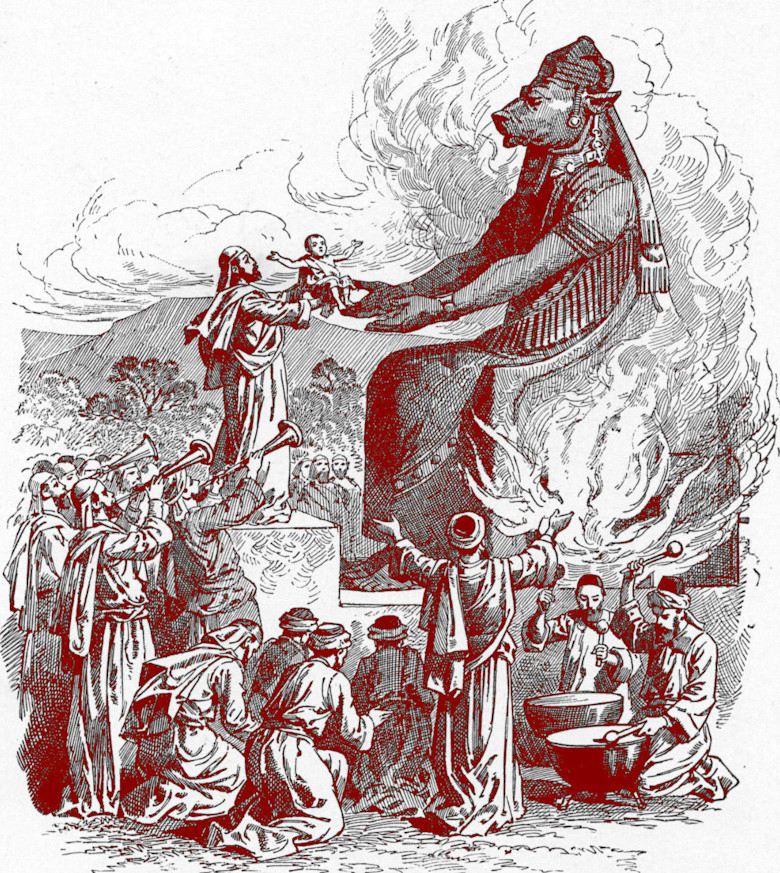
Foster Bible Pictures - Sacrificing a child to Molech - 1897
To properly approach the Old Testament, modern readers must understand the context of the ancient world. Reading between the lines of these episodes in the Old Testament, it seems clear to me that the ancient Israelites were not monotheists—they did not believe that there only existed one deity. They were what scholars now call henotheists, which means people who acknowledge the existence of many deities but understand that there is a single, all-powerful deity who rules over the other ones. We know that this belief was held by the early Church as well: such early church figures as Justin Martyr and Tertullian acknowledged the existence of the pagan deities but said that they were demons—essentially fallen gods.
Why does this distinction matter? Because if we assume that these spiritual entities were real, then it makes sense that the ancient Israelites would have seen evidence of their existence through displays of power and magic in the neighboring people groups. The idea that they might abandon the worship of the God of gods for the worship of rival deities, then, is more like abandoning your trust in one friend for another. I don’t mean to say that what they did wasn't deeply wicked, but it's a mistake to think that they were simply stupid for believing that the pagan gods existed. Their error was to confuse the tricks of demons with the truth of the God of gods.
Eventually, Ahaz's son Hezekiah took the throne and reversed all of the horrible things that his father had done, purifying the temple and returning it to the worship of the one God, as narrated in 2 Chronicles 29.
Suffice it to say that these years were very tumultuous times in the history of ancient Israel; religion was a matter of great contention and the difference between a good king and a bad king could change the entire culture for a whole generation.
Subscribe
Life-giving writing by Christian scholars sent to your inbox once per month

Zachary Porcu has a PhD in church history from the Catholic University of America in Washington DC, with additional degrees in philosophy, humanities, and Classics (Greek and Latin). He is an Eastern Orthodox Christian.
Keep reading

Who was Tartak in the Bible? The idol of the Avites

Hineni in Hebrew: “Here I am” from God and Man
What are the prophetic books of the Bible?
Who is Esaias in the Bible? Answered by a Christian Scholar

Peor: The Mountain and God of the Moabites