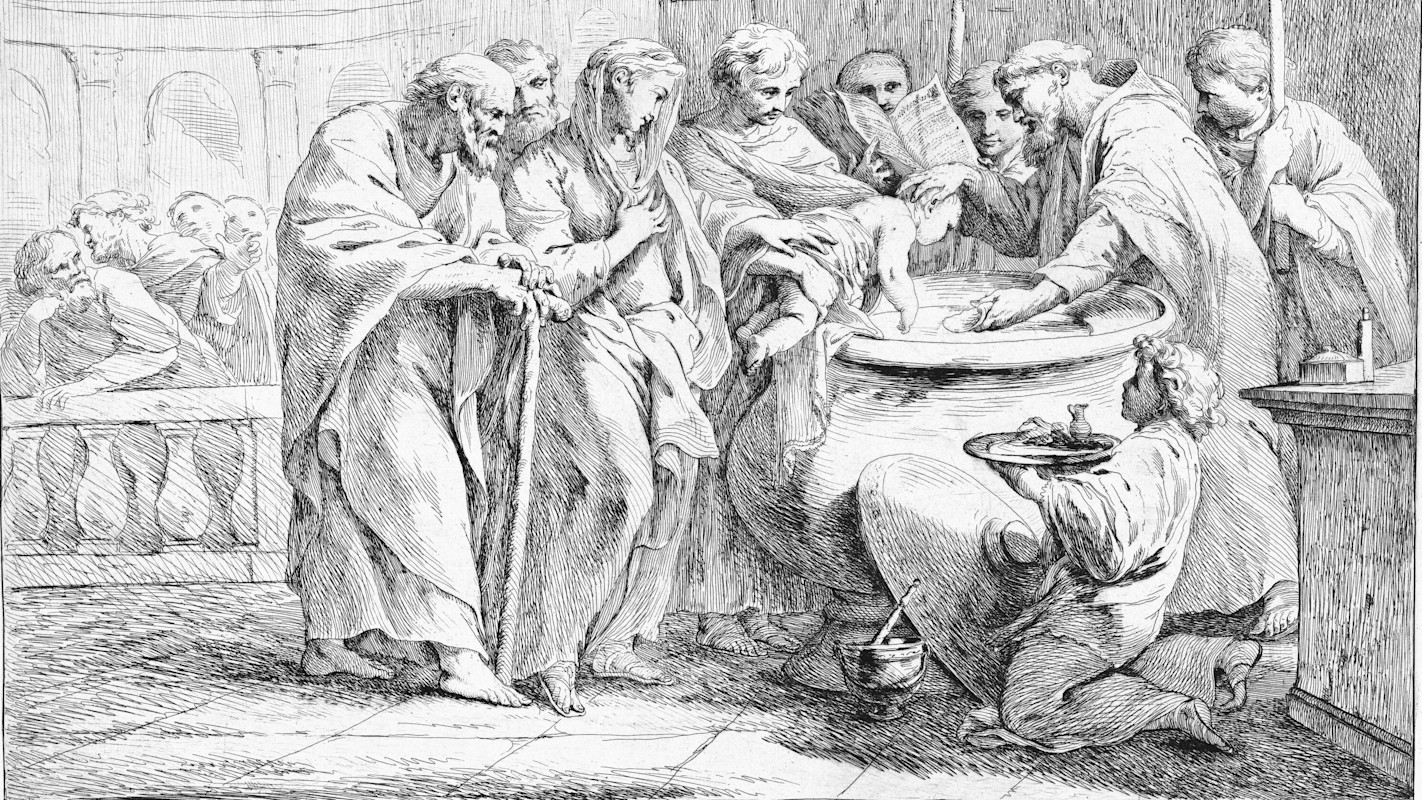
What is paedobaptism? A Christian scholar explains
The short story:
Paedobaptism, also called “infant baptism,” is the practice of baptizing infants and small children. While the New Testament doesn’t explicitly spell out how children should be baptized, infant baptism was the accepted practice of nearly all Christians for the first 1500 years of Christianity, and is still practiced by the majority of Christians today.
Paedobaptism is the more technical or older way of referring to the baptism of infants. “Paedo” or “Pedo” come from the Greek pais (πάις), which means “child.” However, because “pedo” in modern slang has come to be a shorthand for “pedophilia,” many people now simply call it “infant baptism” to get away from that connotation.
What is infant baptism? It’s the practice of baptizing an infant, not too long after the child’s birth, as a part of initiating the child into the church.
What is the difference between a credobaptist and a paedobaptist?
In contrast to paedobaptism, credobaptism is the view that baptism should specifically be withheld from children and postponed until they’re old enough to make the decision for themselves as to whether they want to be Christians.
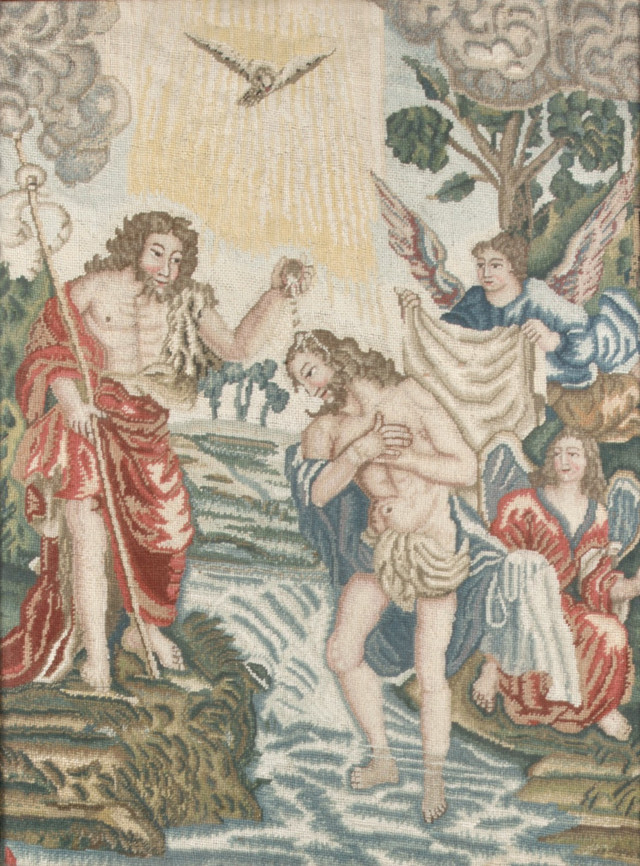
A German tapestry depicting the baptism of Christ.
Credobaptism makes sense if you primarily view Christianity in terms of belief. Modern Protestant groups who view salvation primarily or only as the act of believing in Jesus are generally the ones who advocate for credobaptism, and they support this by arguing that credobaptism is the practice that we see in the New Testament (something we’ll address in the next section).
Infant baptism, however, makes sense if you understand that Christianity is more than belief. This understanding has to do with two very different ways of looking at the world: a sacramental or “enchanted” way of viewing the world and a secular or “disenchanted” way of viewing the world.
The secular view is to see the world as only or primarily physical. In this view, physical actions and objects have meaning only if people think they have meaning, and when we take physical actions or use physical objects in religious rituals, we understand them as being symbolic. Symbols don’t have any intrinsic power; they get their power from our beliefs about them. This view was one of the main ideas coming out of the Enlightenment era and has influenced just about every discussion in modern thought.
The other way to look at the world, however, is to view the physical and the spiritual as being fundamentally interconnected, such that physical objects and actions have intrinsic spiritual power and energy. This view was held by all ancient people: Christians, Jews, and Pagans alike. You can see examples of this view all throughout the Bible: consider episodes like Moses holding up his staff to defeat the Amelakites; or Christ healing a blind man with mud (John 9:6-11); or St. Peter’s shadow healing people (Acts 5:15); or the prescription in the law of Moses that tests whether a woman committed adultery by writing a curse in a book, wiping the writing into water, and having the woman drink it to see whether she becomes physically corrupted by literally eating the words of a curse (Numbers 5:11-28).
Father Paulino Miranda carries a monstrance in a procession.
So really, it comes down to how you view the world: if the physical and the spiritual are inseparably connected, then our physicality and our spirituality are linked. Baptism, in this view, confers spiritual benefits on an infant regardless of what the child happens to believe about it.
Another way to think about it is that baptism was understood by the early Church as the fulfillment of the practice of circumcision. That’s why, as the New Testament Church was establishing its doctrine about how to bring non-Jews into the faith, they didn’t require them to be circumcised, only baptized. And, as you may know, circumcision was performed on infants—not because the infants could assent to it, but because it physically brought them into the covenant of Abraham. Ancient Christians practiced baptism in the same way because baptism was the new seal of the covenant following Christ’s fulfillment of the law.
Is Paedobaptism Biblical?
What’s mandatory for baptism isn’t spelled out in the Bible, so people can cite different verses either for or against infant baptism. In the New Testament, people tend to be baptized following their agreement or assent to belief in Jesus or his teachings:
“Then he called for a light, ran in, and fell down trembling before Paul and Silas. And he brought them out and said, ‘Sirs, what must I do to be saved?’ So they said, “Believe on the Lord Jesus Christ, and you will be saved.” (Acts 16:29-24; see also Acts 2:38–41)
That’s why some people think that personal belief is essential. On the other hand, there are many instances of people being baptized along with their entire households and families. In fact, in the very same passage from Acts, the apostles go on to baptize the man’s entire family:
“And he took them the same hour of the night and washed their wounds; and he was baptized at once, he and all his family.” (Acts 16:33)
Jusepe de Ribera - The Holy Family with Saints Anne and Catherine of Alexandria - 1648
While people make all sorts of arguments from the New Testament, it’s a simple fact that the Bible doesn’t say exactly whether or when children should be baptized. However, just because the Bible doesn’t state something explicitly doesn’t mean that there isn’t a right answer to this question. If it did, then we’d be in a lot of trouble with other Christian doctrine.
As it turns out, not every essential Christian belief is fully defined in the Bible. The doctrine of the Trinity, for example, isn’t explicitly laid out in the Bible. You can certainly see evidence in the Bible that the New Testament authors had an understanding of the Trinity (especially in John’s Gospel account), but it wasn’t until the fourth century that Christians had a fully articulated understanding of the persons of the Trinity and the natures of Christ. These definitions were a main focus of the early Christian creeds, and part of the reason that so much debate went into the Creed is that the Bible wasn’t completely clear on these issues. Heretical groups used Bible verses to back up their positions just as much as Trinitarian Christians did. In the end, it wasn’t that one way of interpreting the Bible beat another way of interpreting the Bible, and everyone on one side was convinced, it was that the Councils of the Church met and, guided by the Holy Spirit, settled the matter definitively.
Another example, ironically, is the Bible itself. Which books should be considered part of the official canon of scripture isn’t laid out in the Bible. In fact, there were many controversies about what should and shouldn’t be included in the canon of scripture: for example, it was a not-uncommon belief that the Book of Revelation shouldn’t be considered a part of scripture, and there were a number of other books that people thought should be in the canon but which ultimately did not make the cut. Like the Trinity, these issues weren’t settled definitively until the fourth century.
Infant baptism was much the same. Like the question of the Trinity, or which books should be included in the canon of scripture, infant baptism wasn’t totally clear for the first few centuries of Christianity.
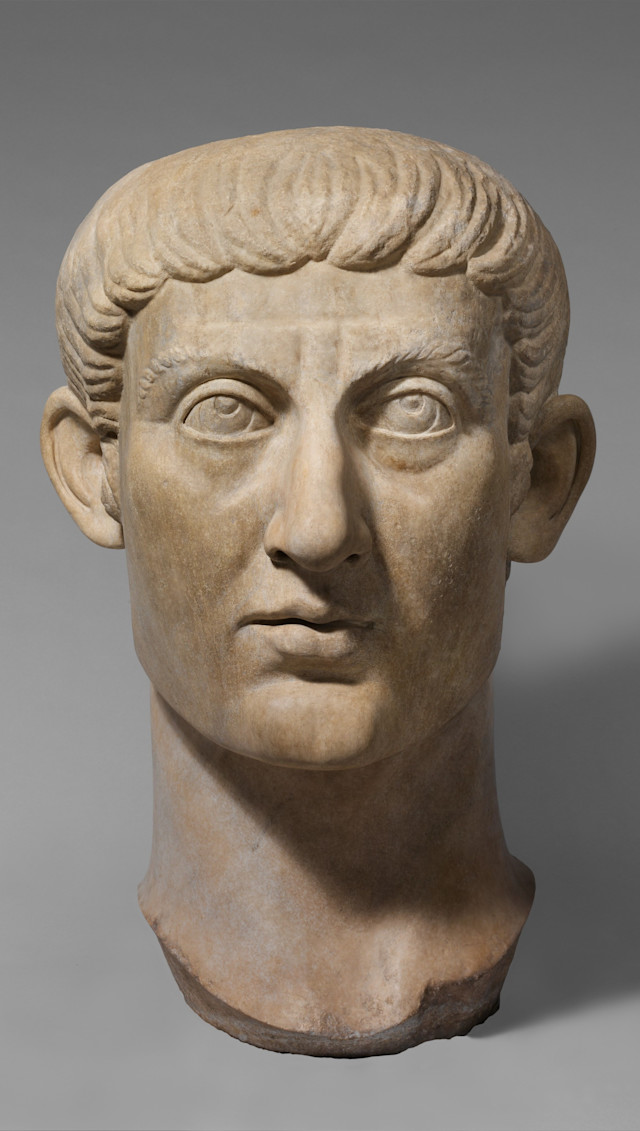
A marble portrait head of Emperor Constantine I, from circa 370.
For this reason, and other reasons that aren’t always clear, you can find many examples of Christians who were baptized later than infancy—sometimes much later. At the same time, you can find many examples of Church Fathers who affirm infant baptism, like Saint Augustine, who said in On Baptism that infant baptism was like circumcision in that “though it [the child] could not yet believe with the heart, that it should be counted unto it for righteousness because the sacrament in itself was of great avail.”
There is also evidence that the apostles themselves baptized infants. The early Church Father Origen wrote that, “the Church received from the Apostles the tradition of giving Baptism even to infants” (Origen, fragments, Commentary on Romans). This passage is an important witness to the earlier tradition, as Origen was a second-century Christian. Given that John the Evangelist died around 100 A.D., and Origen was born around 185 A.D., Origen was only a generation or so removed from the original gospel writers, so he had a much better idea of what they would have taught.
The matter was finally settled at Council of Carthage at the beginning of the fifth century, which states in canon 110 that “even infants, who could have committed as yet no sin themselves, therefore are truly baptized.” This statement was the normative Christian teaching on baptism for over a thousand years.
The belief in credobaptism as a distinct alternative to infant baptism, especially on the basis that infant baptism wasn’t “Biblical,” didn’t emerge until the Protestant Reformation. The growth of credobaptism followed a theological shift away from sacramental thinking and towards the kind of thinking that would ultimately lead to the Enlightenment and the secularization of Europe.
That said, only some denominations have changed their baptismal practice. The majority of Christians today—Catholics, Orthodox, and what are called “high church” Protestants—still practice infant baptism, just as the overwhelming majority of people who identify as Christian still believe in the Trinity and the traditional canon of scripture.
Subscribe
Life-giving writing by Christian scholars sent to your inbox once per month

Zachary Porcu has a PhD in church history from the Catholic University of America in Washington DC, with additional degrees in philosophy, humanities, and Classics (Greek and Latin). He is an Eastern Orthodox Christian.
Keep reading
“I Believe in God the Father”: Creeds and Controversies

Forgiveness and the Remission of Sins
Stanley Hauerwas: Virtue Ethicist & Postliberal Theologian
Who is Jürgen Moltmann and What Did He Believe?
Greg Bahnsen: Apologist and Presbyterian Minister