Skip to content

Judith 3

A font-perfect reading bible

1Then the kings and the princes of all the cities and provinces, of Syria, Mesopotamia, and Syria Sobal, and Libya, and Cilicia sent their ambassadors, who coming to Holofernes, said: 2Let thy indignation towards us cease: for it is better for us to live and serve Nabuchodonosor the great king, and be subject to thee, than to die and to perish, or suffer the miseries of slavery. 3All our cities and our possessions, all mountains and hills, and fields, and herds of oxen, and flocks of cheep, and goats, and horses, and camels, and all our goods, and families are in thy sight: 4Let all we have be subject to thy law. 5Both we and our children are thy servants. 6Come to us a peaceable lord, and use our service as it shall please thee. 7Then he came down from the mountains with horsemen, in great power, and made himself master of every city, and all the inhabitants of the land. 8And from all the cities he took auxiliaries valiant men, and chosen for war. 9And so great a fear lay upon all those provinces, that the inhabitants of all the cities, both princes and nobles, as well as the people, went out to meet him at his coming. 10And received him with garlands, and lights, and dances, and tumbrels, and flutes. 11And though they did these things, they could not for all that mitigate the fierceness of his heart: 12For he both destroyed their cities and cut down their groves. 13For Nabuchodonosor the king had commanded him to destroy all the gods of the earth, that he only might be called God by those nations which could be brought under him by the power of Holofernes. 14And when he had passed through all Syria Sobal, and all Apamea, and all Mesopotamia, he came to the Idumeans into the land of Gabaa, 15And he took possession of their cities, and stayed there for thirty days, in which days he commanded all the troops of his army to be united.

Douay-Rheims Bible, American Edition (1899). Public domain in the United States. Digital text courtesy of eBible.org.

Keep reading

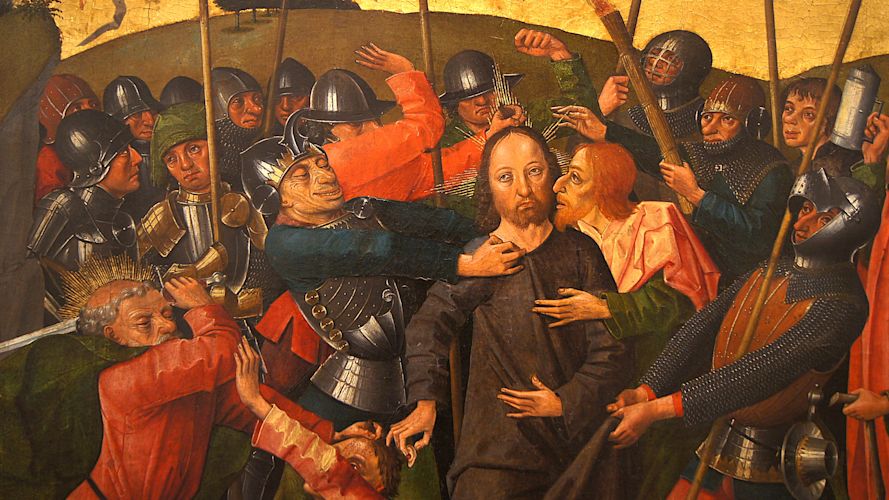
Malchus: The Roman Soldier in the Garden of Gethsemane

Malchus: The Roman Soldier in the Garden of Gethsemane

Dr. Zachary Porcu
by Dr. Zachary PorcuCatholic University of America
The short answer: In the Bible, Malchus is the servant of the high priest whom St. Peter struck with a sword when the Jews came to arrest Jesus. He is mentioned in only one Gospel account and is not considered a saint in any tr...
What does the Bible say about the Antichrist?

What does the Bible say about the Antichrist?

Dr. Zachary Porcu
by Dr. Zachary PorcuCatholic University of America
There is not a specific person with the title “The Antichrist” in the Bible. Instead, the term “antichrist” is used in the Bible to refer to anybody who opposes Christ. This is often surprising for people to hear, since popular...
What does Jehovah Tsidkenu mean?

What does Jehovah Tsidkenu mean?

Dr. Zachary Porcu
by Dr. Zachary PorcuCatholic University of America
Because the Bible is long, complex, and technical, it’s easy for people to take a passage out of context and get absorbed in endless details that seem dramatic and engaging but entirely miss the point. The various names for God...
Stanley Hauerwas: Virtue Ethicist & Postliberal Theologian

Stanley Hauerwas: Virtue Ethicist & Postliberal Theologian

Dr. Zachary Porcu
by Dr. Zachary PorcuCatholic University of America
Stanley Hauerwas has been influential across many fields, but he is probably most famous for being a proponent of what philosophers call “virtue ethics.” Virtue ethics is one of the three schools of thought on ethics in modern ...
A PhD explains Isaiah's phrase: “Forget the former things”

A PhD explains Isaiah's phrase: “Forget the former things”

Dr. Zachary Porcu
by Dr. Zachary PorcuCatholic University of America
The past is a powerful thing. Through pictures, videos, and other types of “time capsules,” we can create powerful messages that endure into the future and offer a window into the past. Certain sounds, tastes, and especially sm...
Peor: The Mountain and God of the Moabites

Peor: The Mountain and God of the Moabites

Dr. Zachary Porcu
by Dr. Zachary PorcuCatholic University of America
Peor was the name of a mountain in the land of Moab. It is significant as the final place that the prophet Balaam visited when he was being pressured by the king of Moab to curse Israel. The Israelites had recently conquered Si...