Malchus: The Roman Soldier in the Garden of Gethsemane
The short answer: In the Bible, Malchus is the servant of the high priest whom St. Peter struck with a sword when the Jews came to arrest Jesus. He is mentioned in only one Gospel account and is not considered a saint in any tradition.
Malchus was the name given to one of the servants of the high priest. He appears in a brief episode when the servants of the high priest come to arrest Jesus in the garden of Gethsemane and take him away to trial. This is the beginning of the chain of events that would culminate in Jesus’ scourging and execution.
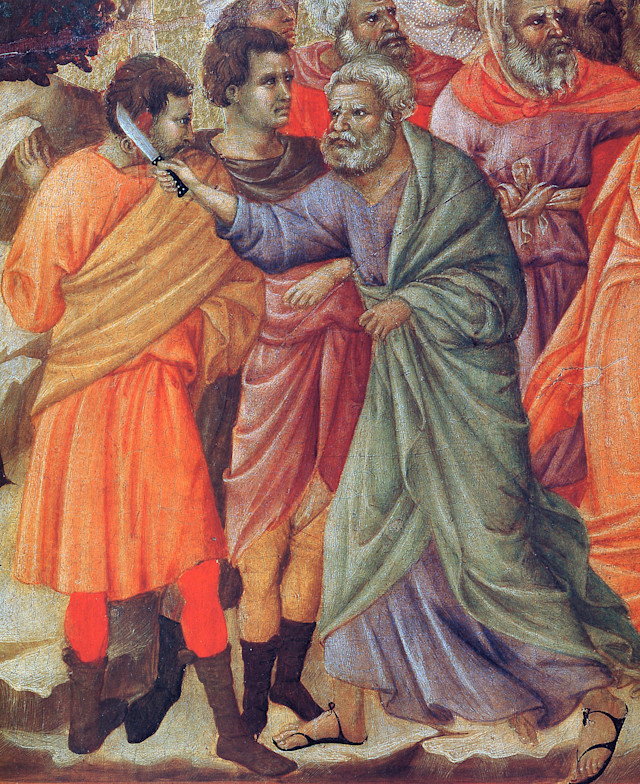
Duccio di Buoninsegna - St. Peter Cuts the Ear of Malchus - late 1200s
As with many episodes in the Gospels, each evangelist adds different levels of detail. All four Gospels report that one of Jesus’ disciples cut off the ear of the servant, but only John names the disciple (St. Peter) and the servant (Malchus):
“Then Simon Peter, having a sword, drew it and struck the high priest’s servant, and cut off his right ear. The servant’s name was Malchus. So Jesus said to Peter, ‘Put your sword into the sheath. Shall I not drink the cup which My Father has given Me?’” (John 18:10–11)
Luke’s account gives the additional detail that Jesus not only stops Peter but heals Malchus:
“When those around Him saw what was going to happen, they said to Him, ‘Lord, shall we strike with the sword?’ And one of them struck the servant of the high priest and cut off his right ear. But Jesus answered and said, ‘Permit even this.’ And He touched his ear and healed him.” (Luke 22:49-51)
We don’t know what happened to Malchus after that.
Was Malchus a saint?
The Malchus from this story is not identified as a saint in any tradition, though the fact that his name is mentioned in the Gospel of Luke may indicate that he was known to the Christian community. It’s possible that he had come to believe in Christ by the time that Luke’s gospel was written, making him known to the early Christians—but this idea would be pure speculation.
There is, however, a Saint Malchus: Malchus of Syria. Details about his life are recorded in a biography by Saint Jerome in the fourth century A.D., but he was certainly not the same person as the Malchus mentioned in the Gospel accounts. He is commemorated in Eastern Orthodoxy on March 26 and in Catholicism on October 21.
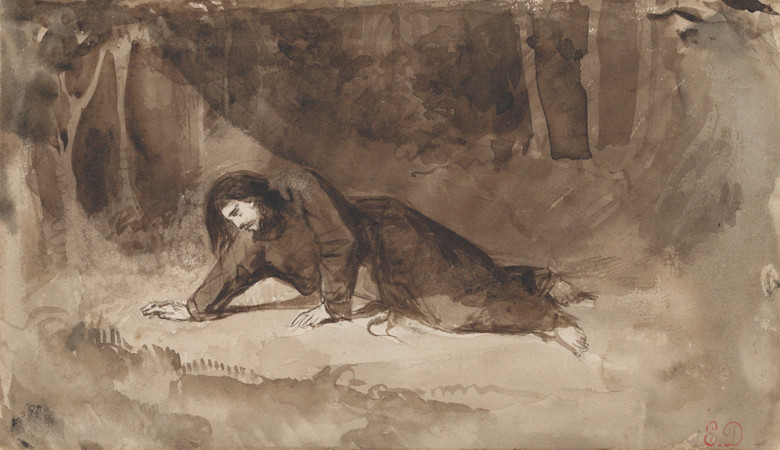
Eugène Delacroix - The Agony in the Garden - circa 1849
Why did Jesus put Malchus’ ear back on?
The gospel accounts don’t provide much commentary on Jesus’ decision to heal Malchus, though we can make some informed speculations.
In Matthew’s account, Jesus explains his rebuke of Peter’s actions:
“But Jesus said to him, ‘Put your sword in its place, for all who take the sword will perish by the sword. Or do you think that I cannot now pray to My Father, and He will provide Me with more than twelve legions of angels? How then could the Scriptures be fulfilled, that it must happen thus?’” (Matthew 26:52-54)
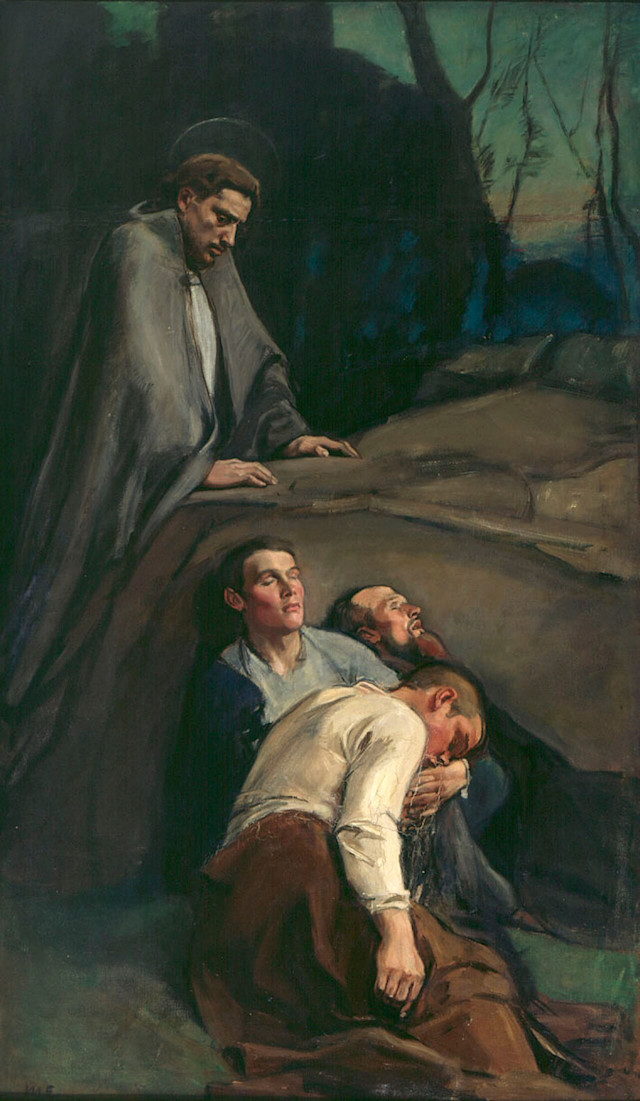
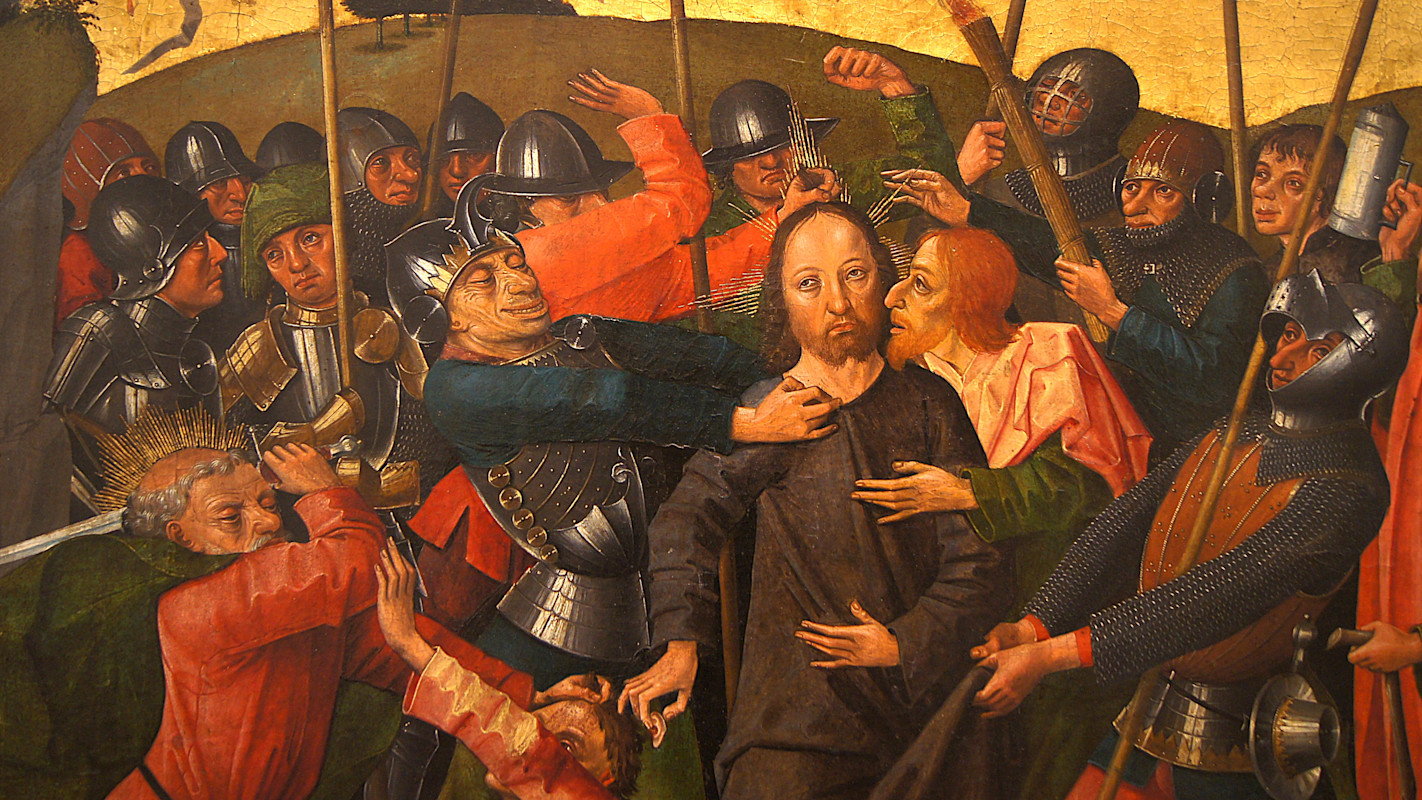
Caspar Isenmann - Arrest Of Jesus - 1400s
Second, that Jesus was not defenseless; he could invoke physical force if he wanted to, as he had access to twelve legions of angels. Even one angel would have been a terrifying and powerful opponent—in the Bible, an angel’s first words on appearing to a human are typically, “Do not be afraid.” Given that a Roman legion consisted of somewhere between 4,000 and 5,000 men, twelve legions of angels would have been an incomprehensibly powerful force. But again, physically destroying his human enemies was not the point.
Third, and finally, we might speculate and say that Jesus’ healing of Malchus had spiritual significance, prefiguring what Jesus was about to do: heal mankind’s broken nature through his death and resurrection. It speaks to the point that Jesus conquers death and the devil without force, because he doesn’t need force. Christ simply swallows up or overwhelms death with his infinite life, for he is Life Itself, and life itself cannot die.
What does Malchus mean in the Bible?
The exact meaning of the word is unclear. The spelling “Malchus” is a Latinization of the Greek “Malchos” which was probably a transliteration of a Hebrew name like “Malluch.” Thayer’s Greek Lexicon suggests that “Malchus” meant “king” or “kingdom.”
Subscribe
Life-giving writing by Christian scholars sent to your inbox once per month

Zachary Porcu has a PhD in church history from the Catholic University of America in Washington DC, with additional degrees in philosophy, humanities, and Classics (Greek and Latin). He is an Eastern Orthodox Christian.
Keep reading
Jesus and the Syrophoenician Woman: Gentile Salvation

Who was the first woman preacher in the Bible?
Was Jesus a Rabbi?
Who was Phanuel? Archangel or Father of Anna?
Is “love conquers all” in the Bible?