Stanley Hauerwas: Virtue Ethicist & Postliberal Theologian
The short story:
Stanley Hauerwas is an American-born Christian public intellectual, considered by many to be the greatest living theologian. A prolific writer and speaker, he has made major contributions to many areas of philosophy and theology.
Stanley Hauerwas has been influential across many fields, but he is probably most famous for being a proponent of what philosophers call “virtue ethics.” Virtue ethics is one of the three schools of thought on ethics in modern philosophy.
What is virtue ethics? It may be helpful to distinguish it from the other two major views. The first is called “utilitarianism,” which is the idea that an action is good if it produces good results or outcomes, such as reducing suffering in the world.
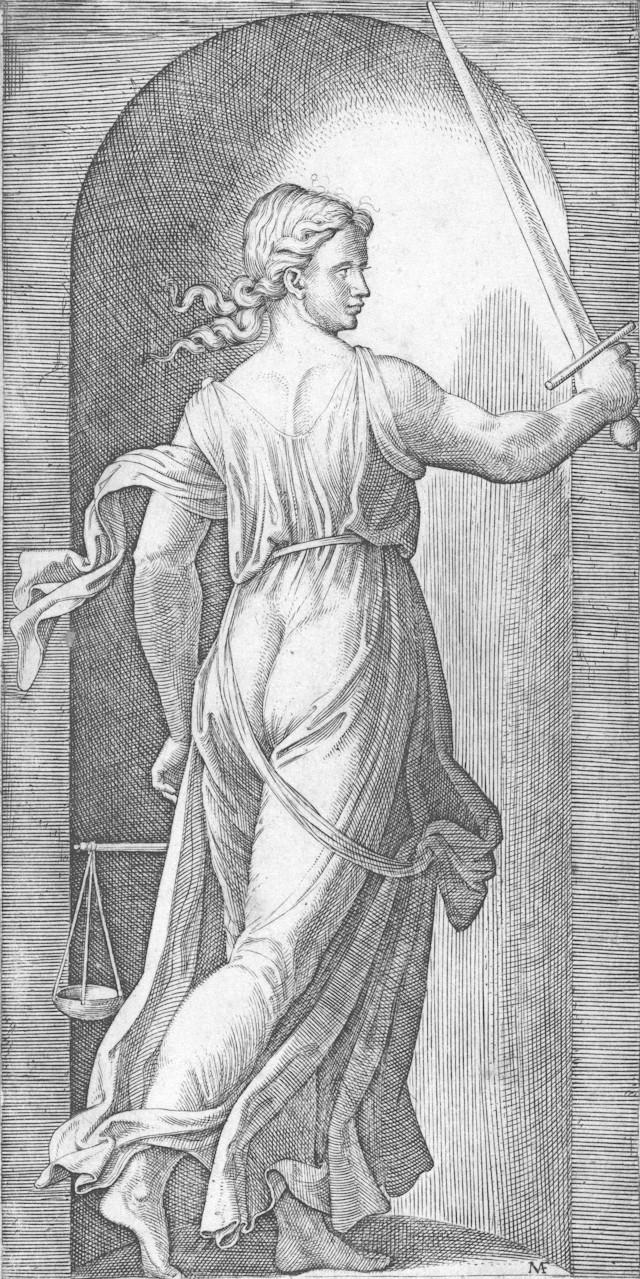
Marcantonio Raimondi - Justice - circa 1525
While virtue ethics—like any good ethical system—cares about both moral laws and the outcomes of actions, it holds that neither laws nor outcomes are the primary way we can tell if certain behavior is good or bad. The primary way, for virtue ethics, is virtue and vice. If you lie all the time, you become a liar. If you help others, it makes you into a compassionate or merciful person. In a word, character is the main focus of virtue ethics, rather than moral rules (as in deontology) or outcomes (utilitarianism).
Hauerwas was a major contributor to the modern conversation on virtue ethics. He was heavily influenced by Alasdair MacIntyre, who was one of the most prominent twentieth-century voices on this topic.
Hauerwas also advocated for the idea that you can’t divorce ethics from theology. This means that your moral actions and your moral beliefs can’t be separated. The idea that you can separate what you believe from what you do is something that a lot of modern people assume. If you think about it for a minute, however, you’ll realize that it doesn’t make a lot of sense, because the two are interrelated: if you believe that you can eat junk food and be healthy, that will influence the decisions you make about food. This is related to virtue ethics in the sense that your beliefs and practices all ultimately influence what sort of person you become.
What is Stanley Hauerwas known for?
Besides virtue ethics, Hauerwas is also a proponent of “postliberal theology,” or what is often called narrative theology.
Postliberal or narrative theology is the idea that Christianity should be primarily viewed from a narrative perspective, meaning that it can only really be understood from the inside, like a story, and also that it has to be understood on its own narrative terms.
Why is it called “postliberal” theology? In this context, the term “liberal” doesn’t refer to leftist politics: it refers to the type of thinking that developed in the modern era, namely, the Enlightenment movement that wanted to see the world primarily in terms of rationalist arguments. This way of thinking is what you might call “objectivity,” the idea that things can be understood from the outside only, the way a scientist examines something by measuring it, weighing it, and recording data about it.
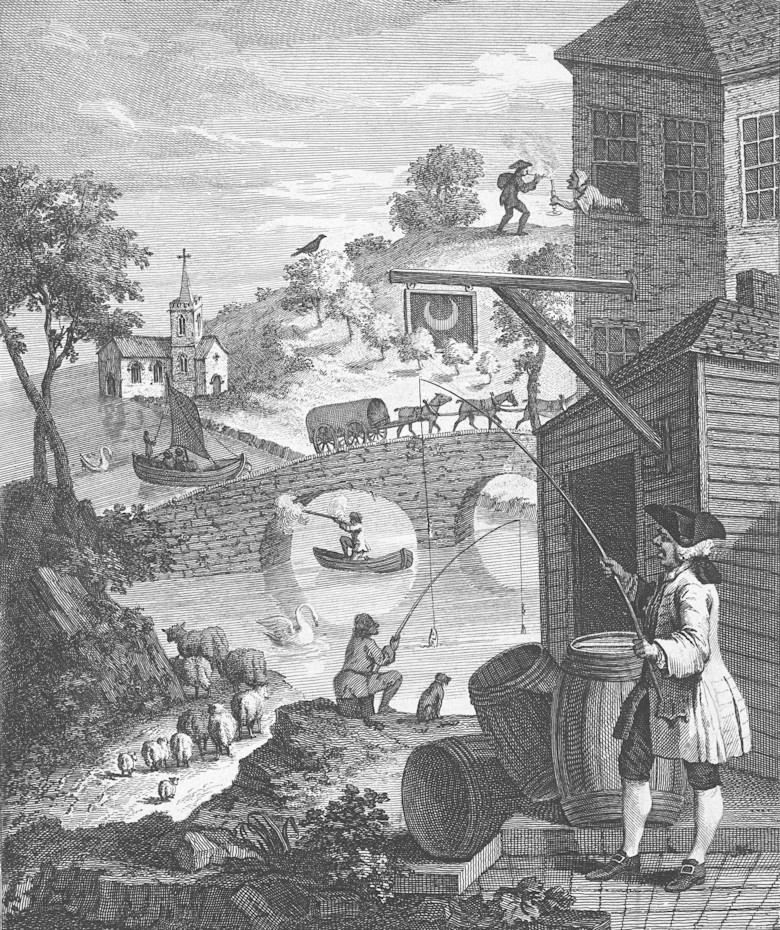
Luke Sullivan - Satire on False Perspective - 1754
Another way to put this idea is that a scientific way of looking at the world is one in which we are forced to see everything as inherently meaningless. The boiling point of water, for example, has no meaning. From a scientific perspective, objective facts are the most important thing, not subjective things like meaning.
Because of these obvious limitations, Hauerwas wanted to go beyond this liberal (scientific) way of viewing the world: hence the name post liberal.
But what does it mean to admit that the world consists of more than facts? What’s the alternative? The alternative is to view the world like a story. Whatever story you believe in is what gives the world meaning. For example, if I asked you “how was your morning?”, you wouldn’t give me a minute-by-minute account of everything that happened to you this morning. You know that’s not what I’m asking for. I’m not asking for a list of facts about your day, I’m asking for a story.
You’re going to say something like, “I had a great morning” or “I had an awful morning” or something in between. In other words, you’re going to take the facts about your morning and interpret them for me, making a story out of them and therefore presenting them with a certain meaning. Stories are what give things meaning.
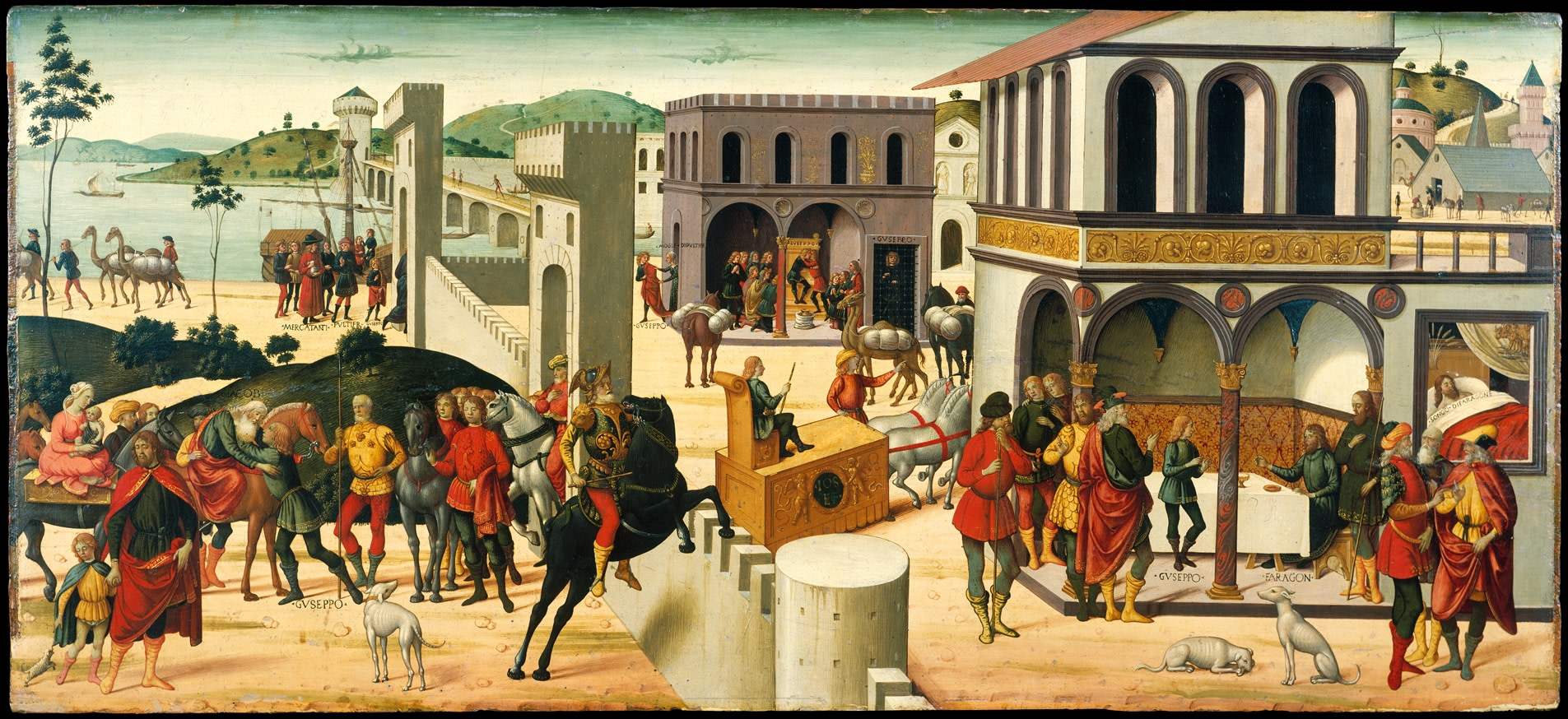
Biagio d'Antonio - The Story of Joseph - circa 1482
What’s notable about both virtue ethics and narrative theology is that it they aren’t really new things. Narrative theology is how Christianity always thought about itself since the ancient world, and all the ways that the ancient Israelites and later the early Church conducted its life was in exactly this way. And they also practiced what we might now call “virtue ethics” in that they believed that morality was inseparable from character.
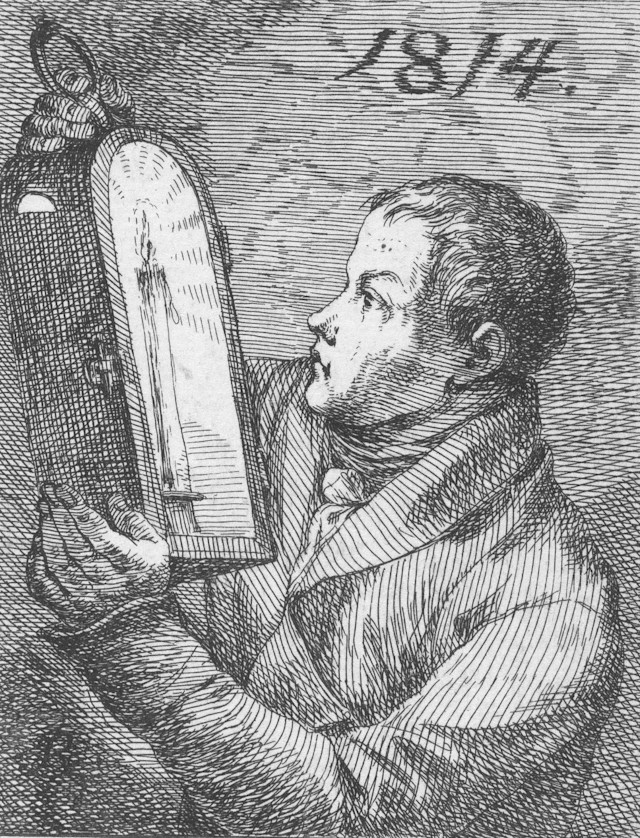
Joseph Bergler the Younger - Enlightenment - 1814
But for the last five hundred years of Christianity a lot of this kind of thinking was lost and replaced by the Enlightenment, liberal way of thinking about the world. This perspective says you should only look at the world in scientific terms—as fact-first rather than meaning-first—and in which morality is viewed only in terms of outcomes and ignores the question of who we are becoming when we behave morally or immorally.
You might say, therefore, that Hauerwas is going back to an older, more traditional way of thinking about Christianity, by helping people go beyond the liberal and Enlightenment-influenced thinking of the last few centuries.
Who is the greatest living theologian?
Hauerwas is considered by many to be the greatest living theologian, though that depends on how you define the term. As a scholar, academic, and writer, he certainly has one of the most impressive careers of any person alive today. He’s published a prolific amount of books and essays, and has achieved international fame not just in academic circles (where he’s been given many prestigious recognitions) but also as among lay audiences—such as appearing on the Oprah Winfrey Show.
However, a more traditional definition of the the word “theologian” is not merely someone who is a good academic. This is because, since the time of the early church, Christians have always recognized that the intellect is not the only or even the best path to God; holiness is. There have been many miracle-working saints who were in fact completely illiterate, just as there have been many intellectuals who were wicked. Evagrius Ponticus, a church father from the first few centuries of Christianity, defined a theologian as one who “truly prays”—not as someone who writes a lot of books.
Why? Because theology is in the study and understanding of God. But God is not merely an object of knowledge like a bacteria, a plant, a machine, or a physics problem. He is a person, someone with whom you must have a relationship. And it’s not just any relationship: because he is goodness and truth and love itself, to draw close to him is also to draw close to truth itself. So the true theologian is someone who knows God himself, in a living relationship; not merely someone who knows things about God, from the outside.
And in fact, this kind of relationship wraps back around to the whole ideal of a postliberal or narrative theology, which emphasizes the participatory nature of theology—of entering into it as a living story and praying truly.
Subscribe
Life-giving writing by Christian scholars sent to your inbox once per month
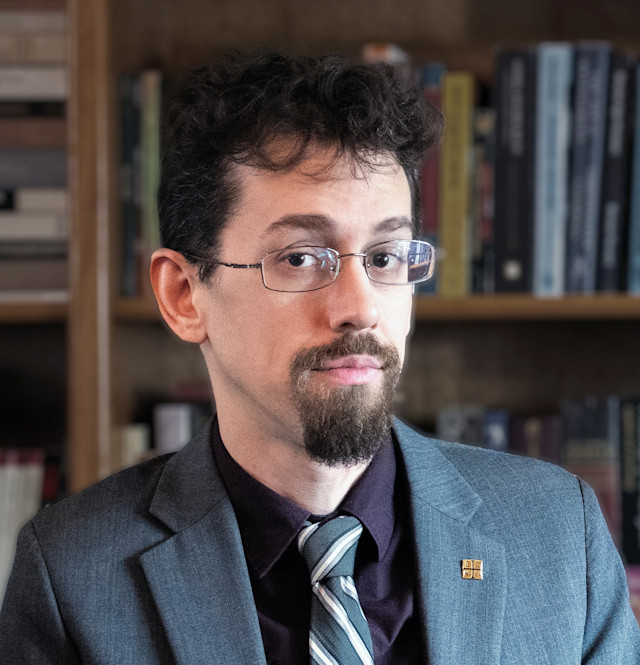
Zachary Porcu has a PhD in church history from the Catholic University of America in Washington DC, with additional degrees in philosophy, humanities, and Classics (Greek and Latin). He is an Eastern Orthodox Christian.
Keep reading
Forgiveness and the Remission of Sins
Who is Jürgen Moltmann and What Did He Believe?

Jerry Bridges and The Navigators: A Protestant Order
Greg Bahnsen: Apologist and Presbyterian Minister
What color is God? By a Christian Scholar