The story of Epaphroditus, missionary of St. Paul
The short answer
Epaphroditus was one of St. Paul’s fellow missionaries, mentioned in his letter to the Philippians. He appears only twice in the New Testament, but according to church history and oral tradition, he became the bishop of Adriaca and was numbered among the Seventy, a group of Christ’s followers less prominent than the Twelve Apostles.
Epaphroditus is mentioned in Philippians 2:25 and 4:18 as one of St. Paul’s fellow missionaries. Paul was on a missionary journey around the Mediterranean, and he had several fellow missionaries under his direction. He also had spiritual sons whom he had left in charge of the churches he planted, like St. Timothy—the letters of first and second Timothy were St. Paul’s letters to his spiritual son to help him lead his local church. It seems that Epaphroditus was sent from the church of the Philippians to St. Paul:
“For even in Thessalonica you sent aid once and again for my necessities. Not that I seek the gift, but I seek the fruit that abounds to your account. Indeed I have all and abound. I am full, having received from Epaphroditus the things sent from you, a sweet-smelling aroma, an acceptable sacrifice, well pleasing to God.” (Phil 4:16-18)
Later in the letter he decides to send Epaphroditus back to them:
“Yet I considered it necessary to send to you Epaphroditus, my brother, fellow worker, and fellow soldier, but your messenger and the one who ministered to my need; since he was longing for you all, and was distressed because you had heard that he was sick. For indeed he was sick almost unto death; but God had mercy on him, and not only on him but on me also, lest I should have sorrow upon sorrow. Therefore I sent him the more eagerly, that when you see him again you may rejoice, and I may be less sorrowful. Receive him therefore in the Lord with all gladness, and hold such men in esteem; because for the work of Christ he came close to death, not regarding his life, to supply what was lacking in your service toward me.” (Phil 2:25-30)
Like many of the early Christians mentioned in the Bible, we know much more about Epaphroditus from other sources in church history. According to tradition and the writings of Hippolytus of Rome, Epaphroditus was one of the Seventy Apostles chosen by Christ in Luke 10:1-6. He would go on to become the Bishop of Adriaca.
What does the name Epaphroditus mean?
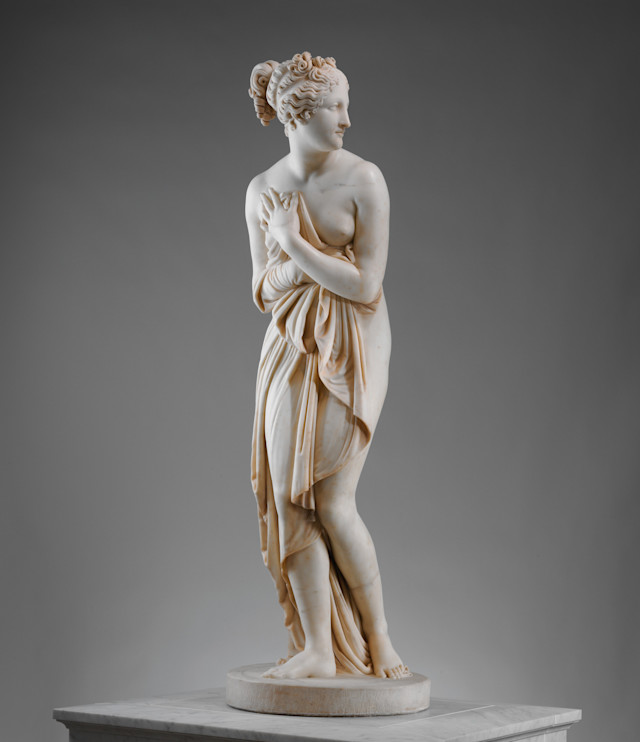
Venus Italica, from the workshop of Antonio Canova, circa 1822.
Was Epaphroditus the same name as Epaphras? Yes: Epaphras was a contracted form of the longer name Epaphroditus. As a result, some people think that he was the same person mentioned in Colossians 1:7, 4:12, and Philemon 23, but it is not entirely clear, as Epaphroditus was something of a common name at the time.
What does the name mean? The name means something like “lovely” or “charming,” as it was a derivative of Aphrodite, the Greek goddess of love. The Latin equivalent of the name was “Venustus” which means “handsome.”
How did he die?
It’s not clear how Epaphroditus died. He came near to death, according to St. Paul. In Philippians (2:27) St. Paul indicates that, “indeed he was sick almost unto death; but God had mercy on him, and not only on him but on me also, lest I should have sorrow upon sorrow” (NKJV). The implication seems to be that he miraculously recovered, but nothing else is clear from either the Bible or church history. Some have suggested that he was the same figure as Epaphroditus, the freedman of Nero, in which case he was put to death by the emperor Domitian, but there’s no strong proof for this connection.
Epaphroditus rejected the fear of death
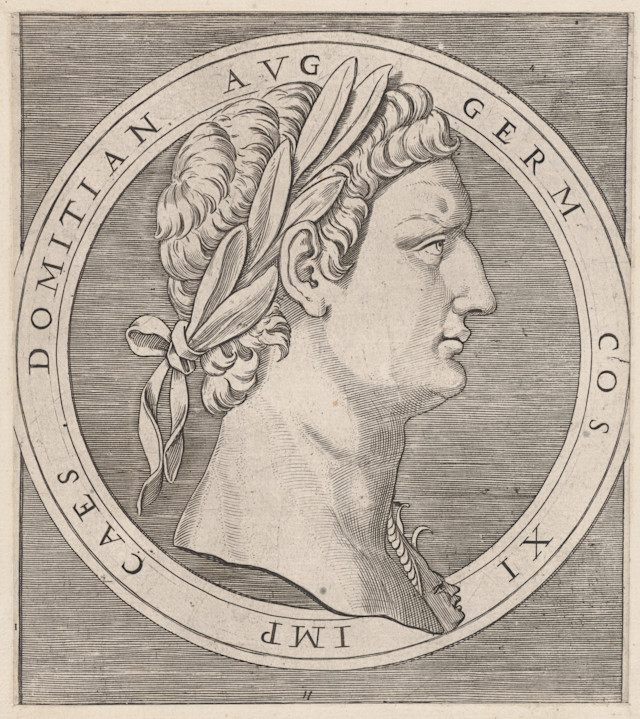
Marcantonio Raimondi - Domitian, from The Twelve Ceasars - 1500s
In what sense did he “not regard his life”? It’s easy to think that this passage has something to do with selflessness or dedication to God in an abstract sense, but the ancient Christians had a straightforward understanding of what this sort of account meant. They understood Christ’s saving act as the conquering and defeat of death, so they actively mocked death. Their fearlessness of and mockery for death was one of the most powerful witnesses that the early Church made in the face of persecution: they didn’t waver in the face of death and torture because they knew that a new age for the universe had dawned: death itself was defeated.
Subscribe
Life-giving writing by Christian scholars sent to your inbox once per month

Zachary Porcu has a PhD in church history from the Catholic University of America in Washington DC, with additional degrees in philosophy, humanities, and Classics (Greek and Latin). He is an Eastern Orthodox Christian.
Keep reading

Pastor vs. Priest: What are the differences?


Jesus went to Hell for 3 days as seen in Scripture

Jesus and the Syrophoenician Woman: Gentile Salvation
Who was the first woman preacher in the Bible?
Was Jesus a Rabbi?