The Weapons of Our Warfare Are Not Carnal
The short story
This phrase is from 2 Corinthians 10:4, which is part of Saint Paul’s larger vision of the close relation between the physical, political world and the spiritual one.
Where in the Bible is the phrase, “the weapons of our warfare are not carnal”? It comes from St. Paul’s second letter to the Corinthians, verse 10:4. Here is the passage in context:
For though we walk in the flesh, we are not waging war according to the flesh. For the weapons of our warfare are not of the flesh but have divine power to destroy strongholds. We destroy arguments and every lofty opinion raised against the knowledge of God, and take every thought captive to obey Christ, being ready to punish every disobedience, when your obedience is complete. (ESV)
What does it mean that our weapons are not carnal?
Saint Paul doesn’t elaborate in this particular passage, but there are a few things we can infer based on passages in his other letters and the historical context of his day. If you read the epistles of St. Paul, you will get a sense of the grandeur and drama of Christian life. He thinks about the Christian struggle in cosmic terms rather than merely political or worldly terms. In the ancient world, nobody would have thought of separating the political or the worldly from the cosmic, because ancient people—Pagan, Jewish, and Christian alike—would have thought of the human, political world as only one part of the cosmic narrative of the whole universe.
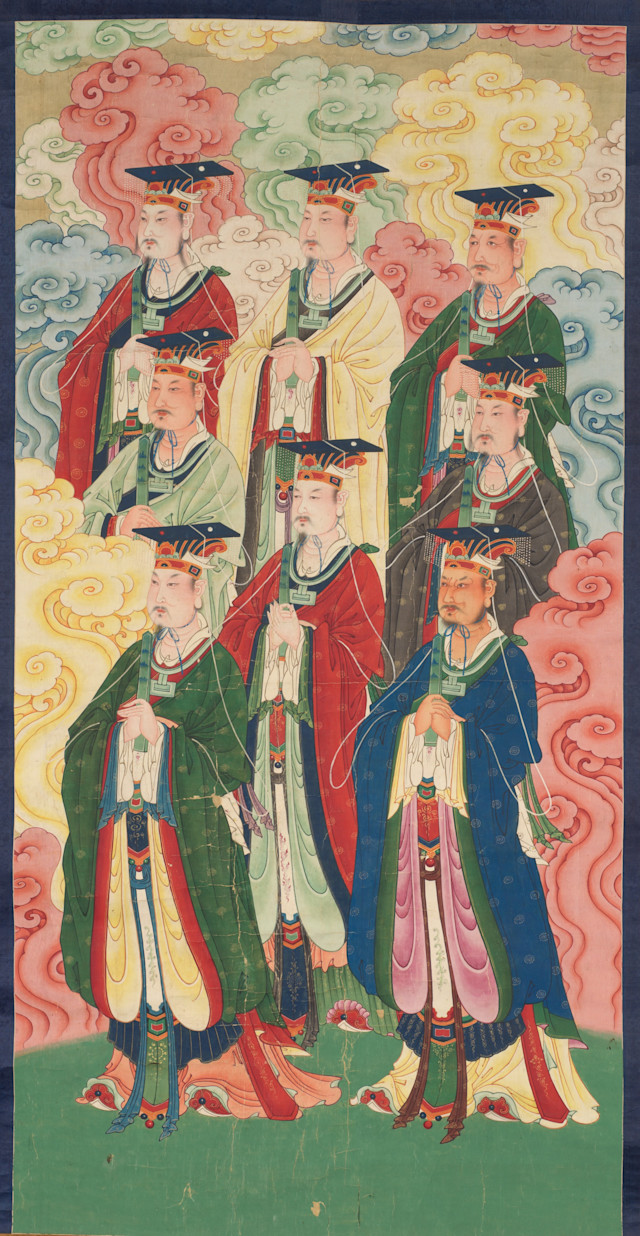
"Eight Heavenly Emperors," by an unknown artist from the Ming or Qing dynasty in China.
This context shaped much of how St. Paul thought about the world, so it helps us understand his most popular passages. In his letter to the Ephesians, for example, he writes, “For we do not wrestle against flesh and blood, but against the rulers, against the authorities, against the cosmic powers over this present darkness, against the spiritual forces of evil in the heavenly places” (Eph 6:12). While most people realize that he’s talking about angelic powers in this passage, it’s interesting that he calls them the “rulers” and “authorities” of the present world and indicates that they are “in the heavenly places.” Like all early Christians, he acknowledged the existence of these fallen angelic beings. But if these beings were fallen, how did they become the authorities and rulers over the world of men?
There is a somewhat cryptic passage in Deuteronomy that provides a clue. In summarizing the history of Israel, Moses mentions a time when God divided the nations of mankind:
When the Most High gave to the nations their inheritance, when he divided mankind, he fixed the borders of the peoples according to the number of the sons of God. (Deut 32:8; ESV)
The traditional interpretation of this passage is that it is a reference to the episode of the Tower of Babel, in which God scattered the nations and divided their language. Further, the idea that he divided the nations of mankind “according to the number of the sons of God” is a reference to the angelic beings, who are often referred to in the Old Testament as the “sons of God.”
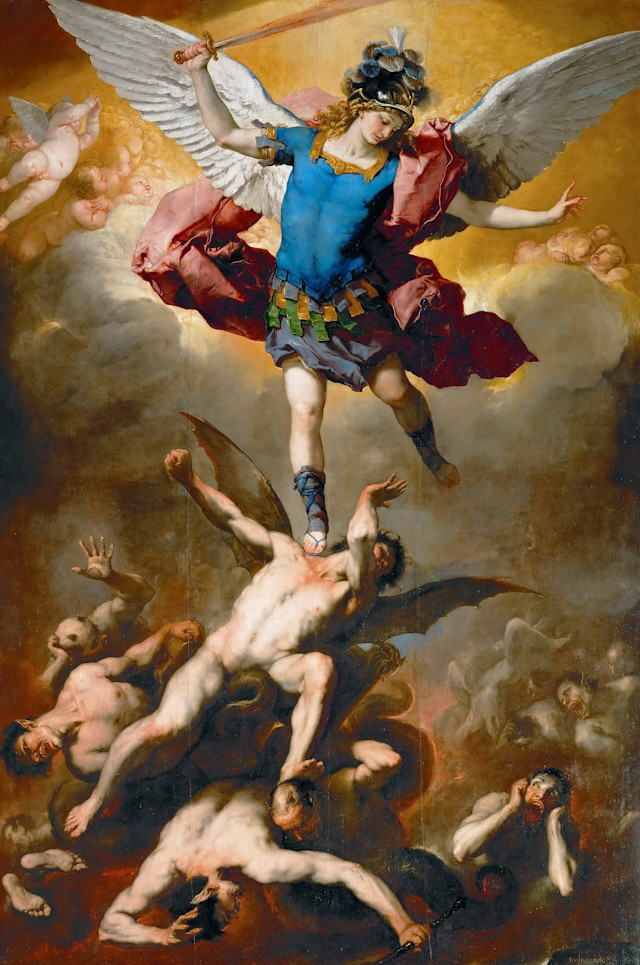
Luca Giordano - The Fall of the Rebel Angels - circa 1666
There is some debate over the right way to translate this passage. Many translations say, “the gods of the nations are idols,” but the more traditional understanding is that these creatures are demons. This language is used in the early Greek translation of the Bible, the same version that Jesus and the apostles quote from. What’s the difference? The point is that this verse is not saying that the gods of the nations were fake, as some people might think when they read the word “idol.” Rather, it reflects the ancient Israelite understanding that these gods were real spiritual beings—but that they were wicked, fallen gods. In a word, demons.
This context helps us understand Saint Paul’s various remarks about spiritual warfare. He has in mind a cosmic hierarchy where the rulers of the world, the gods of the nations, are fallen angelic beings. They have real leadership over the Earth, but need to be resisted and overthrown because they are wicked. And, because these beings failed to steward the nations properly, Christ ended their rule by coming into the world and beginning the missionary efforts of his Church.
It’s easy for modern people to over-spiritualize these sorts of passages. That’s why I want to emphasize that St. Paul was talking about a world where spiritual entities physically ruled the earth through their various cults and the religious practices associated with them. By “spiritual warfare” he wasn’t talking about the devil trying to make you have a bad day, or make you depressed or anxious, or cause you, personally, to sin more. Those are all possibilities in a world filled with demonic entities, but when St. Paul talks about the rulers of the world, he means the literal, physical, political world. That the weapons of our warfare are not carnal means that, even though we have to deal with a world physically ruled by evil, we overcome it spiritually: by becoming holy, “perfect as your heavenly father is perfect” (Matt 5:48), and by sharing in Christ’s invincibility against any power—even death.
Subscribe
Life-giving writing by Christian scholars sent to your inbox once per month

Zachary Porcu has a PhD in church history from the Catholic University of America in Washington DC, with additional degrees in philosophy, humanities, and Classics (Greek and Latin). He is an Eastern Orthodox Christian.
Keep reading

Who was Tartak in the Bible? The idol of the Avites


Why stay away from the Book of Enoch
Jesus and the Syrophoenician Woman: Gentile Salvation
Who was the first woman preacher in the Bible?
Was Jesus a Rabbi?