Was Jesus born in September?
The short answer
It’s not clear when exactly Jesus was born, as the Gospel accounts don’t specify it, nor are there other historical accounts that might help. Different dates have been proposed, but despite the lack of consensus, it’s still correct to celebrate Jesus’ birth according to the traditional date.
Everyone knows that Christmas is in December, but was December actually the month of Christ’s birth? The gospel accounts don’t say, nor does any other book of the New Testament. No one recorded the exact date Jesus was born. Is this lack of specificity important?

Suzuki Harunobu - The Seventh Month (Fumizuki) - circa 1865
The Roman calendar—which was something like a standard for the ancient world at the time of Jesus’ birth—was famously flexible. The Roman calendar only had 355 days, so it quickly got out of sync with the seasons. The Roman solution was to insert an extra month into some years between February and March called the intercalary month, of variable duration, depending on how many days they needed to reconcile the calendar year with the seasons. There were a variety of shenanigans associated with this calendar adjustment process, where the official in charge of making the adjustment might lengthen the years during which his political allies were in office and shorten those years in which his political enemies were in office!
These sorts of inconsistencies make it difficult to date any ancient events with precision, not just the birth of Christ. However, I think it’s important to point out that the greatest efforts towards standardizing the calendar were begun in Rome but completed by the Church. The Church ultimately established the calendar that the whole world uses today.
I always find it weird that people are so skeptical towards Christian dates like the birth of Christ on the basis that they are theological events, as though religious motivations invalidated the qualifications of the people recording history. In fact, Christians were some of the best mathematicians and astronomers of the ancient and medieval world, and they were devoted copiers of manuscripts and preservers of literacy. It is because of their record-keeping that we’re able to date many of the events of the ancient world with accuracy—because,for example, they kept thorough records of the lines of succession of bishops from the original apostles. This succession of bishops was undoubtedly a helpful, independent dating system in a world where years were often based on the succession of temporal rulers such as kings and emperors.
What month and year was Jesus born?
So what did the early church say about the birth of Jesus? As for the year, we aren’t really sure. The Anno Domini dating system wasn’t proposed until around A.D. 525, and it wasn’t widely adopted for several centuries after that. It’s very possible that the year of Jesus’ birth was actually a few years earlier or later—it’s hard to say. Besides the calendar not being standardized in the ancient world, there were other inaccuracies and points of confusion. For one, there are inaccuracies in the lists of Roman consuls who held office during the time around Christ’s birth, along with confusions about the exact years of the emperors' reigns. In addition, the Incarnation of Christ has been identified with his birth, but many ancient authors instead associated the date with his conception, which would have been nine months earlier. These confusions are all understandable and typical of the dating of almost anything in the ancient world.
Ancient sources are much more confident about the month and day that Jesus was born, generally agreeing that the date was December 25th. We have writings from such prominent figures of the early Church as St. Euodias of Antioch in the first century, St. Theophilus of Caesarea in the second century, and St. Jerome and St. John Chrysostom in the fourth century—all agreeing on the date December 25th.
There have been a few modern movements, however, to demonstrate that Jesus’ birth was in September, based on various calculations and rationales. Though the two gospels which deal with the birth of Jesus, Matthew and Luke, do not mention the season or month in which Jesus is born, a December date has been disputed on the grounds that shepherds were out grazing their flocks during the time of the nativity. On the one hand, it seems unlikely that shepherds would be grazing their flocks during the winter, but on the other hand, winters in Judea were quite mild; Israel has a very similar climate to Southern California. As such, this detail has been used both for and against a winter date for the nativity of Christ.
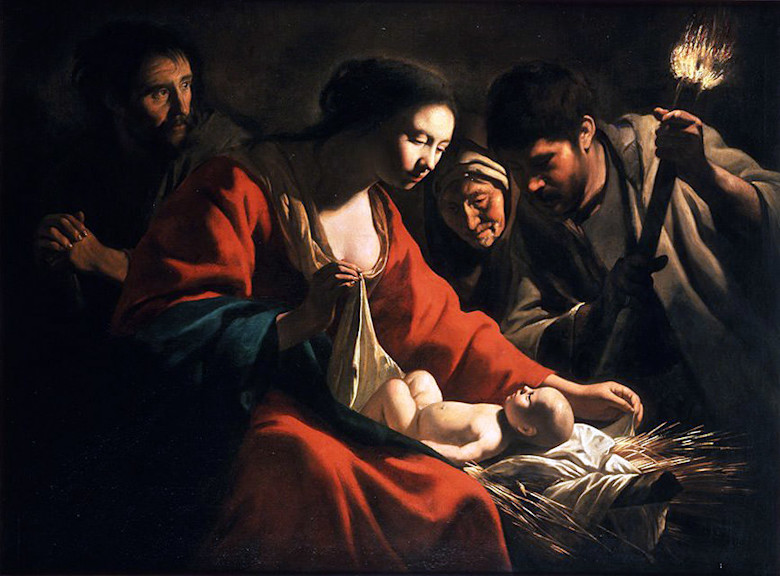
Nativity with a Torch by the Le Nain brothers, circa 1635-40
While there is a good handful of arguments for a September date, I think it’s significant that all of the revisionist dates have been proposed within the last few hundred years. All of the major sources in the ancient world, those within a few hundreds years of Christ’s life, proposed the December date. Does that mean an end to the discussion?
When is Jesus’ real birthday?
There’s a great deal of calculation, argumentation, and debate that could go into this topic. Unfortunately, this discussion is rarely, in my experience, an objective, neutral dedication to fact-finding: it almost always has an ulterior motive. If you can demonstrate that Jesus’ birthday wasn’t December 25th, you can put the Church and the early Christians in a bad light, implying that they were (at worst) knowingly subverting or corrupting the facts to suit their narrative, or (at best) mistaken.
The kinds of arguments people raise on these grounds, however, tend to show a lack of familiarity with the mindset of early Christians and the ancient world in general. Let’s look at one of the most prominent arguments against Christianity.
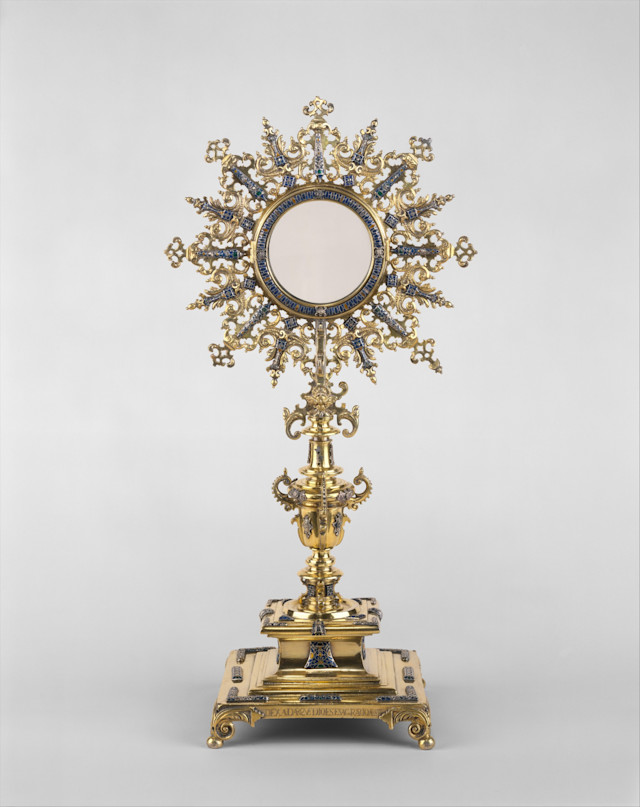
A monstrance attributed to Diego de Atienza, from circa 1646.
It’s a little-known fact that the early Christians did not disbelieve in the pagan deities. Most of the writers of the early Church affirmed their existence, but had a very particular narrative about them. Early Christian writers held that the pagan gods were creations of the One God, like angels, and that they were put in charge of various things on the earth, such as watching over different people groups and lands. The issue is that these gods fell into temptation, lusting after the things of the earth, and became evil gods, consumed by their vices—another way of saying that they were fallen angels. The pagan religions, therefore, were actually the various cults of these fallen gods who created false religions in imitation of the true worship of God. In this view, it could be argued that December 25th was always originally going to be Christ’s birthday, but it was usurped by a fallen religion before the birth of Christ. Christians were simply taking it back.
It depends on how you look at the world. If you come into the discussion with the prejudice that Christianity and paganism are false, then you’ll be predisposed to believing that the pagan festivals were merely made up, and that the Christian appropriation of them is yet another thing people made up. But if you believe in the spiritual world, then the true nature of the gods and their relationship to sacred times and seasons of the year has real significance. Christianity’s narrative about the origin of paganism explains why everyone believed in these pagan religions despite them being so often unpleasant: their gods were real but fallen.
The liturgical calendar
The last thing I want to address is the issue of how to think about time. These discussions about dating systems generally miss the point, not because they aren’t important, but because this over-emphasis on the physical world only would have been entirely foreign to the early Church and ancient people in general, because it elevates exact calendar calculations at the expense of spiritual goods.
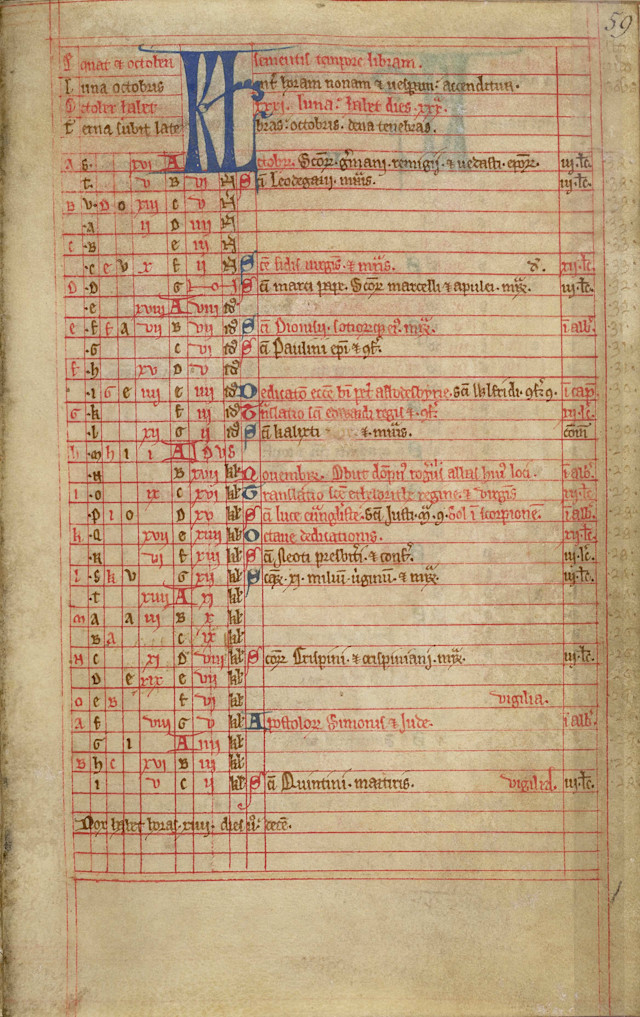
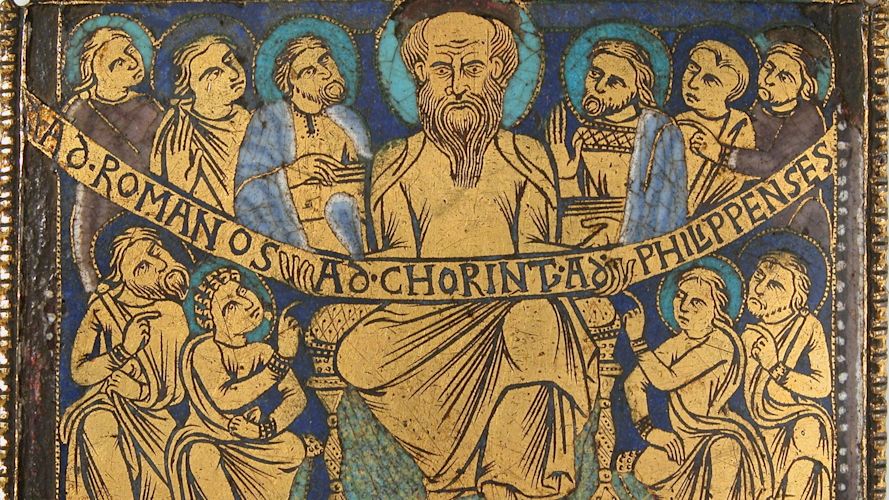
Liturgical calendar from a 13th century manuscript
The liturgical calendar is the fabric of this kind of life. The liturgical calendar is the calendar of all the feasts and fasts of the church, and the entire year is broken into different liturgical periods, such as the Nativity fast leading up to Christmas, Lent leading up to Easter, and all the other Saints' days throughout the year. It’s important to understand that the liturgical calendar is not merely a remembrance of the past, the way that secular holidays like the Fourth of July or Thanksgiving are presented as remembrances of past historical events. When Christians celebrate these holy days, they’re doing them as part of their participation in the divine liturgy, in the cosmic liturgy of the angels, who are said to exist above the normal kind of historical time. In the holy liturgical time of the divine liturgy, all time is present. So when we participate in a celebration of Christmas, we don't say “Christ was born,” as though we were remembering the past. We say “Christ is born,” because we are caught up in the eternal present of liturgical time and are able to directly participate in this event as a cosmic event.
The earthly calendar, with all its calculations and efforts to maintain accuracy, is not the highest reality. We think it is, because we have a bias towards that which is measurable and verifiable. But if this life is only a shadow of the age to come, and we participate in that higher spiritual reality through the liturgy, then the liturgical calendar is the organization of these historical events into a cosmic structure that we can participate in. It is not mere symbolism that’s secondary to normal, secular time; rather, it is a call to a higher spiritual reality that excels our earthly calculations. In the Christian view, to celebrate Christmas on December 25th is to follow the more real date, because it’s part of liturgical time. It is to celebrate Christmas in relational to all the other cosmic events of the rest of the liturgical calendar, as a reflection of the true, cosmic time of the age to come.
Subscribe
Life-giving writing by Christian scholars sent to your inbox once per month

Zachary Porcu has a PhD in church history from the Catholic University of America in Washington DC, with additional degrees in philosophy, humanities, and Classics (Greek and Latin). He is an Eastern Orthodox Christian.
Keep reading

Jesus and the Syrophoenician Woman: Gentile Salvation

Who was the first woman preacher in the Bible?
Was Jesus a Rabbi?
Who was Phanuel? Archangel or Father of Anna?

Is “love conquers all” in the Bible?