Abdiel: Milton's Angel who Scorned the Devil - By a PhD
The short story:
The angel Abdiel is from John Milton’s epic poem Paradise Lost; it is not found in the traditional canon of scripture. While the poem captures some of the spirit of the angelic fall, many of the details Milton adds—such as the names and roles of various angelic beings—are almost entirely a product of his creative liberty.
The name “Abdiel” appears in the Bible only one time, in 1 Chronicles 5:15: “Ahi the son of Abdiel, the son of Guni, was chief of their father’s house” (NJKV). In this passage, Abdiel appears as someone’s father in a genealogy, not in an extended Old Testament story. As a result, there isn’t much to say about him.
But most people looking for information on Abdiel aren’t concerned with this relatively obscure Old Testament name. Instead, they’re looking for information about the archangel.
Is there an archangel named Abdiel in the Bible? The answer is no, but it’s easy to see where the misunderstanding comes from. The reason people often think that Abdiel is a prominent character in the Bible is because Abdiel is the name of one of the angels in Paradise Lost.
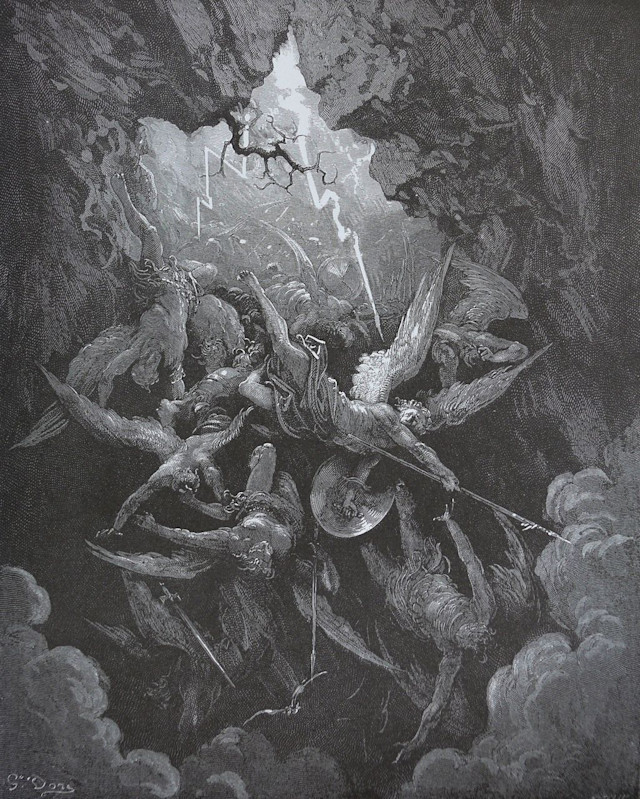
Gustave Doré - illustration for Paradise Lost - 1866
As such, Milton takes a great deal of liberty in composing his epic. He draws on a variety of sources from mythology and culture, not all of which are rooted in traditional Christianity.
One of Milton’s liberties is the angel Abdiel, whom he classifies as a type of angel called a seraph. In Milton’s story, Abdiel is among the angels Satan tries to persuade to join his rebellion against God, but Abdiel condemns Satan and his plan.
Milton calls him the only faithful one among the faithless, the only one unmoved by Satan’s speech. Book V of Paradise Lost states that Abdiel was “unshaken, unseduced, unterrified,” and he kept his loyalty, love, and zeal:
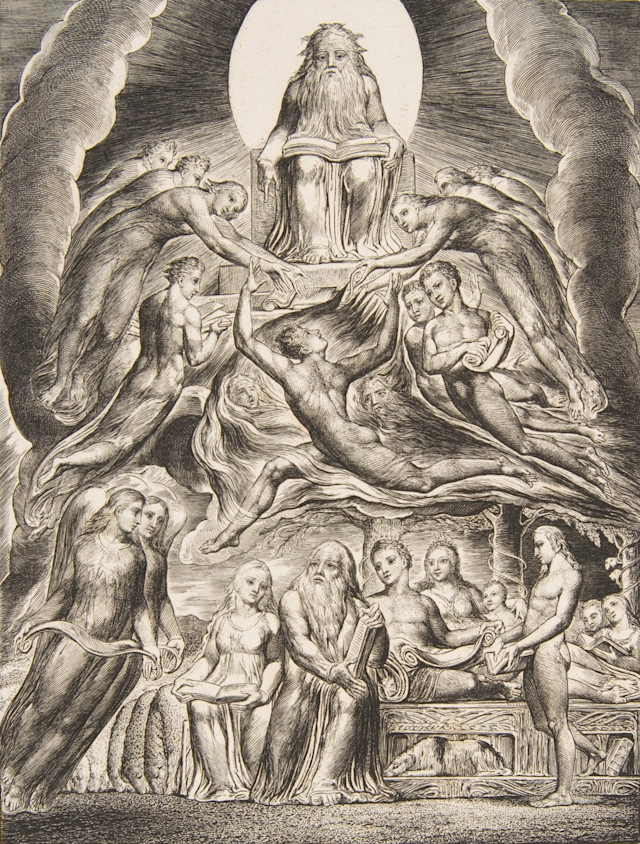
“So spake the Seraph Abdiel, faithful foundWilliam Blake - Satan before the Throne of God - 1826
Among the faithless, faithful only he;
Among innumerable false, unmoved,
Unshaken, unseduced, unterrified,
His loyalty he kept, his love, his zeal;
...
And with retorted scorn, his back he turned
On those proud towers to swift destruction doomed.”
Turning his back on the traitor angels, Abdiel flees to heaven in order to bring news of the rebellion back to God. By the time Abdiel gets there, however, he finds that heaven is already aware of the rebellion and the angelic host is in the middle of preparations for war.
Since Milton began this trend, the name Abdiel has been used for many different angels in fiction, in works like Many Waters by Madeleine L’Engle and The Revolt of the Angels by Anatole France.
Who was the angel that got kicked out of heaven?
It’s a bit of a complicated question, but the short answer is Satan, or the devil. Of course, Satan wasn’t alone in his rebellion, so he wasn’t alone in his punishment, either.
According to the Bible, the early church fathers, and the books that the New Testament writers considered authoritative (like Enoch), many angels were “kicked out” of heaven, though a better way of putting it is that they left.
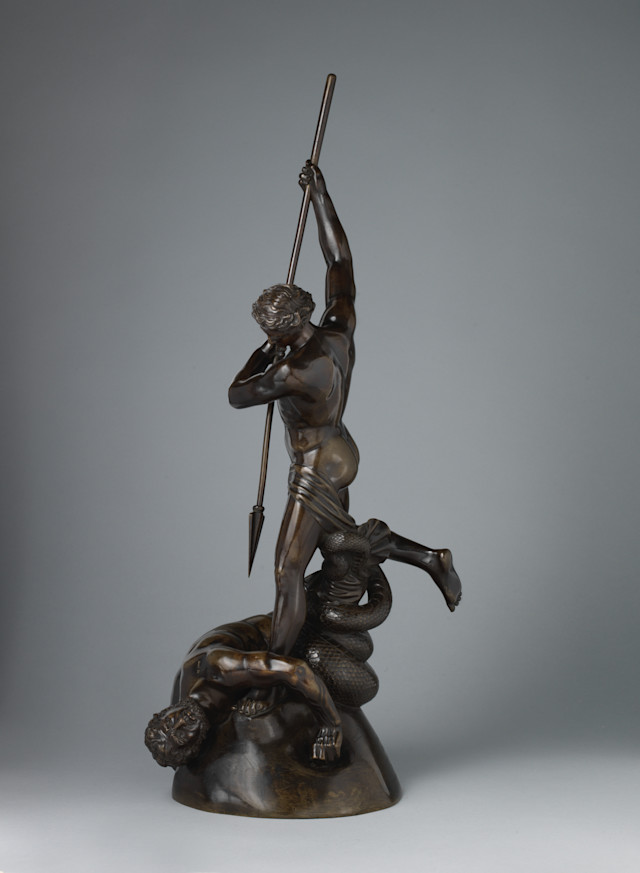
Edward William Wyon - Saint Michael Overcoming Satan - 1842
According to the Enoch account, there was a group of angels who were put on the Earth to watch over mankind and steward creation, but it seems that all of them went bad. In the language of the Bible, St. John writes in the book of Revelation that the dragon “drew a third of the stars of heaven and threw them to the earth” (Rev 12:4), which many people interpret as support for the idea that the devil (the dragon) drew a third of the angelic powers (the stars of heaven) down to the earth with him in his rebellion. This interpretation would have been more intuitive to ancient people, as they understood the stars, planets, and other “heavenly bodies” as literally heavenly: as spiritual beings, or at least as objects piloted or guided by spiritual beings.
For example, the early church fathers viewed the star of Jesus in Bethlehem—which overshadowed the other stars in the sky—as Christ, the God of gods, overshadowing all the other gods (the stars) with his birth.
You might think that the idea of “other gods” is a bit pagan, New-Age, or esoteric, but both the Bible and the early church fathers describe them this way. For example, Saint Augustine explains that Christians use the word “angels” to mean the same thing that pagans mean by the word “gods.” He saw no issue with this identity of meaning because it was clear to him that Christians knew the difference between the lesser gods (with a lower-case “g”) and the God of gods (with an upper-case “G”).
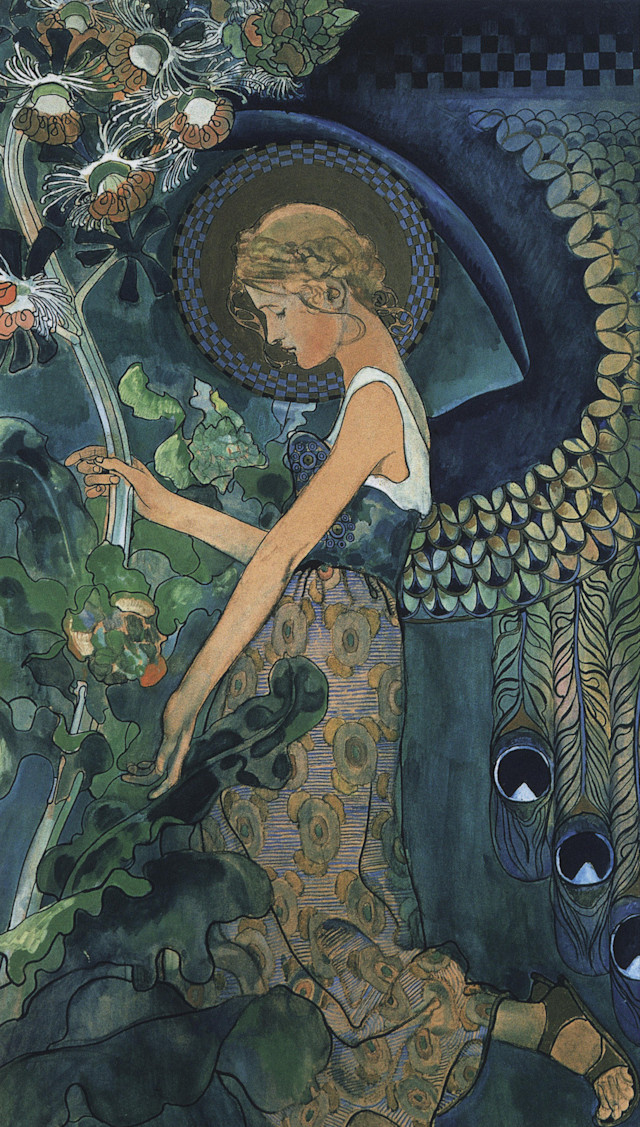
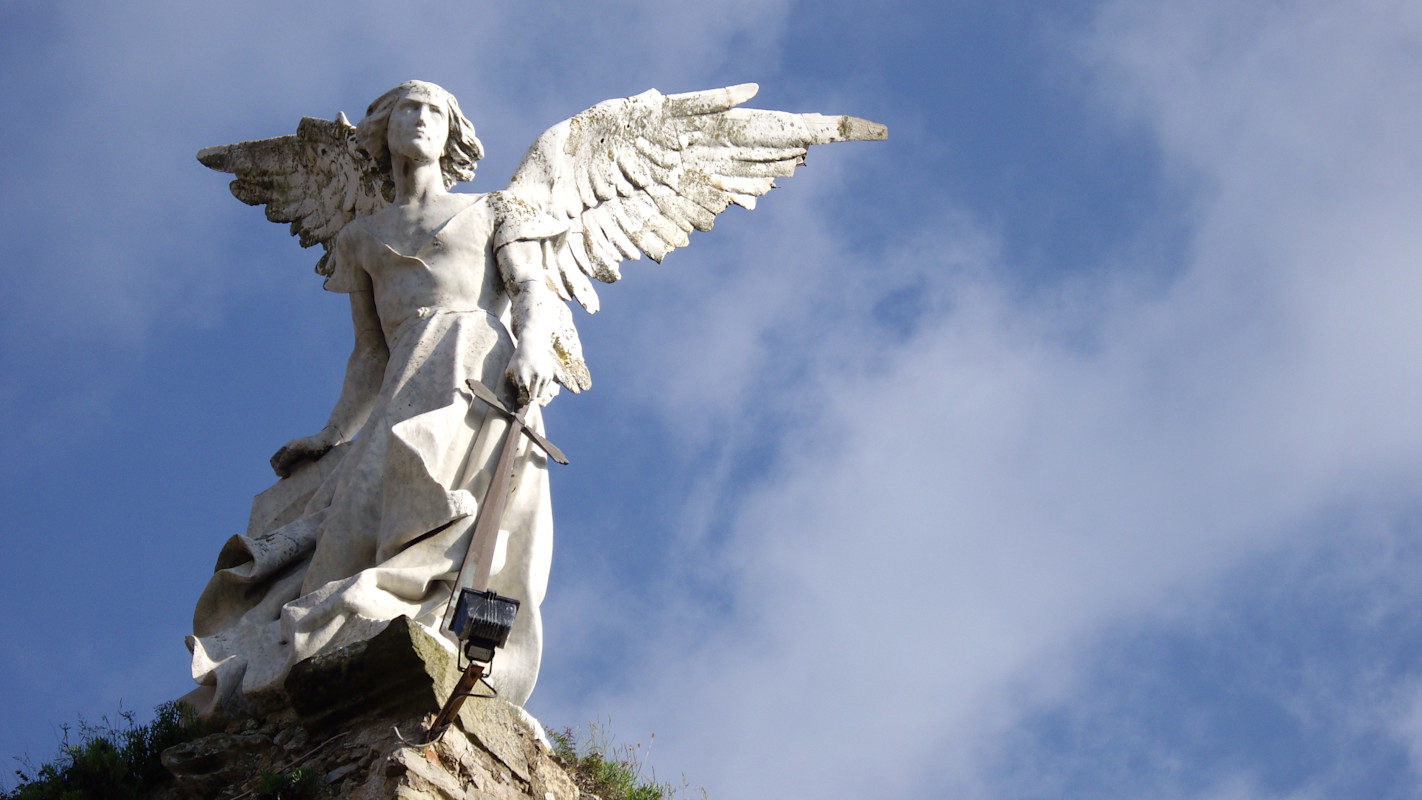
Kazimierz Sichulski - Angel - 1911
To return to the question of Abdiel: God originally put some number of spiritual beings in charge of various elements of creation, but some number of them rebelled and became traitors. We don’t have an ironclad, exhaustive account of which angels rebelled, however, as the Bible isn’t comprehensive on this topic, and the naming in sources like the Book of Enoch doesn’t always line up correctly (and again, Enoch has a secondary authority to the traditional Biblical canon. See our article about it here). Could there have been an angel like Abdiel, who heard Satan’s pitch to rebel against heaven but refused? Certainly. But do we know anything about it? Not really.
What is the meaning of Abdiel?
Abdiel is a Hebrew word that means “servant of God”. In Hebrew it’s written, עֲבְדִּיאֵל. The Hebrew suffix “-el” refers to God, and it is commonly used in the names of angels. All the named archangels in the canon of Scripture (and many that are not) have “-el” at the end of their name. Gabriel, Michael, Raphael and Uriel are the main ones mentioned in the canon of scripture, and each of their names relates to God in some way. For example, Gabriel means “God is my strength,” and Michael means “who is like God?”
Subscribe
Life-giving writing by Christian scholars sent to your inbox once per month

Zachary Porcu has a PhD in church history from the Catholic University of America in Washington DC, with additional degrees in philosophy, humanities, and Classics (Greek and Latin). He is an Eastern Orthodox Christian.
Keep reading

Why stay away from the Book of Enoch

Is Sachiel a real angel?
Pentagram vs Star of David: Symbolism Historical and Modern
What is the longest book in the Bible? And the shortest?
"It is well with my soul": Bible verse or hymn lyric?