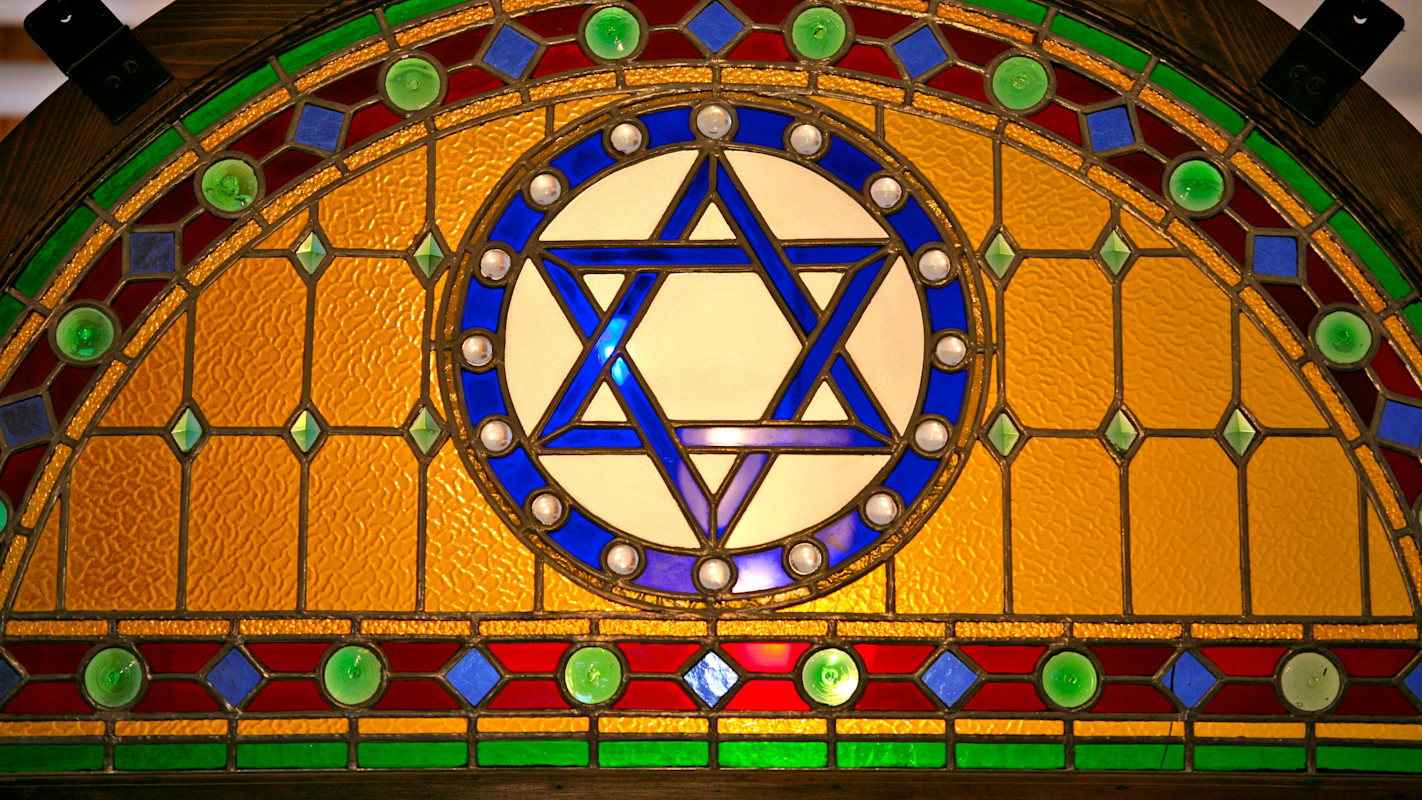
Pentagram vs Star of David: Symbolism Historical and Modern
The short story:
The Star of David is a hexagram (a six-sided shape), which is obviously not the same as a pentagram (a five-sided shape). In the modern world, the two have very different meanings, as a pentagram tends to be associated with magic, the occult, and/or Satanism, while the Star of David tends to be associated with Judaism. However, the ancient origins of the two symbols may be closer than most people realize.
While modern people tend to associate the pentagram with the devil, satanism, or magic in general, it’s important to realize that the pentagram is a perennial symbol that’s been used in huge range of cultural contexts for all of human history. Considered in the abstract, the different line lengths of a pentagram exist in a golden ratio with one another, so geometrically it is pleasing to look at. It’s easy to understand how it might come up in many cultural contexts.
One traditional way that the pentagram has been used is to symbolize the elements. In Chinese philosophy, the five elements (wood, water, metal, fire, and earth) are often arranged in a pentagram. In Western cultures, there are only four traditional elements (earth, air, fire, and water), so a pentagram is often used to depict these four elements plus the “fifth” element, which is spirit. Because the pentagram is traditionally depicted with the fifth point of the shape pointing upward, Western pentagrams typically symbolize the elevation of the spirit above the other elements, meaning that spirit is higher than matter.
This symbolism can be interpreted in various ways. In a generic sense, you could say it means something like “heaven is higher than earth.” However, ancient and medieval magical traditions (and especially modern Neo-pagan movements) have taken the pentagram as a general symbol for magical power or action: spiritual energy being “higher” than the four elements means that the natural elements of the earth are open to the manipulation of magic. This association is so strong that it’s made its way into countless pieces of pop culture, from movies to card games.
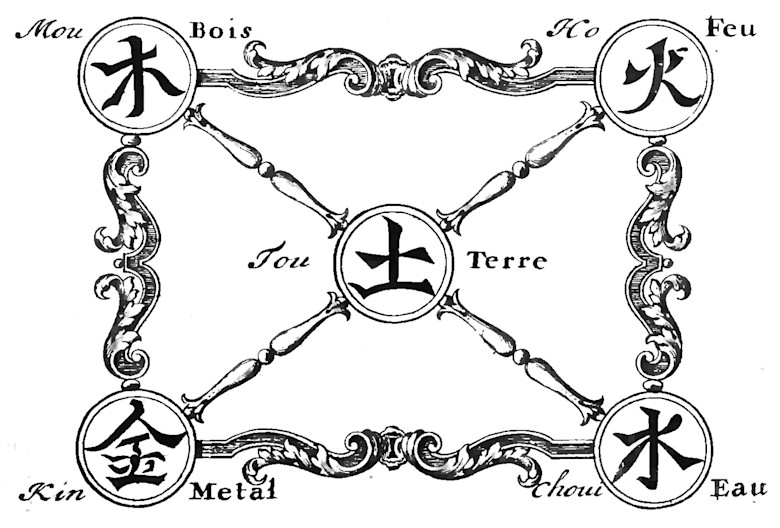
Jean-Baptiste Du Halde - Table of the Five Elements - 1736
How did the pentagram become associated with Satanism?
It’s not quite what you might think. While there are many Satanic movements that believe in magic, arguably the most popular Satanic movement of the last century adopted the pentagram for the opposite of its traditional symbolism.
The Church of Satan, founded by Anton LaVey in the mid twentieth century, was—contrary to popular belief—an avowedly atheist religion. LaVey believed that the traditional world religions were nonsensical, and he drew on the imagery of Satan as a symbol for what his movement was about: ambition, self-indulgence, and the power of the will. His brand of Satanists do not believe in Satan and do not worship him, because they don’t believe in supernatural entities of any kind. Some people are thrown off by the fact that the Church of Satan uses ritual and ceremony, but that’s because LaVey believed that these elements were psychologically powerful and important for the human experience.

Anton LaVey
But, because of its association with the Church of Satan, by the late twentieth century, many Westerners, especially Americans, associated the pentagram (whether upside-down or rightside-up) with Satanism, the devil, and evil. They often associated all of those things with neo-pagan and New Age occult movements that did have an emphasis on magic. For example, although the Wiccan belief in supernatural entities and powers is incompatible with the atheism of the Church of Satan, it was easy for a post-Christian culture to group both types into a general “anti-Christian” category. As a result, the pentagram, in whatever orientation, became an anti-Christian symbol and therefore a symbol of evil.
Ironically, if you go back further, the pentagram has had many good associations, even Christian ones. For example, thousands of years ago, the symbol was used by Pythagoras and his following of Greek mathematicians, scientists, and philosophers as a symbol of health and knowledge. At other times it has been used as a symbol for Jerusalem, because the name “Jerusalem” in Hebrew is spelled with five letters. In the Medieval era, the pentagram had a number of specifically Christian meanings, from the five senses to the five knightly virtues (friendship, generosity, chastity, courtesy, and piety), and even the five wounds of Christ.
What is the Star of David?
The so-called “Star of David” or “shield of David” is a six-pointed figure made of two triangles that form a hexagram. While it’s most commonly associated with Israel and Judaism today, it was not originally a Jewish symbol. Like the pentagram, the hexagram is one of the basic symbols of geometry and has been used throughout history in many different contexts.
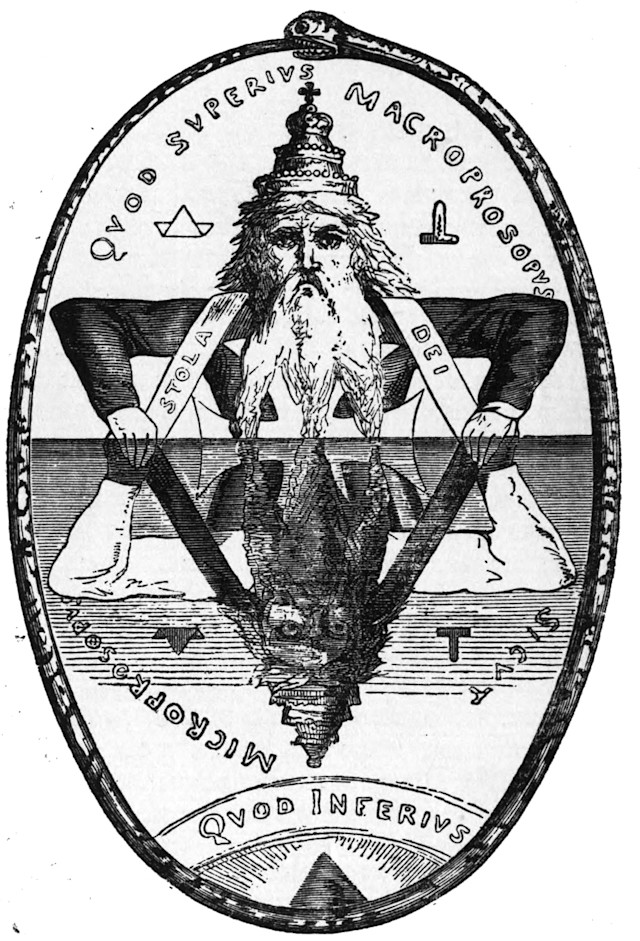
Alphonse Louis Constant - The Double Triangle of Solomon - 1896
The Star of David wasn’t primarily associated with Judaism until the late modern era. In the nineteenth century, European Jews began using it for themselves, and in World War I, it was used frequently to mark the graves of Jewish soldiers, instead of a cross. From there it went on to become an exclusively Jewish symbol in the contemporary world, and adopted as the flag of the First Zionist Congress in 1987.
Despite the name, there’s little evidence that the “star of David” had any relationship to the religion and culture of ancient Israel. Evidence of its association with modern, Rabbinic Judaism can only be demonstrated as early as the third century A.D. Earlier than that, there isn’t any evidence that ancient Israelites used the symbol to self-identify.
What is the difference between a pentagram and the Star of David?
So obviously, you might say, the Star of David has nothing to do with the pentagram, which is more about spiritual, occult movements rather than modern-day Judaism.
That may not be true, however.
While the symbol in a Jewish context is generally referred to as the “Star of David” or the “shield of David,” there’s a good historical argument that it originally came from the Seal of Solomon.
Solomon was the Son of King David, a legendary figure with hundreds of wives, boundless riches, incredible wisdom, and so on. He is the subject of much praise and awe through history, but one of the most curious legends is that he supposedly had a legendary ring that gave him the power to command and control spirits, exorcise demons, and even speak with animals.
A long tradition holds that Solomon possessed incredible powers as an exorcist and commander of spiritual beings. This tradition arguably peaked in the Medieval era, where Solomon’s ring and its symbolism became an object of fascination in Western occultism and esotericism. This symbolism continued through the Medieval era and became a huge influence on the emerging Renaissance magical traditions, such as alchemy.
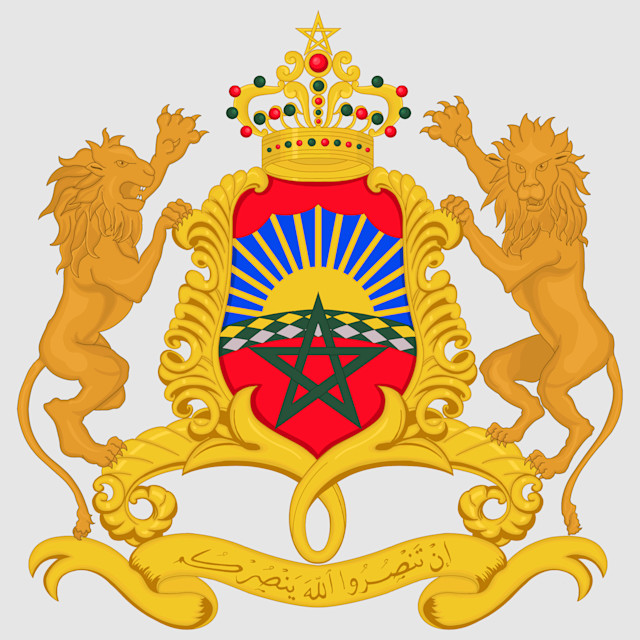
The coat of arms of Morocco, which includes two pentagrams.
While they’re not the same symbol now, since they have come to bear totally different associations, it wouldn’t be difficult to argue that the six-pointed hexagram that came to represent the modern-day nation of Israel has the same root as the contemporary use of the pentagram as a symbol for magic and occultism: Solomon, who was one of the greatest Israelites and also, if the legends are true, one of the greatest magicians.
Subscribe
Life-giving writing by Christian scholars sent to your inbox once per month

Zachary Porcu has a PhD in church history from the Catholic University of America in Washington DC, with additional degrees in philosophy, humanities, and Classics (Greek and Latin). He is an Eastern Orthodox Christian.
Keep reading
The Sigil of Baphomet and the Satanic Pentagram

Hineni in Hebrew: “Here I am” from God and Man
Who was Jotham, king of Judah?
What are the prophetic books of the Bible?
Who is Esaias in the Bible? Answered by a Christian Scholar