Who is Asaph in the Bible? A minister and psalmist of David
The short answer:
The name Asaph refers to several different figures in the Bible, but the most famous one is attributed the authorship of twelve of the Psalms.
The name “Asaph” is Hebrew for “gather”. It is used three times in the Bible, and may refer to any of several figures. But the main one that people are generally interested in is the Asaph who is attributed a number of the psalms.
At one point, King David appoints a man named Herman as the chief musician or singer, and also appoints the Merarites at his “left hand” and Asaph at his “right hand”:
“Now these are the men whom David appointed over the service of song in the house of the Lord, after the ark came to rest. They were ministering with music before the dwelling place of the tabernacle of meeting, until Solomon had built the house of the Lord in Jerusalem, and they served in their office according to their order.
And these are the ones who ministered with their sons: Of the sons of the Kohathites were Heman the singer, the son of Joel, the son of Samuel.... And his brother Asaph, who stood at his right hand, was Asaph the son of Berachiah.” (1 Chronicles 6:31-33, 39, NKJV, my emphasis)
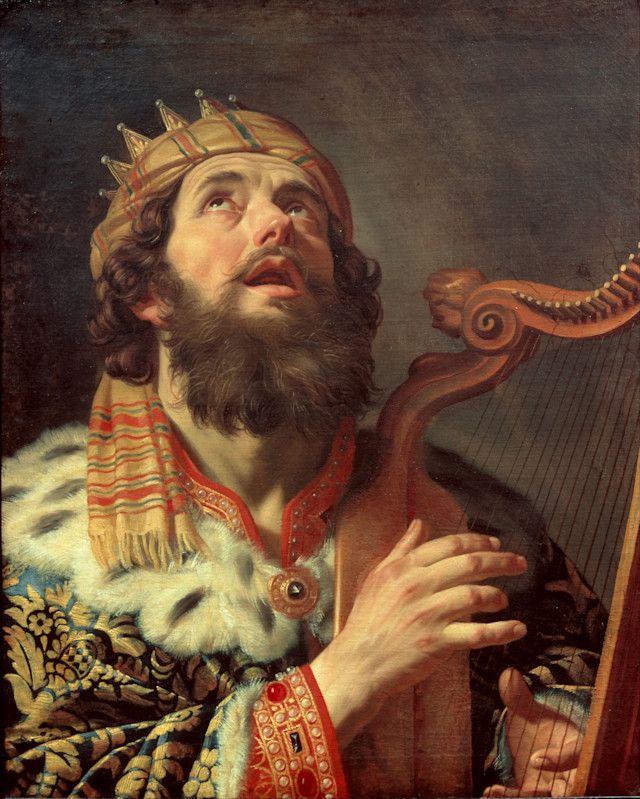
Gerard van Honthorst - King David Playing the Harp - 1622
Like most things, scholars disagree, given that we have very little evidence for one view or another. It could be that these Psalms were composed by Asaph, which would make sense. It could also mean that they were composed by David but were written down or transcribed by Asaph. Or it could mean that the psalms were performed in the tradition of the sons of Asaph. The simple reading is that they were either composed or transcribed by Asaph, and some scholars support this view by noting similarities among the psalms attributed to him. Ultimately, however, we aren’t sure of the answer.
What was the sin of Asaph?
There isn’t a particular “sin” that Asaph is famous for, in the same way that the sin of Adam and Eve was to eat of the forbidden tree, the sin of Cain was murder, or the sin of Judas was betraying Christ. What most people mean when they talk about Asaph’s sin is the part in Psalm 72 (or 73) when he discusses how he almost lost his way when he began to envy the prosperity of the wicked. He noticed that there were wicked people who nevertheless prospered greatly and enjoyed all of the fine things of this life, despite their moral depravity. In Psalm 73: 2-12, he writes:
But as for me, my feet had almost stumbled;
My steps had nearly slipped.
For I was envious of the boastful,
When I saw the prosperity of the wicked.For there are no pangs in their death,
But their strength is firm.
They are not in trouble as other men,
Nor are they plagued like other men.
Therefore pride serves as their necklace;
Violence covers them like a garment.
Their eyes bulge with abundance;
They have more than heart could wish.
They scoff and speak wickedly concerning oppression;
They speak loftily.
They set their mouth against the heavens,
And their tongue walks through the earth.Therefore his people return here,
And waters of a full cup are drained by them.
And they say, “How does God know?
And is there knowledge in the Most High?”
Behold, these are the ungodly,
Who are always at ease;
They increase in riches.
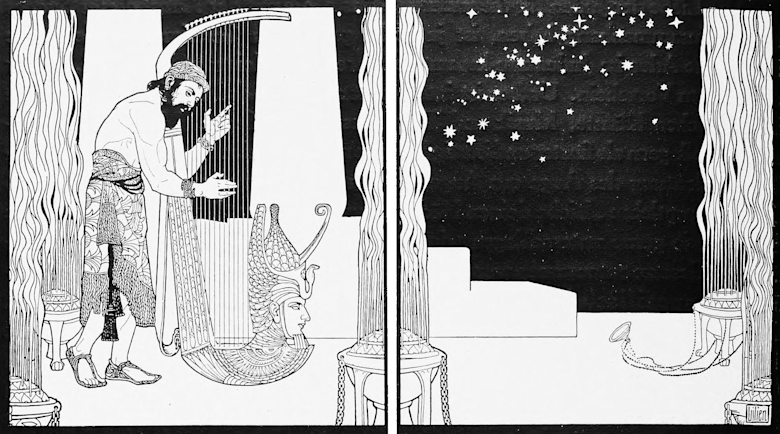
Ephraim Moses Lilien - The Psalmist - 1922
In verses 13-14, he questions why he tries to be morally upright, since he only experiences hardship as a result:
Surely I have cleansed my heart in vain,
And washed my hands in innocence.
For all day long I have been plagued,
And chastened every morning.
The psalm ends with Asaph realizing his folly. We don’t know why he changed his mind, but he mentions going into the sanctuary of God and realizes that he “was so foolish and ignorant; I was like a beast before You” (verse 22), and concludes,
Nevertheless I am continually with You;
You hold me by my right hand.
You will guide me with Your counsel,
And afterward receive me to glory.
And ends the psalm with,
But it is good for me to draw near to God;
I have put my trust in the Lord God,
That I may declare all Your works.
Subscribe
Life-giving writing by Christian scholars sent to your inbox once per month

Zachary Porcu has a PhD in church history from the Catholic University of America in Washington DC, with additional degrees in philosophy, humanities, and Classics (Greek and Latin). He is an Eastern Orthodox Christian.
Keep reading
Hineni in Hebrew: “Here I am” from God and Man
Who was Jotham, king of Judah?
Who is Esaias in the Bible? Answered by a Christian Scholar
What are the prophetic books of the Bible?

Peor: The Mountain and God of the Moabites