Skip to content
Rachel's Tomb: The Death of an Israelite Matriarch

Rachel's Tomb: The Death of an Israelite Matriarch

Dr. Zachary Porcu

July 22, 20262 min read

The short story:

Rachel’s tomb is a historical memorial site where Rachel, the wife of the patriarch Jacob, is buried. Jacob is the man who would be called “Israel”; the father of the Israelites. The modern-day nation of Israel is named for him.

The Biblical passage that relates Rachel’s death is from Genesis 35:

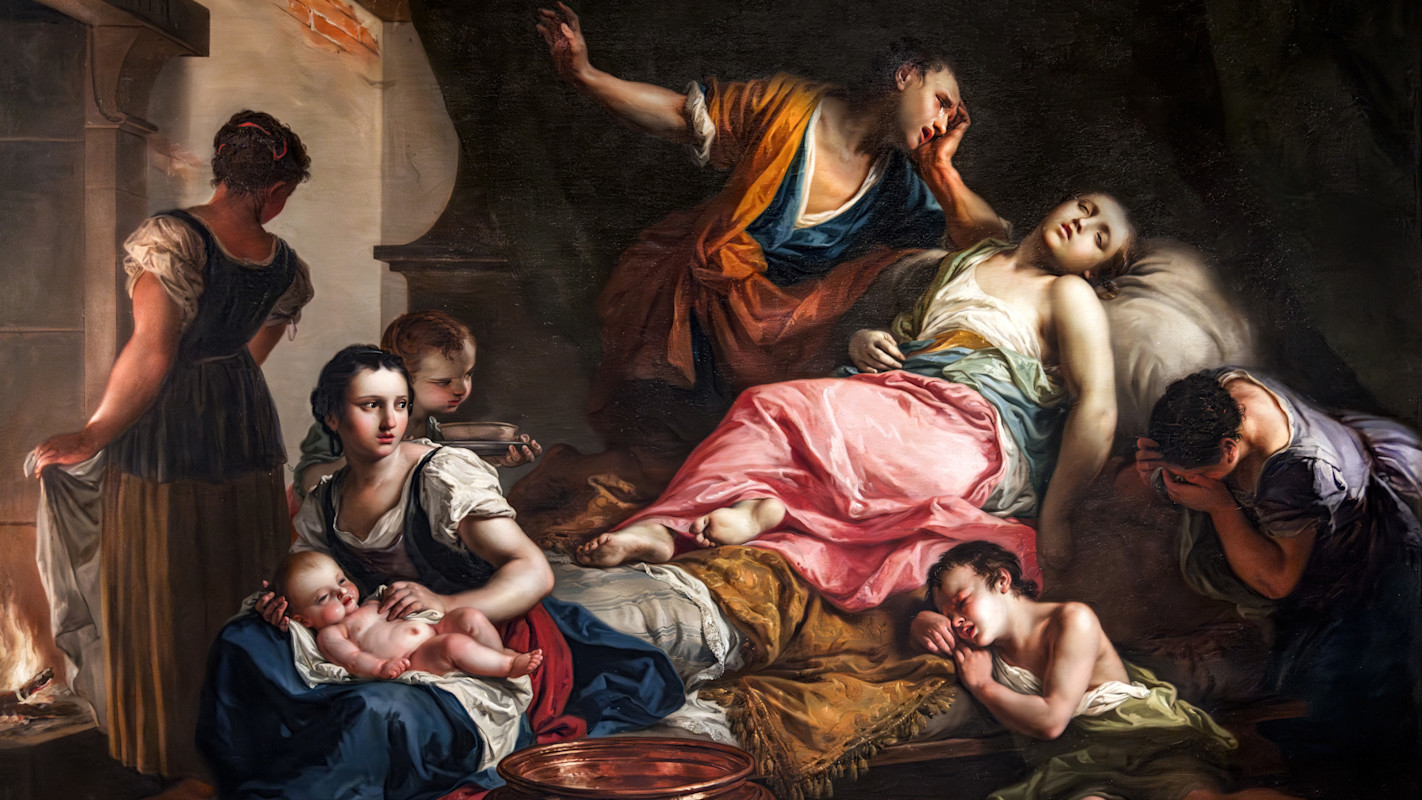
“Then they journeyed from Bethel. And when there was but a little distance to go to Ephrath, Rachel labored in childbirth, and she had hard labor. Now it came to pass, when she was in hard labor, that the midwife said to her, ‘Do not fear; you will have this son also.’ And so it was, as her soul was departing (for she died), that she called his name Ben-Oni; but his father called him Benjamin. So Rachel died and was buried on the way to Ephrath (that is, Bethlehem). And Jacob set a pillar on her grave, which is the pillar of Rachel’s grave to this day.” (Genesis 35:16-20, NKJV)
20260722_WilliamDyce_TheMeetingOfJacobAndRachel

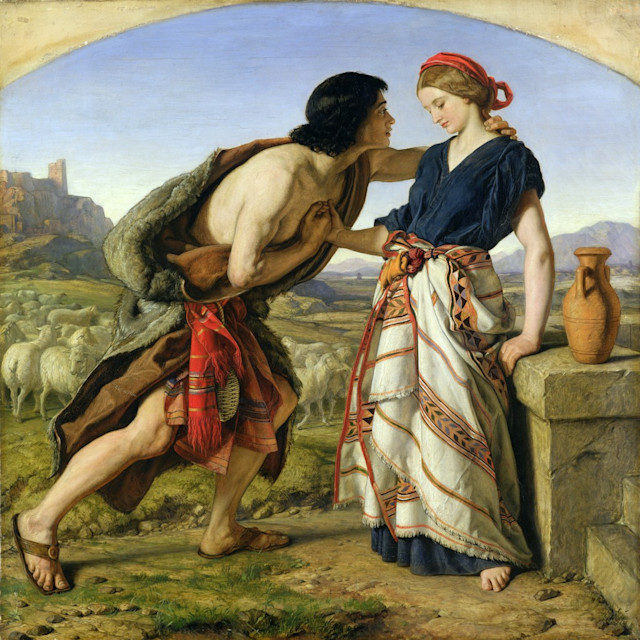
William Dyce - The Meeting of Jacob and Rachel - 1853

Though scholars dispute the exact location of Rachel’s tomb (scholars tend to dispute everything), it is broadly accepted across the Christian, Jewish, and Muslim communities that the tomb is in Bethlehem, in the West Bank region. Traditions which give the location of the tomb go back to the fourth century AD, including the Onomasticon—the church historian Eusebius’s famous “list of names.” In the absence of any other definitive evidence, there’s no reason not to trust tradition on this point—as is generally the case with things that are so old. The tomb passed through many hands over the centuries and experienced various renovations, and people visit the sarcophagus to this day.

Rachel’s tomb is significant for many reasons; she was one of the main matriarchs of ancient Israel and her husband’s favorite wife. Her husband, Israel, had twelves sons by four women: Rachel, Rachel’s older sister Leah, and each of their respective maidservants, who became Israel’s concubines. All totaled, Israel had twelves sons—each of whom became the patriarch of one of the Twelve Tribes of Israel. Of these, Rachel only bore two—Joseph and Benjamin.

Why is Joseph significant? Though he was not a direct ancestor to Jesus (Jesus’ lineage is traced from Joseph’s older brother, Judah—one of Leah’s sons) Joseph nevertheless lived a life that is seen by the church Fathers as a foreshadowing of Christ’s life.
20260722_GeorgPencz_JosephLoweredIntoAWell

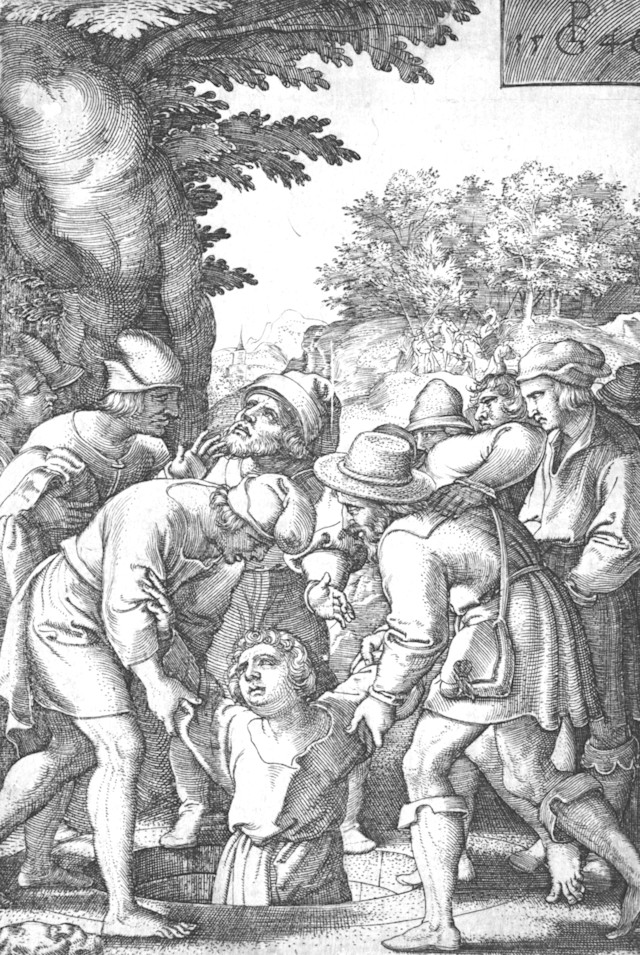
Georg Pencz - Joseph Lowered into a Well by His Brothers - 1546

Joseph had a complicated story; his brothers left him for dead, but he went on to save the lives of his entire family. Because he was his father’s favorite son, Jacob earned his brothers’ jealousy. One day they seized him and threw him into a pit, but instead of leaving him to die, they decided to sell him into slavery. While a slave in Egypt, he gained the notice of Egypt’s ruling class through his ability to interpret dreams. He eventually helped rule Egypt, serving as the Pharaoh’s second-in-command. Given this incredible status and influence, he was able to save Egypt from a coming famine—as the knowledge of this famine was revealed to him by God. When the famine hit the surrounding lands, Joseph’s family journeyed to Egypt to buy food. Joseph recognized his brothers and, despite their prior misdeeds, gave them food and invited them to live in Egypt. He saved them from the famine and elevated them to the favored class of the Egyptian culture at the time.

The motifs here for Christ are, perhaps, obvious: just as Jesus died and conquered death, bringing life to the world, Joseph was headed for death but “returned” to life and brought life to his people in the midst of the threat of death (the famine).

As the mother of this iconic and celebrated patriarch of Israel, Rachel went on to be honored for generations to come—and still is to this day.

Why was Rachel buried separately from her husband?

People give a variety of spiritual reasons in answer to this question, but none of them stand out to me as the definitive reason. I can only assume that there were logistical reasons to consider: in the ancient world, people were generally buried quickly, before they decomposed. For this reason, they were often buried very close to where they died. While someone who senses that his end is drawing near might request to travel closer to where his eventual tomb would be, the circumstances surrounding Rachel’s death were more hurried—she died during childbirth in the middle of a journey to Bethel.

Image credit
  • Giambettino Cignaroli - The Death of Rachel - 1770
  • William Dyce - The Meeting of Jacob and Rachel - 1853
  • Georg Pencz - Joseph Lowered into a Well by His Brothers - 1546

Article folder: Old Testament

Tagged with: IsraelIsraelitesThe Twelve Tribes of IsraelEgyptGenesis

Dr. Zachary Porcu

Zachary Porcu has a PhD in church history from the Catholic University of America in Washington DC, with additional degrees in philosophy, humanities, and Classics (Greek and Latin). He is an Eastern Orthodox Christian.

Full author bio

Keep reading

A PhD explains the phrase "What the devil meant for evil"

A PhD explains the phrase "What the devil meant for evil"
Dr. Zachary Porcu
by Dr. Zachary PorcuCatholic University of America
There isn’t a single, specific Bible verse about what “the enemy meant for evil,” but the closest is Genesis 50:20: “But as for you, you meant evil against me; but God meant it for good, in order to bring it about as it is this...
Necromancy in the Bible: Fallen Spirits, Ancient Religion

Necromancy in the Bible: Fallen Spirits, Ancient Religion

Dr. Zachary Porcu
by Dr. Zachary PorcuCatholic University of America
Because of fantasy novels, zombie movies, and games like Dungeons and Dragons, a “necromancer” has come to mean someone who raises and commands the dead. In popular culture, a necromancer is commonly pictured as an evil warlock...
Resen: One of the Cities of Nimrod

Resen: One of the Cities of Nimrod

Dr. Zachary Porcu
by Dr. Zachary PorcuCatholic University of America
Resen is a city mentioned in Genesis 10:12: “Cush begot Nimrod; he began to be a mighty one on the earth. 9 He was a mighty hunter before the Lord; therefore it is said, “Like Nimrod the mighty hunter before the Lord.” 10 And t...
Merari: Son of Levi and Ancestor of Judith

Merari: Son of Levi and Ancestor of Judith

Dr. Zachary Porcu
by Dr. Zachary PorcuCatholic University of America
According to the Abarim Publications website (a dubious theological source but good for etymology), the name Merari (מררי), means “bitter” or “strong” (as in having a strong taste) in Hebrew: “The name Merari, like other Levite...
Who is Asaph in the Bible? A minister and psalmist of David

Who is Asaph in the Bible? A minister and psalmist of David

Dr. Zachary Porcu
by Dr. Zachary PorcuCatholic University of America
The name “Asaph” is Hebrew for “gather”. It is used three times in the Bible, and may refer to any of several figures. But the main one that people are generally interested in is the Asaph who is attributed a number of the psal...
The Shulamite: Bride of Solomon and Allegorical Woman

The Shulamite: Bride of Solomon and Allegorical Woman

Dr. Zachary Porcu
by Dr. Zachary PorcuCatholic University of America
The word “Shulamite” (also spelled “Shulammite”) is only used once in the Bible, in the Song of Solomon, chapter 6, verse 13. What does it mean? It’s at least a reference to the bride of Solomon, but the nature of the title is ...