Who was Tiras in the Bible?
The short answer
Tiras was one of the descendants of Noah (specifically, his grandson) who, according to the book of Genesis, repopulated the earth following the Great Flood. Looking closer at Tiras can reveal all sorts of depth to the way we understand the concept of family.
The book of Genesis describes the Great Flood that destroyed the Earth and the effect of that event on the world population. The story is that the race of mankind became corrupted after the fall of the angels, and that this corruption caused so much degradation and bloodshed that the earth had to be partially destroyed in order to purify it. But God did not wish to destroy mankind, so the narrative of Genesis shows that God started mankind anew with Noah’s family, the only people who survived the Flood.
The relation of Tiras to Ham, Shem, and Japheth
Noah had three sons, each of whom became the father of many different people groups that went on to repopulate the whole earth. Japheth is described as having seven sons: Gomer, Magog, Madai, Javan, Tubal, Meshek, and Tiras. Of these seven, only Gomer and Javan’s sons are listed in the Genesis account. The identity and offspring of Tiras is not given.
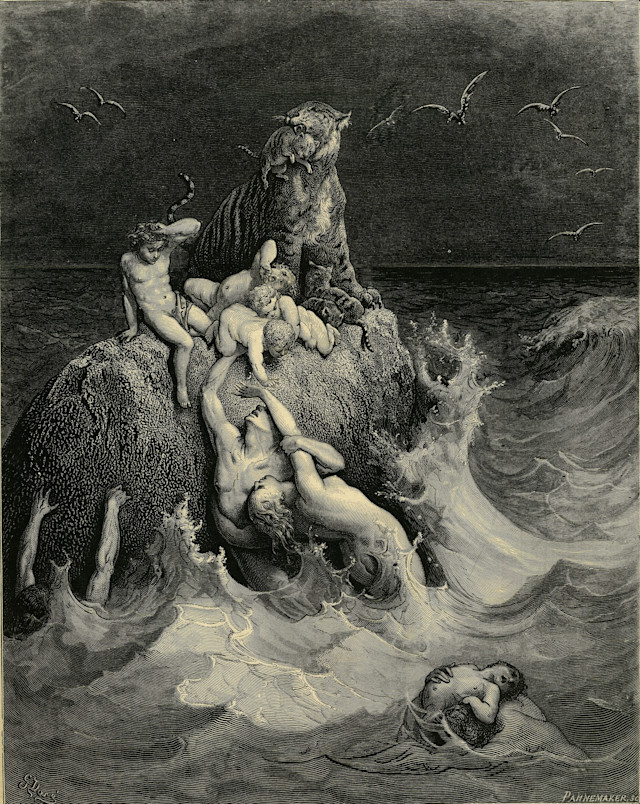
Gustave Doré - The Deluge - 1866
One of the sons of Ham, for example, is listed as “Egypt,” implying that this man went on to be the father of the ancient nation of the same name. Genesis also lists the sons of Egypt, which includes the ancestors of all sorts of famous people groups. For example, the progenitor of the Philistines, who would later have conflict with the Israelites, most famously told in the story of David and Goliath.
The children of Japheth
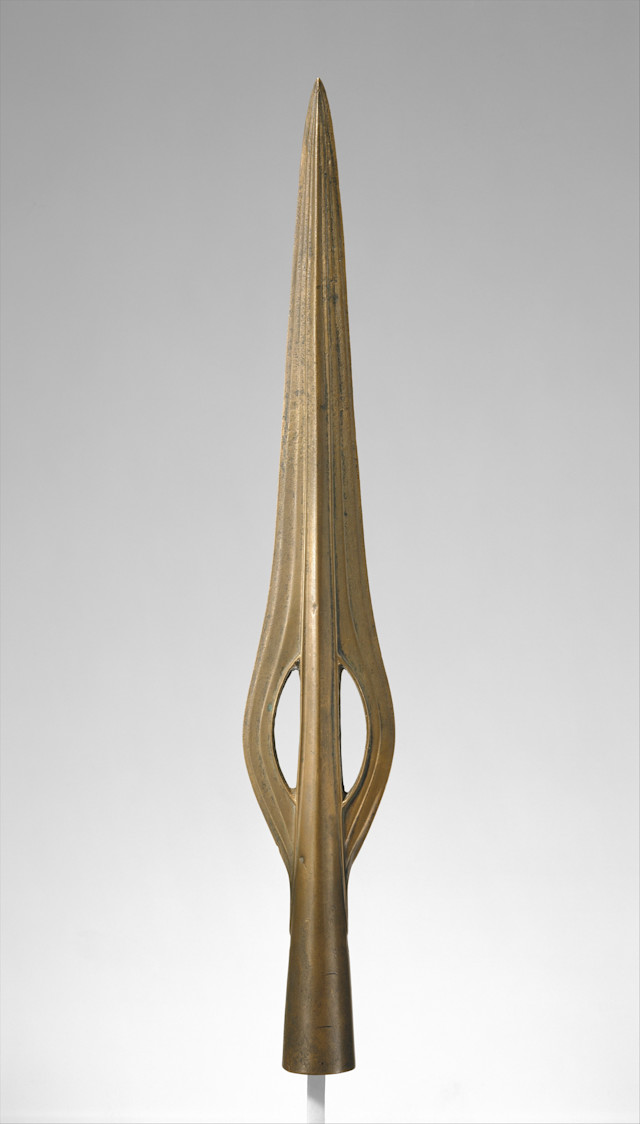
A spearhead from the Bronze Age, prior to the collapse caused by the sea peoples.
But you could also entertain more bizarre theories. While not directly descendants of Tiras, a note in the Genesis account explains that, among the sons of Javan (one of the older brothers of Tiras), there emerged the “maritime” peoples. Could these have any link to the migrating “sea peoples” who theoretically ushered in the late bronze age collapse? It’s interesting that Genesis—which was likely written sometime during or a little after the bronze age collapse—referenced a sea people without other explanation, as though the writers assumed that the reader would already have been familiar with it. It’s impossible to say for sure, of course; this is just my own scholarly speculation. There are also many theories that propose tracing all the major macro-people groups of the world—Europeans, Africans, and Asians—to specific descendants of Noah, though again, these theories are difficult to prove.
Family and identity in the Ancient World
Something modern people don’t think about very often is the way a family grows and evolves over many generations. In the modern view, you are just you: an individual with your own ideas and goals and interests, and when you die, that’s it for you. In other words, we tend to be hyper-individualistic in our thinking about the world, because we’ve been trained to think about the world in terms of ourselves first and our communities and relationships second. In contrast, ancient peoples thought about their family or clan identity first and their individual identity as secondary to their family identity.
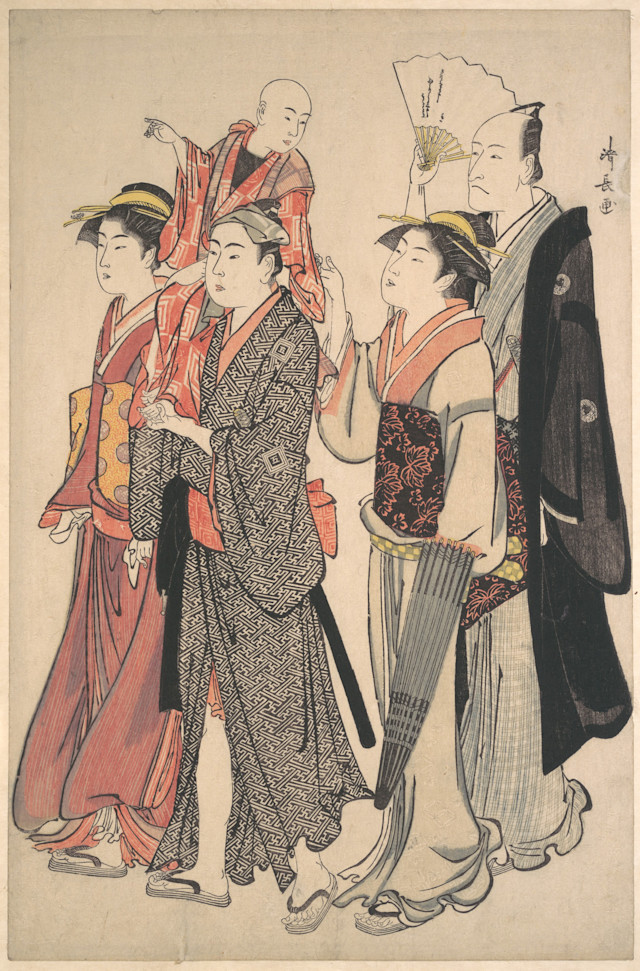
Torii Kiyonaga - Ichikawa Danjuro V and His Family - 1782
In non-Western cultures this pattern isn’t always the case. Japanese people do the opposite: their first name is their family name and their second name is their individual name, because their familial affiliation is primary and their individual identity has meaning only through the context of their family identity.
[Note: Whether these reasons are ultimately the basis for the order of names in Western or Japanese cultures is not provable, but modern Western culture is more individualistic, while Japanese culture is more recently based on a system of feudalism.]
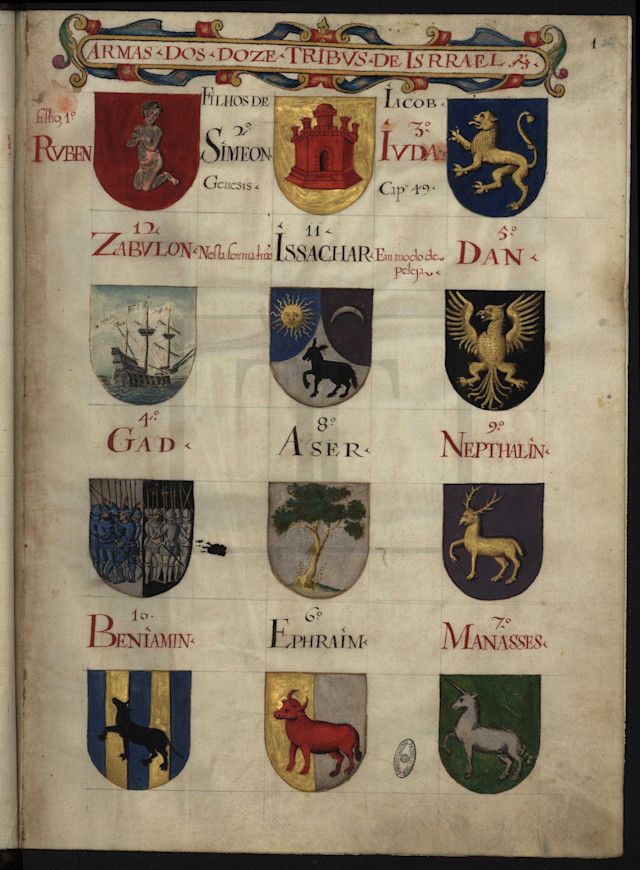
A 1675 depiction of the coats of arms of the twelve tribes of Israel by Francisco Coelho.
Noah’s grandchildren founded people groups because of the flood, but the normal way for one man to become a whole nation was simply being successful. If you became a powerful man in the ancient world, you’d almost certainly acquire many wives and therefore have many children. The book of Judges records that Gideon had “many wives” as the explanation for why he had seventy sons (Judges 8:29). His sons were a whole army that conquered other people groups, and when they all had children, their family quickly became a force to be reckoned with. If each of his sons had even half as many sons as him, he would have had something like 2,500 grandchildren—and what about great-grandchildren? You can see how one man can quickly grow into an entire nation.
The most prominent example in the Bible is Israel (formerly known as Jacob) who famously had twelve sons. Each son became the father of an entire nation named after its respective founder. Eventually, they became known as the twelve tribes of Israel—and at that point it meant Israel as both man and nation.
Israel is something like the “main character” of the Old Testament, both as an individual person and as the nation of all his descendants. The Biblical authors, especially in the poetic and prophetic writings, often move back and forth between these two different meanings, sometimes referring to Israel as an individual and sometimes as a nation. But the double-meaning is always present because ancient people thought of their tribes and nations like massive extended families that extended across time as well as space. While many people think of the genealogy sections of the Bible as the “boring” parts, you can see why tracing genealogy was so important to ancient people: to trace family lineage is to trace the history and development of whole people groups, and therefore the very fabric of ancient civilization.
Subscribe
Life-giving writing by Christian scholars sent to your inbox once per month

Zachary Porcu has a PhD in church history from the Catholic University of America in Washington DC, with additional degrees in philosophy, humanities, and Classics (Greek and Latin). He is an Eastern Orthodox Christian.
Keep reading

Why stay away from the Book of Enoch
Hineni in Hebrew: “Here I am” from God and Man
Who was Jotham, king of Judah?
What are the prophetic books of the Bible?
Who is Esaias in the Bible? Answered by a Christian Scholar