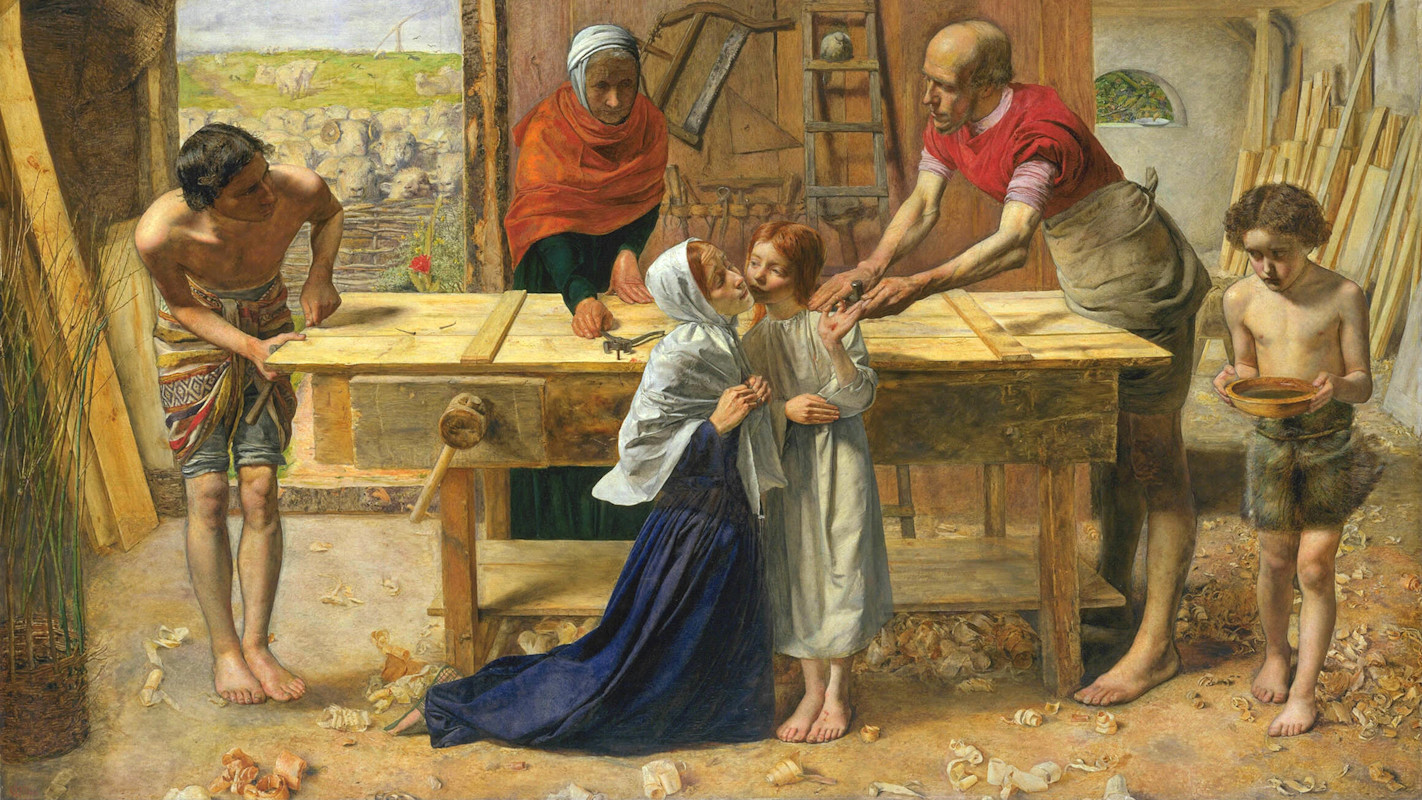
Christian Mythology: Criticism, Genre, Truth
The short story:
The phrase “Christian mythology” can be used in many different ways. It is often used by atheists and skeptics to suggest that Christianity isn’t true. However, older Christian writers also considered Christianity to be mythological—precisely on the grounds that they believed it was true. Ultimately, “myth” is a type of literary genre, a way of telling stories, and there can be “true myths.”
“Christian mythology” is a broad term that gets used in a few different ways. Some people (atheists and skeptics, primarily) try to use it in a derogatory way to suggest that the stories in the Bible are fictional. In the same way that modern people say “Greek mythology” or “Norse mythology” because they don’t believe that Zeus or Thor were real, skeptics use the same language for Christianity to suggest that figures like Jesus, Moses, and Archangel Michael weren’t or aren’t real.
But this kind of attack on Christianity is ironic, because Christians believe in mythology in a much more profound way than most atheists might imagine. But a lot of this misunderstanding is rooted in a confusion over terms.
Ancient used the word “myth” differently than modern people do. Modern people tend to use the word to mean “fake” or “made-up,” as in the phrase “that’s just a myth” or the early 2000s TV show Mythbusters.
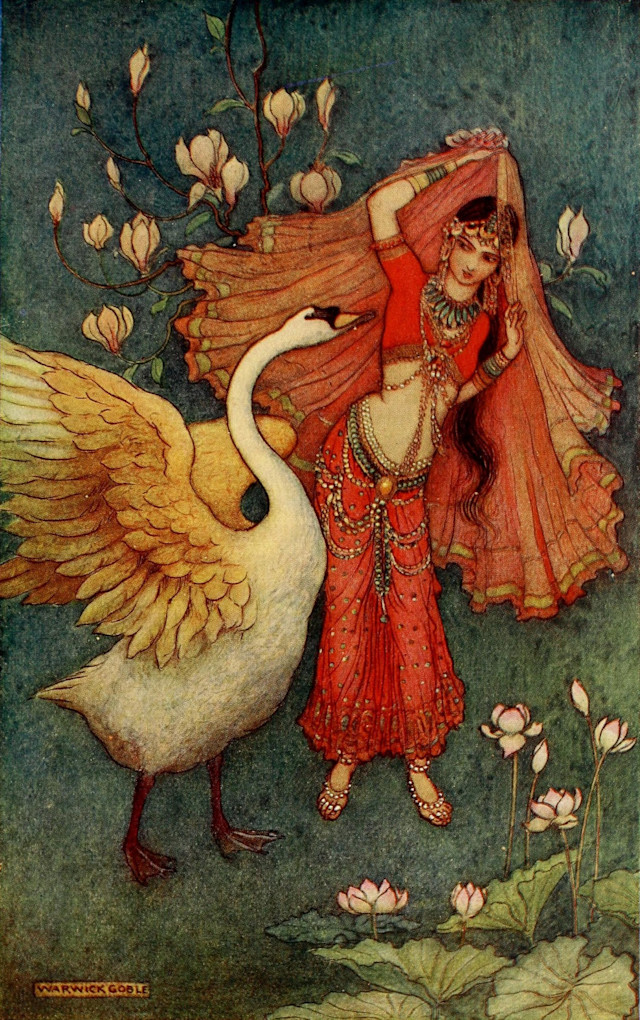
Warwick Goble - Damayanti and the Swan - 1913
As a result, it was an accepted practice for ancient people to switch the facts of a narrative around to fit the point that they were making with the story as a whole—because the moral point, the deeper meaning, was understood as the most important part of a narrative.
This view is why—as the moderns would understand it—ancient people combined their historical accounts with mythological accounts. The story of the founding of Rome, or Japan, or Greece all start with some sort of mythic account centered on the gods, and the Bible is no different.
Throughout Christianity, therefore, scholars have identified a variety of recurring moral themes in the text of the Bible, in church tradition, in the extra-Biblical writings surrounding the church, and in hagiography. Common motifs (or storytelling patterns) in these works include the nobility of self-sacrifice, the descent into death and the underworld, and the idea of someone who dies and comes back to life. Because these motifs recur in Christian writing, you could say that they form a kind of pattern for Christian storytelling in general. They are a framework for what we might call a kind of “Christian mythology.”
That said, these motifs also occur throughout other religions and mythologies. For this reason, critics of Christianity often dismiss Christianity as a copycat of older, pagan religions—as though Christianity is a mere derivative of these traditions because it has similar motifs.
But this sort of argument is based on a mythology of its own. Modern people like to pretend that they are more scientific and sophisticated than ancient people, but everyone has a mythology (even modern atheists!) because everyone has a narrative about the world.

There are many modern superstitions, including those surrounding black cats.
Modern, scientific people also have such a narrative. It could be summarized in this way: Long ago, ancient people stupidly believed that gods and demons and spiritual entities caused everything in nature, because they didn’t have science. But eventually people got smart and learned how to use science, overcoming superstition. This change led to a more civilized existence and the development of technology, literacy, and human rights. As we get more and more sophisticated and base our world less on irrationality and superstition, we’ll continue to make the world a better and better place.
Contrary to popular belief, this picture of history is almost entirely false from a factual, historical perspective. You can read more in my short book, Journey to Reality. In any case, it’s important to recognize that this narrative is also a mythology: it’s a narrative story about the meaning of the events in human history. It makes value judgements about historical events and ideas—some beliefs are stupid, others are enlightened, one kind of civilization is better than another, and so on.
Are Mithra and Jesus the same?
Because there were a variety of pagan cults at the time of the birth of Christianity, critics have attempted to show that Christianity merely copied older pagan religions. They developed what is called the “Christ myth theory,” which claims that there was no such person as Jesus, and that the gospels accounts were fictional.
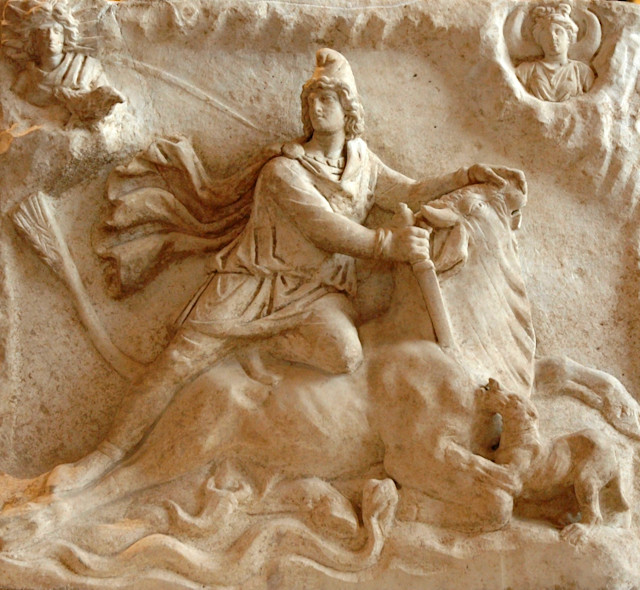
This Roman relief from the second or third century depicts Mithras slaying a bull.
There are many problems with this hypothesis. For one, the broad consensus of scholars is that Jesus of Nazareth was a real person who lived and taught in Jerusalem and Galilee. Though this hypothesis has occasionally been trendy, it doesn’t bear up under historical scrutiny.
The second issue with this hypothesis is that there are few parallels between the imagery of the cult of Mithras and the life and ministry of Jesus.
If you’re being extremely general and not looking at the evidence in detail, you could say that both have a miraculous birth, promise salvation, and have a feast celebrated on December 25, but those comparisons don’t stand up to examination.
Mithras was said to have been born out of a rock. This story differs substantially from Jesus being born of a virgin human woman, as Jesus’ birth indicates that God truly took on human nature—a claim that no other religion has ever made.
Those who compare Christ to Mithras often connect Mithras to the Roman feast of sol invictus. While Mithras was often associated with the sun, the feast of sol invictus was a public holiday celebrated on December 25—everyone was aware of it. The Mithric cult, on the other hand, was a mystery religion that only the initiated were allowed to participate in. The feast of sol invictus, therefore, was not a specifically Mithric religious feast, so it’s not a good basis for comparing the Mithric cult and Christianity. There are many other attempted parallels, but they generally have the same kinds of issues.
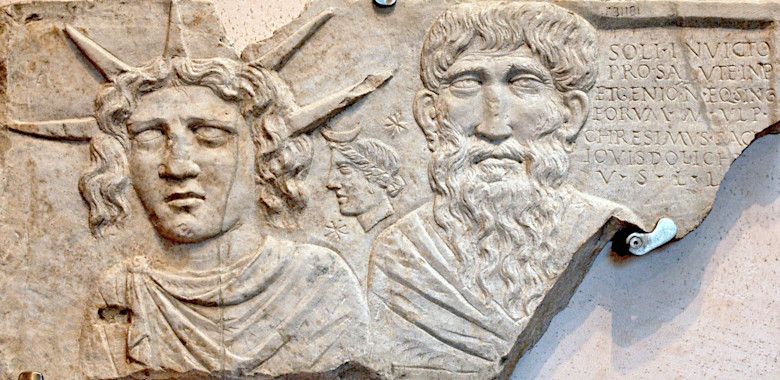
A Roman votive plaque from the second century depicting the sun god, the moon goddess, and what may be Jupiter Dolichenus.
Most problematically of all, no works of Mithric theology are extant. As a result, it’s almost impossible to know what the religion’s practitioners believed. The evidence that we do have is mostly archeological: there are various scenes of mythic portrayals of Mithras in reliefs and inscriptions, but the interpretation of this evidence is widely contested by scholars. Ultimately, it’s more or less impossible to make a meaningful comparison between the narratives of the Mithric cult and Christianity.
In other words, while it was once popular to assert that Christianity was an imitation of the cult of Mithras, there’s almost zero evidence support that theory.
In fact, the references that we do have from the early church period suggest the opposite. Justin Martyr, a second century church father, accused the Mithraic cultists of copying the early Christian liturgy:
“Which the wicked devils have imitated in the mysteries of Mithras, commanding the same things to be done. For, that bread and a cup of water are placed, with certain incantations, in the mystic rites of one who is being initiated, you either know or can learn.” (First and Second Apologies of Justin Martyr, Chapter 66)
So actually, the evidence that we have suggests that the Mithric cult may have copied many of its central practices from Christianity. This relation would fit the early Christian belief that the pagan religions were the inventions of fallen, rebel gods.
Can I read mythology as a Christian?
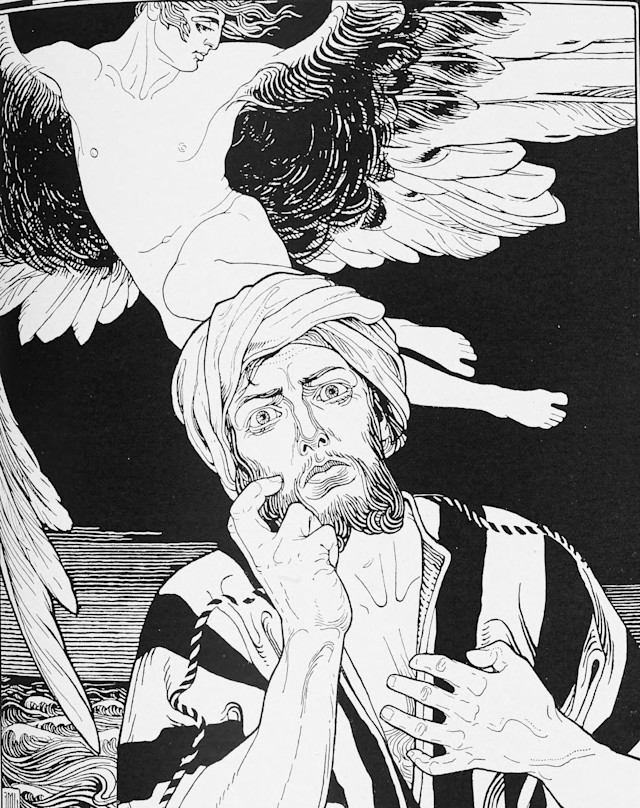
Ephraim Moses Lilien - Daniel and the Maggid - circa 1900
Some modern Christians believe that the mythologies of the ancient world were fake, including the Greco-Roman, Egyptian, or Hindu myths. However, it was the position of the early church fathers (and, arguably, the language of the Bible) that the pagan gods really existed—that they were, in fact, rebel angels. These gods invented their respective religions to control humans and extract worship and sacrifice from them, but despite these deceptions, they could only mimic the truth.
For example, in Greek mythology, the narrative is that the Titan gods originally ruled the universe but they were savage and unjust, so they were overthrown by Olympian gods who seized control of the universe and went on to govern it better. What does that sound like? To me it sounds a lot like the story of the devil leading a rebellion of angels against the God of gods—except that in the real story the rebels lost.
So you might view pagan mythology as containing elements of the true mythology, twisted to serve as propaganda for these fallen spirits.
You can see this sort of pattern all over pagan mythology when you start comparing it to Christianity. To go back to the original concern, the early Christians actually deemed the many similarities between the motifs of pagan mythology and Christian mythology as evidence that Christianity was true.
Why? Because Christianity claims to be the “fullness” of the truth. The position of the early church wasn’t that Christianity was true and all other religions were completely false. Instead, it held that the other religions had parts of the truth but were missing (or had added) many other parts which made them incomplete. These additions or subtractions were often outright wicked, such as human sacrifice and the worship of demons.
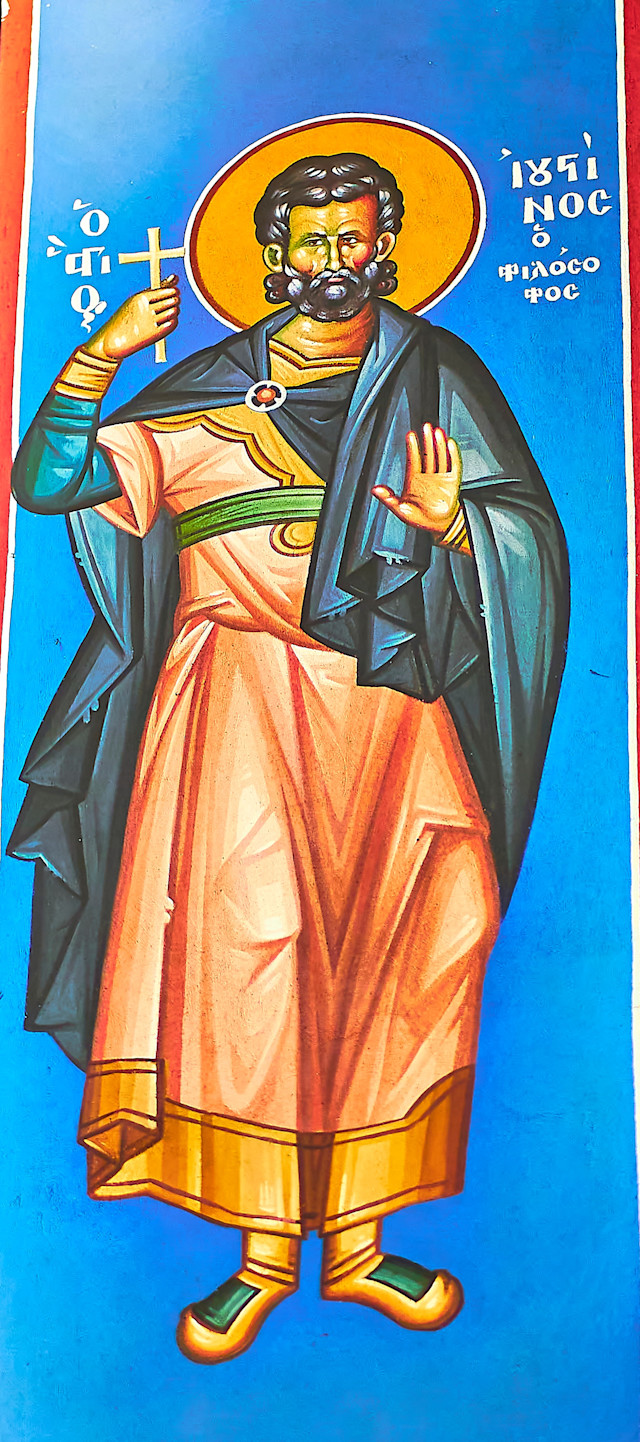
A contemporary icon of St. Justin Martyr.
Finally, there is a kind of literary genre that you might call “Christian myth.” It uses the mythic assumptions of Christianity and often borrows from other mythologies, wrapping them into a greater Christian cosmology. This genre is a long tradition that arguably includes works like John Milton’s Paradise Lost or Dante’s Divine Comedy, but is most recognizable to modern people in the writings of C.S. Lewis, J.R.R. Tolkien, and George MacDonald. These writers frequently used mythological elements in their stories, tying them together with Christian elements. This unification was meant to indicate that Christianity is the fullness of truth: it is both true and contains all the truth that’s found in other mythologies. In fact, some scholars argue that this tendency to draw on a range of past mythologies and present a kind of “enchanted world” gave rise to the modern fantasy genre in literature.
Subscribe
Life-giving writing by Christian scholars sent to your inbox once per month

Zachary Porcu has a PhD in church history from the Catholic University of America in Washington DC, with additional degrees in philosophy, humanities, and Classics (Greek and Latin). He is an Eastern Orthodox Christian.
Keep reading
Who was Phanuel? Archangel or Father of Anna?


Abdiel: Milton's Angel who Scorned the Devil - By a PhD
Forgiveness and the Remission of Sins
Stanley Hauerwas: Virtue Ethicist & Postliberal Theologian
Who is Jürgen Moltmann and What Did He Believe?