Forgiveness and the Remission of Sins
The short story:
The phrase “remission of sins” comes up frequently in the New Testament, though how often depends on the translation. It's an important concept in the Bible, and this language was ultimately put into the Nicene Creed to describe the power of baptism. Forgiveness and remission are often used interchangeably in the New Testament, but the ancient Christian understanding of remission was that sin was more than just an offense to God that could be cleared up if God chose to forgive you: it also created a physical problem for mankind that resulted in our physical corruption and death. Therefore, remission of sins is about both forgiveness and becoming physically freed from sin and its effects on our bodies.
The phrase “remission of sins” shows up in most translations of the Bible in at least a few places.
When John the Baptist is born, for example, his father Zechariah makes a prophecy about him that mentions the remission of sins:
“And you, child, will be called the prophet of the Highest; for you will go before the face of the Lord to prepare His ways, to give knowledge of salvation to His people by the remission of their sins, through the tender mercy of our God.” (Luke 1:76-78, NKJV)
And later in Luke’s Gospel, John has grown up and preaches the very thing prophesied: “And he went into all the region around the Jordan, preaching a baptism of repentance for the remission of sins.” (Luke 3:3, NKJV; see also Mark 1:4)
The phrase is used by Jesus himself at the institution of Communion with his disciples at the Last Supper. Jesus breaks the bread and explains to the disciples that his blood has established a new covenant with them, and that participation (drinking the cup) is for the remission of their sins:
“And as they were eating, Jesus took bread, blessed and broke it, and gave it to the disciples and said, ’Take, eat; this is My body.’ Then He took the cup, and gave thanks, and gave it to them, saying, ‘Drink from it, all of you. For this is My blood of the new covenant, which is shed for many for the remission of sins.’” (Matthew 26:26-28, NKJV)
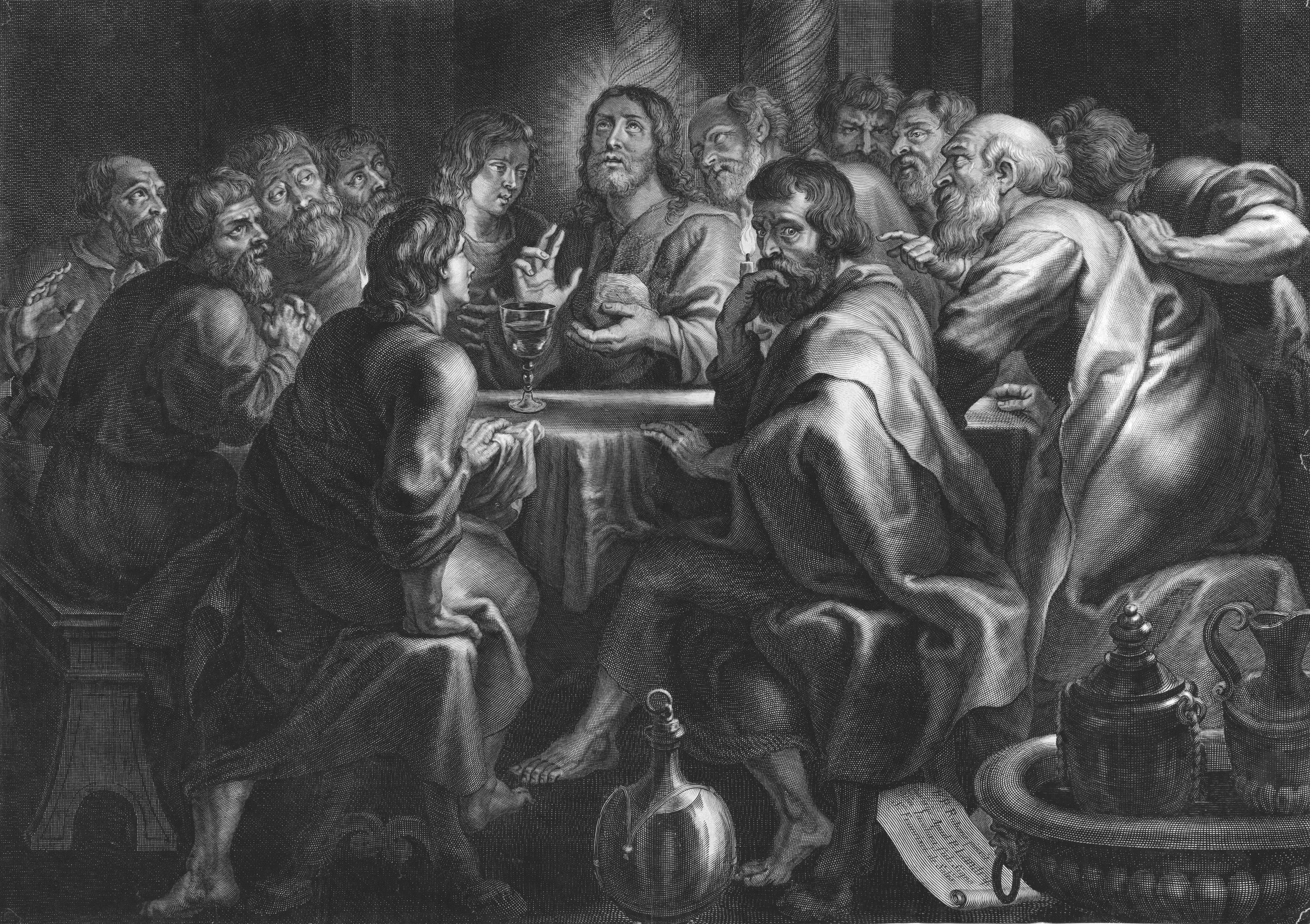
Pierre Landry - The Last Supper - 1600s
After Jesus is raised from the dead, he tells his Apostles to go and spread the Gospel. Part of their central message is the remission of sins:
“Then He said to them, ‘Thus it is written, and thus it was necessary for the Christ to suffer and to rise from the dead the third day, and that repentance and remission of sins should be preached in His name to all nations, beginning at Jerusalem. And you are witnesses of these things.’” (Luke 24:46-48)
During the Acts of the Apostles, as the Apostles carry out that task, we get an example of St. Peter delivering the appointed message:
“Then Peter said to them, ‘Repent, and let every one of you be baptized in the name of Jesus Christ for the remission of sins; and you shall receive the gift of the Holy Spirit.’” (Acts 2:38, NKJV)
And later on, Peter says the phrase while preaching:
“And He commanded us to preach to the people, and to testify that it is He who was ordained by God to be Judge of the living and the dead. To Him all the prophets witness that, through His name, whoever believes in Him will receive remission of sins.” (Acts 10:43, NKJV)
There may be other instances, depending on the translation, but these are some of the main places you find this language in the Bible.
Remission of Sins in Baptism
There are two important practices that have always been associated with the idea of the remission of sins: baptism and communion. The phrase “remission of sins” is also famous in what is arguably the most important Christian document after the text of Scripture: the Nicene Creed.
After the Christian persecutions ended and Christianity became legal in the Roman Empire, all of the leaders of all of the churches came together in a series of councils to get on the same page about the fundamentals of Christianity. They discussed which books would be in the Bible, how the Church should be organized, and what the essential beliefs of Christianity were.
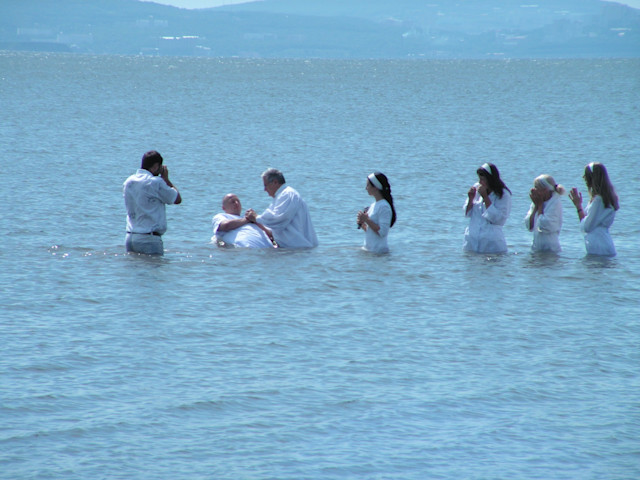
A baptism in Russia in 2006.
We also see this language at the Last Supper, where Christ says that his blood was shed “for the remission of sins.” Certain denominations interpret this line as a reference to the blood that Christ shed on the Cross and conclude that it was the Jesus’ death that allowed for our sins to be remitted. However, the context of the Last Supper makes it clear that Jesus is calling his disciples to have the remission of their sins by drinking of the cup of his blood: “Then He took the cup, and gave thanks, and gave it to them, saying, ‘Drink from it, all of you. For this is My blood of the new covenant, which is shed for many for the remission of sins’” (Matthew 26:26-28, NKJV).
Just like baptism, communion is a physical thing that allows us to participate in a spiritual reality. The bigger context for this idea is the Incarnation of Jesus. Jesus took on human nature so that there would be a medium through which human nature and God’s divine nature could be united, and that medium is physicality. We are physical by nature, but God isn’t, so he took on physical nature to give us a way of participating with him.
Forgiveness and Remission
Like most things in the Bible, there is controversy about how to interpret the idea of the remission of sins, especially as distinct from forgiveness. Are they the same thing? In English these ideas are different, but in the Bible they’re used somewhat interchangeably. What’s the best way to interpret this concept? There are a few schools of thought on this question.
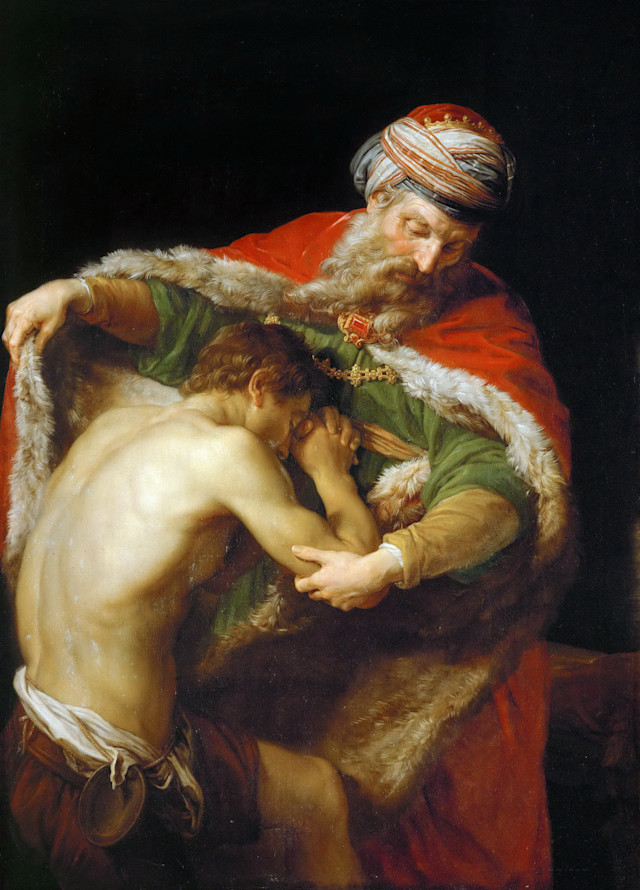
Pompeo Batoni - The Return of the Prodigal Son - 1773
In this school of thought, the main thing we need to do is believe and accept Jesus—also described as “having faith.” It is this faith (defined primarily as belief and acceptance of God) which allows us to have the remission of our sins, in the same way that you can get forgiveness from somebody who loves you simply by asking for it: “For it is by grace you have been saved, through faith—and this is not from yourselves, it is the gift of God— not by works, so that no one can boast” (Ephesians 2:8-9, NIV).
There are a few issues with this interpretation. The first is that it's very popular for certain denominations to interpret this verse from Ephesians as saying that remission only comes by grace through faith, so no physical actions are necessary. But you may notice that the verse doesn't use the word “only.” Why does this detail matter? Because, with the words of scripture taken literally, the possibility remains that there can be a physical component to salvation that doesn't fall under St. Paul's definition of "works."
The issue is that it's not uncommon for people to read passages in the New Testament where “works” are condemned and take them to the extreme conclusion that nothing physical matters when it comes to salvation.
However, both inside and outside of the New Testament, it has always been the teaching of the Church that our physical nature is just as important a part of our identity as our spiritual nature. We are bodies just as much as we are souls or minds. A really good example of this belief is the Christian idea that a man and woman become one flesh through sexual union.
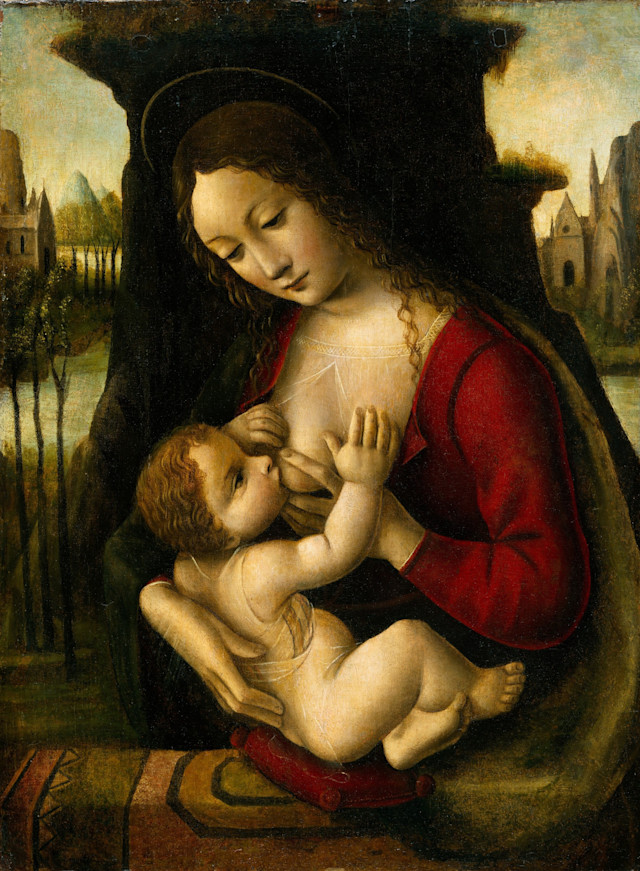
Bernardino dei Conti - Madonna and Child
Therefore, salvation is not simply a matter of God forgiving us, for presumably he could do that just by deciding to. In other words, sin is more than mere abstraction: it's a state of physical corruption, because spiritual corruption and physical corruption go together. As fallen creatures marked with the spiritual corruption of original sin, we get old, we get sick, we get hurt, and of course we die.
The original word that the New Testament authors use to describe remission offers a clue to the physical aspect of sin. The Greek word used in these verses is aphesis / ἄφεσις (for the noun) or aphiemi / ἀφίημι (for the verb). While many people translate it as “forgive,” the word means something closer to “loose,” in the sense of setting free, letting go, dismissing, releasing, or even discharging. Loosing isn’t the same as forgiveness, which is where one person chooses to stop being upset at another for something they did.
Salvation is about more than God deciding whether to forgive us. Our problem isn’t that God is like an angry father who’s mad at us for something we did wrong. Rather, our problem is that we need to overcome death and corruption, which we do by participating with Christ in his physical death and resurrection—and in doing so share in his conquering of sin and evil. Sin, which is what causes our physical corruption and death, is what has to be released. You might say that we need to be untied from sin, an act that is both physical and spiritual.
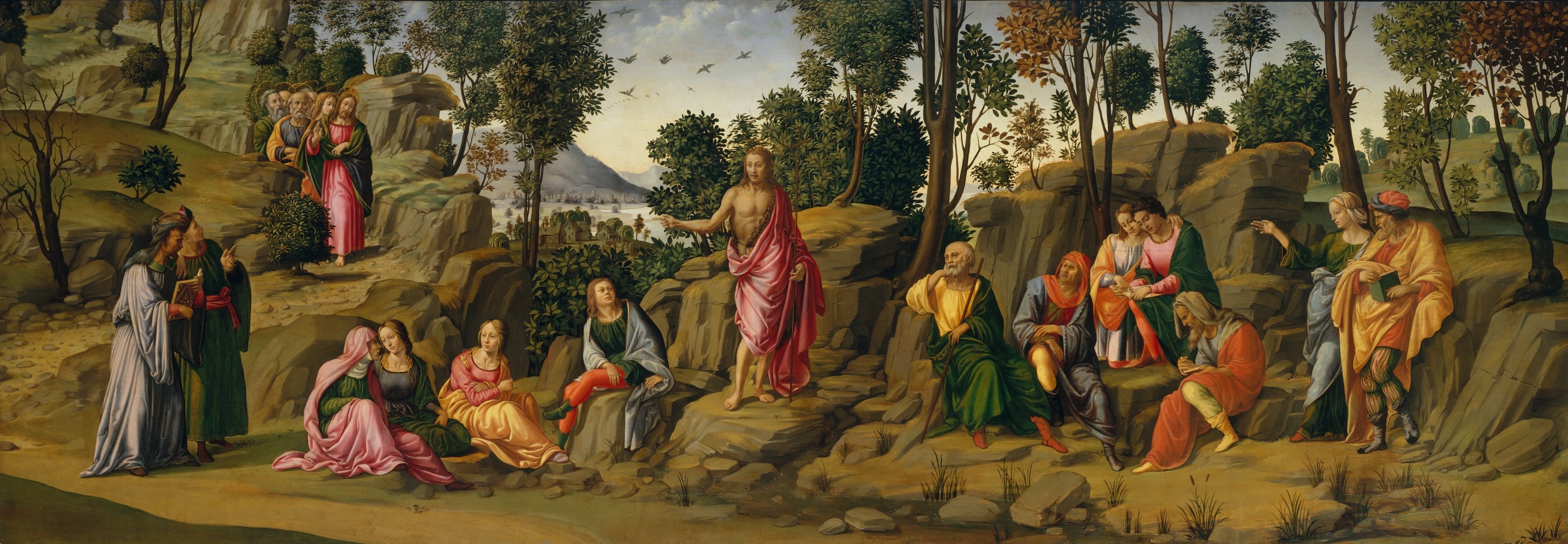
Workshop of Francesco Granacci - Saint John the Baptist Bearing Witness - circa 1507
The physical aspect of sin is why the two major sacraments in Christianity, communion and baptism, are physical things. Again, you are a physical body and sin is a physical problem much as it is a spiritual one.
In certain denominations, however, the suggestion that there is a physical component to salvation can be distressing, since it sounds like it contradicts Saint Paul's repeated warning that the “works of the law” (meaning all of the actions that the Jewish religious leaders performed to try to make themselves righteous) cannot save us. People frequently point out that salvation is explicitly described as a free gift from God in Romans 6:23.
I want to be clear that that passage is true. Salvation is still the free gift of God, and we are saved by the grace of God, not by our own power. But we have to be clear here. When St. Paul says that we aren’t saved by works, he means we aren’t saved by our accomplishments. But there’s no contradiction between this belief and the idea that salvation involves physical elements. Otherwise, it would just be a salvation of your mind and not your body!
Obviously, belief and trust in God are essential to the whole process, and the Church has never said otherwise. But so are the physical elements, which is why Christ says that one has to physically eat his body and drink his blood in order to have life (John 6:55-57), and why the Church ultimately settled on the language it did in the Creed. And, perhaps more obviously, Jesus didn’t come back from the dead in the form of a spirit, but in his physical body.
Subscribe
Life-giving writing by Christian scholars sent to your inbox once per month

Zachary Porcu has a PhD in church history from the Catholic University of America in Washington DC, with additional degrees in philosophy, humanities, and Classics (Greek and Latin). He is an Eastern Orthodox Christian.
Keep reading
“I Believe in God the Father”: Creeds and Controversies


"A man shall leave his father and mother." What does it mean?

Stanley Hauerwas: Virtue Ethicist & Postliberal Theologian
Who is Jürgen Moltmann and What Did He Believe?
Greg Bahnsen: Apologist and Presbyterian Minister