Who is Jürgen Moltmann and What Did He Believe?
The short answer:
Jürgen Moltmann was a German professor and theologian in the Reformed tradition. He was influenced by the work of Karl Barth and wrote extensively on many topics in theology, including the Trinity and the radical hope that we have in the Gospel.
Moltmann’s theological writing and thinking incorporated many different elements. He worked in several different areas and often overlapped with traditional groups like Eastern Orthodoxy, Catholicism, and even Judaism. As a result, he didn’t have a single, comprehensive, systematic theological system like some modern theologians do.
There are, however, a few main theological ideas that Moltmann was known for. He is often associated with “kingdom of God theology,” which emphasizes the idea that the kingdom of God exists both in the future (because the kingdom of God is coming) as well as in the present, since God is also present with us.
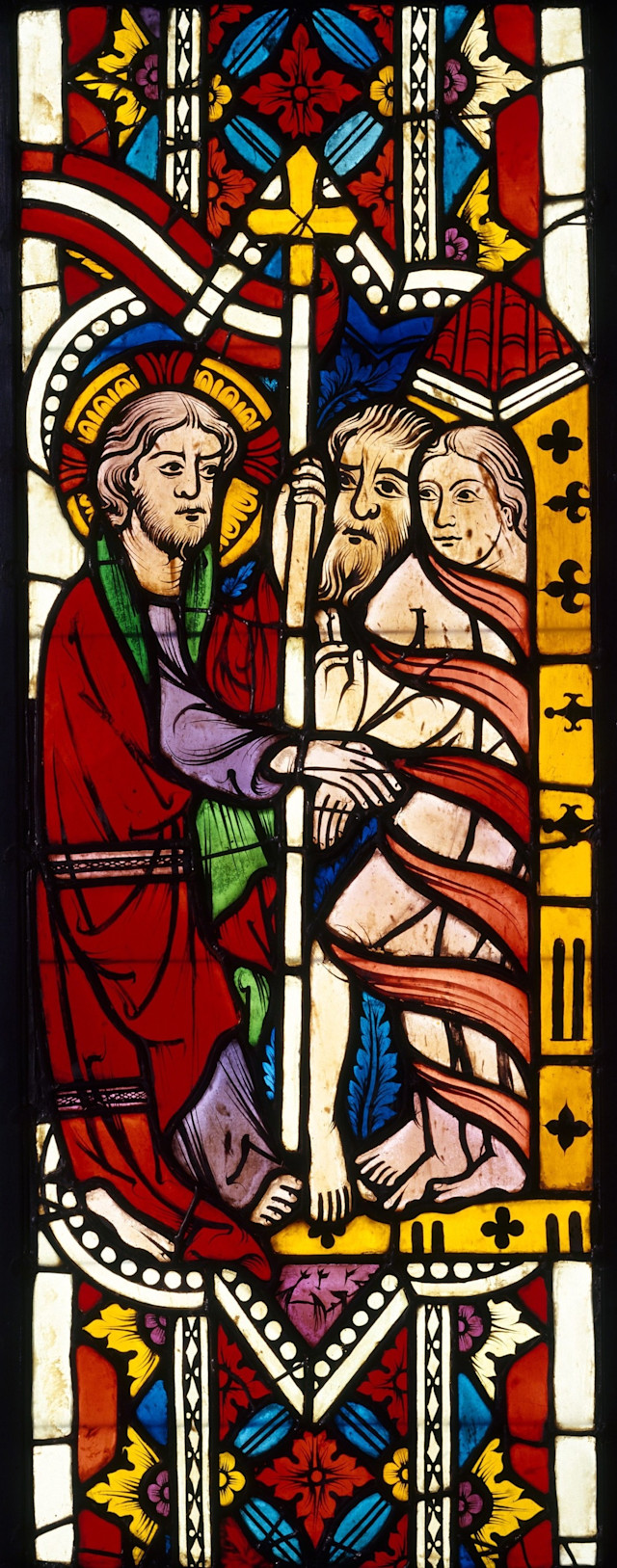
A 1350 stained glass depiction of Christ harrowing Hell.
But how should radical hope inform the way we view our lives? Most people believe that we should do what we can to make the world a better place—and Christians agree. But some people overemphasize this goal because they think that this world is the only world there is, and that, since everyone is going to die, this earthly lifetime is all the time we have. If you think that death is the end, it becomes critically important to live your best life, here and now, while you can.
But this view goes against one of the central ideas in Christianity. Christians believe that Jesus conquered death and rose from the dead. He was the “firstborn of the dead,” which means that, even though we are all going to die, Christ will return at “the end of the world,” raise everyone from the dead, and “make all things new.” In other words, he’ll destroy all sin, evil, death, and corruption and usher in the new age of the Kingdom of God.
It’s common to call this renewal the “end of the world” (which is why it’s called “eschatology,” the study of the end), but Moltmann points out that it is actually the beginning of a new age. And because in this age everything will be “made new,” this new life is, in a sense, when life will really begin. If true, then what’s most important about our lives now is that we live our lives in anticipation of this coming age. This combination of living in the present but looking to the future is what Moltmann calls a “theology of hope.”
However, none of these ideas are new. And it’s to Moltmann’s credit that he doesn’t invent a new theology but (seemingly) draws on the authentic, ancient Christian understanding of these ideas. The early Church—and sacramental Christians today—have always focused on living in the present but being oriented toward the future. In my book, I call this orientation the “Journey to Reality,” because the Kingdom of God could be called “reality itself,” and our present lives are not yet fully real.
What did Moltmann say about the Trinity?
Moltmann does not innovate in his account of the Trinity—which is always a compliment in theology, as innovations result in man-made, heretical religions. However, Modern scholars like to give names to everything, so Moltmann’s view is often called “social trinitarianism.”
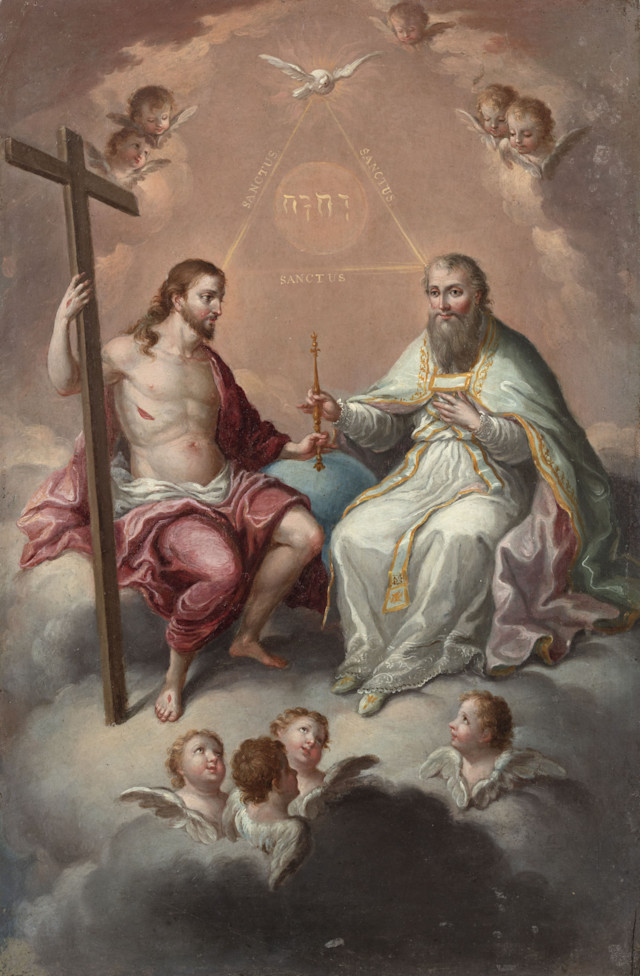
José Campeche - The Trinity - circa 1790
Social Trinitarianism, then, is the idea that the nature of God as a Trinity is a model or example for how human relationships should be. It’s a radical idea in the modern world, because we live in an age where people tend to think of themselves primarily as individuals, while relationships are secondary.
The modern world typically views your essential self as something that’s distinct from other people, since your relationships can and do change all throughout your life, but you don’t stop being you because your relationships change. Our society is based on an idea called “radical individualism,” which is the belief that our individuality is the most important thing about us.
But if you think about it for a few minutes, you’ll notice the holes in this way of thinking. We all know that who we hang out with has a huge effect on our personality, and we’ve all known people whose personalities changed (sometimes radically) depending on who they were hanging out with or dating. And of course, at a more basic level, we don’t pop into existence on our own. We come into existence sexually: two people come together in a relationship and that relationship creates a new person.
Social trinitarianism says that it is normal and natural for us to be shaped by our relationships because human beings are created in the image of God, and that God is a Trinity of persons united in perfect love.
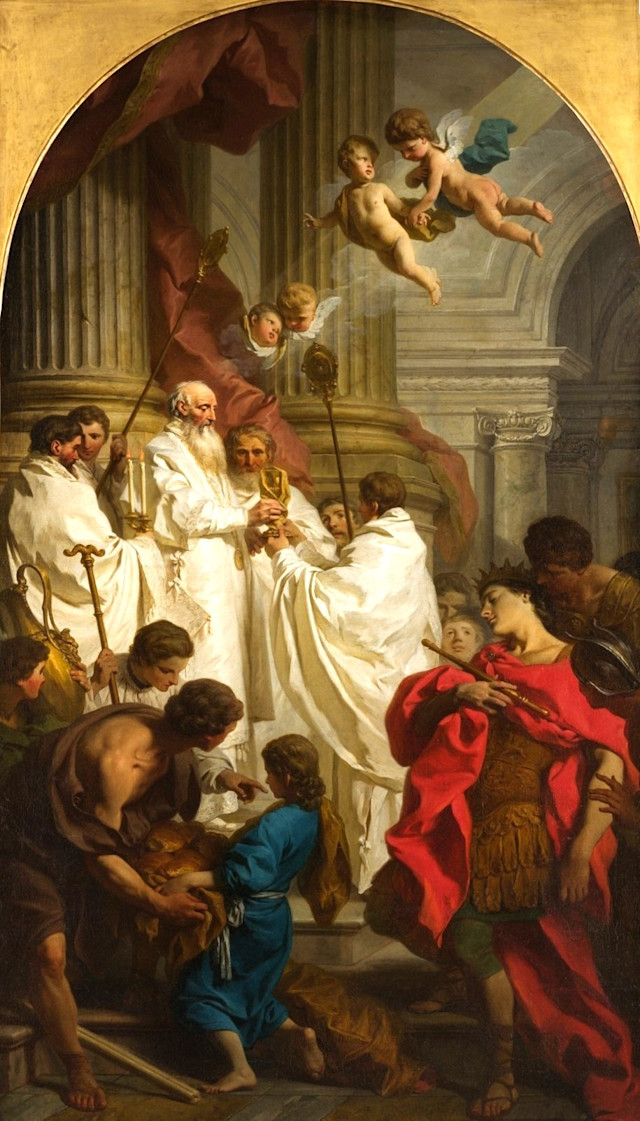
Pierre Hubert Subleyras - The Mass of Saint Basil - 1746
Is Moltmann a Universalist?
Universalism is the idea that all people will ultimately be saved and redeemed by God, but there are variations in this belief. The most radical one is that the idea that no one can go to Hell, because eventually everyone will freely choose Heaven. While the Church Fathers generally condemned this interpretation of the Bible, that doesn’t mean that anyone will go to Hell—of course, this question depends upon your definition of Hell is, so it requires a larger conversation.
Moltmann had a lot to say on this topic and took issue with many of the traditional ideas about doctrines like Hell, eternal damnation, and so on. He held highly nuanced views and—as far as I can tell—his beliefs can’t be reduced to a simple declaration like “no one will go to Hell.”
Moltmann touched on this question in an interview with the journalist Florian Berndt. In response to the question, “How is hell considered, if at all, in your theology of hope?” he replied,
“I believe in Christ's Descent to hell. He came back and declared: “I have the keys to death and hell!” What does He do with these keys? He opens them up of course! When you think of hell, you should never think about it in the context of the question whether you yourself or someone else is going there, but always look to Christ. In His wounds, death and hell have been overcome.”
Subscribe
Life-giving writing by Christian scholars sent to your inbox once per month
Zachary Porcu has a PhD in church history from the Catholic University of America in Washington DC, with additional degrees in philosophy, humanities, and Classics (Greek and Latin). He is an Eastern Orthodox Christian.
Keep reading
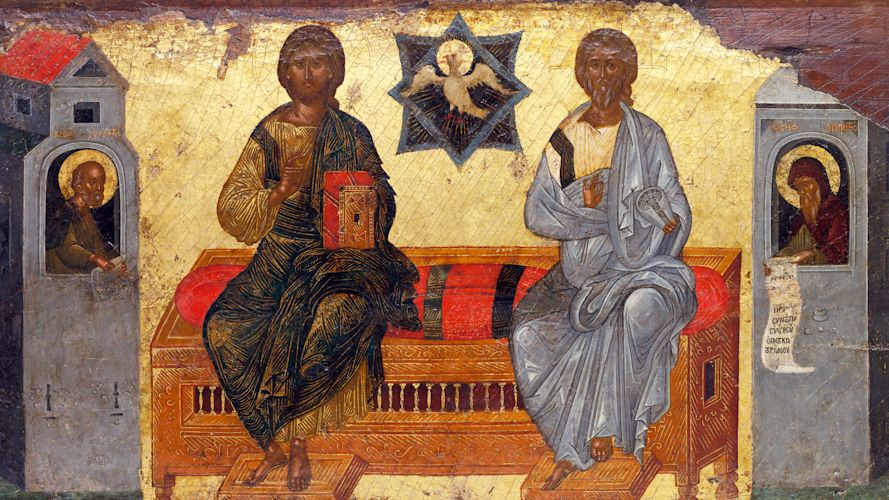
The Trinity: Are God and Jesus the same person?
Forgiveness and the Remission of Sins
Stanley Hauerwas: Virtue Ethicist & Postliberal Theologian
Greg Bahnsen: Apologist and Presbyterian Minister

Jerry Bridges and The Navigators: A Protestant Order