What is sexual fasting? On abstinence in marriage
The short answer
Sexual fasting is like any other fast: you abstain for some duration of time. The goal is to avoid being a slave to sexual impulses, to surrender them to the heart and mind and grow more in harmony with oneself.
If you’ve been around traditional religion enough, you may have gotten the impression that the Church is not a huge fan of pleasure. Restrictions on food, alcohol, or sex can give the distinct impression that Christianity is against pleasure or even happiness on the basis that those things are “worldly”. But this impression is a misunderstanding. The reality is quite the opposite, and certainly not unique to Christianity.
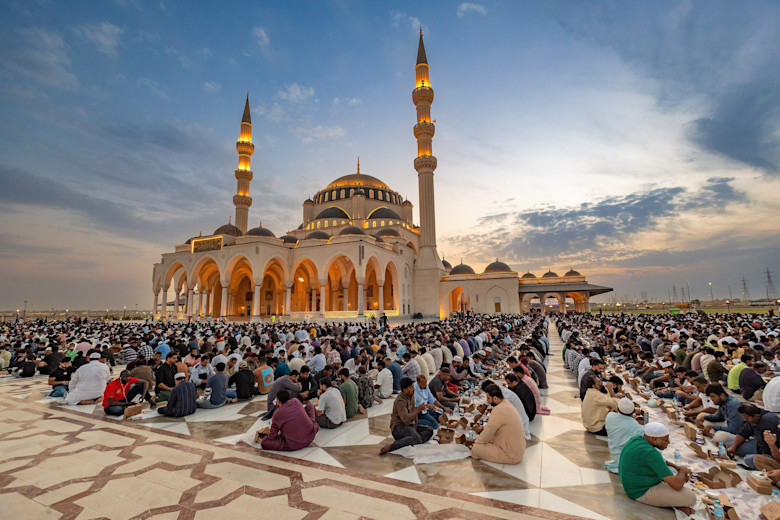
A crowd prepares for Iftar, the breaking of the daily fast during Ramadan.
When you think about fasting, you probably think of abstaining from food and sometimes drink. However, many traditions also fast from sexual acts. This practice might seem odd to a modern person, but it quite naturally goes along with the purpose of fasting.
Definition of abstinence: what is a sex fast?
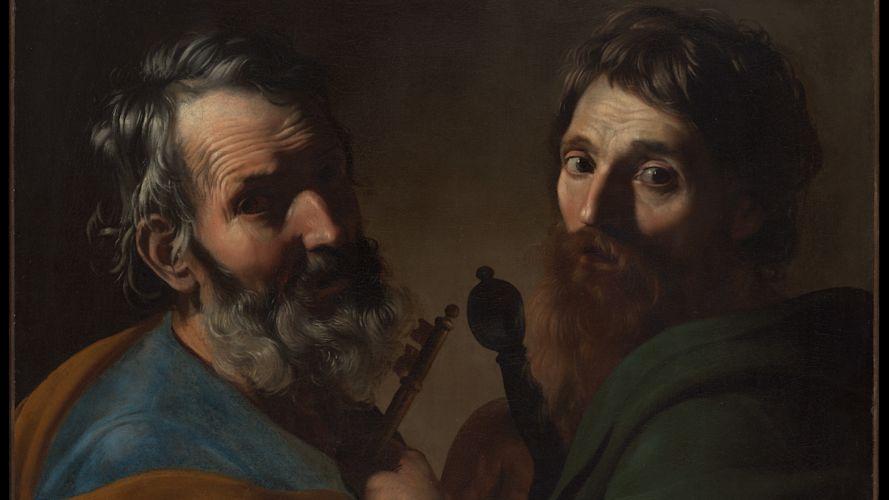
Sexual fasting is a fast like any other fast: you abstain from sexual activity for the duration of your fast. Unlike fasting from food, however, a sexual fast is usually something you don’t do by yourself. If you’re married, it’s something you ought to discuss with your spouse, in the same way that if you were the person responsible for doing the cooking in your home, you wouldn’t decide to stop eating (and therefore cooking) and not discuss it with the other people in your house. In his letter to the Corinthians, St. Paul writes that spouses ought to agree together about sexual fasting, so that they’re both on the same page, and also that your time of abstinence be limited in order to not test your self-control beyond what you can handle (1 Cor 7:5). It’s more or less the same as other kinds of fasting. But to understand such fasts better, we need to put them in the context of the real purpose of fasting.

Ivan Kramskoy - Christ fasting in the wilderness - 1872
Fasting and the body
Depending on which religion you follow, there will be important differences in how you understand fasting. For many religions, fasting is a part of escaping or denying the needs of the body. A lot of older or more eastern religions, like Buddhism, believe that the body is not really important, and that what’s more important about you is the soul. In religions that believe in reincarnation, for example, your body is of such secondary importance that you can be reincarnated in any form—human or animal or even a god—but what endures across each body is the soul. Such religions use fasting as a way to separate the body from the soul, to focus more on your “true” self and get away from the distractions of the body—distractions like physical pleasure. In certain religions, the body is even seen as a prison for the soul, and fasting and asceticism are ways to escape from it.
Christ really had (and has) a body. Our bodies are therefore a good and important part of who we are.
How do we understand fasting if Christian asceticism is not about escaping the body? Unfortunately, many well-meaning Christians misunderstand the purpose of fasting because they misunderstand the role of the body. One mistake is to think that the body is somehow inherently evil or sinful, or that human beings have a “sin nature” associated with the body that can’t help but do evil. In other words, the body is still ”a problem” for many people even when they try to adopt a Christian view of it.
When my grandfather died I remember going to the burial hoping to have the opportunity to visit my grandmother’s grave, as she had died about nine years prior. However, when we arrived, all of the dirt from digging my grandfather’s new grave had been piled on top of my grandmother’s grave, since they were adjacent. I mentioned my disappointment to my uncle: “I really wanted to see grandma,” I said, “but they piled all this dirt on her.”
My uncle replied, “Well, she’s not really here. She’s in heaven.” His idea was that, though her body was in the ground right next to us, her real self was not present; “only” her body was there. He believed, as many people do, that you are a soul or a spirit, but you merely have a body—and that body is something you ultimately want to overcome or leave behind. Those who hold this view usually think about fasting in a similar way to those religions that view the body as a problem: as a prison that you need to escape from or a source of sin that you need to overcome. This confusion about the body leads to a confusion about fasting.
A Christian understanding of the body
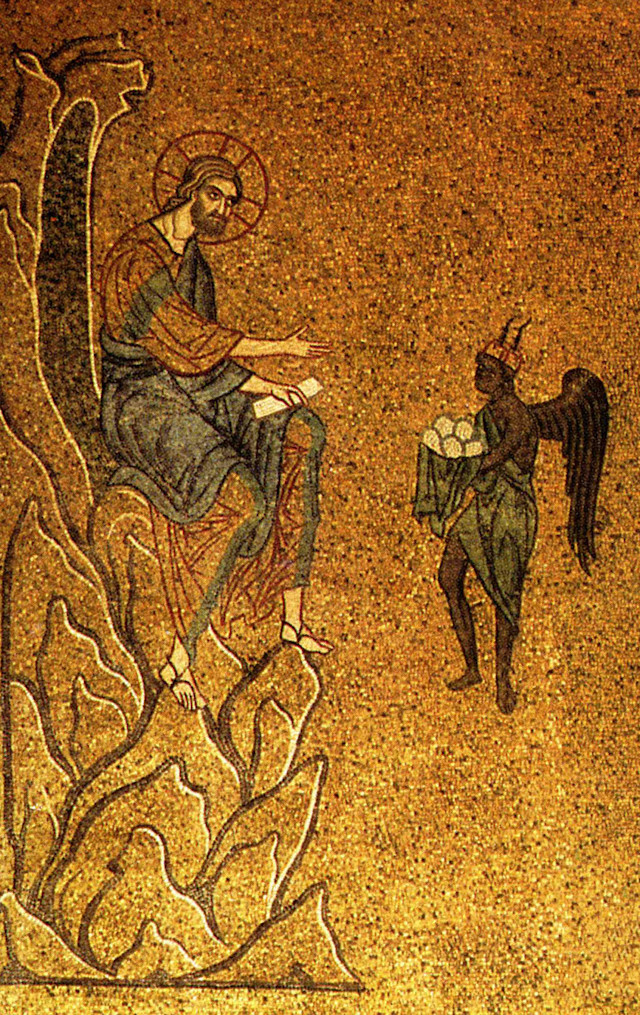
The devil tempts the hungry Christ with bread - Mosaic in Basilica di San Marco
If the human being is composed of three parts, how should those parts be organized? This question is timeless, and the answer that’s been given by the greatest thinkers in Western history is that even though all three of these parts are equally important and equally you, not all of them have the same job, and they shouldn’t all be in charge of you. For the human being to be in harmony with itself, there must be a hierarchy of these parts: the "lower" faculties (the body) need to be obedient to the "higher" faculties (the heart and mind). The early Christians did not disregard the body as something unimportant or evil—Christ truly had a body, after all—but they said that the body and its needs must be obedient to the other two parts. You might say that the body is the “youngest brother” of the mind and the heart.
This idea makes sense given the nature of the body. The body's needs tend to be intense, urgent, and short-sighted. When you’re thirsty, you want water. When you’re hungry, you want food. When you feel sexual urges, you want sex. The body doesn’t really ask questions like, “is it good for me to eat this particular thing at this particular time?” or “should I really be having sex with this person at this time?” because the body doesn’t really think—it just wants.
Naturally, if you always obeyed these impulses you’d live a very short-sighted life and probably get yourself into a lot of trouble. You certainly wouldn’t have much self-control. In fact, the early Christians recognized that if you always gratified your body’s desires, you wouldn’t be a free person: you’d be a complete slave to your impulses. Anyone with an addiction or bad habit knows that they have less freedom over their actions.
Limitations on sex, including sexual fasting, are therefore also important.
The goal, of course, is not to disregard or ignore the body, but to achieve self-mastery. It require you to train your self-control through the temporary denial of your body’s impulses. This training is the essence of sexual fasting, or any kind of fast. You don’t completely abandon food, drink, and sex—all of which are inherently good things that need to be put in their proper place, so you don't lose your self-control and become enslaved to your body. Only then can you be in harmony with yourself and, in the language of the early Christians, become a more whole person.
Subscribe
Life-giving writing by Christian scholars sent to your inbox once per month

Zachary Porcu has a PhD in church history from the Catholic University of America in Washington DC, with additional degrees in philosophy, humanities, and Classics (Greek and Latin). He is an Eastern Orthodox Christian.
Keep reading
How Hot is Hell? Biblical Ideas vs. Pop Culture Depictions


The Problem with Sexual Sin

The Baptism of Poland: Unification and Christianization

What is a Pastor Emeritus? Should they exist?

What are the best Bible verses about love and trust?