Resen: One of the Cities of Nimrod
The short story:
Resen is a city in the Bible, mentioned in Genesis 10:12 as one of the many cities built by Nimrod. We don’t know it’s exact location today, and it almost certainly isn’t the same as the modern-day city of Resen in Macedonia.
Resen is a city mentioned in Genesis 10:12:
“Cush begot Nimrod; he began to be a mighty one on the earth. 9 He was a mighty hunter before the Lord; therefore it is said, “Like Nimrod the mighty hunter before the Lord.” 10 And the beginning of his kingdom was Babel, Erech, Accad, and Calneh, in the land of Shinar. 11 From that land he went to Assyria and built Nineveh, Rehoboth Ir, Calah, 12 and Resen between Nineveh and Calah (that is the principal city).” (Gen 10:8-12)
This passage is from the list of the descendants of Noah. After the Great Flood, Genesis explains how the earth was repopulated from the lines of the sons of Noah. These passages present themselves as being written some time after the Flood—likely many decades or even centuries later. The author (Moses, traditionally) explains how each of these descendants went on to father entire people groups, found great cities, or blossom into whole cultures. For example, Moses writes that the sons of Javen were the origin of the “coastland peoples of the gentiles” (10:4-5), and that the descendants of Canaan became the Canaanites who had their territory from Sidon to Gaza (10:19). It makes sense, therefore, that he would be writing this passage from the vantage of retrospect.
Resen was a city founded by Nimrod, who is described as “a mighty hunter before the Lord” (Genesis 10:8). He built multiple cities, including Nineveh, which is famous for being the city that repented in the story of the prophet Jonah.
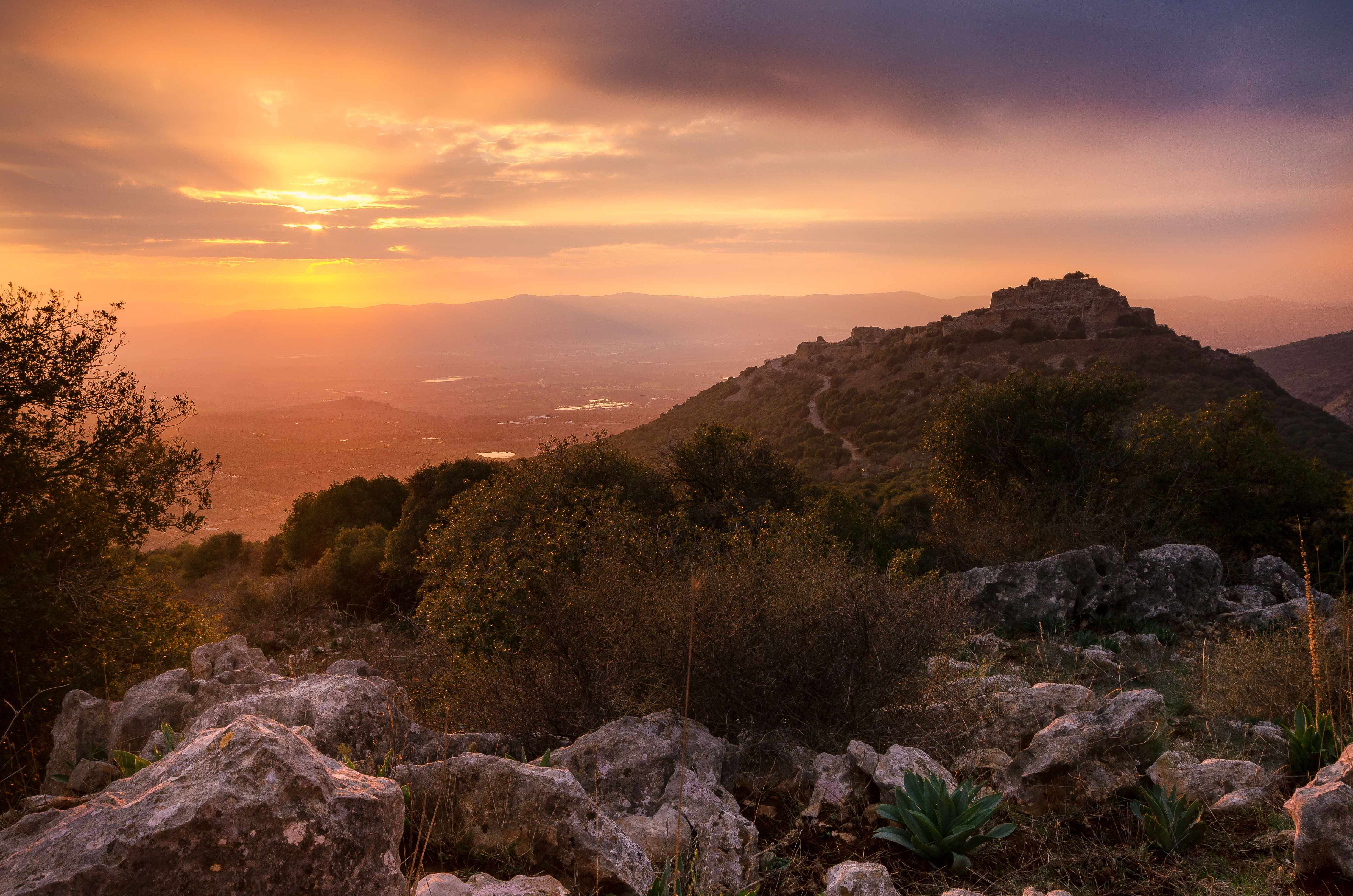
Nimrod Fortress at Sunset
Like most ancient cities, it’s almost impossible to trace the history of Resen because it’s difficult to get precision from ancient sources. The Book of Jubilees and Josephus’ Antiquities of the Jews make some mention of the boundaries between different cities and regions where Resen would have been, but the lack of clarity in these works and translation differences in the Biblical sources have made it difficult to identify the exact location of Resen. Consequently, there is no scholarly consensus about where it was.
There is a modern-day city called “Resen” in Macedonia, but it’s too far away from the place where the biblical city of Resen would have been. Macedonia is north of mainland Greece, whereas the biblical city was located somewhere near Ninevah in Assyria.
What is the meaning of Resen?
It’s not clear to me that we know the exact meaning of the name. Smith’s Bible Dictionary (1901) suggests “bridle,” as in the piece of tack that’s used to control a horse, and Hitchcock’s An Interpreting Dictionary of Scripture Proper Names says the same. But we have to be open to the idea that the name may have held very different cultural connotations in its original historical context—and we may have lost access to it over the course of history.
Subscribe
Life-giving writing by Christian scholars sent to your inbox once per month

Zachary Porcu has a PhD in church history from the Catholic University of America in Washington DC, with additional degrees in philosophy, humanities, and Classics (Greek and Latin). He is an Eastern Orthodox Christian.
Keep reading
Hineni in Hebrew: “Here I am” from God and Man

Who was Jotham, king of Judah?
What are the prophetic books of the Bible?
Who is Esaias in the Bible? Answered by a Christian Scholar
Peor: The Mountain and God of the Moabites