Sosthenes of The Seventy Disciples - by a Christian PhD
The Short Story:
Sosthenes was a Jewish convert to Christianity, mentioned in several passages from the New Testament. He was also a member of the Seventy Apostles that Christ sent ahead of him to cast out demons and preach the gospel, as described in Luke chapter 10.
Sosthenes is mentioned a couple times in the New Testament. He appears in the opening verse of first Corinthians as part of St. Paul’s greeting, where he calls Sosthenes “our brother”:
“Paul, called to be an apostle of Jesus Christ through the will of God, and Sosthenes our brother, to the church of God which is at Corinth...” (1 Cor. 1-2)
The way this line is phrased indicates that St. Paul and Sosthenes are both writing to the church at Corinth.
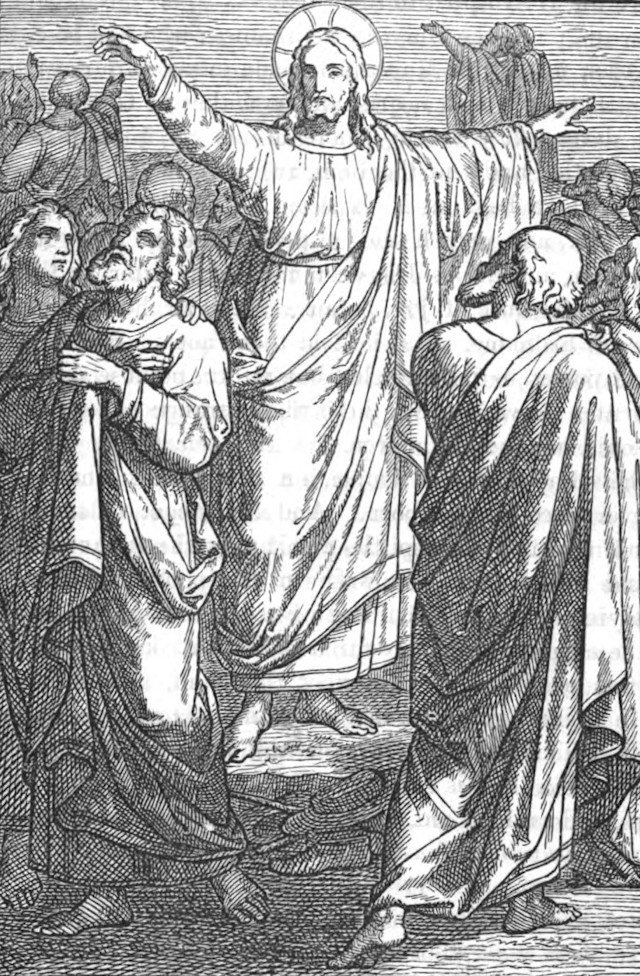
Unknown Artist - Jesus Sends Out 70 Disciples - 1873
Frustrated by this response, the Jews seized Sosthenes and beat him in the presence of the judgement seat, presumably as an act of protest, but Acts recounts that “Gallio took no notice of these things.”
Why did they beat Sosthenes? The book of Acts says that Sosthenes was “the ruler of the synagogue,” even though it said that Crispus was the ruler of the synagogue just a few verses earlier. How do we sort out the details of this story?
Secular historians dispute these issues, as they commonly do with most of the minor figures mentioned in the New Testament. Some argue that Sosthenes was a common name at the time, so there could have been several men with that name. Paul’s friend from 1 Corinthians, then, could have been a different Sosthenes than the man who was the ruler of the synagogue.
Others have suggested that Sosthenes was the same person as Crispus, who is also mentioned in 1 Cor 1:14. There isn’t a lot of evidence to support this claim, however, especially since they’re both mentioned in the same chapter of Acts. The evidence, in fact, points to the opposite view: that they were different, successive leaders of the synagogue in Corinth—first Crispus, and then Sosthenes. This account would line up with the narrative in Acts 18, and we can infer that there was some gap in time between Crispus acting as the ruler of the synagogue and receiving baptism his from St. Paul.
Who was Sosthenes, according to tradition?
Sosthène Weis - Weicherdange - 1917
Many things that we know about the New Testament and the early church are recorded in other sources. There are extra-Biblical writings from the early Christians, baptismal records, records of the succession of bishops, and a plethora of other sources like the church’s living memory, its iconography, its hymnography, and so on. When you take all these streams of tradition together, you get a better picture of some of these figures.
What do these sources tell us about characters like Crispus and Sosthenes? We find that Crispus was the leader of the synagogue at Corinth, who was succeeded in that position by Sosthenes. Sosthenes, like Crispus, was later converted by St. Paul. And, perhaps more importantly, both of these men were members of what are called “The Seventy.”
Who were the 70 disciples?
Most people know about the Twelve Apostles, who were something like Jesus’ inner circle. But there was a larger group of disciples (you might call them an “outer circle”) who followed Jesus in various capacities. They are the ones that Jesus chose, in addition to the Twelve Apostles, to go and visit various cities and begin the work of building up the early churches. As Luke describes in his Gospel account (10:1-24), Jesus sent them out in pairs to preach the gospel, cast out demons, and minister to the people.
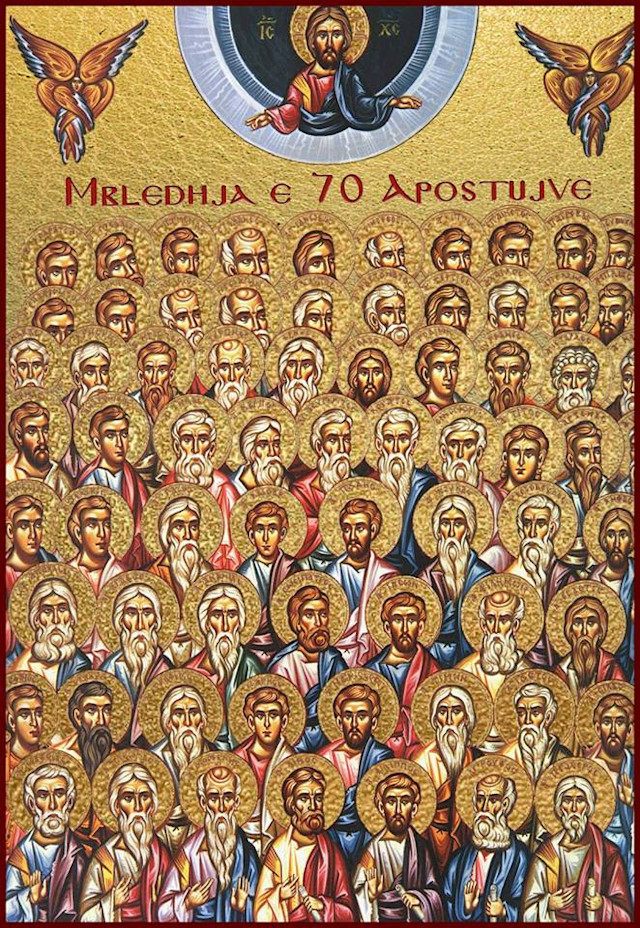
An icon of The Seventy Apostles.
Almost all of the Seventy became bishops in the early church. “Bishop” is the formal name for the highest rank in church governance, above a priest and a deacon. A bishop’s major task is to oversee the churches in an area, give guidance, and make authoritative decisions on matters of doctrine and church order. That St. Paul was a prominent early bishop is obvious from his many letters to the churches he was responsible for. It’s also why he sent multiple letters to his spiritual son Timothy, who was the bishop of Ephesus, giving guidance about how to run the church there (see 1 Timothy and 2 Timothy). While the exact terminology surrounding the office of the bishop took time to evolve, the roles are clearly present in the New Testament.
Like many of the members of the Seventy, Sosthenes and Crispus were also bishops. Crispus became the bishop of Aegina, which is an island near the Peloponnesus, and Sosthenes became the bishop of Colophon. They were clearly two different people, not the same person with different names, and they were both influential and important, like all of the Seventy Apostles.
What’s confusing about Sosthenes is that, if he was one of The Seventy, he would have been sent out by Christ during the Gospel accounts—prior to the Acts account, but he also supposedly converted to Christianity when St. Paul visited Corinth. How do we reconcile it? It’s hard to say for sure, but there’s no contradiction between someone being a part of the Seventy and not receiving the full baptism or initiation into the Church until the events of Acts.
Subscribe
Life-giving writing by Christian scholars sent to your inbox once per month

Zachary Porcu has a PhD in church history from the Catholic University of America in Washington DC, with additional degrees in philosophy, humanities, and Classics (Greek and Latin). He is an Eastern Orthodox Christian.
Keep reading

Pastor vs. Priest: What are the differences?

Jesus and the Syrophoenician Woman: Gentile Salvation
Who was the first woman preacher in the Bible?
Was Jesus a Rabbi?
Who was Phanuel? Archangel or Father of Anna?