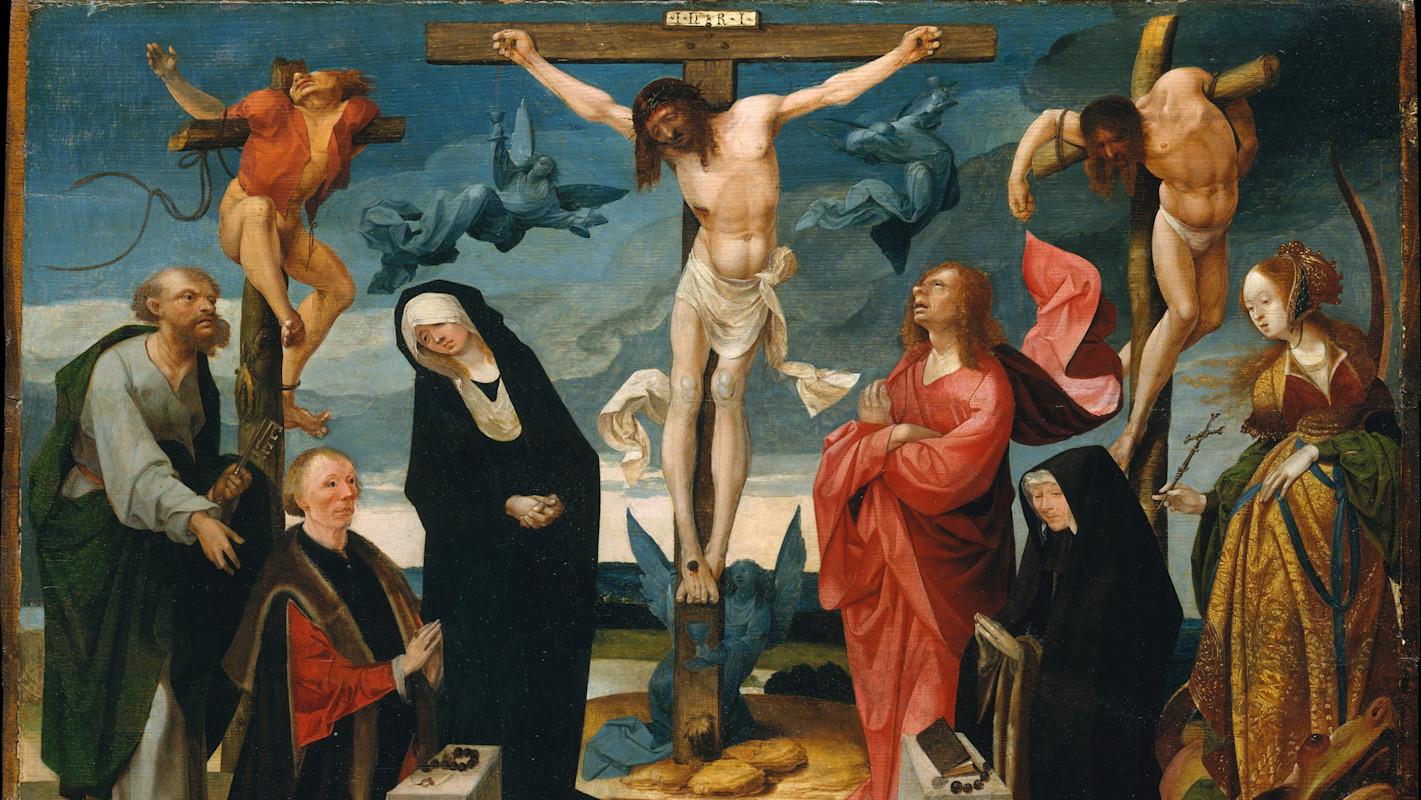
St. Dismas, the good thief at Golgotha
The short answer:
St. Dismas is the name attributed to one of the thieves who was crucified with Christ. The name “Dismas” doesn’t appear in the Bible and only shows up hundreds of years later in a few manuscripts, but it is the thief’s official name in the Catholic church and is still used by many Christians today.
All four Gospel accounts related the fact that Jesus was crucified along with two other men. According to Luke’s account, one of the thieves mocked Jesus, while the other thief recognized that Jesus was the Christ, humbled himself, and received a great gift.
“Then one of the criminals who were hanged blasphemed Him, saying, ‘If You are the Christ, save Yourself and us.’
But the other, answering, rebuked him, saying, ‘Do you not even fear God, seeing you are under the same condemnation? And we indeed justly, for we receive the due reward of our deeds; but this Man has done nothing wrong.’ Then he said to Jesus, ‘Lord, remember me when You come into Your kingdom.’
And Jesus said to him, ‘Assuredly, I say to you, today you will be with Me in Paradise.’” (Luke 23:39-43)
The two thieves: Gestas and Dismas
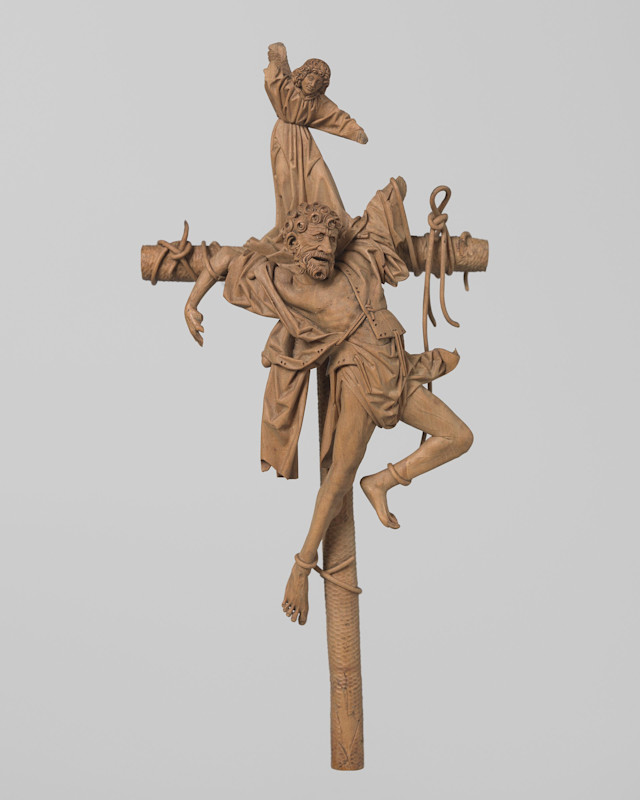
A scupture of Dismas by an anonymous Netherlandish artist, circa 1510.
Historically, the name “Dismas” for the repentant thief stuck, as did the name for the less-popular, unrepentant thief, “Gestas.” The Gospel of Nicodemus also seems to be where we get the name “Longinus” for the soldier who pieced Christ’s side with a spear. But other traditions give their own names. The Russians refer to the repentant thief as “Rakh,” while the (much later) Arabic Infancy Gospel refers to him as “Titus” and the unrepentant thief as “Dumachus.” The name Dismas was officially accepted by the Catholic church, where he is considered a canonical saint. In the Eastern Orthodox church, he is generally referred to as “the repentant thief” or the “penitent thief” rather than being named, though he is still understood to be saved because of what Christ very explicitly told him.
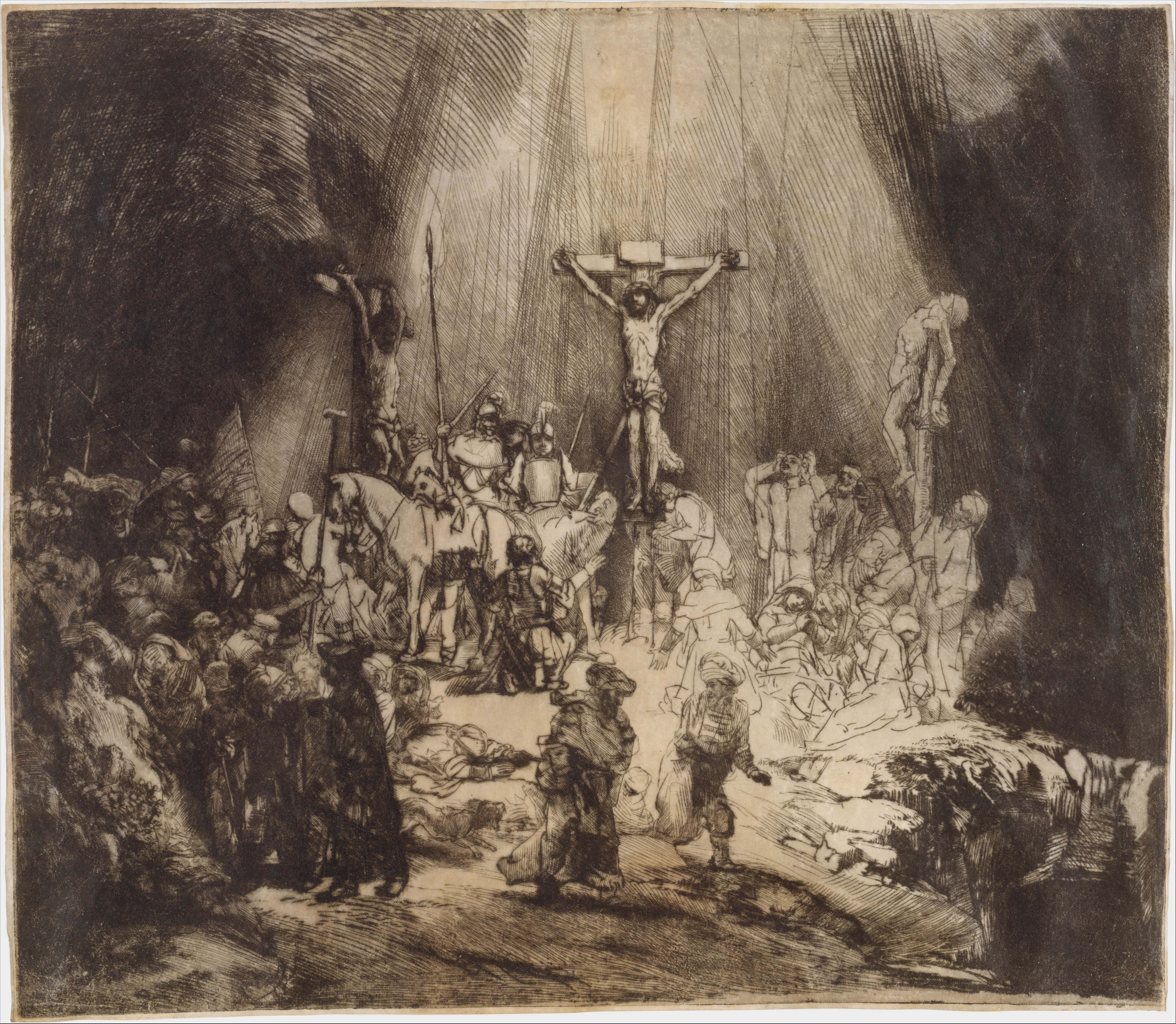
Rembrandt van Rijn - Christ Crucified between the Two Thieves: The Three Crosses - 1653
In the Catholic church, St. Dismas is commemorated on March 25th. In Eastern Orthodoxy he is remembered on Good Friday in the following verse:
“Eden's locked gates the Thief has opened wide,
By putting in the key, ‘Remember me.’”
Prayer of St. Dismas
You can find different prayers of the saints on many Catholic archival websites. Daily-prayers.org lists a few prayers for St. Dismas:
Prayer To St. Dismas
Saint Dismas, you alone were Canonized a Saint by Christ Himself;
you were assured of a place in Heaven with Him, “This day”
because you confessed your sins to Him on Calvary;
and you were truly sorry for them as you hung beside Him on a cross;
you who opened the Heart of Jesus in mercy and forgiveness
even before the centurion’s spear tore it asunder;
you whose face was close to that of Jesus in His last agony,
to offer Him a word of comfort;
you who knew how to pray,
teach me the words to say to gain pardon for my sins;
and you who are close to Him now in Heaven,
pray to Him for me that I shall never again desert Him,
but that at the close of my life I may hear the words He addressed to you:
“This day thou shalt be with Me in Paradise.” Amen.
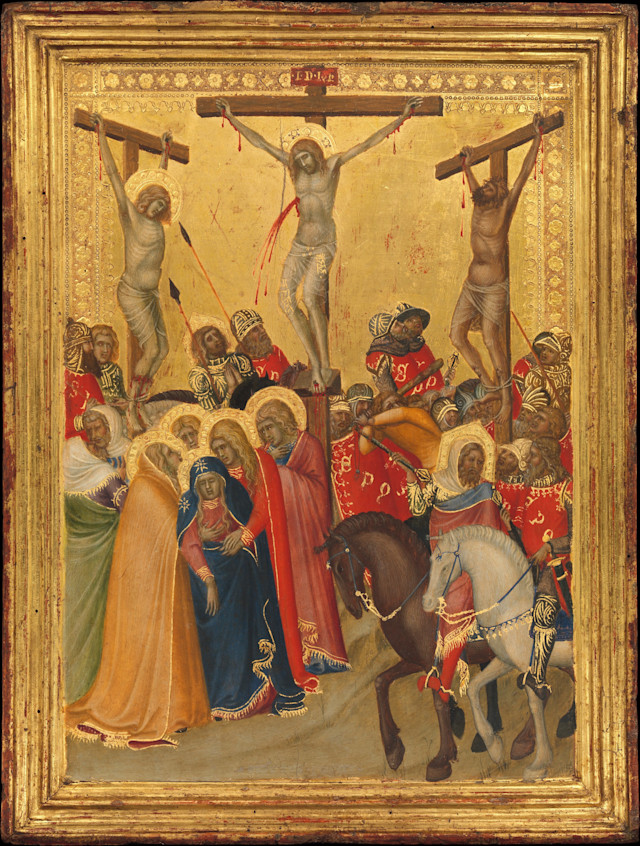
In this icon of the crucifixion by Pietro Lorenzetti from the 1340s, Christ is crucified between the two thieves. St. Dismas is on the left, looking downward in humility toward Christ.
"Today you will be with Me in Paradise"
There aren’t any major miracles attributed to St. Dismas. Normally miracles after death are one of the main signs that the church looks for in canonizing a saint, but in the case of the repentant thief, Christ’s own words, “today you shall be with me in paradise” are enough!
Subscribe
Life-giving writing by Christian scholars sent to your inbox once per month

Zachary Porcu has a PhD in church history from the Catholic University of America in Washington DC, with additional degrees in philosophy, humanities, and Classics (Greek and Latin). He is an Eastern Orthodox Christian.
Keep reading
Who was Saint Longinus and what is his story?


Jesus and the Syrophoenician Woman: Gentile Salvation
Who was the first woman preacher in the Bible?
Was Jesus a Rabbi?
Who was Phanuel? Archangel or Father of Anna?