Was Jesus a Rabbi?
The short story:
Jesus was a teacher, which is what the term “Rabbi” literally means. In the modern day, it refers to a particular leadership role within Rabbinic Judaism—analogous to a Christian priest or pastor. In other words, there was no such thing as a formal Rabbi in Jesus’ time. When the New Testament authors called Jesus a Rabbi, they meant it literally: that he was a teacher with disciples.
In the New King James version of the Bible, Jesus is first called a Rabbi by Judas, in Matthew 26:25: “Then Judas, who was betraying Him, answered and said, ‘Rabbi, is it I?’” The context for this verse is significant: Jesus has just revealed that one of his disciples will betray him, and Judas asks if it’s going to be him.
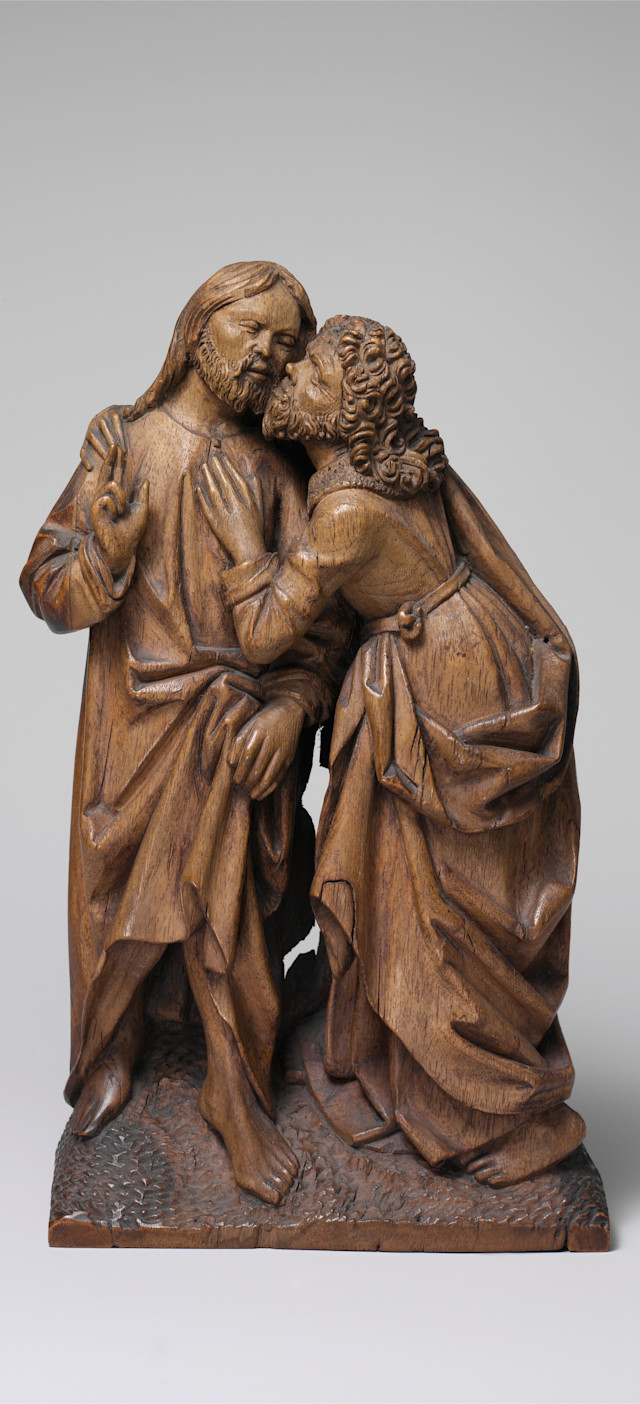
A German statue from the 1500s depicting the kiss of Judas.
Not all uses of “Rabbi” are in the context of betrayal, however. Peter also calls Jesus Rabbi in Mark 11:45: “And Peter, remembering, said to Him, ‘Rabbi, look! The fig tree which You cursed has withered away.’”
In the New King James translation, Luke doesn’t include the word Rabbi at all. It is John who uses it the most in his Gospel. It appears in John 3:2:
“This man came to Jesus by night and said to Him, ‘Rabbi, we know that You are a teacher come from God; for no one can do these signs that You do unless God is with him.’”
In John 3:26:
“And they came to John and said to him, ‘Rabbi, He who was with you beyond the Jordan, to whom you have testified—behold, He is baptizing, and all are coming to Him!’”
In John 4:31:
“In the meantime His disciples urged Him, saying, ‘Rabbi, eat.’”
In John 6:25:
“And when they found Him on the other side of the sea, they said to Him, ‘Rabbi, when did You come here?’”
In John 9:2:
“And His disciples asked Him, saying, ‘Rabbi, who sinned, this man or his parents, that he was born blind?’”
And in John 11:8:
“The disciples said to Him, ‘Rabbi, lately the Jews sought to stone You, and are You going there again?’”
Was Jesus a Rabbi or a carpenter?

William Balfour Ker - The Call of the Carpenter - 1914
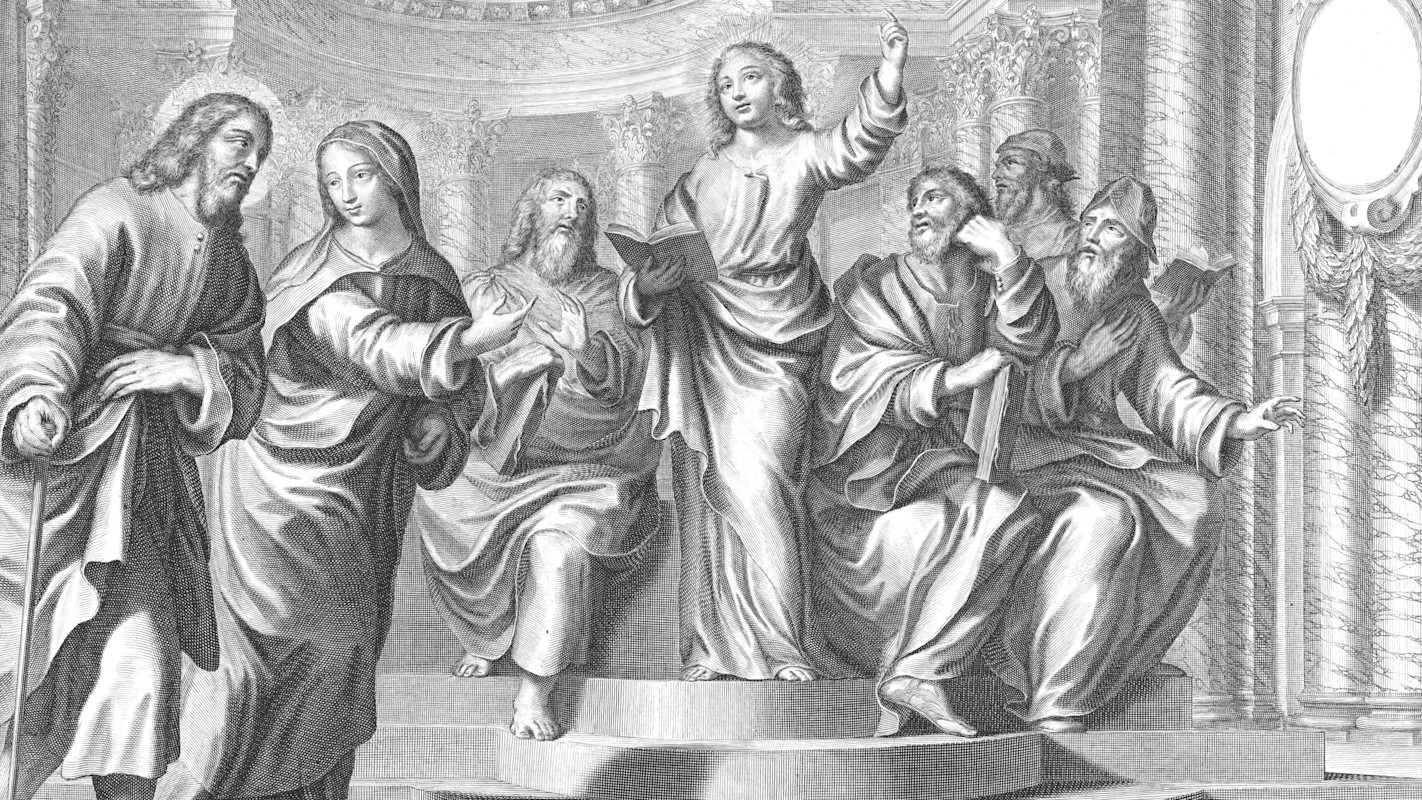
So while Jesus was likely raised in the profession of his stepfather Joseph, he became a teacher (Rabbi) when he began his ministry. You might argue that it was even earlier, given that he was teaching in the synagogue when he was twelve years old, conversing with the religious leaders:
“Now so it was that after three days they found Him in the temple, sitting in the midst of the teachers, both listening to them and asking them questions. And all who heard Him were astonished at His understanding and answers”. (Lk 2:41-47).
What was a Rabbi in Jesus’ time?
In Hebrew, the word “Rabbi” means “teacher”. The Bible uses it to refer to scribes, pharisees, and lawyers who were the experts in Jewish law. The idea of a “Rabbi” as a formal position, analogous to a Christian priest or pastor, was a later creation of Rabbinic Judaism.
How is Rabbinic Judaism different from the Jewish religions of Jesus’ time? The old religion of ancient Israel was based around worship in the Jewish temple, but the temple was destroyed in A.D. 70, making it impossible to practice. Those Jews who didn’t convert to Christianity, therefore, were in a bind. Around AD 100, they created Rabbinic Judaism, a new kind of religion that was based on the synagogue model and which had someone with the formal title “Rabbi” as the religious leader of the local Jewish community.
But because this position—and this whole religion—didn’t formally exist until after Jesus’ time, it’s not correct to call Jesus a Rabbi in the sense that modern-day Rabbinic Judaism uses this term.
Subscribe
Life-giving writing by Christian scholars sent to your inbox once per month

Zachary Porcu has a PhD in church history from the Catholic University of America in Washington DC, with additional degrees in philosophy, humanities, and Classics (Greek and Latin). He is an Eastern Orthodox Christian.
Keep reading

Pastor vs. Priest: What are the differences?


Jesus and the Syrophoenician Woman: Gentile Salvation
Who was the first woman preacher in the Bible?
Who was Phanuel? Archangel or Father of Anna?

Is “love conquers all” in the Bible?