What is a sardius stone in the Bible? Carnelian symbolism
The short answer
Sardius stones in the Bible were probably a semi-precious stone called carnelian. They point to a wonderful truth: that physical objects are never simply physical. All objects, especially precious stones, have a profound meaning and depth that is often missing in today's world.
As far as we can tell, a sardius stone (sometimes called “sard stone" or “sardine”) was an ancient name for carnelian, a reddish mineral considered a semi-precious stone. Use of the sardius for decoration goes back to at least 400 B.C. It is found all over the world: South America, Asia, Africa, and Europe. The stone has a rich history of associations with priests, kingship, healers, and good luck. Like almost everything in nature, ancient people associated stones with various spiritual properties, effects on the mind and body, and important symbolism.
The sardius stone is frequently mentioned in the Bible in reference to royalty and riches:
Exodus 28:17 - "You shall set in it four rows of stones. A row of sardius, topaz, and carbuncle shall be the first row;" (ESV)
Exodus 39:10 - "And they set in it four rows of stones. A row of sardius, topaz, and carbuncle was the first row." (ESV)
Revelation 4:3 - "And he who sat there had the appearance of jasper and carnelian, and around the throne was a rainbow that had the appearance of an emerald." (ESV)
However, for most modern people, if you start talking about the spiritual properties of stones, their affect on your emotions, or “crystal energies,” you’ll probably get a few strange looks, since these ideas are associated in contemporary thought with New Age spirituality and pseudo-science. But ancient people did not have the same tidy distinctions that modern people enjoy, because, in a technical sense, they were more sophisticated than us.
The world as enchanted vs. disenchanted
Modern people tend to look at the world as inherently meaningless. A tree is “just” an organism, a puddle of water is “just” liquid, and a stone is “just” a mineral. The assumption is that physical objects have no real meaning. We can give them meaning, use them as symbols to represent certain ideas, and create personal attachments to them, but the basic premise is that objects in nature don’t have any special meaning. Any meaning that they have is the meaning that they have to us—in other words, our subjective view of them. The philosopher Charles Taylor called this view a “disenchanted” way of thinking about the world.
The opposite way of thinking is an “enchanted” view of the world. In an enchanted view of reality, everything in the world has an inherent or intrinsic meaning, regardless of what anyone thinks about it. For example, trees might have particular meanings related to growth, age, wisdom, and fertility; water might have meanings related to purity, compassion, and life; and certain stones might have meaning because they’re associated with certain deities or spirits.
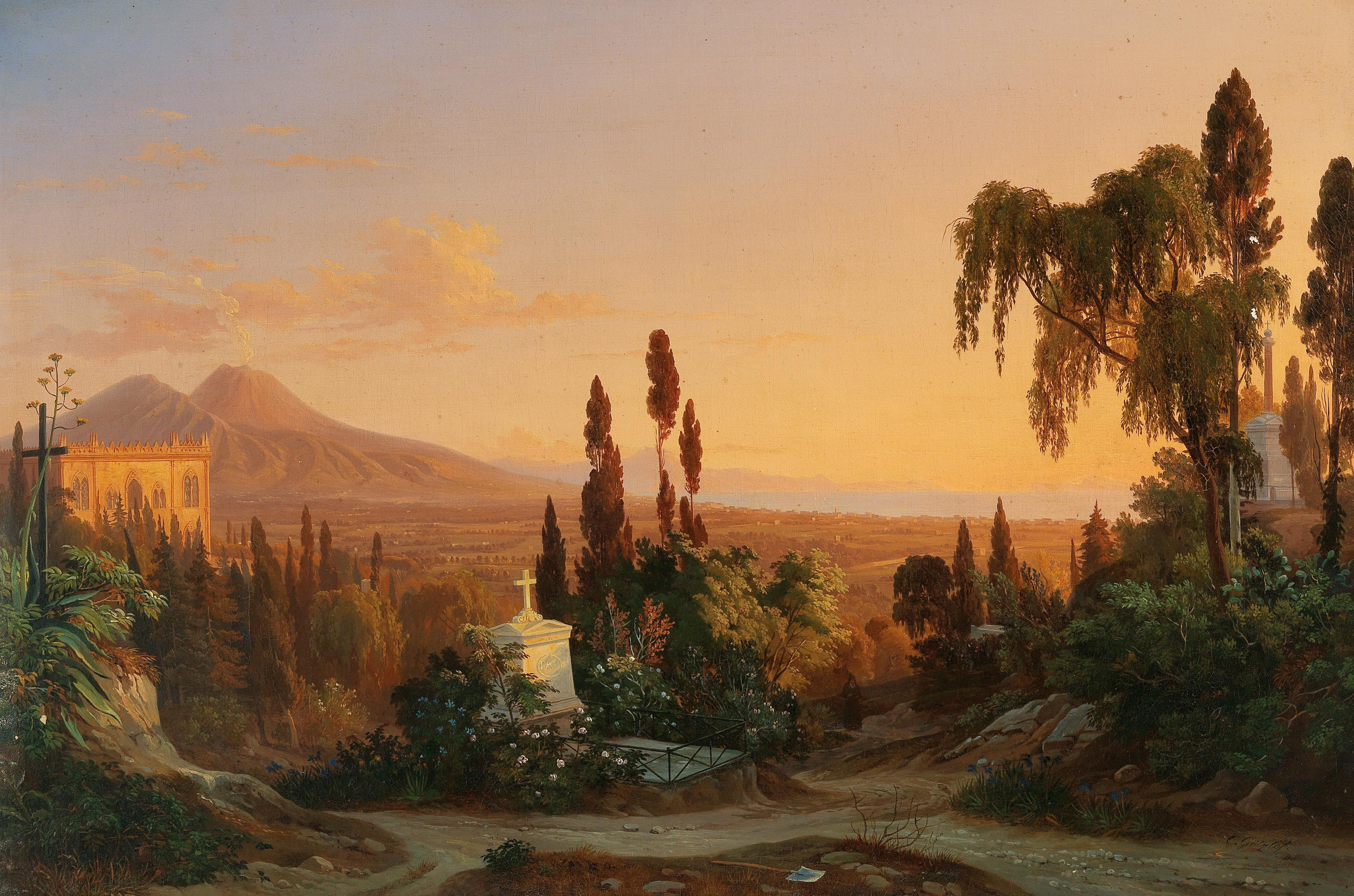
The Gulf of Naples by Carl Götzloff, 1866
The exact meaning of these things is dependent on the assumptions a culture makes about the universe, especially the nature of their gods. If fire, for example, is a gift that was taught to mankind by the titan god Prometheus, then the deeper meaning of fire is that it is a powerful, dangerous thing that indicates the a divine element in discovery and invention. If you were an ancient Greek lighting a fire, you wouldn’t just be remembering the story of Prometheus; in the act of lighting a fire you’d become a participant in that story, the inheritor of a divine gift and one of the arts of the gods. In other words, you would have entered into that narrative, and narrative is what gives meaning to reality.
What narrative gave meaning to things like the sardius stone in the Bible? The Biblical accounts don’t normally give explanations for the meaning of materials—like gold or pearls or carnelian—so it’s hard to say specifically, but the various authors were writing under certain mythological assumptions that were common to ancient world, so it is possible to generalize a bit. Because ancient cultures typically viewed the world in an enchanted way, they believed that all physical things had spiritual significance. Every metal, stone, and element was related in some way to one of the gods or planets. These relations were the basis of the ancient sciences of alchemy and astrology, which organized the elements of the natural world and the heavens. For example, the metal tin was associated with Jupiter and his virtues, like wisdom. Iron was associated with Mars and connected with power, courage, stamina, and masculinity.
The meaning of sardius stones
But, you might ask, why would the ancient Israelites (who wrote the Old Testament) believe in these kinds of symbols, since they didn’t believe in the pagan deities? It’s a common misconception that the ancient Israelites and early Christians did not believe in the pagan deities. In reality, they believed in them but viewed them as fallen gods: beings who had once been entrusted to watch over and steward the Earth, but fell because of their disordered desires and were in open rebellion against the cosmic order. It is for this reason that the Biblical texts refer to the God of Israel as the “God of gods,” “Lord of lords,” “Lord of hosts,” and “the most high.” In other words, other gods existed, but the God of Israel was the highest. And in the New Testament era, Jesus revealed that he (and his Father and the Holy Spirit) is so much higher than the other gods that he is uncreated, uncaused, and the source of being itself. You can read more about the ancient Christian understanding of the fall of the gods in our article on Tartak.
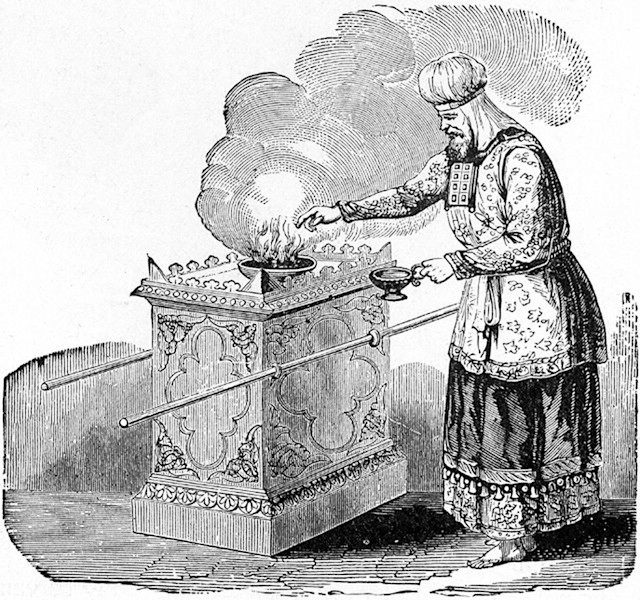
A high priest in the Old Testament may have had sardius stones on his clothing. (source)
It is no coincidence that there are twelve precious stones on a breastplate inscribed with the names of the twelve tribes of Israel. Because we’re dealing with an ancient culture that thought in an enchanted way, I would guess that each of these stones had a specific spiritual meaning. Because the Biblical narrative doesn’t explain those meanings, we can assume that the original audience didn’t need it explained to them; the symbolism would have been obvious in their culture, just as we use certain symbols in the modern world that we don’t explain because we assume everyone is familiar with them.
We can only speculate and theorize about the exact meaning of those stones. More important than settling on an exact meaning is understanding the way ancient people interacted with the physical world: namely, that everything had meaning. A stone was never just a stone.
Subscribe
Life-giving writing by Christian scholars sent to your inbox once per month

Zachary Porcu has a PhD in church history from the Catholic University of America in Washington DC, with additional degrees in philosophy, humanities, and Classics (Greek and Latin). He is an Eastern Orthodox Christian.
Keep reading
Hineni in Hebrew: “Here I am” from God and Man

Who was Jotham, king of Judah?
What are the prophetic books of the Bible?
Who is Esaias in the Bible? Answered by a Christian Scholar

Peor: The Mountain and God of the Moabites