Skip to content
Who was Anna in the Bible?

Who was Anna in the Bible?

Dr. Zachary Porcu

May 27, 20264 min read

The short answer:

There are two women named Anna who are important in New Testament: Anna the Prophetess, mentioned in Luke’s Gospel, and Saint Anna the mother of the Virgin Mary, who isn’t referenced in the New Testament but is attested in ancient traditions of the church going back to the late antique period.

How many Anna’s are there in the Bible?

There are two women named “Anna” who were very important in the events surrounding the birth of Jesus. One is the prophetess Anna who lived in the temple and constantly fasted and prayed. She was old by the time she encountered the infant Jesus. She had formerly prophesied about the coming of Christ and was present when Saints Joseph and Mary brought Jesus to the temple to offer sacrifice for him according to the law of Moses.

The other important Anna is St. Anna the mother of the Virgin Mary. While not named or mentioned in the Biblical canon, she is broadly attested in Christian tradition and has been venerated by Christians since before there were denominations.

What does the bible say about St. Anna? What verse mentions her?

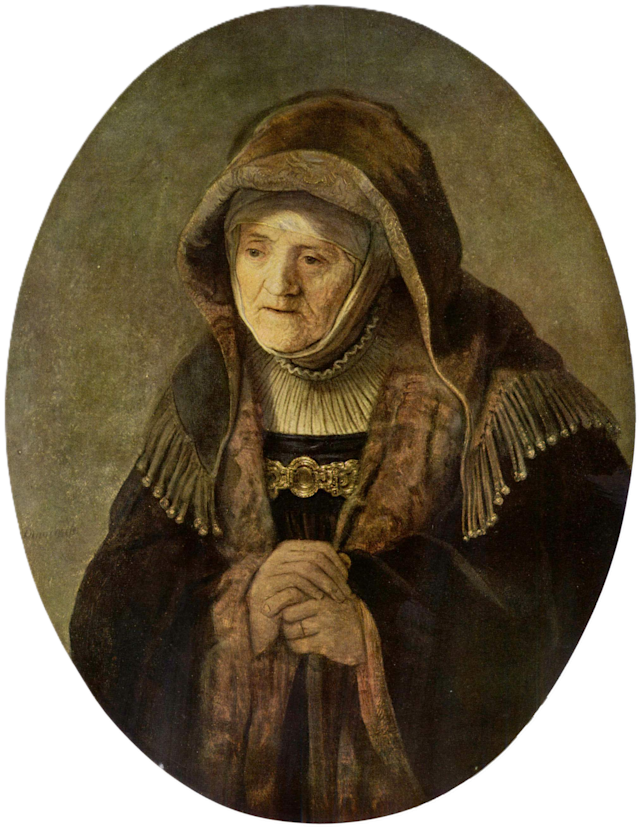
20260527_Rembrandt_ProphetessAnna

Rembrandt van Rijn - The Prophetess Anna - 1639

Saint Anna the Prophetess is mentioned briefly in Luke’s Gospel account:

“Now there was one, Anna, a prophetess, the daughter of Phanuel, of the tribe of Asher. She was of a great age, and had lived with a husband seven years from her virginity; and this woman was a widow of about eighty-four years, who did not depart from the temple, but served God with fastings and prayers night and day. And coming in that instant she gave thanks to the Lord, and spoke of Him to all those who looked for redemption in Jerusalem.” (Luke 2:36–38)

Saint Anna, mother of the Virgin, is not mentioned in the Gospel. Even Luke’s account, which goes back much farther than the others chronologically, begins Mary’s story after she is betrothed to Joseph.

Who was Anna’s husband?

The husband of Anna the Prophetess is not named. The Bible mentions only that she had a husband and may indicate that she had only been married to him for seven years before she became a widow. In any case, she was a widow at the time she received the visit from Saints Joseph and Mary and the infant Jesus.
Saint Anna, mother of the Virgin Mary, was married to a man named Joachim.

Did Anna have a baby in the Bible?

The prophetess Anna was a widow, but there is no indication that she had a child at any point.

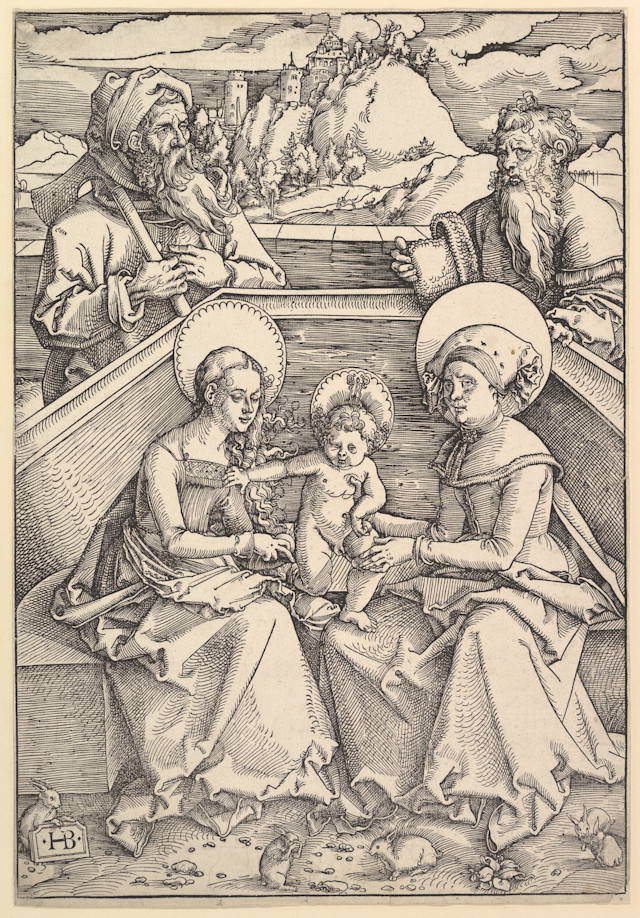
20260527_HansBaldung_TheHolyFamilyWithAnnaJoachim

Hans Baldung - The Holy Family with St. Anna and St. Joachim - late 1400s or early 1500s

Anna and Joachim, however, did have a baby: the Virgin Mary, making them the grandparents of Jesus. According to tradition which is accepted by most Christians historically, Joachim and Anna had been childless into their old age. They prayed to God that he would work the same sort of miracle in them that he had worked in Abraham and Sarah, who also had not had children and were advanced in age. Eventually both Anna and Joachim were visited separately by the Archangel Gabriel, who told them that they would be blessed with a child—and that through that child, the whole world would be blessed. They each promised the archangel that their child would be raised in the Temple. Anna conceived and bore a daughter, whom they named Mary. When Mary turned three years old, they took her to the Temple and presented her to the high priest at the time, the Righteous Zacharias. They offered sacrifice and dedicated Mary to the Temple, where she was raised until the time that she was betrothed to Joseph.

What did Anna say about Jesus?

Anna the Prophetess “spoke about” Jesus to everyone who was present, presumably through prophecy, but the particulars of what she said exactly were not recorded in the New Testament.

Saint Anna the mother of the Virgin Mary did not, as far as I’m aware, have anything specific to say about Jesus, at least not according to accepted traditions. She likely did not live to see the birth of her grandson, considering that she and her husband were very old by the time they had their daughter.

Prayer

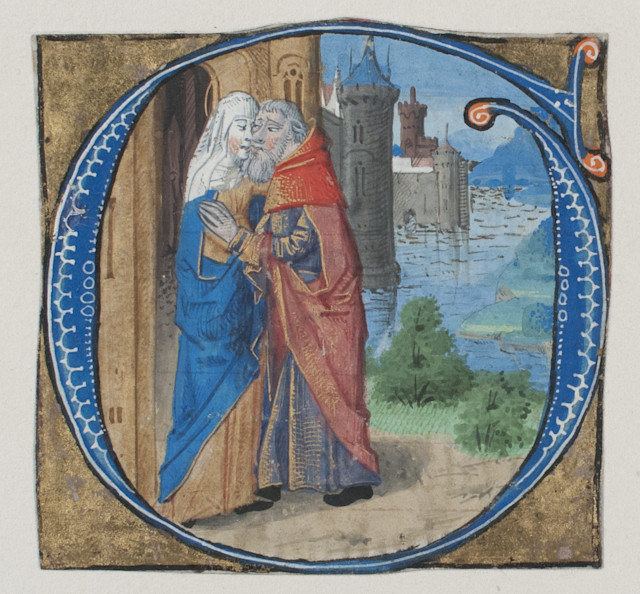
20260527_Illumination_JoachimAnna

A 1400s manuscript illumination of Joachim and Anna.

The traditional hymns to Anna the mother of the Virgin Mary in the Eastern Orthodox church are:

“Let us sing praises to Joachim and Anna,
the couple honored by God
(and they are His kinsmen).
They have borne for us the Maiden
who in a manner beyond understanding
gave birth to Him Who though fleshless,
became the incarnate to save the world.
With her they intercede for our souls.”

And,

“Anna rejoices, released from her barrenness,
and nurses her most pure child.
She calls all people to glorify Him
Who gave the Virgin Mother to mankind from her womb.”

There are doubtless many other prayers and remembrances of St. Anna throughout different Christian denominations, as she was an early and ancient saint. She is commemorated on July 26 in the Catholic, Anglican, and Lutheran churches, and on July 25 in the Eastern Orthodox church (and remembered on September 9 and December 9).

What is the significance of these women? What lesson can we learn from Anna?

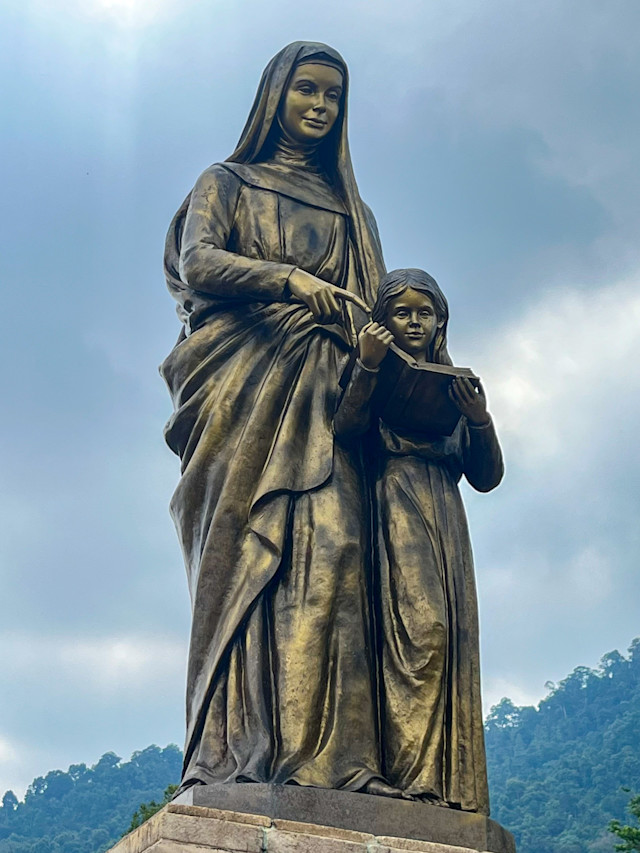
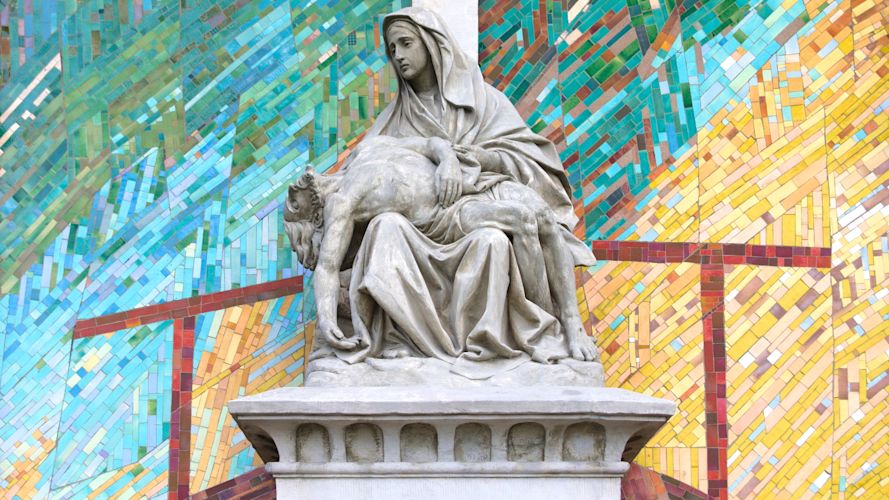
20260527_AnneMary

A contemporary statue of Saints Anna and Mary at the Minor Basilica of St. Anne in Malaysia.

It’s difficult to draw more than general lessons from the Prophetess Anna because her role in the New Testament is so brief. You could probably say that her faithfulness was rewarded or notice that she stayed faithful to her religion even after her husband died and she didn’t remarry, but we don’t know all that much about her.

For St. Anna the mother of the Virgin Mary, there are more obvious lessons to learn about faithfulness, trusting in God, and, I think, sacrifice.

One of the major themes running through Christianity, which you see all over the New Testament, is the idea that you have to give something up in order to gain it. Jesus says that whoever tries to save his life will lose it, but he who loses his life for Christ’s sake will find it. In a little way, we do this sort of thing every day: we sacrifice short-term comforts for long-term gains, such as abstaining from junk food and going to the gym, or going to school and studying rather than watching television. Saint Anna offered her child to God: she was so grateful to have a child in her old age that she was prepared to give the child back to God in gratitude—and that child turned out to be the mother of Christ, who went on to bless the whole world. Anna gave up one thing, but the blessing she received was big enough to bless the entire cosmos.

Image credit
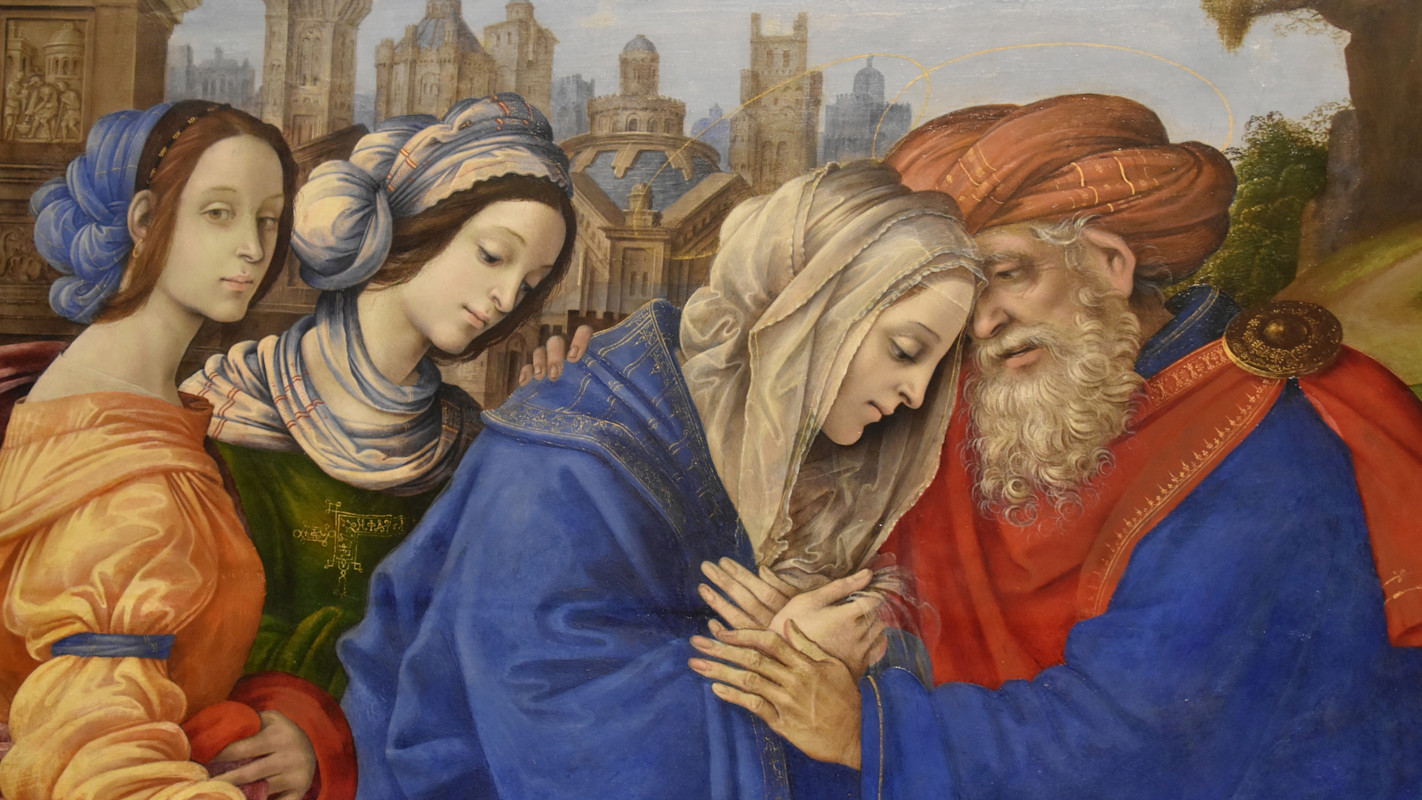
  • Filippino Lippi - The Meeting of Joachim and Anna - 1497 - photograph by Richard Mortel
  • Rembrandt van Rijn - The Prophetess Anna - 1639
  • Hans Baldung - The Holy Family with St. Anna and St. Joachim - late 1400s or early 1500s
  • Manuscript Illumination of Joachim and Anna - 1400s - The Metropolitan Museum of Art
  • Statue of Saints Anna & Mary - photograph by Basil Chew

Article folder: New Testament

Tagged with: saintsprophecysacrificehagiographyTheotokos

Dr. Zachary Porcu

Zachary Porcu has a PhD in church history from the Catholic University of America in Washington DC, with additional degrees in philosophy, humanities, and Classics (Greek and Latin). He is an Eastern Orthodox Christian.

Full author bio

Keep reading

Who was St. Dismas?

Who was St. Dismas?

Dr. Zachary Porcu
by Dr. Zachary PorcuCatholic University of America
Who were the two thieves? All four Gospel accounts related the fact that Jesus was crucified along with two other men. According to Luke’s account, one of the thieves mocked Jesus, while the other thief recognized that Jesus wa...
Where were Gerasenes in the Bible?

Where were Gerasenes in the Bible?

Dr. Zachary Porcu
by Dr. Zachary PorcuCatholic University of America
What was Gerasenes in the bible? The country of the Gerasenes (also known as Gergesenes or simply as Gergasa or Gergesa) was a land to the south or southeast of the Sea of Galilee, though it isn’t clear where exactly it was. T...
Who is Epaphroditus in the Bible?

Who is Epaphroditus in the Bible?

Dr. Zachary Porcu
by Dr. Zachary PorcuCatholic University of America
Epaphroditus is mentioned in Philippians 2:25 and 4:18 as one of St. Paul’s fellow missionaries. Paul was on a missionary journey around the Mediterranean, and he had several fellow missionaries under his direction. He also had...
The Weapons of Our Warfare Are Not Carnal

The Weapons of Our Warfare Are Not Carnal

Dr. Zachary Porcu
by Dr. Zachary PorcuCatholic University of America
Where in the Bible is the phrase, “the weapons of our warfare are not carnal”? It comes from St. Paul’s second letter to the Corinthians, verse 10:4. The passage in context is as follows: For though we walk in the flesh, we are...
What is the prayer to put on the full armor of God?

What is the prayer to put on the full armor of God?

Dr. Zachary Porcu
by Dr. Zachary PorcuCatholic University of America
Saint Paul’s letter to the Ephesians ends with a powerful chapter filled with memorable exhortations. Central to this passage is his long analogy about putting on “the armor of God,” in which he describes a variety of spiritual...
Jesus went to Hell for 3 days as seen in Scripture

Jesus went to Hell for 3 days as seen in Scripture

Dr. Zachary Porcu
by Dr. Zachary PorcuCatholic University of America
Because telling someone to “go to Hell” is an insult, the idea that Jesus went to Hell is probably a bit unnerving to many people. Yet the idea that Jesus descended into Hell when he died is all over the writings of scripture, ...