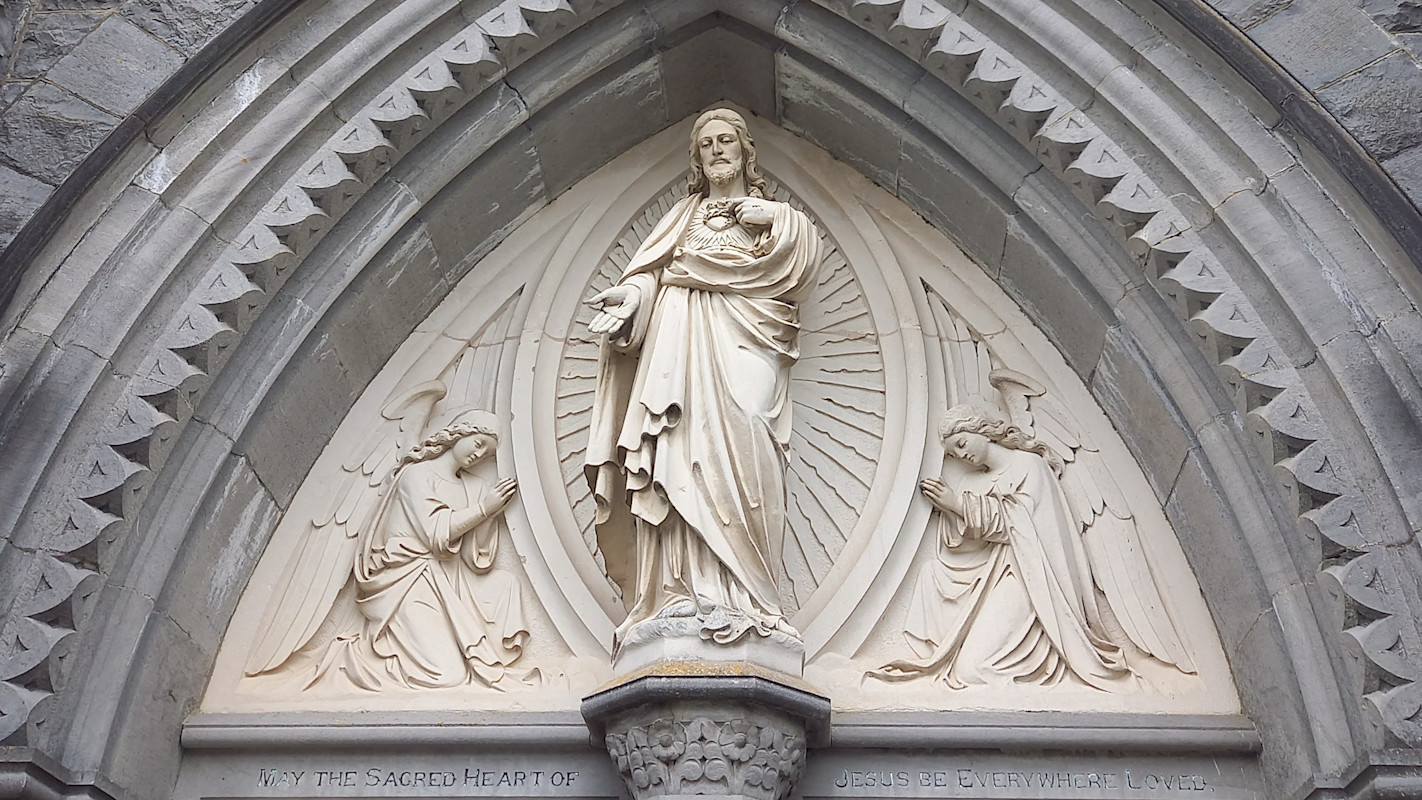
The First Friday Devotion and the Sacred Heart of Jesus
The short story:
The First Friday Devotion is connected to the Litany of the Sacred Heart, which developed in the seventeenth century through the Catholic saint, Margaret Mary Alacoque. It involves taking communion on the first Friday of every month for nine consecutive months.
The devotion was started by Margaret Mary Alacoque. She was a Catholic nun and mystic who received private visions of Jesus for two years, in which he revealed to her the practice of devotion to the sacred heart of Jesus. One major element of this devotion was to take communion every month on the first Friday of the month for nine months in a row.
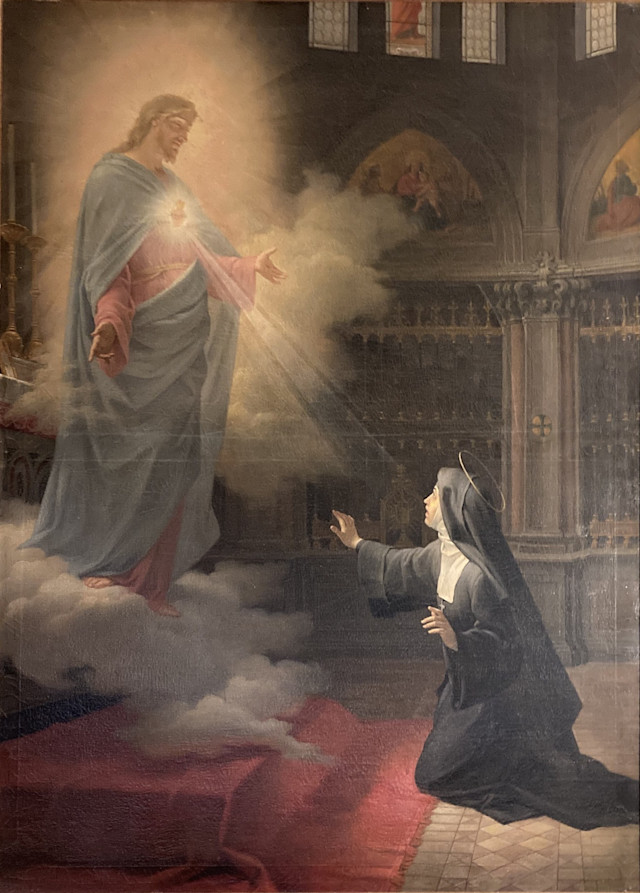
Anonymous - The Vision of the Heart of Jesus of St. Margaret Mary Alacoque - 1800s
At one point Alacoque wrote a letter to the king of France, asking him to use his influence in order to promote the devotion to the sacred heart, but her letter was ignored. Whether he received it is unknown, but Alacoque certainly received no response.
It took another 75 years for the devotion to gain widespread promotion and acceptance. It was the Jesuit Order who kept up the practice, despite it being controversial among Catholics. Centuries later, Pope Benedict XV canonized Alacoque, and Pope Pius XI affirmed her visions as credible in 1928, which led to the devotion to the sacred heart growing in prominence and popularity.
What does the First Friday Devotion require?
According to americaneedsfatima.org, a Catholic website devoted to the veneration of Mary, the three main guidelines for the first Friday devotions are:
“Receive Holy Communion on each First Friday;
The nine Fridays must be consecutive;
They must be made in honor and in reparation to His Sacred Heart.”
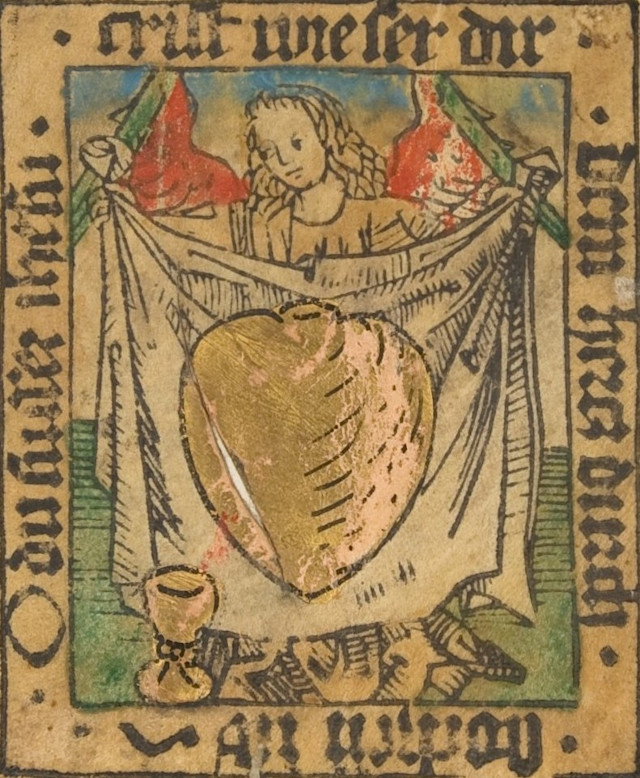
Anonymous - The Sacred Heart on a Cloth Held by an Angel - circa 1480
The website also lists the 12 promises of the sacred heart of Jesus that were made to St. Margaret Mary Alacoque by Christ:
1. I will give them all the graces necessary for their state of life.
2. I will give peace in their families.
3. I will console them in all their troubles.
4. I will be their refuge in life and especially in death.
5. I will abundantly bless all their undertakings.
6. Sinners shall find in my Heart the source and infinite ocean of mercy.
7. Tepid souls shall become fervent.
8. Fervent souls shall rise speedily to great perfection.
9. I will bless those places wherein the image of my Sacred Heart shall be exposed and venerated.
10. I will give to priests the power to touch the most hardened hearts.
11. Persons who propagate this devotion shall have their names eternally written in my Heart.
12. In the excess of the mercy of my heart, I promise you that my all powerful love will grant to all those who will receive Communion on the First Fridays, for nine consecutive months, the grace of final repentance: they will not die in my displeasure, nor without receiving the sacraments; and my Heart will be their secure refuge in that last hour.
Is confession part of First Friday devotion?
Whether you need to go to confession prior to receiving communion on these first Fridays depends. In any traditional view of communion—especially among Catholics and Orthodox Christians—communion is understood to be more than a symbol: it is the real body and blood of Christ. To take this powerful substance into your body and be transformed by it requires a certain preparation, given that it is a ritual action with superlative spiritual power.
In Catholicism, being prepared to receive communion depends on whether you’re in a “state of Grace.” This is a Catholic term for being prepared to receive communion on the basis that you haven’t committed any mortal sins. If you are aware that you have committed mortal sins, then by definition you must go to confession and receive absolution in order to return to a state of grace and be prepared to receive communion.
Subscribe
Life-giving writing by Christian scholars sent to your inbox once per month

Zachary Porcu has a PhD in church history from the Catholic University of America in Washington DC, with additional degrees in philosophy, humanities, and Classics (Greek and Latin). He is an Eastern Orthodox Christian.
Keep reading

What is the Litany of the Sacred Heart of Jesus?

Forgiveness and the Remission of Sins
Stanley Hauerwas: Virtue Ethicist & Postliberal Theologian
Who is Jürgen Moltmann and What Did He Believe?

Jerry Bridges and The Navigators: A Protestant Order