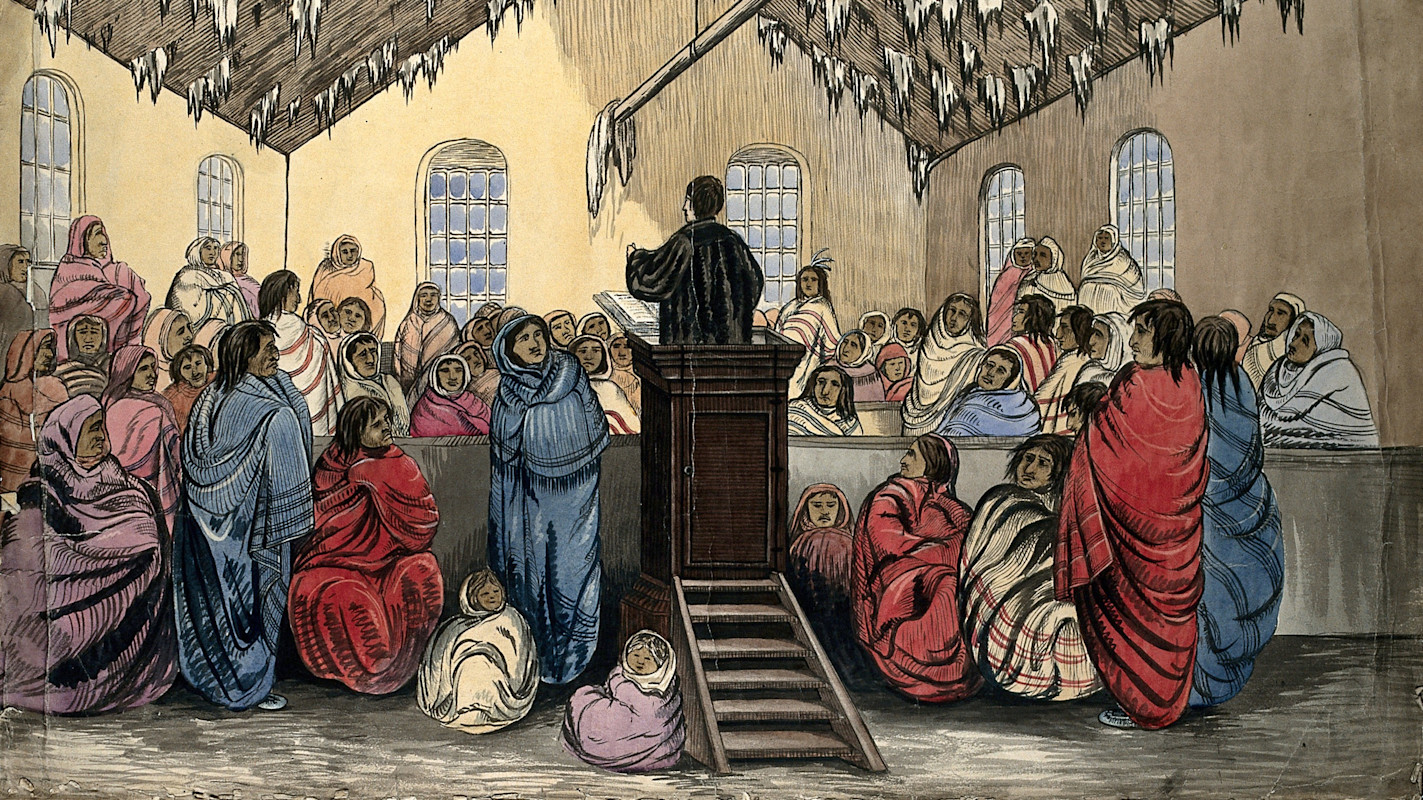
Missio Dei: A Protestant Movement Redefining the Church
The short story:
Missio Dei is a theological movement from the twentieth century that emphasizes missionary work as the most important or primary activity of the church. While missionary activity has always been important in Christianity, this modern movement is more of a redefinition of Christianity and may go against the traditional definition of what the church is.
Missio Dei is the name of a broad theological movement among several branches of Protestantism. It was popularized by Presbyterian and other Reformed churches, but there are examples from Lutherans and other traditional Protestant groups.
The phrase missio dei is a Latin phrase that means “mission of God.” The movement began in the twentieth century with the aim of viewing missionary activity as the main purpose of Christianity. Missio Dei held the idea that Christians should be focused on going into the world and sharing the Gospel with those who are not Christians.
David Bosch—a theologian and writer on the topic of missions and theology—puts it this way:
“In particular, we have begun to see that the church of Jesus Christ is not the purpose or goal of the gospel, but rather its instrument and witness... God's mission is calling and sending us, the church of Jesus Christ, to be a missionary church in our own societies, in the cultures in which we find ourselves.”
Darrell Guder—a Presbyterian professor—is very clear in his belief that the church is the effect of missionary work, not the cause:
“Mission is thereby seen as a movement from God to the world; the church is viewed as an instrument for that mission. There is church because there is mission, not vice versa. To participate in mission is to participate in the movement of God's love toward people, since God is a fountain of sending love.”
None of this might seem unusual to you, especially if you grew up in a Christian context where outreach, mission work, acts of charity, homeless ministries, et cetera, were a normal part of your church life. But statements like Guder’s have a few theological issues.
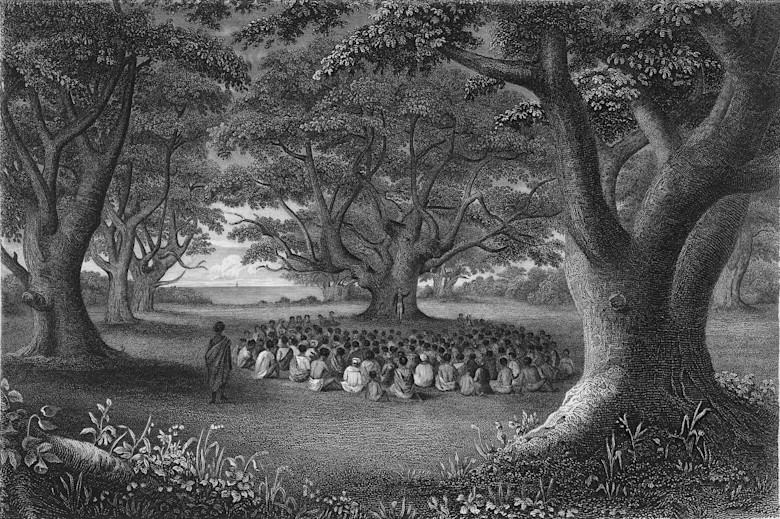
Alfred T. Agate - Missionaries Preaching under Kukui Groves - 1845
What is the Biblical foundation of Missio Dei?
It might seem odd to say so, but at a literal, factual level, there is no Biblical foundation for Missio Dei.
This claim might be unintuitive at first, given that missionary activity is as old as Christianity itself. The New Testament is full of examples of Jesus himself sending people on missions. For example, Jesus sent the Seventy to preach the gospel:
“After these things the Lord appointed seventy others also, and sent them two by two before His face into every city and place where He Himself was about to go. Then He said to them, ‘The harvest truly is great, but the laborers are few; therefore pray the Lord of the harvest to send out laborers into His harvest. ...And heal the sick there, and say to them, “The kingdom of God has come near to you.” But whatever city you enter, and they do not receive you, go out into its streets and say, “The very dust of your city which clings to us we wipe off against you. Nevertheless know this, that the kingdom of God has come near you.”’” (Luke 10:1-11)
And of course, after his Resurrection from the dead, Christ told his disciples to be, essentially, missionaries to the whole world—in what came to be known as “the Great Commission”:
“And Jesus came and spoke to them, saying, ‘All authority has been given to Me in heaven and on earth. Go therefore and make disciples of all the nations, baptizing them in the name of the Father and of the Son and of the Holy Spirit, teaching them to observe all things that I have commanded you.’” (Matthew 28:18-19)
There are other examples as well, and you could even take Jesus’ parable of the Sheep and the Goats as a way that Christ ties outreach and acts of charity to one’s entry into the kingdom of heaven (see Matthew 25:31-46).
How can we say, therefore, that Missio Dei has no Biblical foundation?
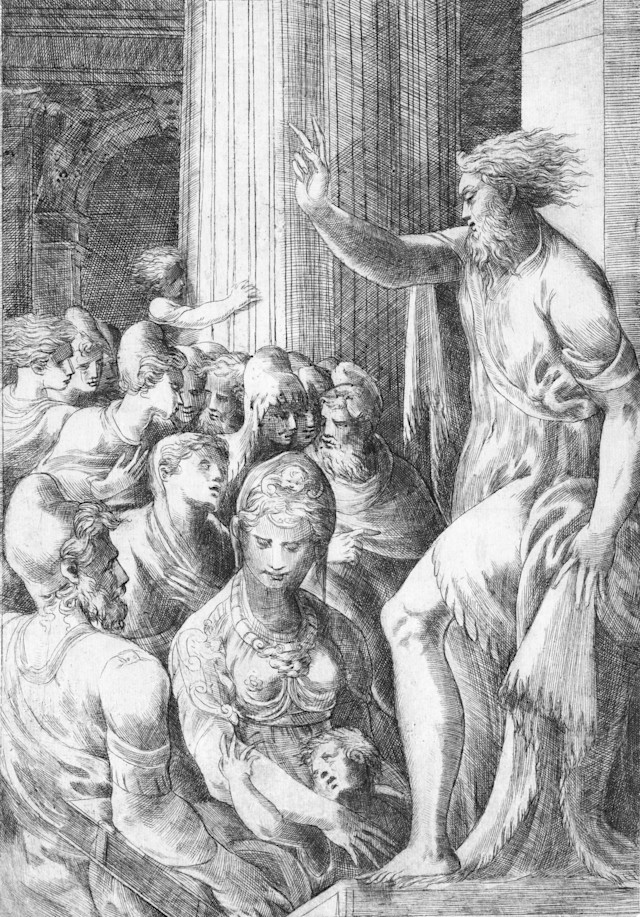
Andrea Schiavone - St. Paul Preaching in Athens - circa 1553
But believing that Christians should do missionary work is not the same as saying that missionary work is the primary goal and the church is the means to that end, or that the church is the “instrument” of the gospel rather than its effect. The idea that missionary activity is vital to the Christian life is not really the claim of Missio Dei—Christians have held this view since the time of Jesus’ ministry. What Missio Dei is actually about is re-defining the word “church” to be the effect or the means of the gospel, not the goal. David Bosch makes the main tenet of Missio Dei quite clear: “The church of Jesus Christ is not the purpose or the goal of the gospel, but rather its instrument.”
This tenet explains why Missio Dei was a Protestant movement, rather than a Catholic or Orthodox one: in traditional Christianity, the Church is understood as the body of Christ itself, meaning that every person who is baptized and receives communion becomes a literal, physical part of the living, physical body of Christ. This idea is at the heart of sacramental theology, which you can read more about in my book, Journey to Reality. Traditional Christians, in other words, have a clear, concrete definition for what the church is: it’s the literal body of Christ, made up of all Christians. It is the very foundation or, you might say, the medium of our life in Christ.
But for Protestants, who generally don’t believe in sacramental theology, the concept of church is almost always more abstract, and different movements have tried to define the church differently over the years. The Missio Dei movement is another attempt to solve the problem of defining what “church” means among denominations who don’t believe in the physical dimension of the sacraments.
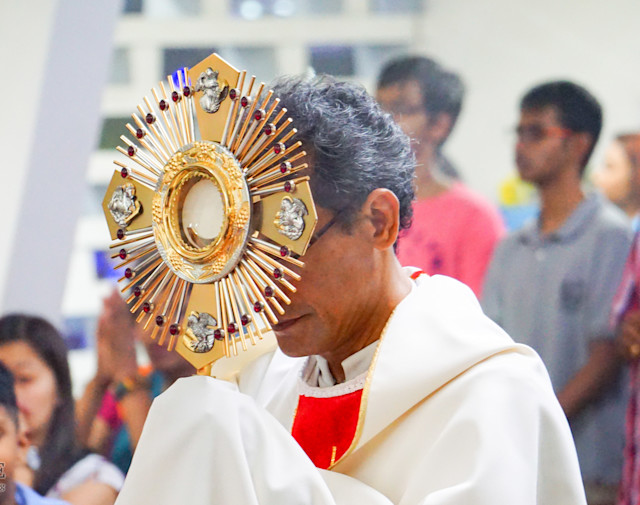
Father Paulino Miranda carries a monstrance in a procession.
Of course, I don’t mean to say that there is no good in mission work or that Protestant churches don’t do good in the world by being very active missionaries. Missionary activity remains central to the Christian life—we just shouldn’t redefine “church” to mean only missionary work, because then you’re missing most of the other things that Jesus says are essential elements of life in him, such as Communion.
Is there a Missio Dei church?
There are a variety of local churches in the United States that make the Missio Dei philosophy their foundational focus, including Mission Dei Chicago, the Missio Dei Church in Manhatten Illinois, and the Missio Dei Church in Cincinnati, Ohio.
Subscribe
Life-giving writing by Christian scholars sent to your inbox once per month

Zachary Porcu has a PhD in church history from the Catholic University of America in Washington DC, with additional degrees in philosophy, humanities, and Classics (Greek and Latin). He is an Eastern Orthodox Christian.
Keep reading
Sosthenes of The Seventy Disciples - by a Christian PhD

Apollos in the Bible: Convert, Missionary, Bishop
Forgiveness and the Remission of Sins

Stanley Hauerwas: Virtue Ethicist & Postliberal Theologian
Who is Jürgen Moltmann and What Did He Believe?