Greg Bahnsen: Apologist and Presbyterian Minister
The short story:
Greg Bahnsen was a twentieth-century philosopher, apologist, and Presbyterian minister. He was a full-time Resident Scholar at the Southern California Center for Christian Studies and made contributions to Christian apologetics, postmillennialism, and the idea of theonomy.
Greg Bahnsen was a Presbyterian minister. He earned both a Master of Divinity and a Master of Theology, and was ordained in the Presbyterian Church in 1975. He is probably best known for being a disciple and close friend of Cornelius Van Til, who advocated for something called “presuppositionalism” and for the idea of “theonomy.” Neither is quite as complicated as it sounds; let’s start with Theonomy.
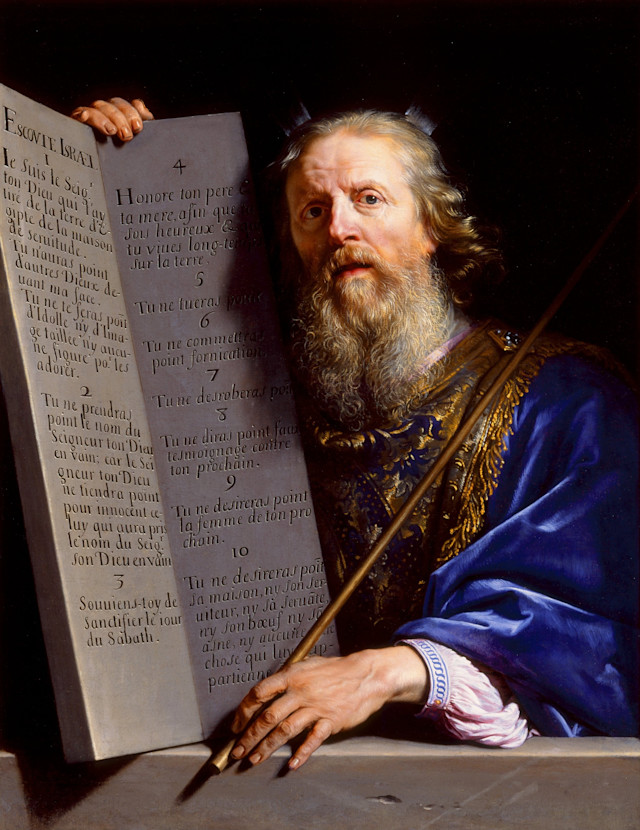
Phillipe de Champaigne - Moses Presenting the Tablets of the Law - circa 1648
In an article originally published in the New Horizons journal (April 1994), Bahnsen defined theonomy in this way:
“Every ethical decision assumes some final authority or standard, and that will either be self-law ("autonomy") or God's law ("theonomy"). While unbelievers consider themselves the ultimate authority in determining moral right or wrong, believers acknowledge that God alone has that position and prerogative.
The position which has come to be labeled ‘theonomy’ today thus holds that the word of the Lord is the sole, supreme, and unchallengeable standard for the actions and attitudes of all men in all areas of life. Our obligation to keep God's commands cannot be judged by any extra-scriptural standard, such as whether its specific requirements (when properly interpreted) are congenial to past traditions or modern feelings and practices.”
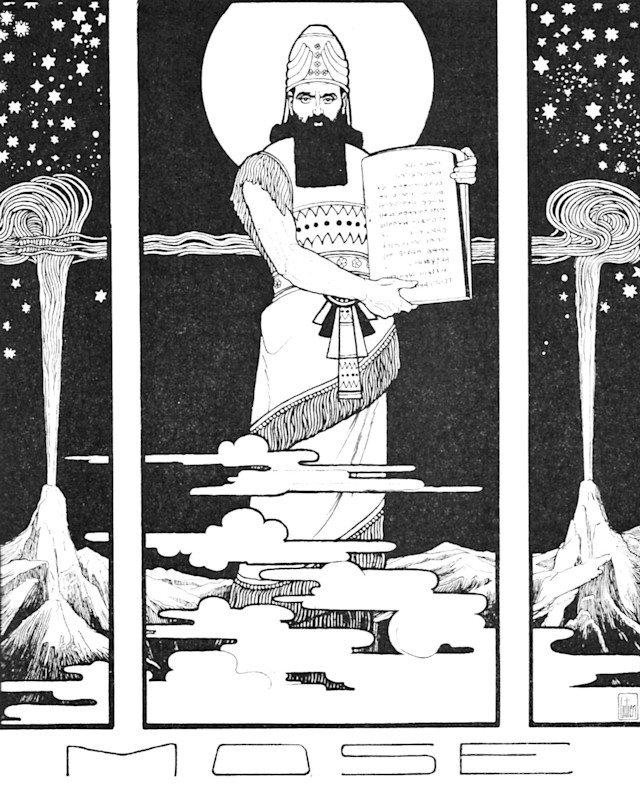
Ephraim Moses Lilien - Mose - 1908
“So theonomy teaches that civil rulers are morally obligated to enforce those laws of Christ, found throughout the Scriptures, which are addressed to magistrates...Political codes today ought to incorporate the moral requirements which were culturally illustrated in the God-given, judicial laws of Old Testament Israel.”
He concludes his discussion with three possible options: “Men must choose in their civil affairs to be governed by God's law (theonomy), to be ruled by tyrants, or acquiesce to increasing social degeneracy.”
What is Presuppositionalism in Christian Theology?
Presuppositionalism was a twentieth-century school of theology developed by thinkers like Cornelius Van Til and Gordon Haddon Clark. One of Van Til’s students and close friends was Greg Bahnsen, who continued to popularize these ideas.
Presuppositionalism is a long word, but the concept isn’t that complicated. It refers to a particular way of doing apologetics, that is, defending a religion or trying to persuade someone of its truth.
There are many different schools of thought about how best to do apologetics. In the ancient world, Christians used all sorts of different methods, depending on the culture. A common practice was finding something true in the religion or culture of their interlocutor and showing how that truth was tied into, or revealed by, the truth of Christianity.

Kim Diaz Holm - Fenris and Odin at Ragnarök - 2019
A more recent example of this method is when Christian missionaries came to China and discovered that the Chinese character for the number 10 was written as a cross. They explained to the Chinese that this was a powerful sign of the Gospel. The number ten, because of the Ten Commandments, represented the Law of Moses. But because Christ is the fulfillment of the Law, it makes sense that the number ten would be represented by a cross—a simple association that contained a powerful cosmic truth.
In the modern era, however, methods of apologetics shifted toward “evidentialism,” or evidence-based apologetics. After the Enlightenment and the Scientific Revolution, modern people came to believe that the world could be seen in a religiously “neutral” way, with discussions of the natural world framed in terms of “laws” like the law of gravity. Anything outside of physical laws, they believed, was “supernatural” and needed to be proven through scientific observation, logical deduction, or both.
Christian intellectuals, at the time and through the present day, rose to the challenge and presented all kinds of arguments for the existence of God, objective morality, and the reliability of the Bible, most of which are very strong arguments that have enjoyed a lot of success.
Presuppositionalism is the idea that this evidence-based approach to apologetics is flawed. One of the main problems is that there is no such thing as a “neutral” worldview, in the way the Enlightenment thinkers and the Scientific Revolution thought of it. This idea makes intuitive sense: every view of the world—no matter if it’s “scientific” or “religious”—is a worldview, meaning it makes its own set of basic assumptions about the world. These basic assumptions are called “presuppositions,” because they are things you presuppose about reality before you start thinking about it.

François Rémond - Allegory of Science - circa 1790
For example, many people say that there is no “real” evidence for God, but that claim is based on something they presuppose about what counts as evidence in the first place. A presuppositionalist is someone who wants to start by accepting that we all presuppose things about reality and believes that the better way to do apologetics is to reject the idea that there is a neutral worldview. Instead, we ought to address each other’s presuppositions directly. Part of the task of apologetics, therefore, includes showing how Christianity’s presuppositions are internally consistent with one another and make sense of the world around us, while other worldviews (like atheism) have presuppositions that are internally inconsistent or don’t fully make sense of the world.
Of course, presuppositionalism isn’t an entirely new idea. It’s a reaction to the evidentialist school of thought that was popular in the Modern age, though you could very well argue that these ideas arose even earlier than that. Medieval Christians, in fact, began to popularize the idea that if an argument could be made without reference to revelation like Scripture or Holy Tradition, it was a stronger argument, because the person you were talking to didn’t have to believe in the same worldview to accept it. This approach was especially popular in Medieval Scholasticism, and arguably led to the Enlightenment thinking that came after it.
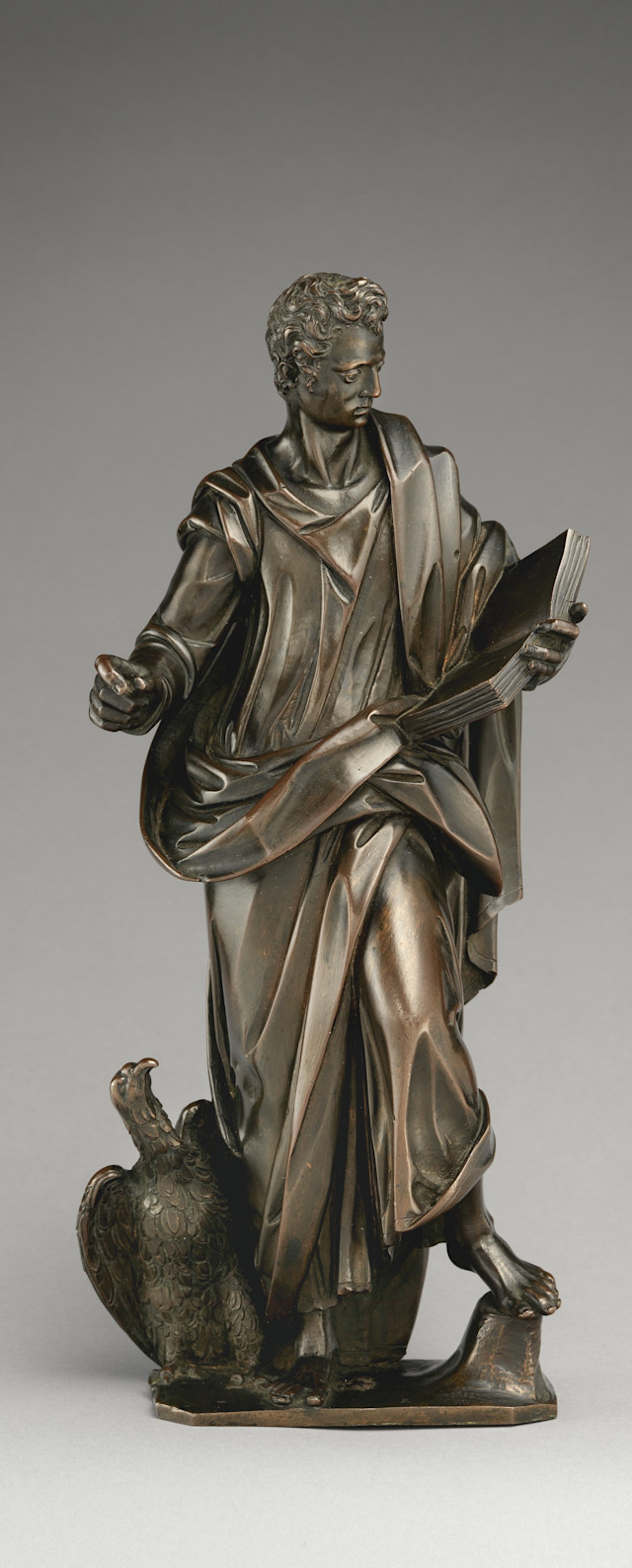
Antonio Susini - Saint John - 1596
But that doesn’t mean that ancient Christians were “more presuppositionalist” than modern Christians. It’s better to say that they went much farther with this idea. How so? They embraced the idea that Christianity was the fullness of the truth—meaning that it contained all truth, so that anything that was true in any other religion had to be a part of Christianity in some way. It was from this basis that they approached their apologetics.
When encountering Greek paganism, for example, St. Paul used ideas that the Greeks already believed about God and tied them into a Christian understanding. You could even argue that St. John, in writing his Gospel account, deliberately used Greek ideas about philosophy in the language that he used to describe God: the first verse of John’s Gospel is, “in the beginning was the word,” but in Greek the word for “word” is “logos,” which has an important technical meaning in Greek philosophy. John appropriated those connotations to make his point about Christ.
Why does all this matter today? Because it puts Greg Bahnsen’s work in the context of the larger conversation about methods of apologetics throughout history. In the twentieth century, the process of secularization that started in the Reformation and Enlightenment had reached its full maturity: after the world wars, the entire modernized West was basically secular, meaning that there no shared religious culture. Evidentialist apologetics arguably lost most of its effectiveness, so presuppositionalism became a popular alternative. Coming at the end of the twentieth century, Bahnsen’s writing extended the work of the last generation of presuppositional thinkers like Van Til. Where presuppositionalism goes from here, into the twenty-first century, remains to be seen, but Bahnsen’s work will be an important element in that discussion going forward.
Subscribe
Life-giving writing by Christian scholars sent to your inbox once per month

Zachary Porcu has a PhD in church history from the Catholic University of America in Washington DC, with additional degrees in philosophy, humanities, and Classics (Greek and Latin). He is an Eastern Orthodox Christian.
Keep reading
Forgiveness and the Remission of Sins

Stanley Hauerwas: Virtue Ethicist & Postliberal Theologian
Who is Jürgen Moltmann and What Did He Believe?

Jerry Bridges and The Navigators: A Protestant Order
What is paedobaptism? A Christian scholar explains