What color is God? By a Christian Scholar
The short answer:
Though often depicted as an “old white guy,” God the Father has no physical body, so any depictions of him in any skin color are simply inaccurate. Jesus, who is God the Son incarnate as a human, did have a physical body with physical characteristics—such as brown hair and eyes. But more than being born a Jew, Jesus’ most important characteristic is that he is the firstborn from the dead and the first of a new kind of human—the kind that cannot ultimately be defeated by death.
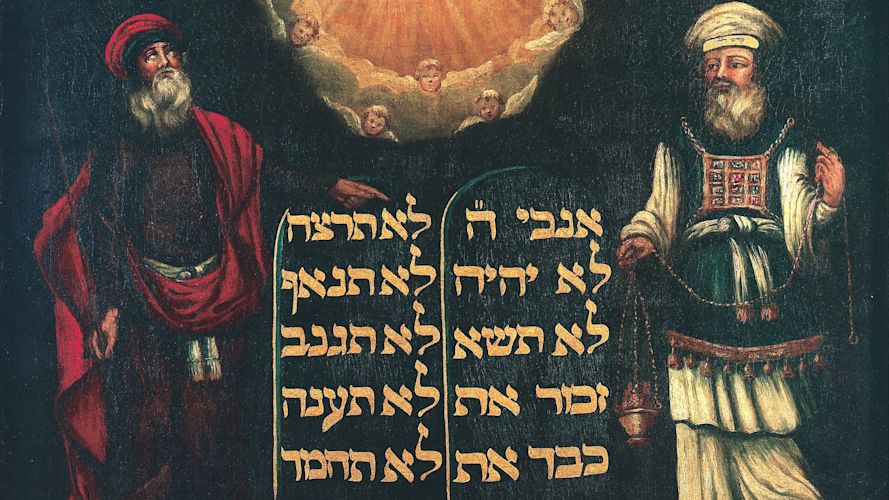
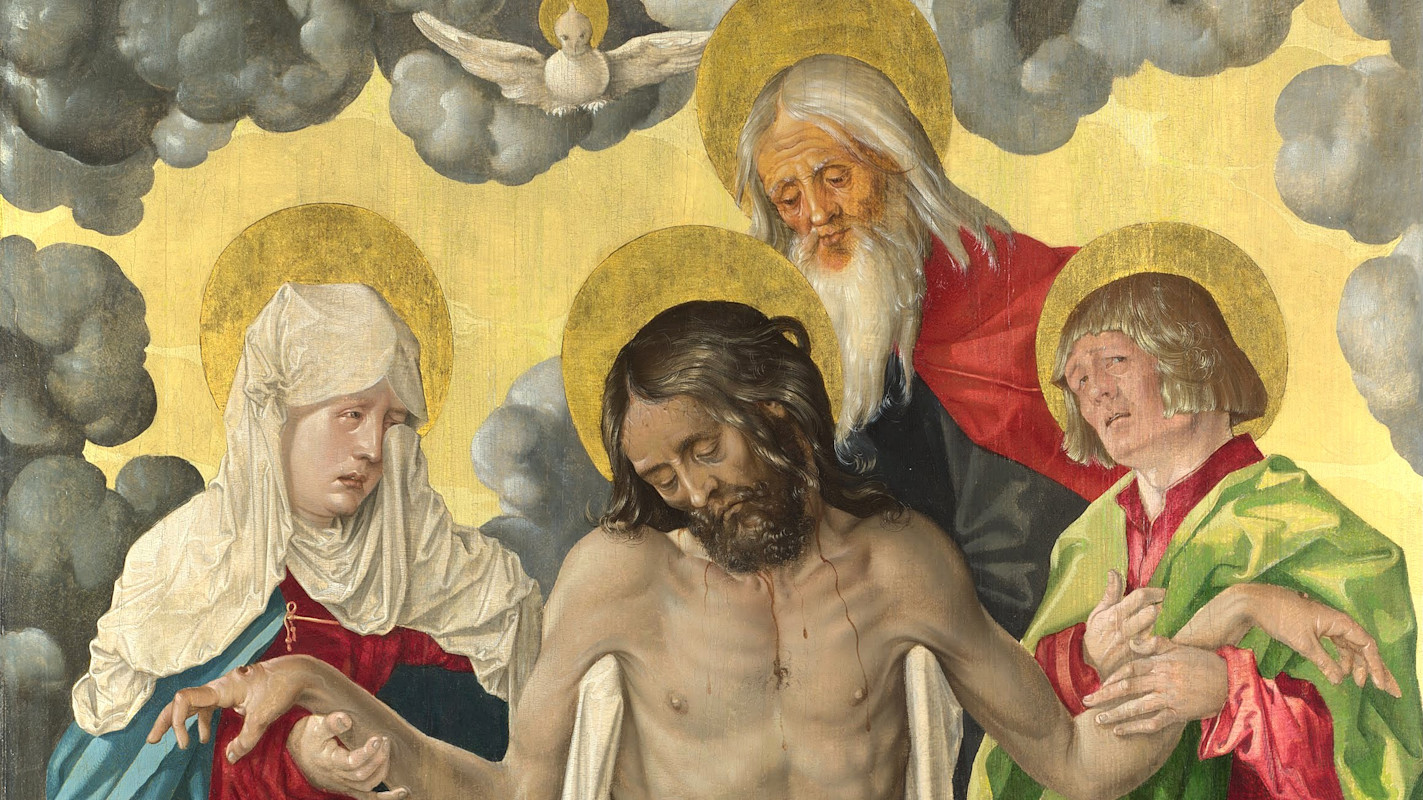
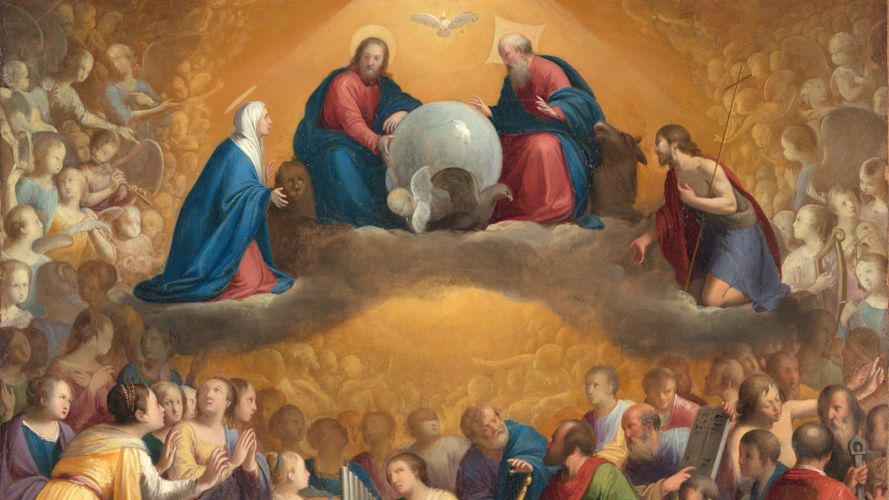
Because some of the most well-known depictions of God in Western culture come from the Renaissance painters, it’s easy to get the idea that God is a fair-skinned, Northern or Central European, or what we refer to as “white.” However, there are two confusions about such depictions.
The first thing we have to do is be clear about who we’re talking about. Lots of people distinguish between Jesus and God, asking questions like, “are Jesus and God the same person?” Because of popular culture (which includes Renaissance art), people have this idea that there is an old man in the sky whose name is “God” and whose son is a younger man who came to Earth, who we call “Jesus.” This account is something like old man Zeus in the sky and his son Hercules—a half-human, half-god—walking around on the Earth.
While popularly associated with Christianity (often unconsciously), this idea isn’t the Christian understanding of God. The Christian idea is that God is a Trinity—a triple unity—and that God the Father (who is in heaven) and God the Son (who became incarnate as the man Jesus) are both equally divine and equally God. Jesus isn’t a half-man, half-god hybrid, he’s fully God, and he took on human nature without losing his divine nature.
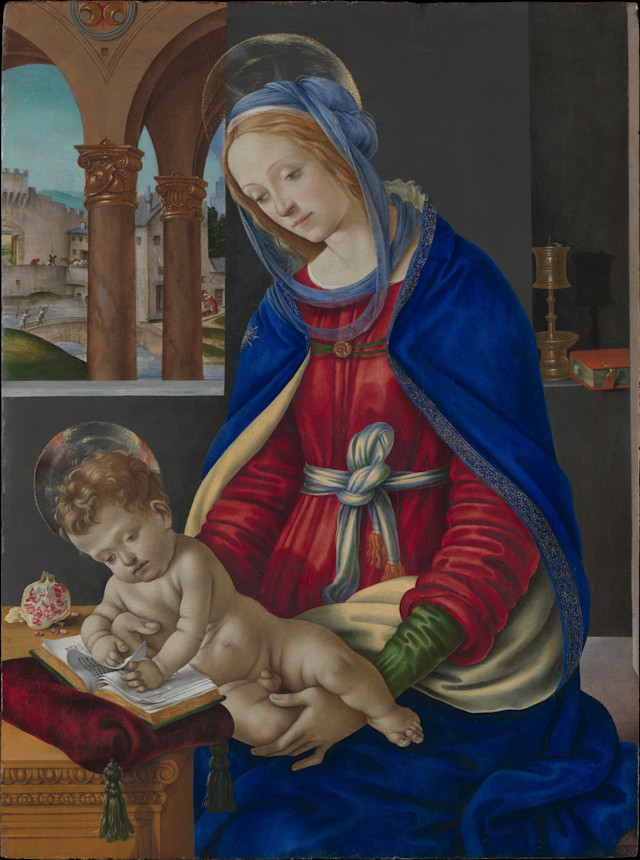
Filippino Lippi - Madonna and Child - circa 1484
God the Father is not just the creator of all things, he is the beginningless, timeless, ageless, spaceless, immaterial source of existence itself. He is beyond time and space and all our other categories for thinking about physical things. Therefore, he doesn’t have a physical body at all—still less does he have a particular color of skin or hair. To ask the question, “what color skin does God the Father have?” is like asking the question, “what color is Thursday?” or “how wet is the number 7?” These are nonsense questions because days don’t have color and numbers can’t get wet. Philosophers call these sorts of claims “category errors” because they are attempts to talk about something using a category that doesn’t apply to it.
When it comes to God the Father, all physical depictions are category errors because the Father, by definition, is not physical. Therefore, it’s impossible to depict God the Father visually, and the Church has always forbid his depiction in religious art or iconography. That doesn’t mean people don’t make visual depictions of God the Father (even in traditional iconography, unfortunately) but people who do so stray outside of the teachings of the Bible and tradition about the nature of God.
As such, many famous historical depictions of God the Father, such as the iconic image of Adam and God in Michaelangelo’s Sistine Chapel, are theological errors. Any depiction of God as having any skin color at all—whether white or black or anything else—is false. It wouldn’t be out-of-bounds to call such depictions “heretical” given that they depict something that’s the opposite of Christian theology.
What color would Jesus be?
Jesus, however, was physical, since he adopted human nature completely and was born a full human being. Therefore, we can ask questions like, “what color skin did Jesus have?”
Jesus was born an Israelite in the ancient near east, which means he almost certainly would have had brown eyes, brown hair, and a skin color on the darker side. He wouldn’t have had “black” skin like an African nor “pale” skin like a Northern European. It would have been more what we associate with an “olive” Mediterranean or Middle-Eastern coloring.
While it’s easy to make an accurate guess about these physical features of Jesus based on what we can infer from history and culture, there have been traditional depictions of Jesus in iconography dating back to the first century which confirm these hypotheses. In traditional icons of Jesus he is portrayed with brown hair, brown eyes, and an olive complexion.
What race is God?
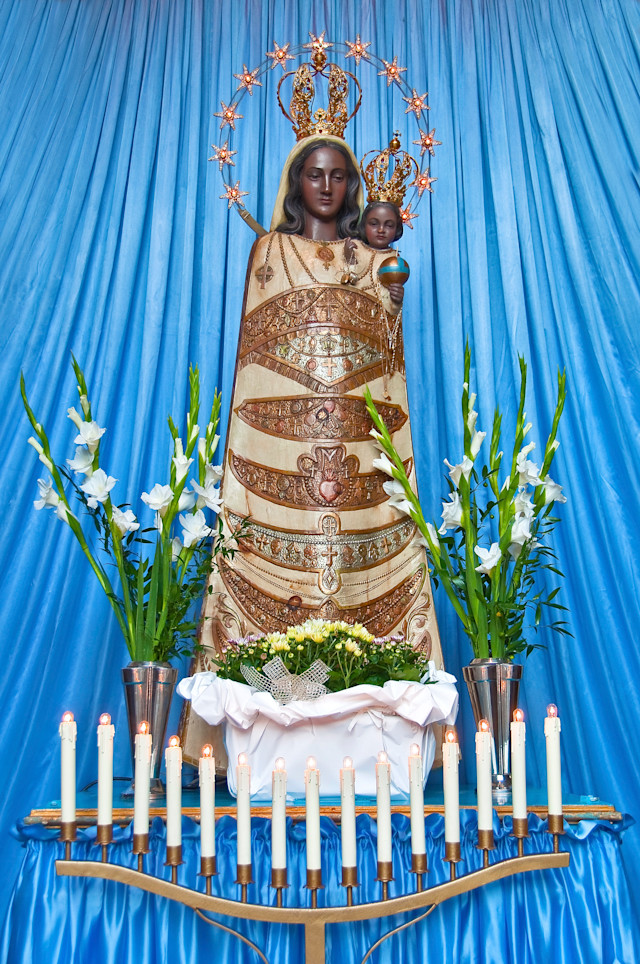
Madonna and Child
When God the Son became a man, however, he took on human nature the same way that all human beings do: by being born of a human woman. In this case, that would be the Virgin Mary, herself an Israelite woman with a particular ethnicity. That would make Jesus also a part of the Israelite people of the first century in the ancient near east.
But, depending on the topic, concerns about race often miss the point of Christianity, which is that, although Jesus did become incarnate in a particular ethnic group, the salvation he promised was for the whole world, not merely to one racial group or another.
Prior to this, the religion of the ancient Israelites was a decidedly ethnic religion. The salvation promised through the law of Moses was primarily understood to be for the Jewish people themselves. They gave the name “gentile” to anyone who was outside of their ethnic tribe, with the distinct connotation that these people were morally inferior, since they lacked the law of Moses and worshiped idols. But with Jesus, everything changed. Salvation was expanded to include the whole world, and the pagan gentiles were invited into Christ’s mission to restore the entirety of fallen humanity.
This change is a big part of why the religious leaders of the Jewish community reacted so poorly to Jesus. Many Jews at the time were hoping for God to deliver them from the rule of the pagan Romans, and were perhaps disappointed that Jesus didn’t lead them in a physical revolution against their overlords like the Jewish heroes of old (consider figures like the Maccabees).
But Jesus’ aim was to deliver them from a far greater enemy: death and the devil. His was a deliverance for all people, since the entirety of mankind was subject to death and under the worldly dominion of the devil and the fallen angels. In dying and descending into Hades, Jesus defeated death and opened a path up to life for all people—not just Jews.
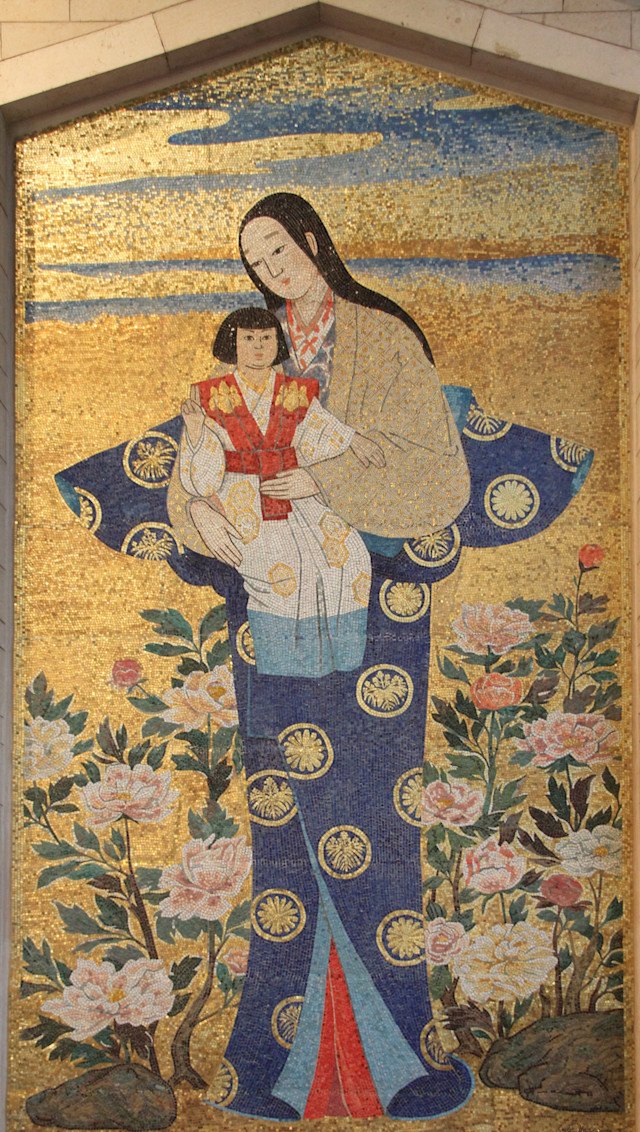
Madonna and Child
Of course, when Jesus is depicted, he often looks more like the ethnicity of the person who is depicting him. For example, Russian depictions of Jesus make him more fair-skinned and fair-haired, while African depictions tend to give him darker coloring. While neither of these depictions are historically accurate, you could say that these depictions have a spiritual meaning in that they make the point that Jesus is a part of every race because he the firstborn of the race of mankind.
In my university classes I often started the semester by defining terms, and what I would put on the board for the definition of “race” was “man.” I’d tell the class that that they were not elves, or fairies, or angels, or demons, but men (meaning, of course, both male and female). And while they would laugh at the comparison, they got the point, which is that mankind is a single “race”—what older writers called “the race of Adam.”
The understanding of the New Testament writers and the early church is that Jesus is the first completed man—the first full human being—because in rising from the dead he became what St. Paul called the “firstborn of the dead.” So while Jesus was a particular ethnicity (ancient Israelite), his higher and more important “race” is mankind, and he calls all people—of whatever color—to participate with him in his conquering of death and evil.
Subscribe
Life-giving writing by Christian scholars sent to your inbox once per month

Zachary Porcu has a PhD in church history from the Catholic University of America in Washington DC, with additional degrees in philosophy, humanities, and Classics (Greek and Latin). He is an Eastern Orthodox Christian.
Keep reading
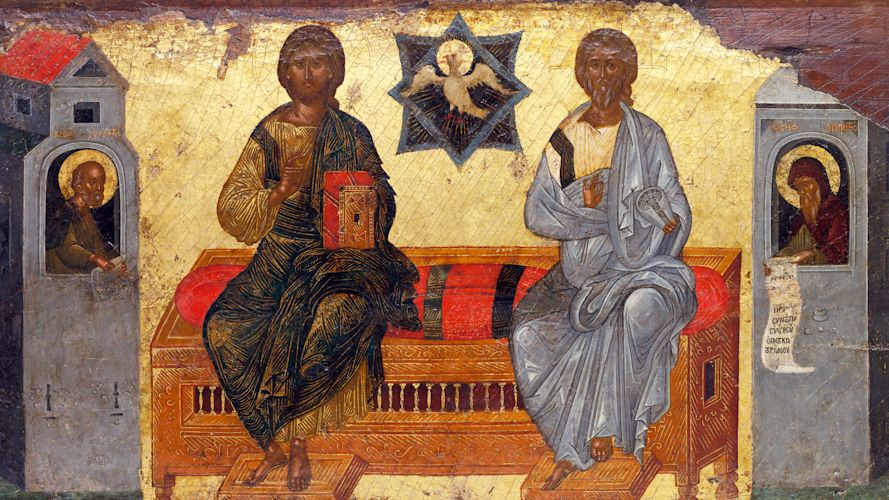
The Trinity: Are God and Jesus the same person?

Forgiveness and the Remission of Sins
Stanley Hauerwas: Virtue Ethicist & Postliberal Theologian
Who is Jürgen Moltmann and What Did He Believe?

Jerry Bridges and The Navigators: A Protestant Order