Gideon's Altar: What does "Jehovah shalom" mean?
The short answer:
“Jehovah Shalom” is one way of pronouncing the Hebrew name that Gideon gives to the altar he builds after encountering God, in the Book of Judges. No specific song or prayer is associated with this phrase, though it has been included in many modern prayers and songs.
Jehovah Shalom means something approximating, “the Lord is Peace”, and is sometimes used more loosely to mean, “the Lord is my peace” or that the Lord gives peace. The phrase occurs only once in the Bible, in the book of Judges, chapter 6, verse 23. In this episode, the ancient Israelites had been defeated by a group called the Midianites and were being oppressed by them. Whenever the Israelites tried to sow seeds and grow their crops, the Midianites came and destroyed the produce that the Israelites had planted so that they barely had anything to eat.
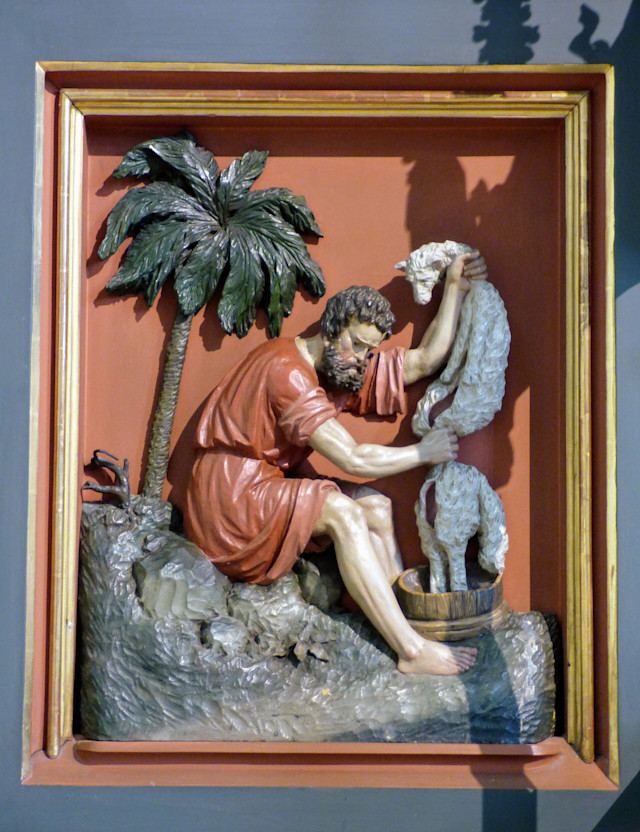
Gideon Wrings Out the Fleece
“Then the Lord said to him, ‘Peace be with you; do not fear, you shall not die.’ So Gideon built an altar there to the Lord and called it The-Lord-Is-Peace. To this day it is still in Ophrah of the Abiezrites.” (Judges 6:23-24)
What does Jehovah Shalom mean in Hebrew?
This name, “The-Lord-Is-Peace,” is a translation of Jehovah Shalom. “Jehovah” means “Lord” or “The Lord” and “Shalom” means “peace,” so taken together it means something like, “the Lord is peace”.
There is, however, some debate about whether “Jehovah” is the correct pronunciation of the word. The original word in Hebrew was not Jehovah, but a word with all consonants: YHWH, written in Hebrew as יהוה. In fact, in Ancient Hebrew all words were originally written without vowels, as a set of consonants. The vowels were later introduced as small dots and marks, called “pointing.” Because they were introduced much later, however, we don’t always know exactly what they were, especially in the case of the word YHWH.
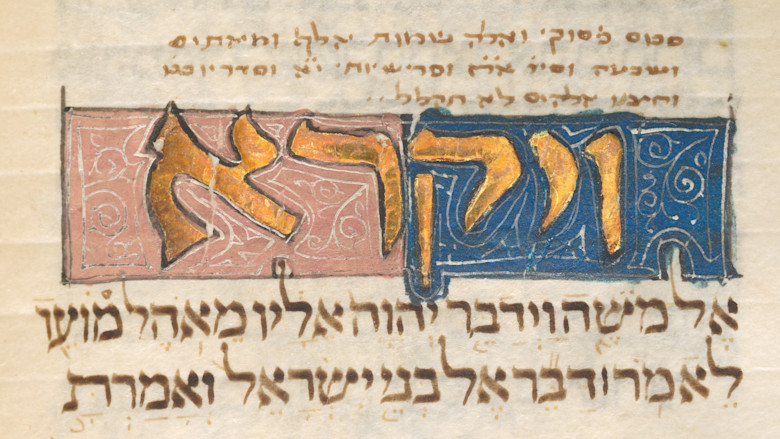
Detail of a 1300s Hebrew bible from Spain.
Why is that? Because the ancient Israelites worried about violating the second commandment (or third, depending on whether you follow the list in Exodus or the list in Deuteronomy) about “taking the Lord’s name in vain.” Rather than risk breaking this commandment by saying the name in a bad context, they decided to stop saying the name at all. They committed to this law for so long that the original pronunciation was lost, and all that remained were the consonants YHWH. As a result, there are disputes about the correct pronunciation of the word. The pronunciation “Jehovah” was first introduced in the 1500s by a Biblical scholar named William Tyndale, but “Yahweh” is another possibility, and is more widely used today. The “J” sound is a modern English sound that many argue would not have been found in the original Hebrew, whereas a “Y” would have been more appropriate for that particular Hebrew letter.
Is there a Jehovah shalom prayer?
There isn’t one particular prayer or song that is the “Jehovah shalom” prayer, at least, not to my knowledge. The idea that God brings peace or can be our peace is a general sentiment among many people across multiple religions and finds expression across all kinds of different prayers and songs in different cultures.
The phrase is perhaps most commonly known as a greeting (as well as a goodbye) among Hebrew speakers. Because “shalom” simply means “peace,” using it as a greeting means something like, “peace be upon you” or simply “peace,” much like the way we say “peace” as a goodbye in English. Among traditional Christians—like eastern Orthodox, Catholics, and some high church Protestants, the phrase “peace be to all” is a standard part of the liturgy that the priest says to the congregation, who reply, “and to thy spirit.”
Subscribe
Life-giving writing by Christian scholars sent to your inbox once per month

Zachary Porcu has a PhD in church history from the Catholic University of America in Washington DC, with additional degrees in philosophy, humanities, and Classics (Greek and Latin). He is an Eastern Orthodox Christian.
Keep reading
Hineni in Hebrew: “Here I am” from God and Man

Who was Jotham, king of Judah?
What are the prophetic books of the Bible?
Who is Esaias in the Bible? Answered by a Christian Scholar

Peor: The Mountain and God of the Moabites