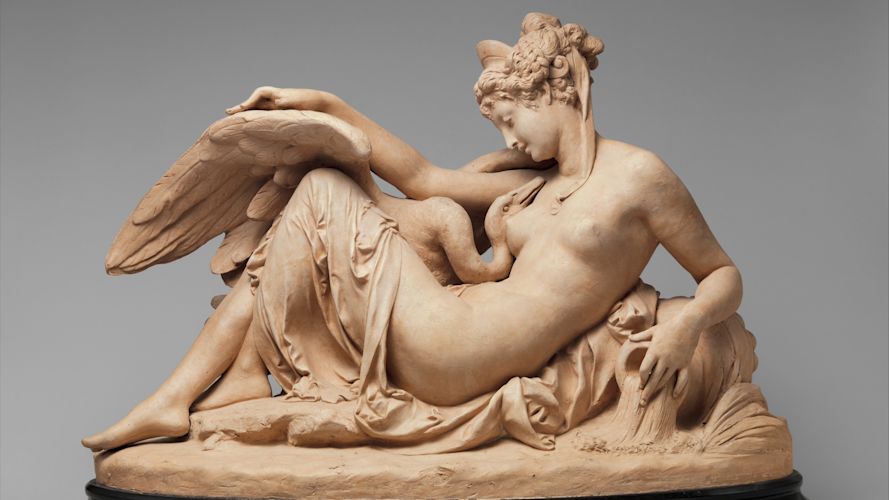
What does the Bible say about self-satisfaction?
The short answer
Self-satisfaction is to give yourself pleasure. God made pleasure, and called it good. Thus, many forms of self-satisfaction (like a sunny vacation) are indeed good. But if you pursue pleasure at the expense of your own self-control, you resemble an animal instead of a human being, especially with chronic self-gratifying behavior like masturbation.
Christians in modern, western countries have a weird relationship with pleasure. There’s often a sense that Christianity is against pleasure, or at least suspicious of it, especially with sexual pleasure. How do we navigate pleasure as Christians?
Some people look for direction in Bible verses, which is often unhelpful. What does that Bible say about self-satisfaction? It says a mix of things, with multiple verses that seem to either condone or condemn, and the context is difficult to understand. It seems that it’s not necessarily sinful to experience pleasure, but it’s also not okay to experience pleasure however and whenever you want. Why?
A common answer people give is that our relationship to pleasure is a matter of will. There’s God’s will and there’s our will, and the major issue is the question of whether you’re submitting to God’s will like a good person or pursuing your own will like a selfish person. There are several problems with this way of thinking, however. One problem is that it’s kind of an infantile way to think about the gospel, treating people like very young children, rather than “sons of God” and heirs in his kingdom. In other words, people who are spiritually mature—not just children who follow rules because “dad said so.” This account misses the deeper issue: the moral nature of the universe.
The place of pleasure

Torii Kiyonaga - In a Pleasure House - late 18th century
That said, since humans are made in God’s image, you are not only a biological organism. Unlike animals, you also have a moral nature. Ancient theologians early in the church’s history called man the “rational animal” as distinct from the “irrational beasts.” A central part of this rational nature is man’s awareness of morality. Cats, for example, have no real sense of morality, because they are only biological organisms. Cats feel impulses and then do things because of those impulses. The only thing that matters is their survival and their ability to pass on their DNA. Cats, in other words, don’t have anything to guide them outside of their biological impulses. But because the human is a rational animal, he’s in a position to step outside of his impulses and evaluate whether they’re correct or not at any given time.
The famous Christian writer C.S. Lewis explained this by analogy to a piano. He observed that a piano doesn’t have two kinds of keys, “right” keys and “wrong” keys. Any of the piano keys can be right at the right time and wrong at the wrong time. Our biological impulses are like this: they’re not right or wrong in themselves, but they need to be played at the right times. Morality is what tells us which keys are right at which times, and to what degree.
This account helps us understand the place of pleasure. Pleasure is how your body gives you feedback about what’s good and bad in terms of your biological survival. You get pleasure from eating, drinking, sex, and so forth, because those things are generally good for you as a biological organism. When you are very thirsty, water tastes even better than when you aren’t thirsty because your body is trying to tell you that you’re dehydrated. Pleasure and biological impulses tend to diminish when you’ve given your body what it needs. In a biological sense, pleasure is not the point, it’s just a way your body gets you to do the right things to take care of it.
Self-gratification and sin
Issues arise when humans want to repeat unnecessary pleasures because they feel good. For most people, it isn’t immediately clear that this behavior is problematic. Most people would ask, “if what I’m doing isn’t hurting anyone, what’s wrong with it?” There are two important problems with this idea.
First, you can always hurt yourself by overindulging in pleasures. Overeating leads to obesity and disease, as does eating only high-pleasure foods like cookies. Drinking too much alcohol can lead to severe organ damage. Even too much (or the wrong kind of) sexual activity can have health consequences. If you stay up all night playing video games or partying, and you don’t get enough sleep, you can damage your brain and body. Some people believe that it’s their choice to hurt themselves if they want to, especially if they value short-term pleasure over long-term health, but that’s an immature way of thinking. Damaging your body will always have consequences for other people in your life. For example, if you become sick, then other people have to take care of you. Even if you don’t trouble your friends and family with it, if you need a lot of extra medical attention, that will take resources from society. We all live together and affect each other, so not taking care of yourself will inevitably affect others.
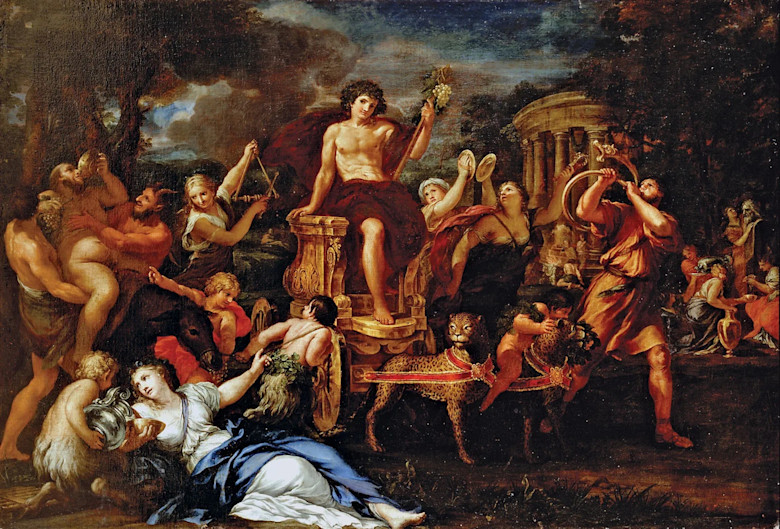
Ciro Ferri - Triumph of Bacchus - 1600s
But there’s a more profound way that we can hurt ourselves through disordered pursuit of pleasure, and that’s spiritually. If you pursue pleasure at the expense of your own self-control, you’ll soon resemble an animal more than a human being because—like an animal—you’ll be reduced to only your instincts. A lot of people joke about their relationship to pleasure in this way. They’ll say things like, “I can’t help myself,” “I’m addicted,” or “that’s just how I am.” It’s like saying, “I’m not in control of myself and I’m okay with that.” It’s like admitting that you’re a slave but laughing about it. Living a life where you indulge in pleasure whenever you feel like it may seem freeing at first, but the reality is, if you aren’t in control of yourself, you become—in the long run—a slave to your impulses and resemble an animal more than a human.
The second issue is that we need to better understand the biological nature of pleasure. Biologically, pleasure is just impulses in the brain; chemicals like dopamine or hormones or endorphins. If all you wanted was pleasure because it felt good, you could simply take chemical stimulants to experience these sensations in a raw form. The science fiction book series Ringworld describes a brain implant called “the droud” that sends electrical signals to the pleasure-center of the brain. This stimulation put the user in a constant state of euphoria. A person with a droud implant just sat there all day smiling because he was constantly full of dopamine. Most people on the droud, in that story, eventually starved to death.
If that strikes you as somehow empty, then you’re on the right track for understanding the role and purpose of pleasure. We have a sense that it isn’t the chemical reactions that we want, but something more. Many thinkers throughout history have distinguished between chemical pleasure and something higher: satisfaction or contentment or “true” happiness. C.S. Lewis called it joy.

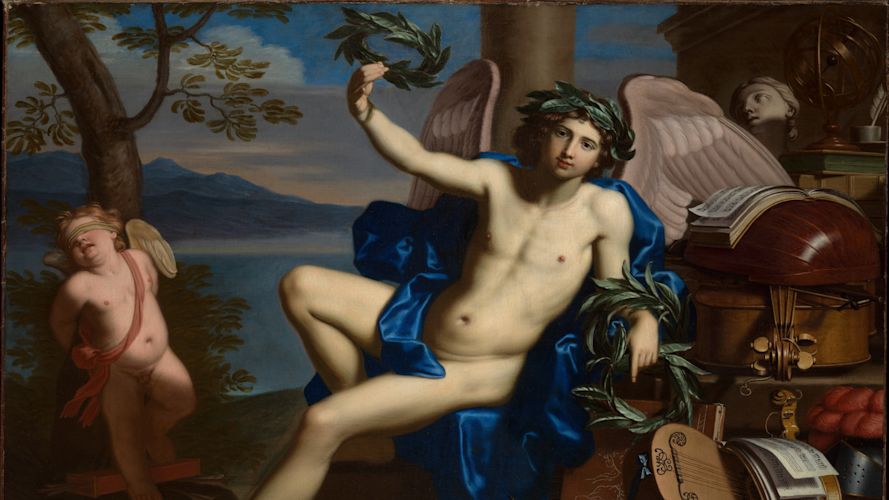
Leonardo Bazzaro - All Is Joy - 1899
The difference between mere pleasure and something higher like joy is, simply put, meaning. Chemical reactions in the brain are ultimately unable to give your life meaning. If all you did was sit around, do drugs, watch pornography, and eat sugar, you might have a high amount of dopamine in your brain, but ultimately you would have a very small and meaningless life. Many people who relentlessly pursue pleasure tend to be discontented or outright miserable. But to have joy requires more than dopamine: it requires meaning.
How do you have meaning? The answer that all religions throughout history have given is that you have to be connected with the deep moral nature of reality. For Christians, that means being totally and completely connected to God. Not because God is some sort of rules enforcer whose approval you want to get. It’s because God is goodness itself. It’s not that God does good things or that God somehow enforces goodness, but that goodness itself—and truth itself and beauty itself—is a person. As Jesus said, “I am the way, the truth, and the life” (John 14:6).
The Bible on "touching yourself"
With this account of pleasure in mind, we can say a few things about masturbation and sexuality. Most people are prepared to accept everything we’ve discussed so far when it comes to food, drug use, alcohol, and so forth. But modern, Western people are more defensive when it comes to sex (in large part because we’ve been trained to think that sexual pleasure is some kind of sacred right, but that’s another story).

Guido Reni - Moses Breaking the Tablets of the Law - 1625
However, Christianity isn’t a religion that’s about following rules for the sake of following rules. The Bible isn’t a comprehensive legal document that lists everything you should and shouldn’t do on every issue. As such, referring to the Bible to answer questions about masturbation isn’t going to go anywhere. A better course of action is to consult the witness of the early Christians, church fathers, and traditional Christian morality, all of which are very clear in condemning masturbation. There are two main reasons why they do so.
Pleasure or joy?
First is the argument about purposes. The purpose of sexual pleasure, like all biological pleasure, is not—as we discussed above—one's own satisfaction. The role of biological pleasures and pains is to guide you toward understanding what to do with your body. The reason we get such an intense burst of chemical pleasure from sex is because one of our deepest biological drives is to reproduce. These pleasures aren’t ends in and of themselves; they’re a means for guiding us towards what we need to do with our bodies. Masturbation, therefore, is like tricking your body into thinking it’s doing something for its survival, but instead doing something that’s only for pleasure.
Imagine if you chewed your food to get the pleasure of taste, but then spat it out right before you swallowed it. Or imagine you ate a meal but later forced yourself to vomit so you could eat more. Masturbating is basically the same kind of thing but for sex, and it can lead to the same kind of biological issues. A lot of people quote studies saying that masturbation is healthy, but there are issues with these studies, and there are a lot of other reports that suggest that there are health benefits to not masturbating. However, this part of the conversation isn’t the central issue, because—as we discussed—humans are more than their biological natures.
We are all intrinsically a part of each other; there are no isolated individuals.
Masturbation, therefore, does harm to your nature. Whenever we take the meaning out of something and reduce it to mere pleasure, we move farther away from our transcendent, spiritual nature and become more animalistic. In other words, the more you disconnect yourself from meaning and fixate on pleasure, the more you limit yourself to your biology, becoming an animal with no self-control. Here’s a simple proof: if you have a habit of masturbating, how easy is it for you to stop?
Subscribe
Life-giving writing by Christian scholars sent to your inbox once per month

Zachary Porcu has a PhD in church history from the Catholic University of America in Washington DC, with additional degrees in philosophy, humanities, and Classics (Greek and Latin). He is an Eastern Orthodox Christian.
Keep reading

How Hot is Hell? Biblical Ideas vs. Pop Culture Depictions


The Problem with Sexual Sin

The Baptism of Poland: Unification and Christianization

What is a Pastor Emeritus? Should they exist?
What are the best Bible verses about love and trust?