Skip to content

Hosea 14

A font-perfect reading bible

1O Israel, return unto Jehovah thy God; for thou hast fallen by thine iniquity. 2Take with you words, and return unto Jehovah: say unto him, Take away all iniquity, and accept that which is good: so will we render as bullocks the offering of our lips. 3Assyria shall not save us; we will not ride upon horses; neither will we say any more to the work of our hands, Ye are our gods; for in thee the fatherless findeth mercy.

4I will heal their backsliding, I will love them freely; for mine anger is turned away from him. 5I will be as the dew unto Israel; he shall blossom as the lily, and cast forth his roots as Lebanon. 6His branches shall spread, and his beauty shall be as the olive-tree, and his smell as Lebanon. 7They that dwell under his shadow shall return; they shall revive as the grain, and blossom as the vine: the scent thereof shall be as the wine of Lebanon. 8Ephraim shall say, What have I to do any more with idols? I have answered, and will regard him: I am like a green fir-tree; from me is thy fruit found.

9Who is wise, that he may understand these things? prudent, that he may know them? for the ways of Jehovah are right, and the just shall walk in them; but transgressors shall fall therein.


American Standard Version (ASV), 1901. Public domain in the United States. Digital text courtesy of eBible.org.

Keep reading

What is a sardius stone in the Bible? Carnelian symbolism

What is a sardius stone in the Bible? Carnelian symbolism

Dr. Zachary Porcu
by Dr. Zachary PorcuCatholic University of America
As far as we can tell, a sardius stone (sometimes called “sard stone" or “sardine”) was an ancient name for carnelian, a reddish mineral considered a semi-precious stone. Use of the sardius for decoration goes back to at least ...
Are soul ties a Christian idea? A scholar responds

Are soul ties a Christian idea? A scholar responds

Dr. Zachary Porcu
by Dr. Zachary PorcuCatholic University of America
What does God say about breaking soul ties? Nothing. Because soul ties—as a specific concept and not a general sense that physical things have spiritual content—are a modern idea, there is nothing in the Bible, the writings of ...
A PhD explains the phrase "What the devil meant for evil"

A PhD explains the phrase "What the devil meant for evil"

Dr. Zachary Porcu
by Dr. Zachary PorcuCatholic University of America
There isn’t a single, specific Bible verse about what “the enemy meant for evil,” but the closest is Genesis 50:20: “But as for you, you meant evil against me; but God meant it for good, in order to bring it about as it is this...
Pentagram vs Star of David: Symbolism Historical and Modern

Pentagram vs Star of David: Symbolism Historical and Modern

Dr. Zachary Porcu
by Dr. Zachary PorcuCatholic University of America
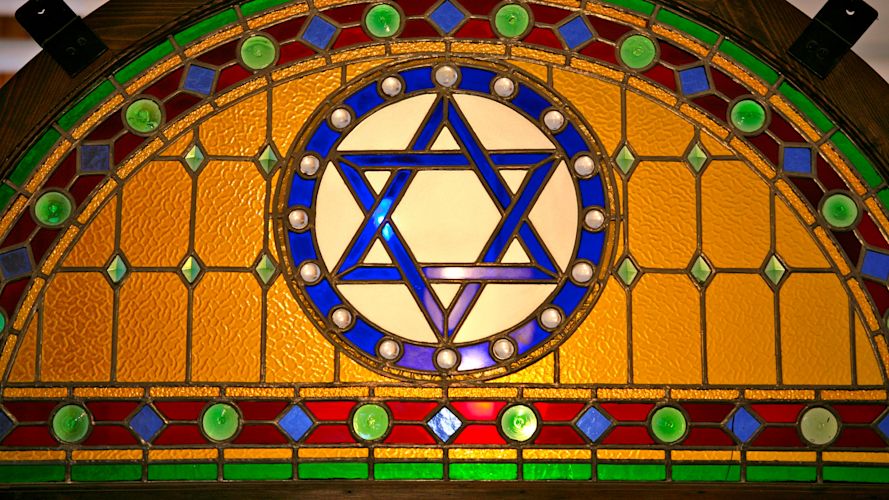
While modern people tend to associate the pentagram with the devil, satanism, or magic in general, it’s important to realize that the pentagram is a perennial symbol that’s been used in huge range of cultural contexts for all o...
Prophetic parents: Who was Amoz father of Isaiah?

Prophetic parents: Who was Amoz father of Isaiah?

Dr. Zachary Porcu
by Dr. Zachary PorcuCatholic University of America
Amoz is one of those Biblical figures connected to prominent people in the Bible, but whom we know very little about. He is explicitly mentioned only thirteen times, all in reference to Isaiah: “Isaiah, Son of Amoz.” We only kn...
What was Cabul in the Bible? PhD says: Two different towns

What was Cabul in the Bible? PhD says: Two different towns

Dr. Zachary Porcu
by Dr. Zachary PorcuCatholic University of America
Cabul is a region of lower Galilee, in the north of what is now modern-day Israel. The words Cabul and Kabul seem to be the same place, as they are different ways of spelling the Hebrew word כבול. The name is mentioned in two p...